Microwave Ablation: Procedure, Recovery and Results

Microwave ablation destroys targeted tumor tissue by delivering controlled heat through a thin probe. It is commonly performed with CT or ultrasound guidance and may be done under general anesthesia or sedation.
Key Takeaways
- Microwave ablation destroys targeted tumor tissue by delivering controlled heat through a thin probe.
- It is commonly performed with CT or ultrasound guidance and may be done under general anesthesia or sedation.
- Recovery is often faster than after open surgery, although follow-up imaging is essential to assess treatment response.
- Suitability depends on the tumor's size, number, location, cancer type, overall health, and treatment goals.
- Possible risks include pain, bleeding, infection, injury to nearby structures, and incomplete tumor destruction.
- Results vary by cancer type and tumor characteristics, so success rates should be discussed individually with the treating team.
Microwave ablation is a minimally invasive treatment that uses microwave energy to heat and destroy selected tumors, most commonly in the liver, lung, kidney, bone, or adrenal gland. It may be an option when surgery is not suitable or when a small number of tumors can be treated precisely with image guidance.
Overview: What Is Microwave Ablation?
Microwave ablation is a minimally invasive procedure used to destroy abnormal tissue, most often cancerous tumors. A specialist places one or more thin applicators, sometimes called probes or antennas, through the skin and into the tumor. The probe delivers microwave energy that creates heat, causing targeted cells to break down.
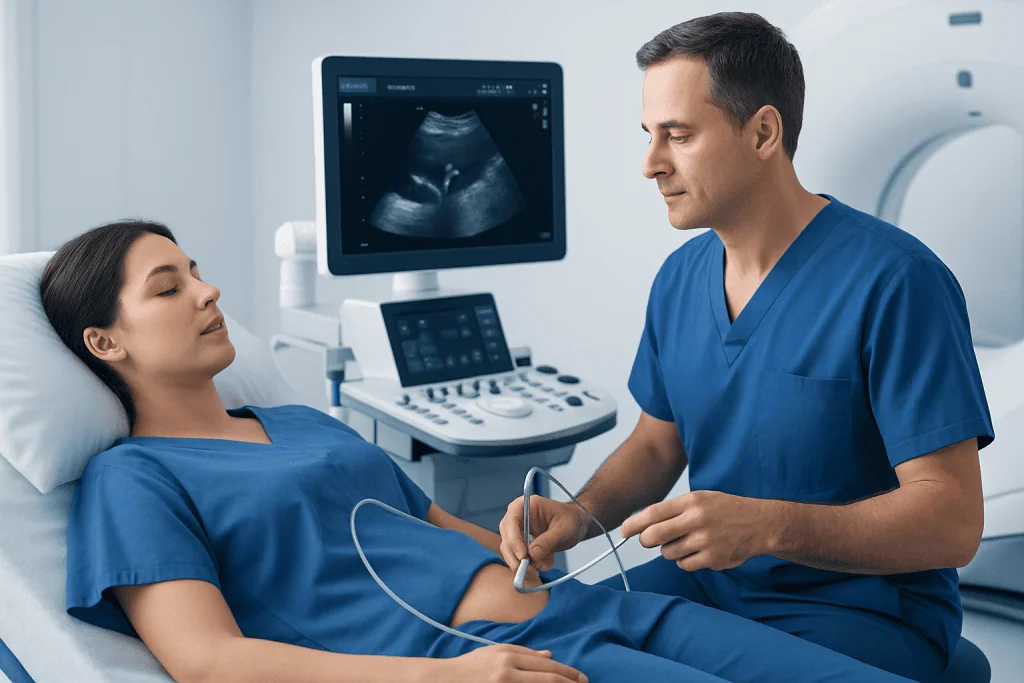
The procedure is usually performed by an interventional radiologist, sometimes in collaboration with surgical, oncology, liver, lung, kidney, or pain-management specialists. CT, ultrasound, or occasionally MRI imaging helps the team guide the probe accurately and monitor the treatment area.
Microwave ablation may be used for primary cancers that begin in an organ or for tumors that have spread from another cancer. It is particularly established for selected liver tumors, including liver cancer, and can also be considered for carefully selected tumors in the lungs, kidneys, bones, adrenal glands, and other sites.
How Microwave Ablation Works
Microwaves are a form of electromagnetic energy. During treatment, the energy makes water molecules within tissue move rapidly, producing heat. When the temperature in the targeted area is sufficiently high for an appropriate period, tumor cells are damaged beyond repair.
The goal is to treat the visible tumor plus a narrow surrounding edge of tissue, known as an ablation margin. This margin helps address microscopic cancer cells that may lie just beyond the tumor boundary. The physician plans the probe position, energy delivery, and number of treatment zones using pre-procedure scans and real-time imaging.
Compared with some other thermal techniques, microwave energy can create larger treatment zones relatively quickly and may be less affected by nearby blood flow. However, the best technique depends on the organ involved, tumor position, local expertise, and the person’s broader cancer treatment plan.
Microwave ablation is a local treatment. It treats the targeted lesion but does not replace systemic treatments, such as chemotherapy, immunotherapy, or targeted therapy, when those are needed to manage cancer elsewhere in the body.
Who May Be a Candidate?

Microwave ablation is considered individually by a multidisciplinary team. It may be recommended when a tumor is small or limited in number, can be reached safely with a probe, and is not too close to structures that could be harmed by heat. It can be used with curative intent in some situations and to control disease, reduce symptoms, or preserve organ function in others.
For example, it may be offered to people with early-stage liver tumors who cannot have surgery because of liver function, other health conditions, or tumor location. It can also be used for selected metastases, including some tumors that have spread to the liver from colorectal cancer, as part of a wider treatment strategy.
Important candidacy factors include the tumor’s type, size, number, growth pattern, and location; previous treatments; blood-clotting status; infection risk; kidney and liver function; and the person’s ability to undergo anesthesia or sedation. Pregnancy, uncontrolled bleeding problems, or an untreated infection may require postponement or an alternative approach.
Before treatment, the team reviews scans, laboratory results, medications, allergies, and medical history. Blood-thinning medicines may need temporary adjustment, but this should only be done under instructions from the prescribing clinician and procedure team.
Microwave Ablation Steps: What Happens on the Day
Clear microwave ablation procedure information can help patients prepare. The process usually begins with check-in, confirmation of consent, and placement of an intravenous line. The care team reviews the plan, checks vital signs, and may give preventive antibiotics depending on the treatment site and individual circumstances.
Most procedures are performed under general anesthesia or monitored sedation with local anesthetic. The patient is positioned to allow the safest path to the tumor. The skin is cleaned and covered with sterile drapes, and CT or ultrasound is used to identify the planned entry point.
The physician makes a very small skin opening and advances the microwave probe into the tumor under imaging guidance. Energy is delivered for a planned period, sometimes from more than one position. The team may use additional protective techniques, such as fluid or gas placed near the treatment area, to separate and protect nearby organs when appropriate.
After energy delivery, imaging may be performed to assess the ablation zone and check for immediate complications. The probe is removed, a small dressing is applied, and the patient is observed in a recovery area. Many treatments are completed in one session, though some people need staged procedures for multiple lesions.
For selected patients, microwave ablation treatment can be integrated with surgery, embolization, radiation therapy, or systemic cancer treatment. The precise sequence is decided by the multidisciplinary team.
Microwave Ablation Recovery and Follow-Up
Microwave ablation recovery varies according to the organ treated, anesthesia used, number of probes, and a person’s general health. After the procedure, patients are monitored for pain, nausea, bleeding, breathing changes, and other early concerns. Some go home the same day, while others stay overnight for observation.
It is common to experience soreness or bruising at the probe entry site, tiredness, and mild discomfort in the treated area for several days. After liver ablation, some people develop temporary low-grade fever, fatigue, nausea, or flu-like symptoms as the body responds to the treated tissue. The clinical team can advise on suitable pain relief, eating and drinking, activity, and wound care.
Most people are asked to avoid strenuous activity and heavy lifting for a short period, then return gradually to usual routines as advised. Driving should be avoided until the effects of sedation or anesthesia have fully worn off and the treating team confirms it is safe. The dressing should be kept clean and dry according to discharge instructions.
Follow-up imaging is a central part of care. CT or MRI scans are commonly scheduled weeks to months after treatment to confirm that the treated zone covers the tumor and to look for recurrence or new lesions. Blood tests and cancer-specific monitoring may also be used, depending on the condition being treated.
Benefits, Risks and Expected Results
A potential benefit of microwave ablation is that it can treat a tumor through a small skin entry point rather than a large surgical incision. This may mean less disruption of surrounding tissue, a shorter hospital stay, and a quicker return to everyday activity for suitable patients. It can also preserve more healthy organ tissue than removing part or all of an organ in some cases.
Microwave ablation risks are real but are generally uncommon when procedures are carefully planned and performed by experienced teams. Possible complications include pain, skin burns, bleeding, infection, fluid collections, blood clots, damage to nearby organs or nerves, and anesthesia-related problems. Risks vary by treatment site; for example, lung treatment can cause air leakage around the lung, while liver treatment can affect bile ducts or blood vessels.
Another possible outcome is incomplete ablation, meaning a small amount of tumor remains at the edge of the treated area. Local tumor recurrence can also occur later. Repeat ablation, surgery, radiation, embolization, or systemic therapy may be considered if scans show remaining or recurrent disease.
There is no single microwave ablation success rate that applies to everyone. Results depend strongly on tumor type, size, number, location, whether a complete treatment margin is achieved, and whether cancer is present elsewhere. Smaller tumors that can be fully covered by the ablation zone generally have more favorable local-control outcomes than larger or difficult-to-reach tumors.
Preparing Safely and When to Seek Medical Care
Before microwave ablation, patients should provide an up-to-date medication list and tell the team about allergies, prior reactions to contrast dye or anesthesia, implanted devices, kidney or liver disease, pregnancy, and recent illness. They should follow specific instructions about fasting, diabetes medicines, and blood thinners. Arranging for a responsible adult to accompany them home is usually necessary after sedation or anesthesia.
After discharge, patients should contact their procedure team promptly for worsening pain, persistent vomiting, fever or chills, increasing redness or drainage at the puncture site, new swelling, dizziness, or symptoms that do not improve as expected. These symptoms do not always indicate a serious problem, but timely assessment is important.
Urgent medical care is needed for severe shortness of breath, chest pain, fainting, uncontrolled bleeding, confusion, severe abdominal pain, or signs of a severe allergic reaction such as facial swelling or difficulty breathing. Patients should use local emergency services when symptoms are severe or rapidly worsening.
Acibadem International’s multidisciplinary specialists and JCI-accredited hospitals assess and treat appropriate candidates for microwave ablation, including international patients. Care planning may also involve related services such as liver cancer treatment and lung cancer treatment when these are appropriate to the individual diagnosis.
Frequently asked questions
Is microwave ablation a surgery?
Microwave ablation is a minimally invasive procedure rather than open surgery. A thin probe is inserted through a small skin opening using imaging guidance. It may still require general anesthesia or sedation, depending on the treatment site and procedure plan.
How long does microwave ablation take?
The ablation itself may take a relatively short time, but the full appointment includes anesthesia preparation, imaging guidance, positioning, recovery monitoring, and discharge planning. The total time varies with the number, size, and location of tumors. The treating team can provide the most accurate estimate for an individual case.
Is microwave ablation painful?
During the procedure, anesthesia or sedation is used to keep the patient comfortable. Afterwards, mild to moderate soreness, fatigue, or discomfort around the treatment area can occur. The care team provides a personalized pain-management plan and instructions on when to seek advice.
How long is recovery after microwave ablation?
Many people resume light daily activities within several days, although recovery depends on the organ treated and overall health. Tiredness and localized discomfort can last longer for some patients. Strenuous activity should be restarted only when the treating team advises it is safe.
Can microwave ablation cure cancer?
In selected situations, particularly for small localized tumors that can be completely treated, microwave ablation may be used with curative intent. In other cases, it is used to control tumors, relieve symptoms, or complement surgery and systemic treatment. Whether it can be curative depends on the cancer type, stage, tumor features, and complete treatment of all disease sites.
How is treatment success checked after microwave ablation?
The main method is follow-up imaging, usually CT or MRI, to assess whether the treatment zone fully covers the tumor. The schedule differs by cancer type and treatment site. Blood tests and clinical review may also be part of ongoing surveillance.
References
- National Cancer Institute
- Radiological Society of North America
- Society of Interventional Radiology
- European Society for Medical Oncology
- American Cancer Society
This article is for general information only and is not a substitute for professional medical advice. Please consult a qualified doctor about your individual situation.
Oncology care in Turkey — second opinion and treatment plan
JCI-accredited · board-certified surgeons · reply within 24h
Add us as a Preferred Source to see more of our trusted health content across Google Search, AI Overviews and Discover.