Migraine Aura: Visual Symptoms, Sensory Changes, and When to Seek Help

Migraine aura most often causes visual changes such as flashing lights, zigzag lines, or blind spots. Aura symptoms are usually temporary and develop gradually over several minutes.
Key Takeaways
- Migraine aura most often causes visual changes such as flashing lights, zigzag lines, or blind spots.
- Aura symptoms are usually temporary and develop gradually over several minutes.
- Not every migraine includes aura, and some people can have aura without a severe headache.
- Because some aura symptoms can resemble stroke or other urgent conditions, new or atypical symptoms should be assessed by a doctor.
- Treatment focuses on confirming the diagnosis, managing attacks, and reducing future episodes when needed.
Migraine aura refers to temporary neurological symptoms that often develop before or during a migraine attack. It commonly affects vision but can also cause sensory changes, speech difficulty, or other brief symptoms that deserve medical attention when they are new, severe, or unusual.
Overview of Migraine Aura
Migraine aura is a group of temporary neurological symptoms that may appear before a migraine headache, during the headache itself, or sometimes without much head pain at all. These symptoms are most commonly visual, but they can also affect sensation, speech, or, less often, movement. Aura is part of the migraine process rather than a separate disease.
Many people describe aura as a warning phase. A person may notice shimmering lights, zigzag patterns, numbness, tingling, or trouble finding words. These changes can feel unsettling, but in migraine they are usually reversible and tend to pass within an hour. The symptoms often build up gradually rather than happening all at once.
Migraine aura can affect adults and children, and its pattern may vary from one person to another. Some people always have the same type of aura, while others notice changes over time. Learning to recognize the pattern can help patients respond calmly, avoid triggers when possible, and seek timely care if symptoms do not follow the usual course.
Visual Symptoms and Other Types of Aura
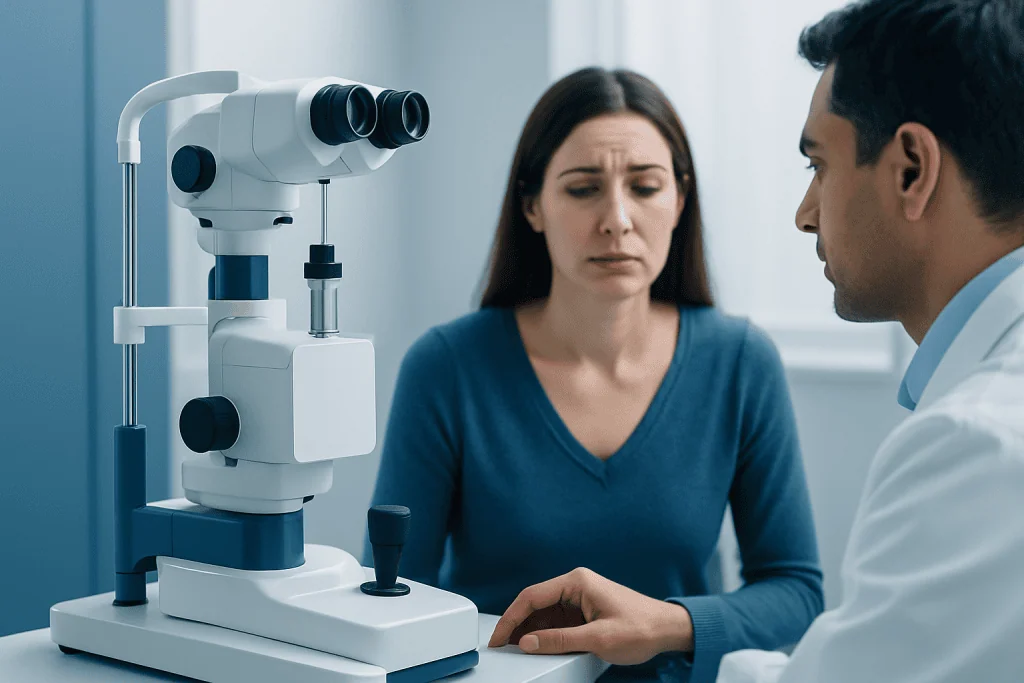
Visual aura is the most common form of migraine aura. It may cause flashing lights, sparkling spots, wavy lines, zigzag shapes, blurred vision, or a temporary blind spot. Some people feel as if they are looking through heat waves or broken glass. These symptoms often start small and spread slowly across the field of vision over several minutes.
Sensory aura can cause numbness, pins-and-needles feelings, or tingling, often beginning in the hand and moving up the arm to the face. Speech or language symptoms may include trouble finding the right word, speaking clearly, or understanding language for a brief period. Less commonly, migraine can involve weakness or more complex neurological symptoms, which need especially careful medical evaluation.
Aura does not always lead to a severe headache. In some cases, the neurological symptoms occur with mild head pain or no headache at all. This is one reason diagnosis matters. Temporary visual disturbance may also have other explanations, so symptoms that are new, one-sided, prolonged, or difficult to distinguish from other conditions should be reviewed by a clinician familiar with migraine.
What Causes Migraine Aura and Who Is at Risk?

Migraine aura is thought to result from a wave of altered electrical activity moving across the brain, often called cortical spreading depression. This process can temporarily affect how the brain handles visual information, sensation, or language. Although the exact reason it happens is still being studied, migraine is considered a neurological condition with genetic and environmental influences.
People with a personal or family history of migraine are more likely to experience aura. Hormonal changes, stress, missed meals, dehydration, poor sleep, bright lights, alcohol, and certain foods may trigger migraine attacks in some individuals. Triggers are not the same for everyone, and a symptom diary can help identify patterns over time.
Risk factors for migraine in general may include a family history, female sex, changes in estrogen levels, and coexisting conditions such as anxiety or sleep problems. Aura can also appear at different times in life. When aura starts for the first time in midlife or later, or changes noticeably from a person’s usual pattern, doctors often recommend a fuller assessment to rule out other causes.
How Doctors Diagnose Migraine Aura
Diagnosis begins with a detailed history. A doctor will ask what the symptoms look or feel like, how long they last, whether they spread gradually, and whether a headache follows. This timeline is important because migraine aura often develops over 5 to 20 minutes and usually resolves within 60 minutes. The clinician will also ask about previous migraine attacks, medications, family history, and any stroke risk factors.
A neurological examination may be performed to check vision, strength, sensation, speech, balance, and reflexes. In many people with a typical history and a normal examination, migraine aura can be diagnosed clinically. However, tests may be needed if symptoms are new, prolonged, one-sided, unusually severe, or difficult to distinguish from a transient ischemic attack, seizure, or eye-related problem.
Depending on the situation, doctors may use blood tests, an eye examination, or brain imaging such as MRI to exclude other conditions. In selected cases, neurological evaluation or other specialist assessment is advised. The aim is not only to confirm migraine aura, but also to make sure urgent conditions such as stroke are not missed.
Treatment Options for Migraine Aura and Migraine Attacks
Treatment depends on how often attacks happen, how disabling they are, and whether aura occurs with headache. For occasional attacks, management may focus on resting in a quiet, dark room, staying hydrated, and using doctor-recommended migraine medicines early in the attack. Many people benefit from taking treatment as soon as aura or headache symptoms begin, according to their clinician’s advice.
If attacks are frequent or significantly affect daily life, preventive treatment may be considered. Preventive options can include prescription medicines, lifestyle changes, and trigger management. The right plan varies from person to person and may be adjusted over time based on response, age, other health conditions, and pregnancy plans when relevant.
Patients with complex symptoms or diagnostic uncertainty may be referred to a neurologist or headache specialist. In some cases, a broader neurology assessment helps guide treatment and rule out similar disorders. When symptoms overlap with other neurological conditions, doctors may also consider possibilities such as epilepsy or vascular events before finalizing the care plan.
Prevention and Self-care
Self-care can play an important role in reducing migraine frequency and helping people feel more prepared. Regular sleep, good hydration, balanced meals, and consistent exercise are often recommended. Avoiding long periods without eating and limiting known triggers may also help. Because triggers vary, keeping a simple diary of symptoms, foods, sleep, stress, and menstrual cycles can be useful.
Stress management is another common part of prevention. Relaxation exercises, mindfulness, paced breathing, and regular routines may reduce vulnerability to attacks in some people. Screen breaks, appropriate lighting, and sunglasses outdoors can be helpful for those whose migraines are triggered by visual strain or bright light.
People who have aura should also think about safety during symptoms. If vision is affected, it is safer to stop driving, using machinery, or climbing until symptoms have fully passed. A doctor can advise on whether additional steps are needed, especially if aura is frequent, changing, or associated with other medical concerns.
When to Seek Medical Help
Although migraine aura is usually benign and temporary, some symptoms need prompt medical attention because they can resemble stroke or other urgent conditions. A person should seek urgent help if symptoms start suddenly, are the worst they have ever experienced, last longer than usual, or include weakness, fainting, confusion, chest pain, or loss of consciousness. New symptoms in someone who has never had aura before also deserve assessment.
Medical advice is also important if visual symptoms affect only one eye, if headaches are becoming more frequent or severe, or if over-the-counter medication is needed often. Pregnancy, older age at first onset, and a history of cardiovascular disease can all influence how symptoms are evaluated. Timely review can improve both safety and symptom control.
For patients needing specialist care, Acibadem International’s multidisciplinary teams in JCI-accredited hospitals evaluate headache and neurological symptoms for international patients. The goal is a careful diagnosis and an individualized treatment plan, especially when migraine aura is difficult to distinguish from other conditions.
Frequently asked questions
What does migraine aura look like?
Migraine aura most often causes visual changes such as flashing lights, zigzag lines, shimmering spots, or a temporary blind spot. Some people also notice tingling, numbness, or brief speech difficulty. The symptoms usually develop gradually and then resolve.
How long does migraine aura last?
A typical migraine aura lasts between 5 and 60 minutes. The symptoms often spread or change over several minutes rather than appearing instantly. If symptoms last longer than usual or do not fully go away, medical assessment is important.
Can migraine aura happen without a headache?
Yes. Some people have aura with little or no headache, which is sometimes called silent migraine or acephalgic migraine. Because this can resemble other neurological conditions, a doctor may recommend evaluation, especially if it is new.
Is migraine aura dangerous?
Migraine aura itself is usually temporary and not harmful, but its symptoms can look similar to urgent conditions such as stroke. That is why new, severe, or unusual symptoms should not be ignored. A doctor can help confirm whether the pattern fits migraine.
What is the difference between migraine aura and a stroke?
Migraine aura often starts gradually and spreads over minutes, while stroke symptoms typically begin suddenly. Aura symptoms are usually fully reversible, but stroke symptoms may persist or worsen. Because the difference is not always obvious, urgent symptoms should be checked immediately.
Can migraine aura be prevented?
In many cases, yes, at least partially. Prevention may include identifying triggers, improving sleep and hydration, managing stress, and using preventive medication when attacks are frequent or disabling. The best plan depends on the individual’s symptoms and medical history.
References
- World Health Organization
- International Headache Society
- National Institute of Neurological Disorders and Stroke
- American Migraine Foundation
- Mayo Clinic
This article is for general information only and is not a substitute for professional medical advice. Please consult a qualified doctor about your individual situation.
Migraine in Turkey — costs, top hospitals & a free quote
JCI-accredited · board-certified surgeons · reply within 24h
Add us as a Preferred Source to see more of our trusted health content across Google Search, AI Overviews and Discover.