Military Press: An Evidence-Based Guide for Patients

Military press mainly trains the shoulders, triceps, and upper back while also challenging core stability. Good technique, adequate shoulder mobility, and gradual progression are important for safety.
Key Takeaways
- Military press mainly trains the shoulders, triceps, and upper back while also challenging core stability.
- Good technique, adequate shoulder mobility, and gradual progression are important for safety.
- Pain during or after military press is not normal and may suggest irritation of the shoulder, neck, or lower back.
- People with a history of shoulder injury, limited mobility, or uncontrolled high blood pressure should seek individualized advice before heavy lifting.
- Alternatives such as dumbbell press, landmine press, or machine press may be better tolerated in some patients.
Military press is a standing overhead pressing exercise used to strengthen the shoulders, upper back, and arms. For most healthy adults, it can be a useful part of training when technique, shoulder mobility, and load progression are appropriate, but it may aggravate pain in people with certain shoulder, neck, or back conditions.
Overview
The military press is a type of overhead press performed from a standing position, usually with a barbell or dumbbells. It is designed to move weight from shoulder level to overhead using coordinated work from the shoulders, triceps, upper chest, and upper back. Because it is done standing, it also requires balance, trunk control, and coordination.
For many people, the military press can be an effective strength exercise when it is learned carefully and progressed gradually. It may help improve overhead function for daily tasks such as placing items on a shelf, lifting luggage, or participating in sports. However, it is not essential for everyone, and there are other ways to build shoulder strength if this movement is uncomfortable or unsuitable.
From a patient-health perspective, the most important question is not whether the military press is universally “good” or “bad.” The better question is whether the movement matches the person’s anatomy, mobility, training experience, symptoms, and medical history. A well-supervised program can often reduce risk, while poor technique, excessive load, or underlying joint problems can increase the chance of pain.
How the military press works in the body
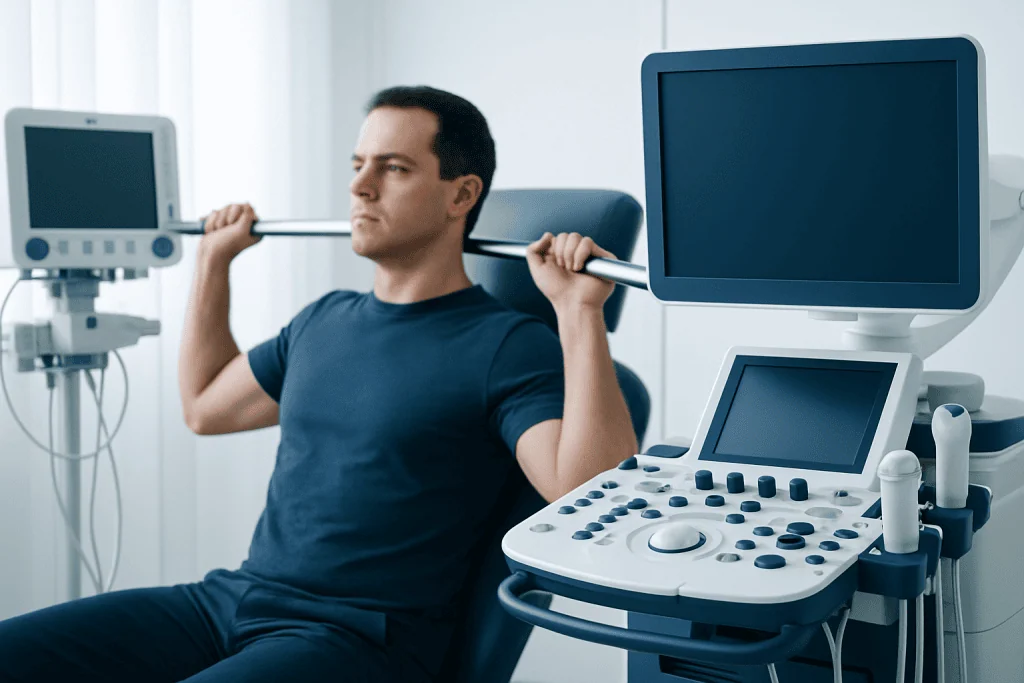
During the upward phase of the lift, the shoulder joint moves into flexion and abduction while the shoulder blade rotates upward to allow the arm to clear the head. The deltoid muscles and triceps provide much of the force, while the rotator cuff helps stabilize the shoulder. The upper back muscles and core work to maintain posture and keep the movement controlled.
This exercise demands more than arm strength alone. It depends on adequate movement in the upper back, healthy shoulder blade mechanics, and the ability to keep the ribs and pelvis in a stable position. If these elements are limited, the body may compensate by arching the lower back, jutting the head forward, or moving the elbows and wrists into less efficient positions.
Because the military press places the arms overhead, it can be more demanding on the shoulder than pushing movements performed in front of the body. For a person with shoulder stiffness, tendon irritation, or a history of impingement, the exercise may provoke symptoms. In some cases, shoulder pain may relate to conditions such as shoulder impingement syndrome or irritation involving the rotator cuff.
Benefits and who may use it safely

When tolerated well, military press can help develop upper-body strength and muscular endurance. It may support shoulder function, improve pressing capacity in sports or recreational fitness, and encourage better awareness of posture during loaded movement. Because the exercise is performed standing, it can also challenge balance and trunk stability in a way that seated pressing does not.
Healthy adults with no current shoulder, neck, or back symptoms may be able to include this exercise as part of a balanced resistance training program. It is often best suited to people who can raise their arms overhead comfortably, keep the spine relatively neutral, and follow a gradual progression. Beginners may benefit from first learning the pattern with light weights, resistance bands, or supervised coaching.
Some people may be better served by modified versions. These include a neutral-grip dumbbell press, a seated press, or a landmine press, which usually requires less overhead range and may feel more comfortable. For patients recovering from injury or returning to exercise after a long break, a rehabilitation-based approach such as physical therapy and rehabilitation may help restore movement and confidence before heavier lifting is attempted.
Risks, common mistakes, and symptoms to watch for
The military press may increase stress on the shoulder, neck, wrists, and lower back if technique is poor or the load is too heavy. One common mistake is excessive low-back arching to compensate for limited shoulder mobility. This can place unnecessary strain on the lumbar spine and may lead to discomfort during or after the session.
Another frequent issue is pressing through pain. Temporary muscle fatigue is expected with exercise, but sharp pain, pinching, catching, numbness, or pain that worsens after training should not be ignored. Symptoms in the front or side of the shoulder may indicate tendon irritation or overload. In some cases, persistent symptoms may need assessment for problems such as rotator cuff tear or other shoulder disorders.
Patients should also watch for loss of control as the weight moves overhead. If the elbows flare excessively, the bar path drifts far in front of the body, or the neck pushes forward to avoid the bar, the movement becomes less efficient and potentially less safe. Fatigue can amplify these errors, so stopping before form breaks down is usually wiser than trying to complete extra repetitions.
- Concerning symptoms include sharp shoulder pain, pain radiating down the arm, tingling, weakness, or a feeling of instability.
- Lower-back pain during pressing may signal poor trunk control, excessive load, or a need for exercise modification.
- Headache, dizziness, or unusual breath-holding during heavy lifting should also be taken seriously.
How to perform military press more safely
Safer performance begins before the lift starts. A person should be able to raise the arms overhead with reasonable comfort and control. Warming up the shoulders, upper back, and trunk can improve readiness for exercise. Light activation drills, shoulder mobility work, and a few easy sets with low resistance are commonly used to prepare the body.
During the lift, the feet should be stable on the floor and the trunk should remain braced without exaggerated arching. The weight begins around shoulder level, and the movement travels upward in a controlled line while the head and barbell pass each other naturally. The goal is smooth overhead positioning rather than forcing the weight up with momentum.
Load should increase gradually over time, not from one heavy session to the next. Many people benefit from starting with dumbbells, which allow each arm to move more independently. If pain appears, reducing the range of motion or switching to a better-tolerated pattern may help. Some individuals do well with specialist shoulder care when structural joint disease limits function, although most exercise-related shoulder pain is managed more conservatively at first.
Breathing also matters. Avoiding prolonged breath-holding may be advisable for some patients, especially those with cardiovascular concerns. People with uncontrolled high blood pressure, recent surgery, or significant musculoskeletal symptoms should ask a qualified clinician how to exercise safely.
Who should be cautious or avoid it
Military press may not be appropriate for everyone. People with current shoulder pain, significant stiffness, previous shoulder dislocation, recent rotator cuff injury, neck pain triggered by overhead motion, or uncontrolled lower-back symptoms may need to avoid or modify the exercise. Those with poor balance or limited exercise experience may also benefit from an alternative movement until strength and control improve.
Caution is also sensible for patients with inflammatory joint disease, severe osteoarthritis, or recent fracture or surgery involving the shoulder, elbow, wrist, or spine. In these situations, individual anatomy and healing status matter more than general fitness advice. A clinician may recommend limiting overhead load, changing the grip, or using machines or cables instead of free weights.
For some patients, chest discomfort, shortness of breath out of proportion to effort, or marked blood pressure elevation with straining may make heavy resistance exercise unsuitable until evaluated. A rehabilitation physician, sports medicine specialist, orthopedic specialist, or physiotherapist can help decide whether the military press is reasonable, needs modification, or should be replaced entirely.
When to seek medical care
Medical advice is recommended if shoulder, neck, or back pain persists for more than a few days after military press, returns every time the exercise is attempted, or interferes with sleep or daily activities. Evaluation is also important if there is sudden weakness, inability to lift the arm, visible deformity, swelling, or a popping sensation followed by ongoing pain.
Urgent assessment is needed for chest pain, severe shortness of breath, fainting, significant head injury, or arm numbness that does not quickly resolve. These symptoms are not typical muscle soreness and should not be attributed to exercise without proper evaluation.
Patients with repeated exercise-related pain may benefit from a structured assessment of strength, range of motion, training habits, and movement pattern. Depending on the findings, the doctor may recommend imaging, medication for short-term symptom relief, or referral for orthopedic rehabilitation. Acibadem International’s multidisciplinary specialists in JCI-accredited hospitals also assess and treat musculoskeletal complaints in international patients when further evaluation is needed.
Frequently asked questions
Is the military press bad for the shoulders?
Not necessarily. In people with good technique, adequate shoulder mobility, and no active injury, it can be a reasonable strengthening exercise. It may become problematic when pain is ignored, the weight is too heavy, or a person has an underlying shoulder condition.
What muscles does the military press work?
It mainly works the deltoid muscles of the shoulders and the triceps. The upper back, rotator cuff, and core also help stabilize the movement, especially in the standing version.
Can military press cause lower-back pain?
Yes, it can if the lifter arches the lower back excessively to compensate for limited shoulder mobility or poor trunk control. Reducing the load, improving technique, or switching to a modified press can help reduce this stress.
Should a person stop military press if there is shoulder pain?
Yes, if the pain is sharp, worsening, or repeatedly triggered by the exercise, it is sensible to stop and seek advice. Mild muscle fatigue is expected, but joint pain, pinching, weakness, or pain that lasts beyond normal soreness deserves attention.
Is dumbbell press safer than barbell military press?
For some people, yes. Dumbbells allow each shoulder to move more independently and may feel more natural, especially when mobility is limited or one side is weaker. However, the safest option depends on the person’s anatomy, training background, and symptoms.
Can beginners do military press?
Many beginners can learn it, but starting light and focusing on form is important. Some may do better with easier variations first, such as a seated dumbbell press or guided instruction from a qualified professional.
This article is for general information only and is not a substitute for professional medical advice. Please consult a qualified doctor about your individual situation.
Joint and spine care in Turkey — expert assessment & treatment
JCI-accredited · board-certified surgeons · reply within 24h
Add us as a Preferred Source to see more of our trusted health content across Google Search, AI Overviews and Discover.

More from the Health Library

Hollow Cheeks: An Evidence-Based Guide for Patients

Surgical turp: Symptoms, Causes, and Treatment — Complete Patient Guide

Sore Feet Arches: What Patients Need to Know

Iron Sushi: An Evidence-Based Guide for Patients

Black Tartar on Teeth: A Complete Medical Overview