Mite Bites — Explained by Medical Evidence, Not Myths

Mite bites often appear as small, itchy red bumps, sometimes with a clustered or linear pattern. Not every itchy rash is caused by mites; eczema, allergies, bedbugs, fleas, and skin infections can look similar.
Key Takeaways
- Mite bites often appear as small, itchy red bumps, sometimes with a clustered or linear pattern.
- Not every itchy rash is caused by mites; eczema, allergies, bedbugs, fleas, and skin infections can look similar.
- Treatment focuses on removing exposure, calming itch and inflammation, and treating any infection or infestation if present.
- Scabies is caused by a mite but behaves differently from simple environmental mite bites and usually needs prescription treatment.
- Medical care is important if the rash is severe, widespread, infected, or does not improve.
Mite bites usually cause itchy, red, irritated skin, but the exact pattern depends on the type of mite involved. Most cases are mild and improve with avoidance of the source, gentle skin care, and symptom relief, though persistent rash or signs of infection should be assessed by a doctor.
What are mite bites?
Mite bites are skin reactions caused by tiny arthropods that are often too small to see easily. In everyday use, the term can refer to several different situations: irritation from environmental mites, bites from animal-associated mites, or infestation by specific human mites such as scabies. Because these causes are different, the appearance, severity, and treatment of the rash can vary.
In most people, mite bites lead to small red bumps, itchiness, and local irritation rather than serious illness. The reaction is often caused partly by the skin’s immune response to mite proteins or saliva. Symptoms may appear soon after exposure or develop over several hours.
A key point is that “mite bites” are not one single diagnosis. Some mites briefly irritate the skin and then disappear, while others remain in close contact with the body or environment. This is why a careful history about pets, bedding, travel, outdoor exposure, and household contacts can be helpful when a doctor evaluates the rash.
What mite bites look and feel like
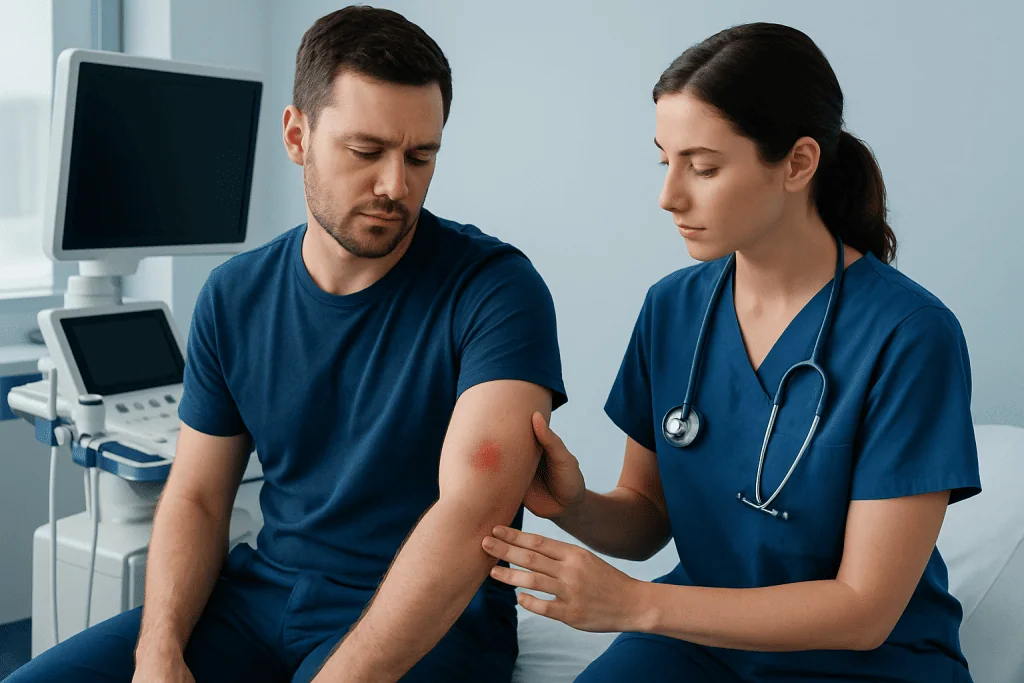
Mite bites commonly cause small, itchy, red papules on exposed or covered skin. The bumps may be scattered, grouped, or arranged in short lines where clothing fits tightly or where mites were trapped against the skin. Some people develop only mild irritation, while others have intense itching or more noticeable inflammation.
The rash can sometimes resemble other conditions. Bedbug bites, flea bites, allergic contact dermatitis, eczema, hives, and some skin infections may all be mistaken for mite bites. For this reason, appearance alone does not always identify the cause.
Depending on the mite involved, people may notice:
- Itching that is mild to intense
- Small red bumps or slightly raised welts
- Areas of scratching, crusting, or irritation
- Symptoms on the arms, legs, waistline, ankles, or areas under tight clothing
- Worsening at night in some conditions, especially scabies
If a person scratches repeatedly, the skin barrier can break down. This may lead to soreness, oozing, or a secondary bacterial infection that needs medical attention.
Common causes and types of mite-related skin reactions
Many so-called mite bites come from mites associated with birds, rodents, straw, stored products, or pets. These mites may bite or irritate humans when their usual animal host is absent or when people come into contact with infested materials. Examples include bird mites and harvest mites, sometimes called chiggers in some regions. These exposures often cause itchy bumps but do not usually result in long-term infestation of human skin.
Another important condition is scabies, which is caused by the human itch mite. Unlike brief environmental exposure, scabies involves mites burrowing into the outer layer of the skin and spreading through close skin-to-skin contact. This condition can cause intense itching and may affect multiple household members. Because scabies is medically distinct, it usually requires specific treatment rather than simple home care; readers who want to understand this difference may find scabies information helpful.
House dust mites are often misunderstood in this context. They are a common trigger for allergies and asthma, but they do not typically bite humans. When a person has itchy skin in a dusty environment, it may reflect allergic irritation rather than true bites.
Risk factors for mite-related rashes include close contact with animals or nests, time spent outdoors in grassy or rural areas, shared bedding or crowded living settings, and delayed cleaning of infested fabrics or furniture. Sensitive skin, eczema, and scratching can make the reaction appear more severe.
How doctors tell mite bites from other rashes
Diagnosis starts with the story behind the rash. A doctor may ask when symptoms began, where the bumps appeared first, whether anyone else in the household is itchy, and whether there has been recent travel, pet exposure, outdoor activity, or contact with birds, rodents, or infested bedding. These details often guide the diagnosis more than the rash alone.
The skin examination looks at the size, pattern, and location of lesions, as well as signs of scratching or infection. In suspected scabies, a doctor may examine typical sites such as the finger webs, wrists, waistline, armpits, or genital region. In some cases, dermatoscopy or skin scraping may be used to look for mites, eggs, or burrows, although this is not always necessary.
If the diagnosis is uncertain, doctors may also consider conditions such as eczema, allergic dermatitis, folliculitis, hives, or insect bites from fleas and bedbugs. When the rash is persistent or atypical, assessment by dermatology can help confirm the cause and guide appropriate treatment.
Treatment for mite bites
Treatment depends on the cause. For mild environmental mite bites, care usually focuses on relieving itch, reducing inflammation, and avoiding further exposure. Cool compresses, gentle cleansing, fragrance-free moisturizers, and over-the-counter anti-itch measures may help many people feel more comfortable. Scratching should be minimized because it can worsen irritation and increase the risk of infection.
If the skin becomes very inflamed, a doctor may recommend prescription creams or other medicines to calm the reaction. When there is concern for a bacterial skin infection, treatment may be needed promptly. In ongoing or severe cases, especially when the diagnosis is not clear, specialist skin evaluation may be useful.
Scabies needs a different approach because the goal is to eliminate the mites, not just soothe the skin. Doctors usually prescribe targeted treatment for the affected person and may advise treatment or symptom monitoring for close contacts. Bedding, clothing, and towels may also need specific cleaning steps. For patients with persistent itch after treatment, symptoms can continue for a period even when the mites are no longer active, so follow-up matters.
If scratching has led to broken skin, doctors may assess for skin infection or other complications. Severe allergic swelling, widespread rash, or uncertainty about the diagnosis should not be self-treated for too long without professional advice.
Prevention and self-care at home
The best prevention depends on the source. If bird or rodent mites are suspected, the main step is removal of nests or infestation by appropriate pest-control methods rather than repeated use of skin products alone. If exposure happened outdoors, showering, washing clothes, and avoiding scratching can help limit irritation. For pet-related problems, animals may also need veterinary assessment.
At home, practical self-care includes washing bedding and recently worn clothing, vacuuming soft furnishings, and reducing ongoing contact with the suspected source. These steps are especially important if more than one person is affected. However, it is still worth remembering that dust mites usually cause allergy symptoms rather than bites, so deep cleaning may not solve every itchy rash.
General skin care can also reduce discomfort and support healing:
- Use mild, unscented cleansers
- Apply fragrance-free moisturizer to protect the skin barrier
- Keep fingernails short to reduce skin damage from scratching
- Choose loose, breathable clothing if tight fabrics worsen itch
- Avoid harsh home remedies that can irritate the skin further
When symptoms keep returning, the key is often identifying the true cause rather than repeatedly treating the rash itself. A doctor may help determine whether the problem is due to mites, allergy, eczema, or another skin condition.
When to seek medical care
Medical evaluation is important if the rash is severe, widespread, very painful, or not improving after basic self-care. A person should also seek care if there are signs of infection such as increasing redness, warmth, swelling, pus, crusting, or fever. New rash in infants, older adults, pregnant individuals, or people with weakened immune systems should be assessed with extra care.
Prompt medical advice is also recommended when itching is intense at night, several household members are affected, or scabies is a possibility. These clues suggest a condition that usually needs prescription treatment rather than simple symptom relief. If the diagnosis is uncertain, doctors may recommend allergy testing or other assessment when allergic skin reactions are part of the picture.
Patients who need specialist evaluation may benefit from a coordinated approach, especially when skin disease overlaps with allergy or infection concerns. Acibadem International’s multidisciplinary specialists in JCI-accredited hospitals diagnose and treat skin conditions, including mite-related rashes, for international patients.
Frequently asked questions
What do mite bites look like on humans?
Mite bites often look like small red, itchy bumps that may appear in clusters or short lines. The exact appearance varies with the type of mite and the person’s skin response, so they can sometimes look like eczema, flea bites, or bedbug bites.
How long do mite bites last?
Mild mite-related skin irritation may improve within a few days to one or two weeks after exposure stops. If the cause is scabies or if the skin becomes infected from scratching, symptoms can last longer and usually need medical treatment.
Do dust mites bite people?
Dust mites do not usually bite humans. They are better known for triggering allergies, such as sneezing, nasal congestion, asthma symptoms, or itchy skin in sensitive people.
Are mite bites contagious?
Simple environmental mite bites are not usually contagious from person to person. Scabies is different because it can spread through close skin contact and sometimes through shared items in certain settings.
What is the best treatment for mite bites?
The best treatment depends on the cause. Mild cases often improve with avoidance of the source, gentle skin care, and anti-itch measures, while scabies or infected skin usually requires prescription treatment from a doctor.
When should someone worry about mite bites?
Medical care is advisable if the rash is severe, spreading, painful, infected, or not getting better. Care is also important if several people in the home are itchy or if symptoms strongly suggest scabies.
This article is for general information only and is not a substitute for professional medical advice. Please consult a qualified doctor about your individual situation.
Explore treatments in Turkey — costs, top hospitals & a free quote
JCI-accredited · board-certified surgeons · reply within 24h
Add us as a Preferred Source to see more of our trusted health content across Google Search, AI Overviews and Discover.

More from the Health Library

Protan Color Blindness: An Evidence-Based Guide for Patients

Vastus Lateralis: A Complete Medical Overview

Slimy Bloody Poop: A Complete Medical Overview

Hematuria: A Complete Medical Overview

Dementia with Lewy Bodies: What Patients Need to Know