MRI for Claustrophobic Patients: Options to Make the Scan Easier
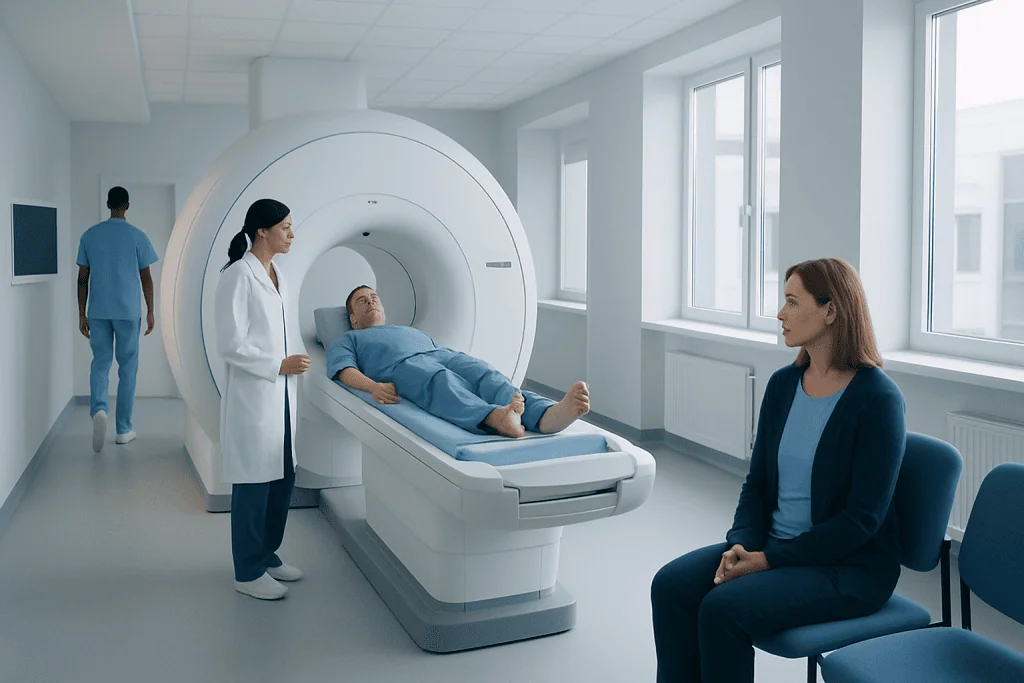
Many people with claustrophobia can complete an MRI when the care team plans ahead. Open MRI and wide-bore MRI systems may feel less confining than traditional scanners.
Key Takeaways
- Many people with claustrophobia can complete an MRI when the care team plans ahead.
- Open MRI and wide-bore MRI systems may feel less confining than traditional scanners.
- Simple steps like music, breathing exercises, and clear communication can reduce anxiety during the scan.
- Sedation or anti-anxiety medication may be appropriate for some patients when prescribed and supervised by a doctor.
- It is important to tell the imaging team about claustrophobia before the appointment so the scan can be adapted safely.
MRI for claustrophobic patients is often possible with the right preparation, scanner choice, and support. Options such as open or wide-bore MRI, relaxation strategies, and in some cases sedation can help make the scan more comfortable.
Overview
MRI, or magnetic resonance imaging, is a common test used to create detailed pictures of organs, joints, the brain, spine, and other structures inside the body. It does not use ionizing radiation, which is one reason doctors often choose it. However, a standard MRI usually requires a person to lie still inside a tunnel-shaped scanner, and this can feel difficult for someone who is uncomfortable in enclosed spaces.
MRI for claustrophobic patients is a frequent concern in imaging departments. Claustrophobia does not mean a person is weak or unable to cope. It is a real and understandable reaction that can cause fear, panic, sweating, fast heartbeat, or an urge to leave the scanner. The good news is that there are several practical options that may help make the scan easier and more successful.
Planning is the most important step. When the imaging team knows about claustrophobia in advance, they can often adjust the appointment, explain what to expect, choose a more suitable machine when available, and discuss comfort measures. In some cases, they may also coordinate with the referring doctor if medication or sedation might be needed.
Why MRI Can Feel Difficult
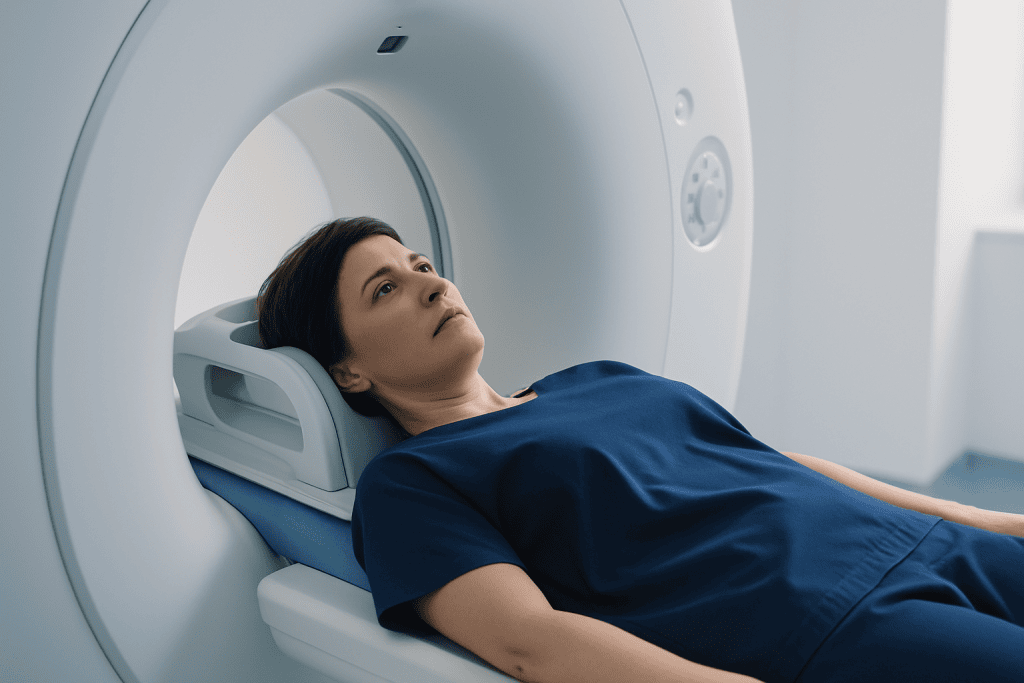
Several features of MRI can trigger anxiety. The scanner is often narrow, the test can take time, and staying still is essential for clear images. Loud knocking or buzzing sounds are also typical during the scan. Even when a patient knows the test is safe, the experience can still feel intense because the body reacts automatically to the environment.
Claustrophobia during MRI exists on a spectrum. Some people feel mildly uneasy but can complete the test with reassurance. Others may develop severe distress or panic, especially if they have had a previous difficult scan, another anxiety disorder, or strong sensitivity to noise, enclosed spaces, or loss of control.
Understanding the source of discomfort can help the team choose the best solution. For one person, the main issue may be the closed space. For another, it may be the noise, the need to stay still, or worry about the results. A clear conversation before the scan often makes the experience more manageable.
Symptoms of Claustrophobia During MRI

Claustrophobia during MRI can show up before the appointment, while entering the scanner room, or once the scan begins. Some people notice only nervousness, while others feel a stronger panic response. Symptoms can appear suddenly and may improve when the person sits up or leaves the scanner.
Common symptoms may include:
- Feeling trapped or unable to escape
- Rapid heartbeat or palpitations
- Shortness of breath or a sensation of not getting enough air
- Sweating, shaking, or dizziness
- Nausea or stomach discomfort
- An intense urge to move, speak, or stop the test
These symptoms can be distressing, but they do not usually mean the MRI itself is causing physical harm. Still, severe anxiety can prevent a person from lying still long enough for useful images. If this has happened before, it is important to tell the care team ahead of time so they can help plan a different approach.
Options That Can Make the Scan Easier
One of the most helpful options is choosing a different type of scanner when medically appropriate and available. Open MRI systems are designed to feel less enclosed than traditional tunnel-style units. Wide-bore MRI scanners are another common option; they still look like a tunnel, but the opening is larger and may feel more comfortable for many patients. Depending on the body part being examined, some centers can also position the patient so the head stays closer to the outside of the machine.
Comfort features can also make a meaningful difference. Many MRI centers provide ear protection, music, blankets, cushions, and two-way communication with the technologist. Knowing that the scan can be paused if needed may help some people feel more in control. In some cases, practicing the sequence beforehand and breaking the scan into shorter parts can reduce anxiety.
Relaxation techniques are often useful, especially for mild to moderate claustrophobia. Slow breathing, guided imagery, counting, progressive muscle relaxation, or listening to familiar music can help calm the body. Some patients benefit from closing their eyes before entering the scanner and keeping them closed throughout the test. Others prefer to focus on a fixed point, a mirror, or instructions from the technologist.
If claustrophobia is more severe, a doctor may recommend anti-anxiety medication or supervised sedation. This approach is not necessary for everyone, but it can be appropriate for selected patients. If sedation is planned, the patient may need fasting instructions and someone to accompany them home, depending on the type used. When an MRI is being performed to evaluate conditions involving the brain, spine, joints, or soft tissues, the care team may also discuss whether a different imaging method or a related test such as an MRI scan in a more suitable setting would be the best next step.
How to Prepare Before the Appointment
Preparation starts when the scan is booked. Patients should tell the imaging center if they have claustrophobia, a previous incomplete MRI, panic attacks, difficulty lying flat, chronic pain, or any condition that may make stillness difficult. This information gives the team time to plan the safest and most comfortable approach. It may also help to ask how long the scan will take, whether music is available, and whether an open or wide-bore scanner can be used.
It is also important to discuss implants, metal devices, hearing aids, insulin pumps, pacemakers, or a history of surgery. MRI safety screening is essential because the scanner uses a powerful magnet. Some patients may need a different protocol or another imaging test. If contrast material is planned, the team may also ask about kidney function, allergies, and pregnancy.
On the day of the appointment, comfortable clothing and simple routines can help. Arriving early allows time to settle in rather than rushing. Limiting caffeine beforehand may be helpful for some people because it can increase jitteriness. If a prescribed anti-anxiety medicine or sedation is part of the plan, it should be used only as directed by the doctor, with transportation arrangements made in advance if needed.
What Happens During the MRI
Before the scan begins, the technologist usually explains the process and positions the patient carefully on the MRI table. Ear protection is provided because MRI machines are loud. Depending on the area being examined, pads, straps, or cushions may be used to improve comfort and help reduce movement. The patient can speak with the technologist through an intercom during the test.
During the scan, staying still is very important because movement can blur the images and may mean parts of the exam need to be repeated. The machine makes rhythmic sounds as the pictures are taken. Each part of the scan often lasts a few minutes, with short pauses between sequences. Patients are commonly given a call button or another way to alert the staff if they need help.
For some conditions, MRI is one part of a broader diagnostic process. A doctor may compare MRI findings with physical examination, lab tests, or other imaging such as CT scan when appropriate. In certain cases involving ongoing pain or structural problems, the MRI may help investigate concerns related to herniated disc or brain tumor, depending on the symptoms and the body area being assessed.
After the Scan and Treatment Considerations
After a standard MRI, most people can return to normal activities right away. If contrast was used, the team may give simple instructions about hydration or what to watch for, although significant problems are uncommon. If sedation or anti-anxiety medicine was given, recovery may take longer, and activities such as driving may need to be avoided for the rest of the day according to medical advice.
The images are reviewed by a radiologist, who sends a report to the referring doctor. The next steps depend on the reason for the MRI. Some patients need no further treatment, while others may need follow-up imaging, medication, physical therapy, or specialist care based on the results.
For patients with severe claustrophobia, it can be useful to note what helped and what did not. This can make future imaging easier to plan. Near the end of the care pathway, patients who need further evaluation may seek support at centers such as Acibadem International, where multidisciplinary specialists and JCI-accredited hospitals diagnose and treat international patients using advanced imaging and coordinated care.
When to Speak With a Doctor
It is best to speak with a doctor or imaging center before the MRI if claustrophobia has caused a previous scan to be delayed, stopped, or avoided. Early planning can prevent unnecessary stress and reduce the chance of an incomplete exam. Patients should also ask for medical advice if they have severe anxiety disorders, breathing problems, chronic pain that makes lying still hard, or concerns about sedation.
Urgent medical advice is important if the MRI was ordered for serious symptoms such as sudden weakness, new seizures, severe headache, major injury, or possible stroke. In these cases, delaying imaging may affect care. The team can still work to improve comfort while keeping the diagnostic process timely.
Patients should never feel embarrassed about raising these concerns. Claustrophobia is common, and imaging teams are familiar with ways to help. Open communication allows the scan to be tailored to the person’s needs while maintaining safety and image quality.
Frequently asked questions
Can a person with claustrophobia still have an MRI?
Yes. Many people with claustrophobia complete an MRI successfully with planning and support. Options may include a wide-bore or open scanner, calming techniques, extra communication, or medication when medically appropriate.
What is the difference between open MRI and wide-bore MRI?
Open MRI is designed to feel less enclosed and may be more comfortable for some patients. Wide-bore MRI still has a tunnel shape, but the opening is larger than a traditional scanner. The best choice depends on the body area being examined and the image quality needed.
Can sedation be used for MRI claustrophobia?
Yes, sedation or anti-anxiety medication may be used for selected patients when a doctor recommends it. The decision depends on overall health, the type of scan, and the severity of anxiety. If sedation is planned, patients usually need specific instructions before and after the exam.
How can someone calm down during an MRI?
Helpful strategies may include slow breathing, guided imagery, listening to music, keeping the eyes closed, and focusing on the technologist's instructions. Some people also feel better when they know they can communicate with the staff at any time. Telling the team about anxiety before the scan is one of the most effective steps.
Is MRI safe if a person feels panic during the scan?
MRI itself is generally safe when proper screening is completed, but panic can make the experience very difficult. The main issue is often that movement or stopping the scan can affect image quality. If panic is likely, the scan should be planned in advance with the imaging team and doctor.
What should a patient say when booking the MRI?
It helps to say clearly that claustrophobia or panic symptoms are a concern, especially if a previous MRI was difficult or incomplete. The patient can also ask whether an open or wide-bore scanner is available and whether music, a support plan, or medication options can be discussed. Sharing this information early gives the team more flexibility.
References
- Radiological Society of North America
- American College of Radiology
- National Institute of Biomedical Imaging and Bioengineering
- National Health Service
- Mayo Clinic
This article is for general information only and is not a substitute for professional medical advice. Please consult a qualified doctor about your individual situation.
Joint and spine care in Turkey — expert assessment & treatment
JCI-accredited · board-certified surgeons · reply within 24h
Add us as a Preferred Source to see more of our trusted health content across Google Search, AI Overviews and Discover.