Mucoepidermoid Carcinoma: Symptoms, Causes, and Treatment Options

Mucoepidermoid carcinoma most commonly affects the major or minor salivary glands, especially the parotid gland. A painless lump in the face, jaw, mouth, or neck is a common sign, but symptoms vary by tumor location.
Key Takeaways
- Mucoepidermoid carcinoma most commonly affects the major or minor salivary glands, especially the parotid gland.
- A painless lump in the face, jaw, mouth, or neck is a common sign, but symptoms vary by tumor location.
- Diagnosis typically combines imaging, a tissue sample, and assessment of the cancer's grade and stage.
- Surgery is the main treatment for many localized tumors; radiation therapy may be recommended in selected cases.
- Low-grade tumors often have a more favorable outlook than high-grade tumors, but individual prognosis requires specialist assessment.
Mucoepidermoid carcinoma is an uncommon cancer that most often begins in a salivary gland, although it can develop in other mucus-producing tissues. Treatment and outlook depend largely on where the tumor starts, whether it has spread, and its microscopic grade.
Overview: what is mucoepidermoid carcinoma?
Mucoepidermoid carcinoma is a rare type of cancer that develops from cells that line glands and passages that produce mucus. It most often starts in the salivary glands, which make saliva and are located around the mouth, jaw, and throat. The parotid glands, found in front of and below each ear, are the most common site. It may also arise in smaller salivary glands in the lips, palate, tongue, throat, or nasal area.
Less commonly, mucoepidermoid carcinoma develops in other parts of the body that contain glandular tissue, such as the airways of the lungs. A tumor in one of these locations is assessed and treated according to its site of origin as well as its pathology. This article focuses mainly on salivary gland mucoepidermoid carcinoma.
Under a microscope, this cancer contains a mixture of mucus-producing cells, epidermoid cells that resemble squamous cells, and intermediate cells. Pathologists classify it as low, intermediate, or high grade based on features such as how abnormal the cells appear and how quickly the tumor seems likely to grow. Grade is important because it helps the clinical team estimate behavior and plan treatment.
Symptoms and signs to notice
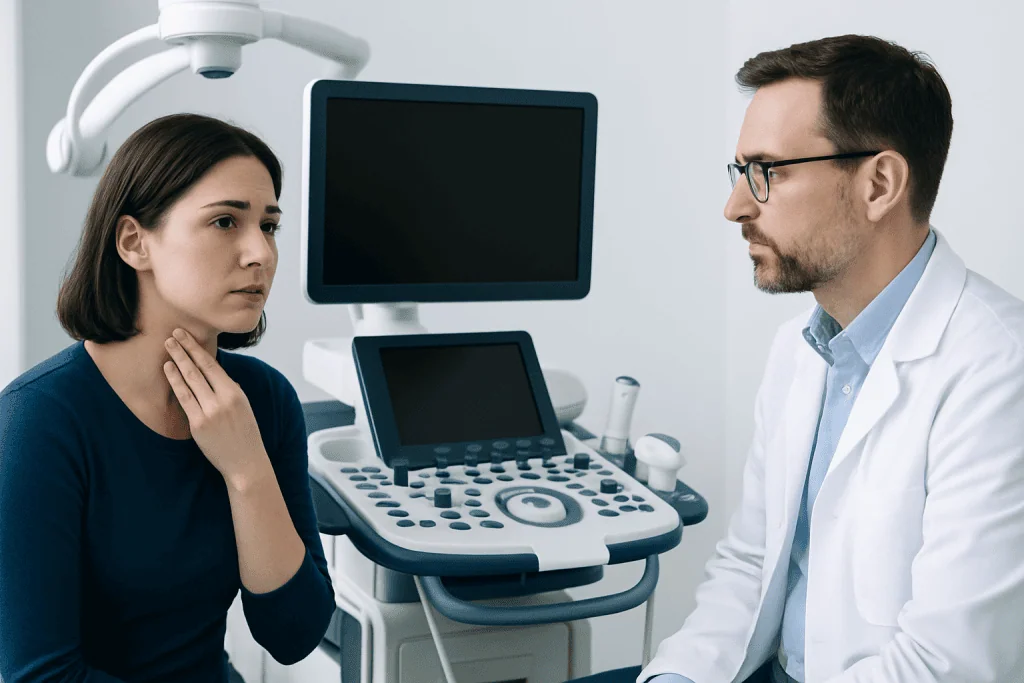
A slow-growing, painless lump in the cheek, near the ear, under the jaw, in the mouth, or in the neck can be the first noticeable sign. Many salivary gland lumps are not cancer, but any persistent or enlarging lump should be assessed by a clinician. Smaller tumors inside the mouth may look like a bluish, red, or normal-colored swelling and can sometimes be mistaken for a mucus cyst.
Symptoms depend on the tumor’s size and exact location. A mass may cause discomfort, pressure, difficulty chewing or swallowing, a change in voice, or reduced mouth opening. Tumors affecting the parotid area can occasionally affect the nearby facial nerve, causing facial weakness, asymmetry, numbness, or trouble closing an eye. These symptoms need prompt medical assessment, although they can also have causes other than cancer.
When the tumor begins in the lungs or airways, symptoms may include persistent cough, wheezing, shortness of breath, repeated chest infections, or coughing up blood. Some small tumors cause no symptoms and are found during tests performed for another reason. Symptoms alone cannot identify the tumor type, so examination and testing are essential.
Causes and risk factors
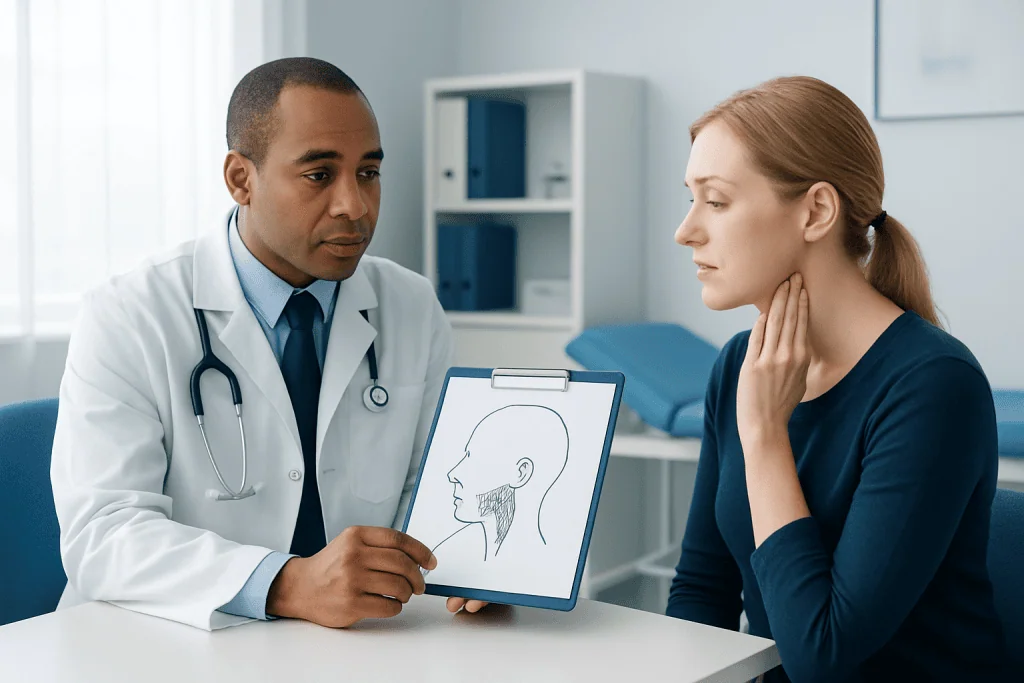
In most people, the precise cause of mucoepidermoid carcinoma is unknown. It is not considered contagious, and it usually does not result from something a person did or did not do. Most cases are sporadic, meaning they occur without a known inherited family pattern.
Some salivary gland mucoepidermoid carcinomas have genetic changes within the tumor cells, including a rearrangement involving the MAML2 gene. This is an acquired change in the cancer rather than a mutation that a person necessarily inherited or can pass to children. Testing for molecular changes may sometimes help pathologists confirm a diagnosis, particularly when the appearance of a tumor is uncertain.
Prior radiation exposure to the head and neck is a recognized risk factor for salivary gland cancers overall, although most people with mucoepidermoid carcinoma have no history of radiation treatment. Age, sex, tobacco, alcohol, viral infections, and environmental exposures may be relevant to some head and neck cancers, but their specific roles in mucoepidermoid carcinoma are not always clear. A person should avoid assuming that one risk factor explains why a cancer developed.
How diagnosis and staging are performed
Assessment usually begins with a medical history and physical examination. An ear, nose, and throat specialist, head and neck surgeon, oral and maxillofacial specialist, or other appropriate clinician examines the lump and checks nearby lymph nodes. They also assess facial movement, mouth function, swallowing, and any symptoms involving the ears, nose, throat, or breathing.
Imaging helps define the size of a tumor and its relationship to nearby nerves, bones, blood vessels, and lymph nodes. Ultrasound may be useful for a neck or salivary gland lump. Magnetic resonance imaging (MRI) or computed tomography (CT) can provide more detailed information, while chest imaging or other scans may be needed when there is concern about spread or when the tumor is located in an airway.
A diagnosis requires examination of cells or tissue by a pathologist. Fine-needle aspiration uses a thin needle to collect cells and can be a useful first test for a salivary gland mass. In some situations, a core needle biopsy or tissue obtained during surgery is needed for a more definite diagnosis and grading. The pathology report identifies the tumor type and grade and may include additional tests where appropriate.
Staging describes the extent of the cancer, including tumor size, involvement of nearby tissues or lymph nodes, and whether it has spread to distant organs. Grade and stage are related but different: grade describes the tumor’s microscopic features, while stage describes its anatomical extent. Both guide treatment discussions and follow-up planning.
Treatment options and follow-up care
Treatment is individualized through discussion among specialists, often including head and neck surgeons, medical oncologists, radiation oncologists, radiologists, pathologists, dentists, speech and swallowing professionals, and rehabilitation teams. The main goals are to remove or control the cancer while preserving function and appearance whenever safely possible.
Surgery is the primary treatment for many localized salivary gland mucoepidermoid carcinomas. The procedure depends on the gland and tissues involved. For a parotid tumor, the surgeon may remove part or all of the gland while carefully working around the facial nerve. Nearby lymph nodes may be removed or sampled when a tumor is high grade, advanced, or associated with suspicious nodes. Reconstructive procedures may be considered when needed after removal of larger tumors.
Radiation therapy may be advised after surgery when there are features associated with a higher chance of recurrence, such as a high-grade tumor, close or involved surgical margins, spread to lymph nodes, nerve involvement, or more extensive local growth. In selected situations where surgery is not suitable, radiation may be used as the main local treatment. Chemotherapy, targeted therapy, or immunotherapy may be considered for recurrent, unresectable, or metastatic disease, often within specialist-led care; their role depends on the individual tumor and available evidence.
Follow-up is important because recurrence can occur, sometimes years after treatment. Visits usually include an examination of the treatment area and neck, review of symptoms, and imaging when clinically indicated. Care may also address dry mouth, dental protection, speech, swallowing, facial movement, nutrition, pain, and emotional wellbeing. Acibadem International’s multidisciplinary specialists and JCI-accredited hospitals diagnose and treat salivary gland cancers for international patients.
Living well during and after treatment
There is no proven lifestyle measure that can prevent every case of mucoepidermoid carcinoma or guarantee that it will not return. However, general health measures can support recovery and long-term wellbeing. These include avoiding tobacco, limiting alcohol, eating a balanced diet that meets individual nutritional needs, staying physically active within a clinician’s advice, and attending scheduled follow-up appointments.
Dental care is especially important for people who have had surgery or radiation involving the mouth, jaw, or salivary glands. Reduced saliva can increase the risk of tooth decay, oral infections, and discomfort. A dentist experienced in caring for people affected by head and neck cancer can recommend preventive strategies and coordinate treatment with the oncology team, particularly before radiation therapy.
Speech and swallowing changes may improve with targeted therapy from a speech-language pathologist. People experiencing facial weakness may benefit from eye protection advice, facial rehabilitation, or referral to an appropriate specialist. It is reasonable to discuss fatigue, anxiety, changes in appearance, work, fertility concerns, or practical travel needs with the care team; supportive care is part of cancer treatment at every stage.
When to seek medical care
A person should arrange a medical appointment for a lump in the face, mouth, jaw, neck, or near the ear that lasts more than two to three weeks, enlarges, becomes firm, or does not have an obvious explanation. Assessment is also appropriate for a mouth sore or swelling that does not heal, unexplained persistent pain in the salivary gland area, difficulty swallowing, or ongoing voice changes.
More urgent assessment is needed for new facial weakness or numbness, rapid enlargement of a lump, significant trouble breathing or swallowing, or coughing up blood. These symptoms do not always mean cancer, but they should not be ignored. People previously treated for mucoepidermoid carcinoma should contact their clinical team if they notice a new lump, persistent new pain, unexplained weight loss, or any symptom that concerns them.
Early evaluation does not mean that a person has cancer. It is the safest way to identify the cause of symptoms and, if treatment is needed, to create an appropriate plan without unnecessary delay.
Frequently asked questions
Is mucoepidermoid carcinoma a common cancer?
No. Mucoepidermoid carcinoma is uncommon, although it is one of the more frequently diagnosed malignant tumors of the salivary glands. It can occur in adults and children, but the clinical approach depends on the person's age, tumor location, grade, and stage.
Can mucoepidermoid carcinoma be cured?
Many localized cases can be treated successfully, particularly when the tumor is low grade and can be completely removed. However, each person's outlook is different, and some tumors require additional treatment or can recur. The treating team can explain the expected outlook using the pathology and staging results.
Does a parotid gland lump mean mucoepidermoid carcinoma?
No. Most lumps in or near the parotid gland are not mucoepidermoid carcinoma, and some are benign salivary gland tumors or non-gland conditions. Imaging and needle sampling or biopsy are used to determine the cause.
Does mucoepidermoid carcinoma spread?
It can spread, but the likelihood varies significantly. Low-grade tumors are generally less likely to spread than high-grade tumors, while higher-grade or more advanced cancers may involve lymph nodes or distant organs. Staging tests help determine whether spread is present.
Is radiation therapy always needed after surgery?
No. Some people with completely removed, low-grade, early-stage tumors may not need radiation therapy. Radiation is more often considered when pathology findings suggest a higher risk of recurrence, such as high grade, involved margins, nerve involvement, or lymph node spread.
Is mucoepidermoid carcinoma inherited?
Usually, no. Most cases are sporadic and are not caused by an inherited genetic condition. Tumor-specific genetic changes may be found during laboratory testing, but these changes generally develop in the cancer cells and do not mean relatives are at increased risk.
References
- National Cancer Institute
- American Cancer Society
- National Comprehensive Cancer Network
- American Society of Clinical Oncology
- World Health Organization Classification of Head and Neck Tumours
This article is for general information only and is not a substitute for professional medical advice. Please consult a qualified doctor about your individual situation.
Oncology care in Turkey — second opinion and treatment plan
JCI-accredited · board-certified surgeons · reply within 24h
Add us as a Preferred Source to see more of our trusted health content across Google Search, AI Overviews and Discover.