Acne Rosacea vs Lupus: Key Differences and How Doctors Tell Them Apart

Rosacea commonly causes persistent central facial redness, visible blood vessels, flushing, and acne-like bumps. A lupus malar, or butterfly, rash often spreads over both cheeks and the bridge of the nose and may occur with fatigue, joint symptoms, or sun sensitivity.
Key Takeaways
- Rosacea commonly causes persistent central facial redness, visible blood vessels, flushing, and acne-like bumps.
- A lupus malar, or butterfly, rash often spreads over both cheeks and the bridge of the nose and may occur with fatigue, joint symptoms, or sun sensitivity.
- A facial rash alone does not diagnose lupus, and blood tests such as ANA must be interpreted alongside symptoms and examination findings.
- Rosacea and lupus require different treatment approaches, so an accurate diagnosis matters.
- New, persistent, worsening, or unexplained facial rashes should be assessed by a qualified clinician.
Acne rosacea vs lupus can be difficult to distinguish because both may cause redness across the cheeks and nose. Rosacea is a chronic inflammatory skin condition, while lupus is an autoimmune disease that can affect the skin and sometimes other parts of the body; a clinician can usually tell them apart by examining the rash pattern, symptoms, medical history, and, when needed, tests.
Acne Rosacea vs Lupus: A Side-by-Side Comparison
Acne rosacea vs lupus is not usually a choice a person can make from a photograph alone. Rosacea, often casually called acne rosacea, is an inflammatory condition that mainly affects the face. Lupus is an autoimmune disease; one form of its skin rash can resemble rosacea, but lupus may also involve the joints, kidneys, blood cells, or other organs.
| Feature | Rosacea | Lupus facial rash |
|---|---|---|
| Typical appearance | Persistent redness, flushing, small visible vessels, and sometimes red bumps or pus-filled spots | Flat or slightly raised red-to-violaceous rash, often described as a butterfly pattern |
| Usual distribution | Central face: cheeks, nose, forehead, and chin; may involve the folds beside the nose | Cheeks and bridge of the nose; classically may spare the folds beside the nose |
| Common triggers | Heat, sunlight, alcohol, spicy foods, exercise, stress, and irritating skin products | Sunlight may trigger or worsen rashes; some people have broader lupus flares |
| Other skin findings | Burning, stinging, dryness, eye irritation, or skin thickening in some cases | Other sun-sensitive rashes, mouth or nose sores, scalp hair loss, or disc-shaped scarring lesions may occur |
| Symptoms beyond the skin | Usually limited to skin and eyes | May include fatigue, joint pain or swelling, fevers, chest pain, or other systemic symptoms |
| How it is confirmed | Usually clinical examination | Clinical assessment supported by selected blood, urine, and sometimes skin tests |
These are useful patterns rather than absolute rules. Rosacea can affect areas beyond the cheeks, and lupus rashes do not always have the classic butterfly appearance. Some people also have more than one skin condition, which is why persistent facial redness deserves a careful assessment rather than self-diagnosis.
What Rosacea Usually Looks and Feels Like
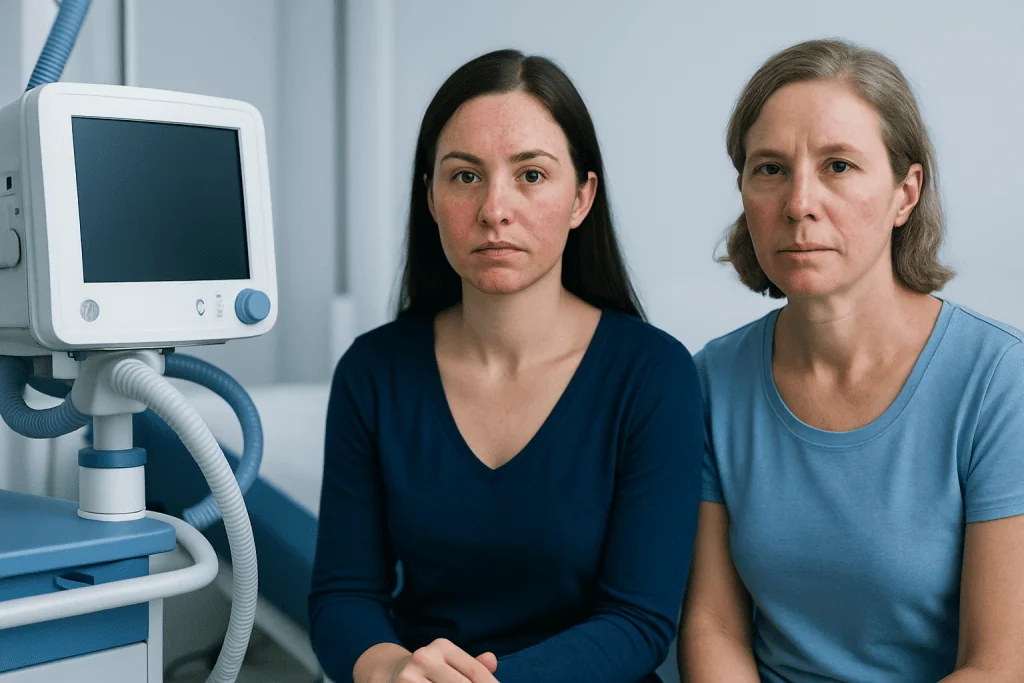
Rosacea usually begins with episodes of flushing or blushing that become more frequent and longer lasting over time. The cheeks, nose, chin, and forehead may look red, and fine visible blood vessels can develop. Many people notice warmth, burning, stinging, tightness, dryness, or increased sensitivity to ordinary skincare products.
Inflammatory rosacea can produce small red bumps and pus-filled spots that resemble acne. However, rosacea generally does not cause blackheads or whiteheads, which are common in acne vulgaris. The term “acne rosacea” is still widely used, but it can be misleading because rosacea is not acne and needs a different management approach.
Rosacea may also affect the eyes. Grittiness, watery or bloodshot eyes, eyelid irritation, light sensitivity, or recurrent stye-like bumps can suggest ocular rosacea. Eye symptoms should be discussed promptly with a clinician, particularly if there is eye pain, marked light sensitivity, or any change in vision.
How Lupus Can Affect the Skin
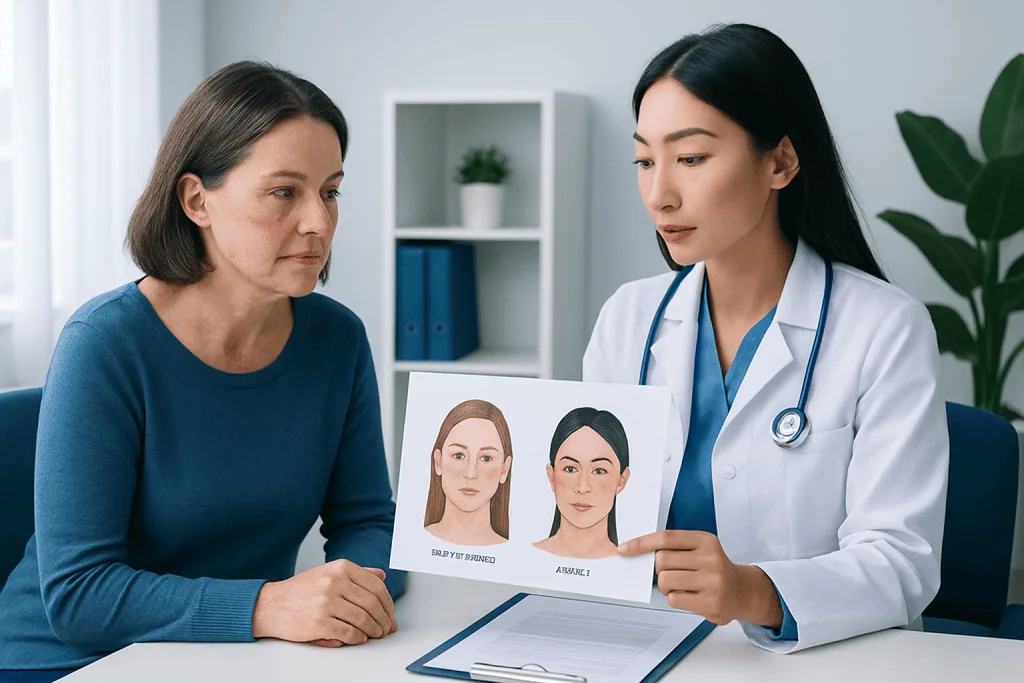
Systemic lupus erythematosus, often called lupus, is an autoimmune condition in which the immune system can cause inflammation in different parts of the body. A malar rash is one possible skin sign. It often appears across both cheeks and over the bridge of the nose, creating a butterfly-like shape, and it may become more noticeable after ultraviolet light exposure.
Unlike rosacea, a lupus rash is often not associated with facial flushing, visible surface vessels, or acne-like pustules. The rash may be smooth and can be accompanied by swelling. In the classic description, the skin folds running from the nose to the corners of the mouth are spared, but this feature alone cannot confirm or exclude lupus.
Lupus can also cause other skin changes, including sun-sensitive rashes on the arms, chest, or upper back; painless sores in the mouth or nose; and hair thinning or hair loss. Some people develop discoid lupus lesions, which are raised, scaly areas that can leave pigment changes or scars. A dermatologist or rheumatologist can help identify the type of rash and whether it is connected to systemic lupus.
How Clinicians Tell Rosacea and Lupus Apart
A clinician starts by listening to the person’s story and examining the entire skin, not only the facial rash. They may ask when the redness began, whether it comes and goes, what seems to trigger it, whether the skin burns or stings, and which cosmetics, creams, or medicines have been used. A history of flushing after heat, alcohol, exercise, or spicy foods supports rosacea, while marked sun sensitivity and symptoms affecting other body systems may raise consideration of lupus.
Questions about fatigue, unexplained fever, joint pain or swelling, mouth ulcers, chest discomfort with breathing, changes in urine, numbness, or color changes in the fingers can help identify symptoms that may need a lupus evaluation. These symptoms have many possible causes, so their presence does not mean that a person has lupus. Their pattern, duration, examination findings, and test results all matter.
Rosacea is commonly diagnosed from its typical appearance and history, without a laboratory test. If lupus is suspected, a clinician may order blood and urine tests, which can include an antinuclear antibody (ANA) test and more specific antibody tests. An ANA result by itself cannot diagnose lupus because it can also be positive in healthy people and in other conditions. In uncertain cases, a dermatologist may take a small skin biopsy to examine the rash under a microscope.
Other conditions can also resemble either rosacea or lupus, including contact dermatitis, seborrheic dermatitis, perioral dermatitis, photosensitive drug reactions, and acne. This is one reason it is best to avoid starting strong steroid creams or prescription acne treatments without guidance: some products can worsen rosacea or alter the appearance of a rash that needs evaluation.
What to Do for Each Condition
If rosacea is diagnosed, treatment focuses on reducing inflammation, improving visible redness and bumps, protecting the skin barrier, and identifying personal triggers. Gentle fragrance-free cleansing, regular moisturizing, and daily broad-spectrum sunscreen are important foundations. A clinician may recommend topical medicines, oral medicines for more significant inflammation, or selected procedures for persistent visible vessels or redness.
Trigger patterns vary. Keeping a simple diary of meals, weather, activities, skincare products, and flares may help a person identify reliable triggers without unnecessarily restricting everyday life. Hot drinks, intense heat, alcohol, spicy food, stress, and sunlight are common triggers, but not every trigger applies to every person.
If lupus is diagnosed or strongly suspected, care is individualized according to the organs involved and the severity of inflammation. Sun protection is particularly important, including protective clothing and broad-spectrum sunscreen. A rheumatologist and dermatologist may coordinate treatments that control skin disease and, when necessary, protect other organs; treatment may include topical therapies, antimalarial medicines, or immune-modifying medicines prescribed and monitored by the specialist.
Neither rosacea nor lupus should be managed by relying on social media images or over-the-counter treatments alone when symptoms are persistent. A treatment plan should account for pregnancy plans, other medical conditions, current medicines, eye symptoms, and the exact type of skin changes present.
Everyday Skin Care While Waiting for an Assessment
A simple routine is usually the safest approach while a facial rash is being evaluated. Washing with lukewarm rather than hot water, using a mild non-abrasive cleanser, patting the skin dry, and applying a bland moisturizer can reduce irritation. Broad-spectrum sunscreen with SPF 30 or higher is sensible for most people, especially when sunlight appears to worsen the rash.
It can help to pause newly introduced products, harsh scrubs, alcohol-based toners, fragranced products, and strong exfoliating acids if they cause burning or stinging. Cosmetics labeled for sensitive skin may be easier to tolerate, though even gentle products can irritate some individuals. Patch-testing a new product on a small area first can be useful.
People should not stop prescribed lupus medicines or other long-term treatments because of a rash without speaking to the prescribing clinician. Conversely, topical corticosteroids are not routinely appropriate for rosacea and may worsen it when used repeatedly on the face. Bringing photographs of the rash during flares and a list of products and medications to an appointment can make diagnosis easier.
When to Seek Medical Care
Medical assessment is appropriate for facial redness or a rash that lasts more than a few weeks, repeatedly returns, spreads, causes significant discomfort, or does not improve after simplifying skincare. It is also important to seek advice before using prescription-strength creams, oral antibiotics, or immune-modifying medicines. A primary care clinician or dermatologist can assess common causes and arrange further review when needed.
More timely assessment is advisable if a facial rash occurs with persistent fatigue, joint pain or swelling, unexplained fevers, mouth or nose sores, unusual hair loss, chest pain, shortness of breath, swelling of the legs, or changes in urine. These signs do not necessarily indicate lupus, but they warrant a broader medical evaluation.
Urgent care is needed for sudden facial swelling with trouble breathing, a rapidly spreading blistering rash, severe eye pain, or vision changes. For international patients, Acibadem International’s multidisciplinary specialists and JCI-accredited hospitals can evaluate facial skin conditions and coordinate dermatology, rheumatology, and eye care when appropriate.
Frequently asked questions
Can rosacea be mistaken for lupus?
Yes. Both conditions can cause redness over the cheeks and nose, especially after sun exposure. Rosacea more often causes flushing, visible blood vessels, burning, and acne-like bumps, while lupus may be associated with symptoms beyond the skin. A clinician can evaluate the full pattern rather than relying on the rash alone.
Does a butterfly rash always mean lupus?
No. A butterfly-shaped facial rash can have causes other than lupus, including rosacea, dermatitis, and reactions to products or medicines. Lupus is diagnosed from a combination of symptoms, examination findings, and selected tests, not from a rash pattern alone.
Does lupus rash itch or burn?
A lupus rash may be symptom-free, mildly itchy, or uncomfortable, depending on its type and location. Rosacea is more often associated with burning, stinging, warmth, and sensitivity to skincare products. Sensation alone is not enough to distinguish the conditions.
Can an ANA test diagnose lupus?
No. ANA is a useful screening test when symptoms and examination findings raise suspicion for an autoimmune condition, but a positive result does not prove lupus. Clinicians interpret it with the person’s medical history and, if needed, more specific blood, urine, or skin tests.
Can rosacea and lupus occur together?
It is possible for a person to have rosacea and an autoimmune condition, including lupus, although one does not automatically cause the other. New or changing symptoms should be reviewed rather than assumed to be part of a known diagnosis. This helps ensure that each condition is managed appropriately.
What type of doctor treats a possible lupus or rosacea rash?
A dermatologist is well placed to assess persistent facial rashes and diagnose rosacea or other skin conditions. If lupus is suspected, a rheumatologist may be involved to evaluate possible effects beyond the skin. Eye specialists may also be needed when there are significant eye symptoms.
References
- American Academy of Dermatology
- American College of Rheumatology
- National Institute of Arthritis and Musculoskeletal and Skin Diseases
- National Rosacea Society
- Mayo Clinic
This article is for general information only and is not a substitute for professional medical advice. Please consult a qualified doctor about your individual situation.
Rosacea in Turkey — costs, top hospitals & a free quote
JCI-accredited · board-certified surgeons · reply within 24h
Add us as a Preferred Source to see more of our trusted health content across Google Search, AI Overviews and Discover.