Multiple Sleep Latency Test: What to Expect and What the Results Can Show
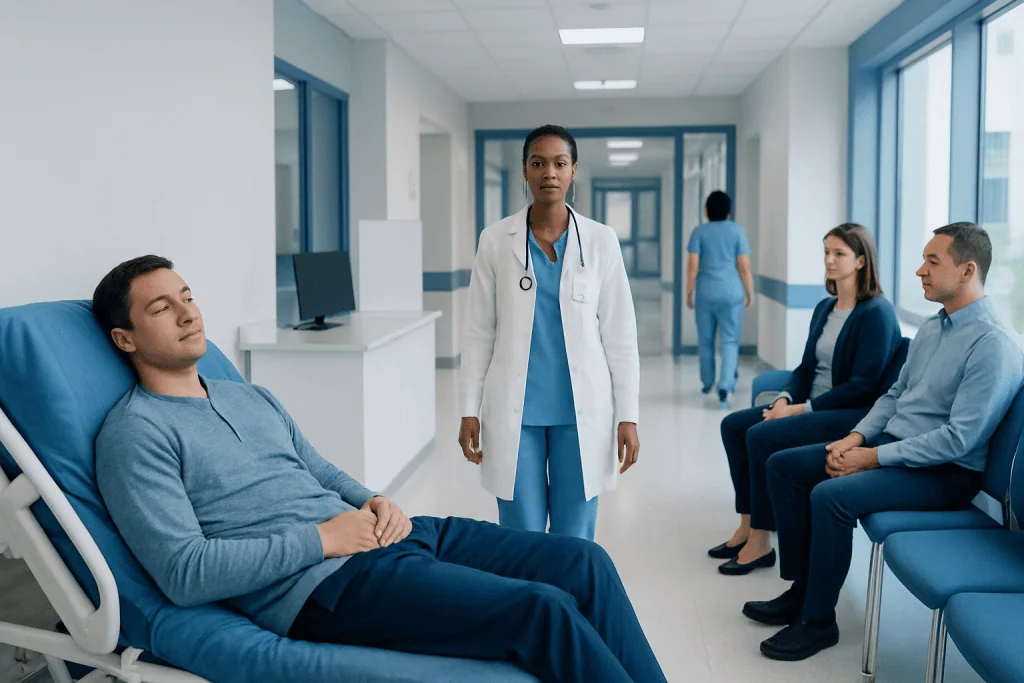
The Multiple Sleep Latency Test is usually done the day after an overnight sleep study. It measures how quickly a person falls asleep during several daytime nap opportunities.
Key Takeaways
- The Multiple Sleep Latency Test is usually done the day after an overnight sleep study.
- It measures how quickly a person falls asleep during several daytime nap opportunities.
- MSLT results can support the diagnosis of narcolepsy and help assess excessive daytime sleepiness.
- Medications, caffeine, sleep deprivation, and irregular sleep schedules can affect the results.
- Careful preparation helps make the test more accurate and useful.
A Multiple Sleep Latency Test is a daytime sleep study that measures how quickly a person falls asleep during scheduled naps. It is most often used to evaluate excessive daytime sleepiness and to help diagnose narcolepsy and certain other sleep-related conditions.
Overview
The Multiple Sleep Latency Test, often called the MSLT, is a specialized daytime sleep test. It is designed to measure a person’s level of daytime sleepiness by checking how quickly they fall asleep in a quiet setting during several scheduled nap periods. The test is commonly performed in a sleep laboratory and usually follows an overnight sleep study called polysomnography.
The MSLT is not a general screening test for poor sleep. Instead, it is used when a sleep specialist needs objective information about excessive daytime sleepiness, especially when conditions such as narcolepsy are suspected. By looking at sleep onset and the pattern of sleep stages during naps, the test can provide helpful clues about how the brain regulates sleep and wakefulness.
This test is especially valuable because symptoms such as tiredness, fatigue, and sleepiness can feel similar but may have different causes. Someone may feel exhausted because of stress, insomnia, or a medical condition, while another person may have a true tendency to fall asleep unintentionally during the day. The MSLT helps distinguish these possibilities as part of a broader sleep evaluation.
Why the Test Is Done
The MSLT is most often used to investigate excessive daytime sleepiness that is not fully explained by lifestyle factors alone. A doctor may recommend it when a person regularly falls asleep during the day, struggles to stay alert in quiet situations, or has episodes that suggest a disorder of sleep-wake regulation.
One of the main reasons for the test is to help diagnose narcolepsy, a neurological sleep disorder that affects the brain’s control of sleep and wakefulness. In some people, symptoms may include sudden sleep attacks, dream-like experiences when falling asleep or waking up, sleep paralysis, or episodes of muscle weakness triggered by emotions. The MSLT can be an important part of assessing narcolepsy.
The test may also be used when idiopathic hypersomnia is being considered. This condition involves significant daytime sleepiness even when a person appears to be getting enough sleep. In addition, the MSLT may help a sleep specialist better understand persistent sleepiness after other causes, such as obstructive sleep apnea, have been evaluated and appropriately treated.
Because other sleep disorders can affect daytime alertness, the overnight study done before the MSLT is essential. It helps identify problems such as sleep apnea, periodic limb movements, or insufficient sleep during the night, all of which can influence the interpretation of the daytime results.
How to Prepare for an MSLT

Preparation is an important part of getting reliable MSLT results. In the days or weeks before the test, a sleep specialist may ask the patient to keep a sleep diary and, in some cases, wear an actigraphy device that tracks sleep-wake patterns. This helps confirm that the person has been following a regular schedule and getting enough sleep before testing.
Some medications and substances can change sleepiness or alter REM sleep, the stage in which dreaming commonly occurs. The doctor may review prescription medicines, over-the-counter products, herbal supplements, caffeine, nicotine, and alcohol before the test. Patients should never stop medications on their own, but they should follow the sleep specialist’s instructions carefully if adjustments are recommended.
It is also important to avoid sleep deprivation before the test. Staying up late, working night shifts, or changing sleep schedules shortly beforehand can make a person appear sleepier than usual and reduce the test’s accuracy. For this reason, the MSLT is typically scheduled only when a fairly stable sleep pattern can be documented.
On the testing day, the patient should usually bring comfortable clothing and be prepared to spend most of the day in the sleep center. Meals are often light and scheduled between naps, and stimulating activities may be limited so that the conditions remain as standardized as possible.
What to Expect During the Test
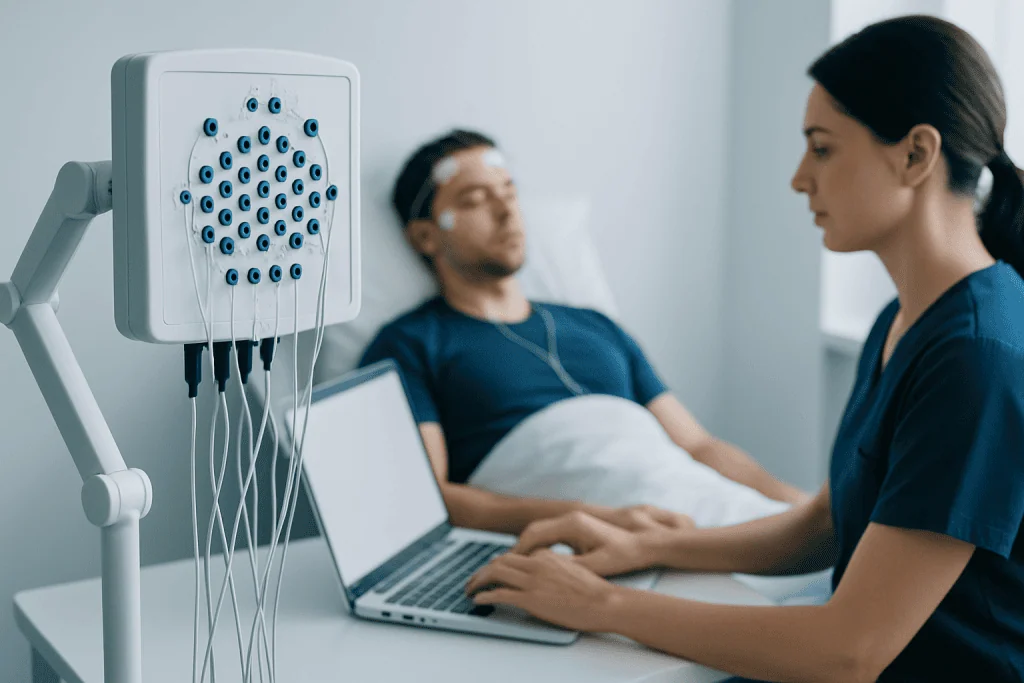
The MSLT is usually performed during the day immediately after an overnight polysomnography study. During the overnight portion, sensors are placed to monitor brain waves, eye movements, muscle activity, breathing, heart rhythm, and oxygen levels. If the overnight study shows too little sleep or another untreated issue that could affect the results, the daytime test may be postponed.
For the MSLT itself, the patient is given several nap opportunities, typically spaced about two hours apart. In each session, the person lies down in a dark, quiet room and is asked to try to fall asleep. Sensors remain in place to record when sleep begins and which sleep stages occur. If the person does not fall asleep within a set period, that nap trial ends. If sleep occurs, the nap is allowed to continue for a brief, standardized interval.
Most people have four or five nap trials over the course of the day. Between naps, they stay awake at the sleep center. Staff members help ensure that the patient does not doze off between sessions, because unplanned sleep can affect the test results. Reading, phone use, and other activities may be limited depending on the sleep laboratory’s protocol.
The test is painless, but some patients find it unusual to be asked to nap on schedule in a clinical setting. Even so, the information collected can be very useful. For people undergoing a comprehensive sleep study evaluation, the MSLT often provides the next step in understanding unexplained daytime sleepiness.
What the Results Can Show
The main result of the MSLT is the average time it takes the patient to fall asleep across the nap opportunities, often called mean sleep latency. In general, shorter sleep latency means greater physiologic sleepiness. The study also looks for whether REM sleep begins unusually quickly during naps, which can be an important finding in certain conditions.
Results are not interpreted in isolation. A sleep specialist considers the MSLT together with symptoms, medical history, the overnight sleep study, medication use, and recent sleep patterns. This matters because many factors can influence how quickly a person falls asleep during the day. Anxiety, unfamiliar surroundings, recent sleep loss, shift work, and certain medicines can all affect the outcome.
When the MSLT shows marked daytime sleepiness along with multiple naps that enter REM sleep very early, the pattern may support a diagnosis of narcolepsy in the right clinical setting. If significant sleepiness is present without the typical REM findings, the doctor may consider other diagnoses, including idiopathic hypersomnia or insufficient sleep. The test can also help show when symptoms are less likely to be caused by a central hypersomnolence disorder.
Although the MSLT is an important diagnostic tool, it does not answer every question on its own. Some people need additional assessment, follow-up, or other testing depending on the overall picture. In selected cases, doctors may combine findings from the MSLT with neurology consultation and further sleep medicine evaluation.
Limits of the Test and Related Diagnostic Steps
Like any medical test, the MSLT has limitations. It is very useful when performed under proper conditions, but it can be affected by poor sleep the night before, untreated sleep disorders, medication effects, substance use, or an irregular sleep schedule. For that reason, specialists are careful about preparation and timing.
The test also measures sleepiness under controlled laboratory conditions, which may not perfectly reflect every person’s everyday experience. Some people feel profoundly sleepy but have borderline results, while others may not fall asleep easily in a lab despite significant symptoms outside it. This is one reason why doctors place strong emphasis on the patient’s history and the overnight study.
When results are unclear, the next steps depend on the situation. A doctor may review whether there was adequate sleep before testing, whether another sleep disorder was present, or whether repeat testing is needed. In some patients, further workup may focus on conditions such as circadian rhythm disorders, mental health concerns, medication effects, or persistent symptoms after treatment for insomnia or other sleep problems.
Comprehensive care often involves both diagnostic testing and careful clinical follow-up. If needed, sleep specialists may recommend related assessments such as electroencephalography when symptoms raise questions about seizure-like events or other neurological causes, although this is separate from standard MSLT evaluation.
After the Test, Treatment, and When to See a Doctor
After the MSLT is completed, the sensors are removed and the data are reviewed by trained sleep professionals and a physician. Results are not usually given immediately, because the recordings must be scored and interpreted carefully. The sleep specialist will explain what the findings mean and whether they support a specific diagnosis or point toward additional evaluation.
Treatment depends on the underlying cause of daytime sleepiness. If narcolepsy or idiopathic hypersomnia is diagnosed, management may include behavioral strategies, careful sleep scheduling, and medications prescribed by a qualified physician. If the issue is related to another condition, treatment may focus on that problem first, such as optimizing care for breathing-related sleep disorders, insomnia, or medication side effects.
Good self-care remains important even when a formal disorder is diagnosed. Regular sleep and wake times, adequate nighttime sleep, caution with driving or operating machinery when sleepy, and avoiding alcohol or sedating substances unless advised by a doctor can all help reduce risks. Patients should seek medical advice if they have persistent daytime sleepiness, sudden sleep episodes, dream-like hallucinations around sleep, sleep paralysis, or weakness triggered by strong emotions.
If symptoms interfere with work, school, or safety, prompt evaluation is especially important. Acibadem International’s multidisciplinary specialists and JCI-accredited hospitals diagnose and treat sleep-related conditions for international patients, with care guided by a full neurological and sleep medicine assessment.
Frequently asked questions
What is a Multiple Sleep Latency Test used for?
A Multiple Sleep Latency Test is used to measure how sleepy a person is during the day under controlled conditions. It is most often used to help diagnose narcolepsy and to evaluate unexplained excessive daytime sleepiness.
Is the MSLT the same as an overnight sleep study?
No. The MSLT is a daytime test, while the overnight sleep study records sleep during the night. The overnight study usually comes first so that doctors can check for other sleep disorders that might affect daytime sleepiness and the MSLT results.
How long does a Multiple Sleep Latency Test take?
The test usually takes most of the day. It involves several scheduled nap opportunities, typically four or five, spaced about two hours apart after the overnight study.
Can medications affect MSLT results?
Yes. Some medications can increase alertness, cause drowsiness, or change REM sleep, all of which may influence the findings. Patients should discuss all medicines and supplements with their doctor before the test and should not stop any treatment unless instructed.
What happens if I cannot fall asleep during the naps?
That information is still useful. The test is designed to measure how long it takes to fall asleep, and not falling asleep during a nap opportunity can help show that excessive physiological sleepiness may be less likely under those conditions.
Can the MSLT diagnose narcolepsy by itself?
No. The MSLT is an important tool, but it is only one part of the diagnostic process. Doctors also consider symptoms, medical history, sleep schedules, medication use, and the overnight sleep study before making a diagnosis.
References
- American Academy of Sleep Medicine
- National Heart, Lung, and Blood Institute
- National Institute of Neurological Disorders and Stroke
- MedlinePlus
- Mayo Clinic
This article is for general information only and is not a substitute for professional medical advice. Please consult a qualified doctor about your individual situation.
Explore treatments in Turkey — costs, top hospitals & a free quote
JCI-accredited · board-certified surgeons · reply within 24h
Add us as a Preferred Source to see more of our trusted health content across Google Search, AI Overviews and Discover.