Muscle Diseases vs Nerve Diseases: What Symptoms Can Tell You

Both muscle and nerve disorders may cause weakness, but they often affect the body in different ways. Numbness, tingling, burning pain, and reduced reflexes are more suggestive of nerve involvement.
Key Takeaways
- Both muscle and nerve disorders may cause weakness, but they often affect the body in different ways.
- Numbness, tingling, burning pain, and reduced reflexes are more suggestive of nerve involvement.
- Muscle diseases more often cause trouble climbing stairs, lifting the arms, or rising from a chair without major sensory symptoms.
- Diagnosis may include a neurological exam, blood tests, EMG, nerve conduction studies, imaging, and sometimes genetic testing or biopsy.
- Early assessment can help guide treatment, rehabilitation, and long-term symptom control.
Muscle and nerve diseases can cause similar problems, especially weakness, fatigue, and difficulty with movement. The pattern of symptoms such as numbness, pain, muscle loss, reflex changes, and balance problems often provides important clues, but a medical evaluation is needed to identify the exact cause.
Overview: how muscle and nerve diseases differ
Muscles and nerves work as a team. Nerves carry signals from the brain and spinal cord to the muscles, and the muscles respond by contracting to create movement. When either part of this system is affected, a person may notice weakness, fatigue, cramps, balance problems, or difficulty performing everyday tasks.
Muscle diseases usually begin in the muscle tissue itself. These conditions are called myopathies and can be inherited, inflammatory, metabolic, medication-related, or linked to hormone or autoimmune disorders. Nerve diseases may affect the peripheral nerves, nerve roots, the connection between nerve and muscle, or motor neurons. Because the symptoms can overlap, it is not always possible to tell the difference based on one sign alone.
Even so, the pattern of symptoms often offers useful clues. For example, a person with a muscle disorder may mainly have weakness without numbness, while a person with a nerve disorder may also develop tingling, burning pain, or reduced sensation. A careful history and examination help doctors decide whether symptoms point more toward muscle, nerve, or sometimes both.
What symptoms can suggest a muscle disease
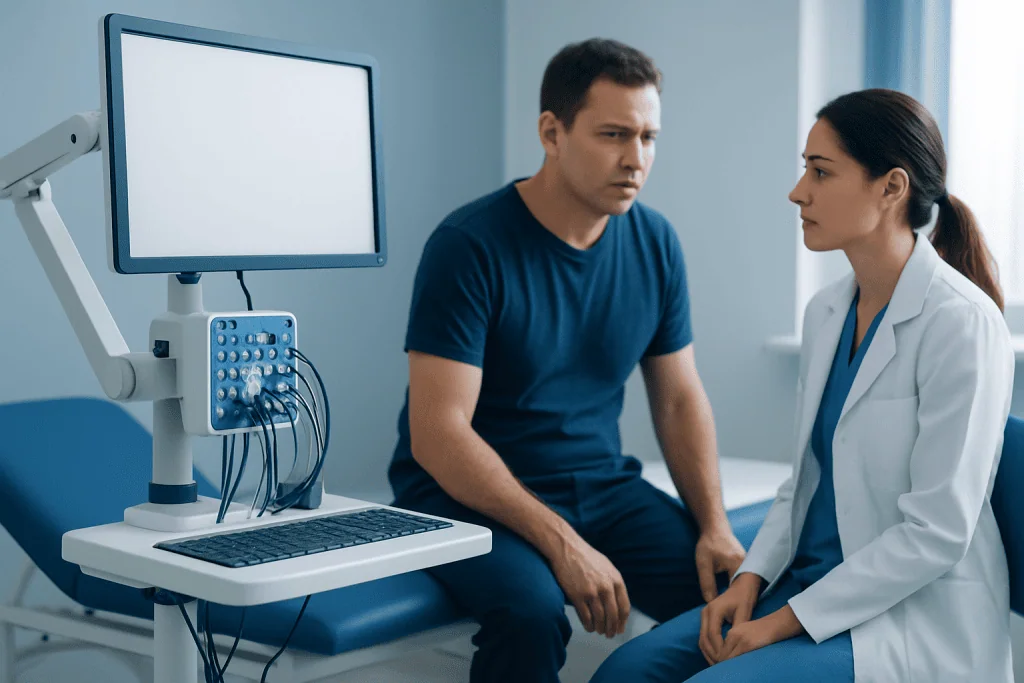
Muscle diseases often cause weakness that is most noticeable in the shoulders, upper arms, hips, or thighs. This is called proximal weakness. A person may find it hard to climb stairs, get up from a low chair, lift objects overhead, wash their hair, or walk uphill. In many muscle disorders, both sides of the body are affected in a fairly similar way.
Muscle pain, cramps, stiffness, exercise intolerance, and fatigue can also occur. Some people notice that their muscles tire quickly, even if they are not especially painful. In certain conditions, the muscles may become tender or swollen, while in others there is gradual muscle wasting over time. Dark urine after intense activity can be a warning sign of muscle breakdown and should be assessed urgently.
One important clue is that pure muscle disease usually does not cause numbness or tingling. Sensation often stays normal. Reflexes may remain normal early on, although severe weakness can make them harder to trigger later. Conditions that can present this way include inflammatory myopathies, muscular dystrophies, and other muscle diseases.
What symptoms can suggest a nerve disease

Nerve diseases often produce a broader range of symptoms because nerves do more than control movement. They also carry messages for touch, temperature, pain, and body functions such as sweating or blood pressure regulation. When nerves are affected, weakness may be accompanied by numbness, tingling, electric-shock sensations, burning pain, or reduced feeling in the hands or feet.
The pattern of weakness can also be different. Nerve disorders often affect distal muscles first, especially in the feet, ankles, hands, or lower legs. A person may trip because of foot drop, struggle with buttons or handwriting, or notice muscle wasting in the hands. Reflexes are commonly reduced or absent in many peripheral nerve conditions.
Some nerve disorders mainly affect movement rather than sensation, so the picture is not always straightforward. For example, diseases involving motor neurons or the nerve-muscle junction may cause weakness without much numbness. Still, changes in sensation, asymmetry, sharp shooting pain, and problems following the path of a specific nerve often make nerve involvement more likely, including forms of peripheral neuropathy.
Important overlap: when symptoms are less clear
Not every case fits neatly into one category. Some people with nerve disease mainly report weakness, while some with muscle disease also have aches, cramps, or fatigue that can mimic a nerve problem. Disorders of the neuromuscular junction, such as myasthenia gravis, can cause fluctuating weakness that worsens with activity and improves with rest. This is different from many muscle and peripheral nerve diseases.
In addition, conditions affecting the spine, brain, metabolism, or immune system can produce symptoms that seem neuromuscular at first. A compressed nerve root in the neck or lower back may cause pain, weakness, and numbness in one limb. Vitamin deficiencies, thyroid disorders, infections, medication side effects, and autoimmune illness can also affect muscle or nerve function.
Doctors look at the full picture rather than one symptom in isolation. The onset, speed of progression, age at onset, family history, distribution of weakness, sensory changes, swallowing problems, breathing symptoms, and exposure to certain medications or toxins all help narrow the possibilities. This is why self-diagnosis can be misleading, even when symptoms seem familiar.
Causes and risk factors
Muscle diseases may be inherited or acquired. Some are caused by genetic changes that affect muscle structure or energy production. Others result from inflammation, immune system activity, infections, endocrine disorders such as thyroid disease, or medications including certain cholesterol-lowering drugs in some individuals. Heavy exercise, dehydration, and electrolyte imbalances can also trigger temporary muscle symptoms, though they are not the same as a chronic muscle disease.
Nerve diseases also have many possible causes. Diabetes is a well-known cause of peripheral nerve damage, but vitamin deficiencies, alcohol use, kidney disease, autoimmune disorders, infections, chemotherapy, compression injuries, and inherited neuropathies can all play a role. In older adults, age-related wear, spinal disease, and cumulative medical conditions may increase risk.
Family history can be especially important when symptoms start young or progress slowly over years. A doctor may ask whether relatives have had weakness, walking difficulties, unexplained falls, hand or foot deformities, or known genetic diagnoses. Understanding the underlying cause is essential because treatment differs greatly between inherited, inflammatory, metabolic, and compression-related conditions.
How doctors make the diagnosis
Diagnosis usually begins with a detailed medical history and physical examination. The doctor asks when symptoms started, whether they came on suddenly or gradually, what activities are difficult, and whether there is numbness, pain, swallowing trouble, shortness of breath, or a family history of similar problems. During the examination, strength, tone, reflexes, sensation, balance, coordination, and walking pattern are assessed carefully.
Blood tests may help identify muscle injury, inflammation, vitamin deficiency, diabetes, thyroid dysfunction, or autoimmune activity. A creatine kinase level can rise when muscle tissue is damaged, though it is not elevated in every muscle disease. Additional tests may be chosen based on the history, such as antibody tests or genetic testing.
Electromyography and nerve conduction studies are often especially useful when doctors need to distinguish muscle disorders from nerve disorders. These tests evaluate how well nerves send signals and how muscles respond. Depending on the suspected condition, imaging studies, muscle MRI, ultrasound, pulmonary testing, or a muscle or nerve biopsy may also be recommended. In specialized centers, assessment may include EMG testing and advanced neurology evaluation to clarify the diagnosis.
Treatment options and symptom management
Treatment depends on the exact diagnosis, severity, and cause. Some muscle and nerve disorders can improve when the underlying issue is treated, such as correcting a vitamin deficiency, adjusting a medication, managing diabetes, or treating inflammation. Other conditions are chronic and focus on slowing progression, preserving function, and improving quality of life.
Care may include medication, supervised exercise, physical therapy, occupational therapy, braces or splints, pain management, nutrition support, and monitoring of swallowing or breathing when needed. Rehabilitation is often a key part of treatment because maintaining mobility, joint range of motion, and safe daily function can make a meaningful difference. Some patients benefit from physical therapy and rehabilitation as part of ongoing neuromuscular care.
When symptoms involve falling, severe fatigue, hand weakness, or trouble with daily tasks, early support is helpful. Assistive devices, home safety adjustments, and energy-conservation strategies can reduce strain and improve independence. In more complex cases, a multidisciplinary team may include neurologists, physiatrists, respiratory specialists, genetic counselors, and rehabilitation professionals. Acibadem International’s multidisciplinary specialists in JCI-accredited hospitals diagnose and treat neuromuscular conditions for international patients when advanced evaluation is needed.
Self-care, prevention, and when to see a doctor
Not all muscle or nerve diseases can be prevented, especially inherited conditions. However, general health measures can support nerve and muscle function. These include regular activity within personal limits, balanced nutrition, good diabetes control, avoiding excess alcohol, reviewing medications with a doctor, and addressing vitamin deficiencies or thyroid problems when present. People with chronic symptoms should avoid overexertion and use exercises recommended by a healthcare professional.
It is reasonable to seek medical advice for persistent weakness, repeated falls, unexplained numbness, progressive muscle loss, frequent cramps, or new difficulty with walking, climbing stairs, or hand use. A doctor should also assess symptoms that interfere with work, sleep, or daily life, even if they seem mild at first. Earlier evaluation can sometimes prevent complications and shorten the path to diagnosis.
Urgent medical attention is needed for sudden weakness, trouble speaking, severe back pain with limb weakness, difficulty breathing, choking, or rapidly worsening symptoms. These can signal an emergency and should not be ignored. If symptoms are gradual but ongoing, an evaluation by a neurologist or neuromuscular specialist can help determine whether the problem is more likely to involve muscle, nerve, or the connection between them.
Frequently asked questions
How can someone tell if weakness is coming from muscles or nerves?
The symptom pattern can offer clues, but it cannot confirm the cause on its own. Muscle disease often causes symmetrical weakness in the hips and shoulders without numbness, while nerve disease more often includes tingling, burning pain, sensory loss, or reduced reflexes. A medical examination and tests are usually needed for a clear answer.
Do muscle diseases always cause pain?
No. Some muscle diseases cause pain, cramps, or tenderness, but others mainly cause weakness and fatigue. A person can have significant muscle disease even without severe pain, which is why persistent functional difficulty should be assessed.
Can nerve disease happen without numbness?
Yes. Some nerve conditions mainly affect motor function and may cause weakness, twitching, or muscle wasting without obvious sensory symptoms. This is one reason doctors look at strength, reflexes, and the overall pattern of symptoms rather than relying on numbness alone.
What tests are most useful for distinguishing muscle and nerve problems?
Doctors often use a neurological exam, blood tests, EMG, and nerve conduction studies. Depending on the situation, imaging, genetic testing, or a muscle or nerve biopsy may also be helpful. The right test plan depends on the person’s age, symptom pattern, and medical history.
Are these conditions treatable?
Many are treatable, and nearly all can be managed in ways that help symptoms and daily function. Treatment may target the underlying cause, reduce inflammation, improve nerve or muscle health, manage pain, and support mobility. Early diagnosis often helps guide the most appropriate care.
When should someone seek urgent help?
Urgent medical care is needed for sudden weakness, breathing trouble, choking, or rapidly worsening symptoms. Emergency evaluation is also important if weakness occurs with trouble speaking, facial drooping, or severe back pain. These symptoms can reflect serious conditions that require prompt attention.
References
- National Institute of Neurological Disorders and Stroke
- National Institute of Arthritis and Musculoskeletal and Skin Diseases
- Muscular Dystrophy Association
- American Academy of Neurology
- National Institute of Diabetes and Digestive and Kidney Diseases
This article is for general information only and is not a substitute for professional medical advice. Please consult a qualified doctor about your individual situation.
Joint and spine care in Turkey — expert assessment & treatment
JCI-accredited · board-certified surgeons · reply within 24h
Add us as a Preferred Source to see more of our trusted health content across Google Search, AI Overviews and Discover.
Check your numbers in seconds
BMI, calories, due date, blood pressure and 30+ more clinical calculators — free, instant, doctor-reviewed ranges.