Muscle Hypertrophy: A Complete Medical Overview

Muscle hypertrophy usually refers to enlarged muscle fibers after resistance training or repeated physical load. Not all muscle enlargement is the same; normal training-related growth differs from swelling, injury, or disease-related changes.
Key Takeaways
- Muscle hypertrophy usually refers to enlarged muscle fibers after resistance training or repeated physical load.
- Not all muscle enlargement is the same; normal training-related growth differs from swelling, injury, or disease-related changes.
- Nutrition, hormones, sleep, training intensity, and recovery all influence how muscle hypertrophy develops.
- Sudden, painful, one-sided, or unexplained muscle enlargement should be assessed by a doctor.
- Treatment depends on the cause and may range from exercise guidance to care for underlying hormonal, neurological, or orthopedic conditions.
Muscle hypertrophy means an increase in muscle size, most often caused by strength training and normal adaptation to physical demand. In some cases, however, unusual or uneven muscle enlargement can be linked to nerve, hormone, genetic, or other medical conditions and may need evaluation.
Overview: what muscle hypertrophy means
Muscle hypertrophy is the medical term for an increase in muscle size. In most people, it happens when muscle fibers adapt to resistance exercise, physical work, or rehabilitation by becoming larger over time. This is a normal biological response and is often associated with improved strength, physical function, and metabolic health.
However, muscle hypertrophy is not always simply a sign of fitness. Sometimes a muscle may look larger because of inflammation, injury, fluid retention, changes in nerve supply, or certain hormonal or genetic conditions. For that reason, doctors consider the whole picture: where the enlargement occurs, how quickly it developed, whether it is painful, and whether there are other symptoms such as weakness or cramping.
A helpful way to think about muscle hypertrophy is that it describes a change in size, not a diagnosis by itself. The important medical question is whether that change reflects healthy adaptation or an underlying problem that needs attention.
How muscle hypertrophy happens in the body
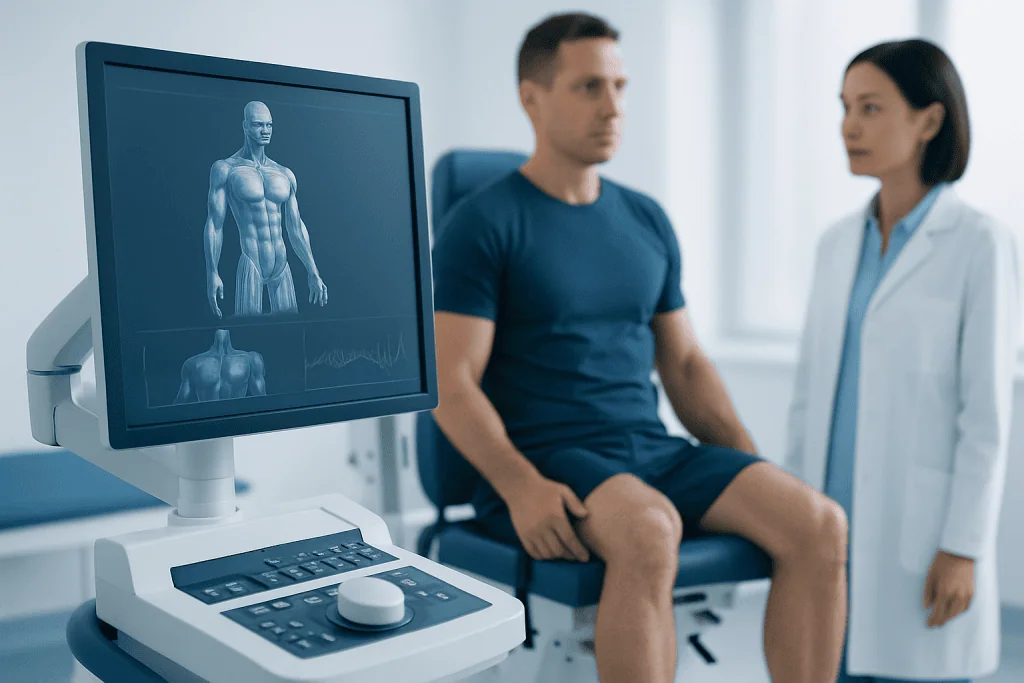
Skeletal muscles are made up of fibers that respond to repeated stress. During resistance training or other demanding activity, these fibers experience small amounts of mechanical strain. The body then repairs and rebuilds them, which can gradually increase the cross-sectional size of the muscle. This process is influenced by protein synthesis, training load, recovery time, and hormone signals.
There are different patterns of muscle growth. In simple terms, muscles may become larger through structural changes in the contractile parts of the fiber or through increases in other components inside the muscle cell. In exercise settings, these changes usually happen together. The result may be stronger, fuller muscles, although visible size and strength do not always increase at the same rate.
Age, sex, genetics, nutrition, sleep quality, and overall health all affect how much hypertrophy develops. Some people respond quickly to training, while others need longer and more consistent effort. Limited muscle growth does not necessarily mean something is wrong, but unexpected or disproportionate enlargement may deserve medical assessment.
Common signs and when enlargement may not be normal

Training-related muscle hypertrophy usually develops gradually over weeks or months. It is often symmetrical, meaning both sides of the body change in a fairly similar way, and it may be accompanied by better strength, endurance, or physical performance. Mild temporary soreness after exercise can occur, but persistent pain is not a typical feature of healthy muscle growth.
Muscle enlargement may be less reassuring if it appears suddenly, affects only one limb or one muscle group, or comes with discomfort, weakness, numbness, stiffness, or visible swelling. In some situations, what seems like hypertrophy is actually a different process, such as muscle strain, a tear, inflammation, bleeding into the tissue, or compensation for nearby muscle weakness.
People should also pay attention to associated symptoms. These may include:
- Persistent pain or tenderness
- Reduced range of motion
- Muscle cramps or twitching
- Weakness despite larger muscle size
- Numbness or tingling
- Rapid changes after injury or illness
When these features are present, a doctor may evaluate for orthopedic, neurological, endocrine, or rare muscular disorders rather than assuming the change is exercise-related.
Causes and risk factors
The most common cause of muscle hypertrophy is resistance exercise. Weight training, bodyweight exercise, sport-specific conditioning, manual labor, and structured rehabilitation can all stimulate muscle growth. Adequate dietary protein, sufficient calories, and recovery between sessions support this process. Hormones such as testosterone, growth hormone, insulin, and insulin-like growth factors also play a role in how effectively muscle tissue adapts.
Muscle enlargement can also occur in less typical settings. Some muscles become larger because they are compensating for weakness elsewhere, especially after injury or chronic joint problems. In rare cases, nerve disorders may lead to apparent hypertrophy or pseudohypertrophy, where the muscle looks enlarged but function is reduced. Certain endocrine conditions, inherited muscle diseases, and long-term changes in movement patterns may contribute as well.
Risk factors for abnormal or concerning muscle hypertrophy include recent trauma, repetitive overuse, body asymmetry, use of performance-enhancing substances, underlying hormone disorders, and neuromuscular disease. A doctor may also ask about family history, medications, and exercise habits. If symptoms suggest a broader issue, evaluation may include related conditions such as muscular dystrophy or structural problems involving the bones, joints, and spine.
It is also important to distinguish true hypertrophy from swelling. Soft tissue edema, inflammation, or a localized mass can make an area seem bigger without reflecting real muscle growth. That is one reason self-diagnosis can be misleading when changes are unusual or persistent.
How doctors evaluate muscle hypertrophy
Medical evaluation begins with a careful history and physical examination. A doctor will usually ask when the enlargement started, whether it is painful, whether it affects function, and how it relates to exercise or injury. They may compare both sides of the body, assess strength and reflexes, and look for signs of joint disease, nerve compression, or muscle wasting in nearby areas.
If the cause is not clear, further testing may be recommended. Blood tests can help look for inflammation, muscle breakdown, thyroid problems, or other hormone-related issues. Imaging may be useful when there is concern for injury, fluid collection, soft tissue abnormalities, or structural changes. Depending on the findings, doctors may use MRI imaging or ultrasound to examine the affected area in more detail.
Some patients may need nerve conduction studies, electromyography, or referral to a neurology, endocrinology, sports medicine, or orthopedics specialist. If symptoms suggest a spinal or nerve problem, assessment may also consider linked issues such as herniated disc. The goal is not just to confirm that a muscle is bigger, but to understand why it has changed and whether treatment is needed.
Treatment options and practical management
Treatment depends on the cause of muscle hypertrophy. When the enlargement is a healthy response to exercise, no medical treatment is needed. Instead, management focuses on balanced training, progressive overload, proper technique, adequate recovery, and nutrition that supports muscle repair. A clinician, trainer, or physiotherapist may help tailor a program to the person’s age, goals, and medical background.
If muscle enlargement is related to injury, overuse, posture, or movement imbalance, treatment may emphasize rehabilitation and correction of the underlying problem. This can include activity modification, guided exercise, stretching, joint support, and targeted recovery strategies. In some cases, physical therapy and rehabilitation helps restore normal mechanics and prevent one muscle group from compensating excessively for another.
When hypertrophy is linked to a medical condition, treatment is directed at that condition. Hormonal disorders may need endocrine care, nerve-related problems may require neurological assessment, and orthopedic causes may call for specialist treatment. If surgery or procedural care is considered for an underlying structural issue, doctors explain the expected benefits, alternatives, and recovery process based on the individual’s diagnosis.
For international patients who need coordinated evaluation, Acibadem International’s multidisciplinary specialists in JCI-accredited hospitals diagnose and treat muscle- and movement-related conditions with input from relevant medical and surgical teams.
Prevention, self-care, and safe muscle development
Healthy muscle hypertrophy is best supported by a gradual and sustainable approach. Sudden increases in training volume, very heavy loads without preparation, or poor lifting technique can raise the risk of strain and compensation patterns that may lead to pain rather than productive growth. Rest days are part of progress, because muscle adaptation happens during recovery as well as during exercise.
Basic self-care principles include eating a balanced diet, staying hydrated, sleeping well, and using structured progression rather than pushing through pain. Warm-up and mobility work may improve movement quality, while consistent follow-up with a qualified trainer or clinician can help reduce avoidable injuries. People returning to exercise after illness, surgery, or inactivity may benefit from a supervised plan.
Performance-enhancing drugs and unsupervised hormone use should be avoided. These substances can affect the heart, liver, hormones, mood, and long-term health, and they may create misleading changes in muscle size. A larger muscle is not always a healthier muscle, especially if growth is driven by unsafe practices or accompanied by weakness, pain, or reduced function.
When to seek medical care
A person should seek medical advice if muscle enlargement is sudden, painful, unexplained, or clearly uneven. Medical review is also appropriate if a larger muscle is associated with weakness, numbness, reduced movement, fever, recent injury, or a noticeable lump. These features can point to causes other than normal exercise adaptation.
Urgent evaluation is especially important after significant trauma, when severe swelling develops quickly, or when pain is intense and out of proportion to recent activity. Persistent symptoms should not be ignored simply because the area appears muscular. A prompt assessment can help distinguish benign training-related change from injury or disease and guide safe next steps.
In general, if someone is unsure whether a muscle change is normal, it is reasonable to consult a qualified doctor. Early evaluation can provide reassurance when findings are harmless and can also identify problems before they worsen.
Frequently asked questions
Is muscle hypertrophy the same as getting stronger?
Not exactly. Muscle hypertrophy means an increase in muscle size, while strength also depends on nerve activation, technique, and coordination. A person can gain strength with modest size changes, especially early in training.
Can muscle hypertrophy be abnormal?
Yes. Although it is often a normal response to exercise, muscle enlargement can sometimes reflect injury, swelling, hormone imbalance, or a nerve or muscle disorder. Sudden, one-sided, painful, or unexplained changes should be assessed by a doctor.
How long does muscle hypertrophy take to happen?
Visible changes usually develop gradually over weeks to months of consistent training. The timing varies based on genetics, age, nutrition, sleep, training quality, and recovery. Very rapid enlargement is less typical and may suggest swelling or another cause.
Does muscle soreness mean hypertrophy is happening?
Not necessarily. Soreness can happen after unfamiliar or intense activity, but it is not a reliable measure of muscle growth. Progress is better judged by consistent training, improved function, and gradual physical changes over time.
What helps healthy muscle hypertrophy?
Progressive resistance training, adequate protein intake, sufficient calories, rest, and good sleep all support healthy muscle growth. Safe technique and a balanced program are also important. If someone has a medical condition or is returning after injury, supervised exercise may be the safest option.
When should someone worry about enlarged muscles?
Concern is more appropriate when enlargement is sudden, uneven, painful, or paired with weakness, numbness, cramping, or a reduced range of motion. A muscle that looks bigger but works poorly may need medical evaluation. A doctor can determine whether the change is a normal adaptation or part of another condition.
References
- World Health Organization
- National Institutes of Health
- American College of Sports Medicine
- National Institute of Arthritis and Musculoskeletal and Skin Diseases
- Mayo Clinic
This article is for general information only and is not a substitute for professional medical advice. Please consult a qualified doctor about your individual situation.
Explore treatments in Turkey — costs, top hospitals & a free quote
JCI-accredited · board-certified surgeons · reply within 24h
Add us as a Preferred Source to see more of our trusted health content across Google Search, AI Overviews and Discover.

More from the Health Library

Rickets: What Patients Need to Know

Boil Popping: A Complete Medical Overview

Mugwort: An Evidence-Based Guide for Patients

Serology: A Complete Medical Overview

Botoxon: Procedure, Recovery and Results

Pinched Nerve in Shoulder: What Patients Need to Know
Physical Medicine & Rehabilitation Specialists at Acibadem
Fzt. Alperen Mustafa Oğuz
Physical Medicine & Rehabilitation
Assoc. Prof. Dr. Altuğ Yücekul
Orthopedic Surgery & Traumatology
Prof. Dr. Arel Gereli
Orthopedic Surgery & Traumatology
Fzt. Asım Sakallı
Physical Medicine & Rehabilitation