Muscular Dystrophy in Children Treatment: How It Works, Results and What to Expect

Muscular dystrophy is a group of inherited conditions that cause progressive muscle weakness, but its course varies widely by type. A pediatric neuromuscular team uses genetic testing and clinical assessments to identify the type and guide treatment.
Key Takeaways
- Muscular dystrophy is a group of inherited conditions that cause progressive muscle weakness, but its course varies widely by type.
- A pediatric neuromuscular team uses genetic testing and clinical assessments to identify the type and guide treatment.
- Treatment is ongoing rather than a single procedure, with plans adjusted as a child grows and needs change.
- Physiotherapy, stretching, mobility support, and monitoring of the heart and lungs are central parts of care.
- Some children may be eligible for medicines or mutation-specific therapies, depending on their diagnosis and clinical assessment.
Muscular dystrophy in children treatment is individualized and may include rehabilitation, medicines for some types, monitoring of the heart and breathing muscles, nutrition support, and orthopedic care. Although most forms cannot currently be reversed, early specialist care can help a child maintain mobility, participation, comfort, and overall health.
How muscular dystrophy in children treatment works
Muscular dystrophy in children treatment works by addressing the effects of muscle weakness early and systematically. The plan is tailored to the specific type of muscular dystrophy, the child’s age, genetic result, current abilities, and whether the heart, breathing muscles, swallowing, or spine are affected. It is not usually one operation or one-time procedure; it is coordinated care that evolves as the child grows.
Many children are supported by a pediatric neurologist or neuromuscular specialist alongside physiotherapists, occupational therapists, rehabilitation physicians, cardiologists, pulmonologists, orthopedic specialists, dietitians, genetic counselors, and psychosocial professionals. The goals are to protect movement and joint range, support safe participation at home and school, detect complications before they cause major symptoms, and promote quality of life.
For certain types, particularly some cases of Duchenne muscular dystrophy, medicines may slow loss of muscle function or address a specific genetic change. Whether a therapy is appropriate depends on the confirmed diagnosis, treatment eligibility, expected benefits, possible side effects, local availability, and the child’s overall health. Families should discuss options with a pediatric neuromuscular team rather than relying on a general treatment plan found online.
Diagnosis, candidacy and care planning
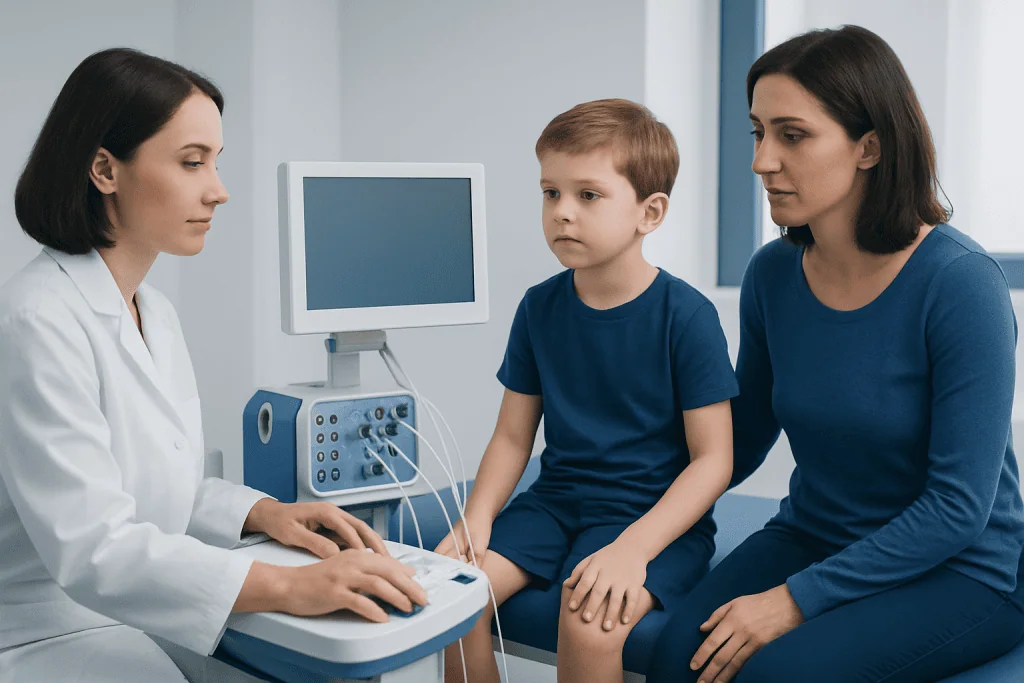
A careful diagnosis is the foundation of treatment. A clinician will ask about developmental milestones, falls, difficulty climbing stairs or rising from the floor, family history, fatigue, pain, and changes in walking. The examination may assess muscle strength, gait, joint flexibility, balance, and signs of involvement outside the skeletal muscles.
Blood tests can identify elevated muscle enzymes, while genetic testing is often used to confirm the condition and define the specific gene change. Depending on the findings, testing may also include heart evaluation, breathing assessments, imaging, or rarely a muscle biopsy. Genetic counseling can help families understand inheritance, the meaning of results, and whether relatives may wish to consider testing.
There is no single definition of candidacy because treatment choices differ among Duchenne, Becker, congenital muscular dystrophies, myotonic dystrophy, facioscapulohumeral muscular dystrophy, and other conditions. A child may be considered for medication, clinical research, bracing, mobility equipment, surgery, or respiratory support based on their muscular dystrophy type and individual needs. Care decisions should include the child and family’s goals, school routine, daily activities, and preferences.
Children with suspected or confirmed neuromuscular disease benefit from regular follow-up. Appointments allow the team to compare function over time, review treatment tolerance, update exercise and equipment plans, and arrange screening of the heart, lungs, bones, and spine when relevant.
What treatment may involve: step by step

The first step is a baseline assessment. The care team documents walking ability, strength, joint range, daily activities, breathing, heart health, growth, and nutrition. This creates a starting point for future comparisons and helps identify the most urgent needs. Families may also meet a genetic counselor and receive practical advice about school, activity, and home safety.
Next, a personalized rehabilitation plan is developed. Physiotherapy commonly focuses on gentle stretching, maintaining range of motion, posture, safe physical activity, and prevention of contractures, which are joints that become difficult to straighten. Occupational therapy can help with self-care tasks, hand function, energy conservation, classroom access, and adaptive equipment. Exercise should be individualized; strenuous or damaging muscle-loading activity may not be suitable for every child.
Medication may be offered for eligible children with particular forms of muscular dystrophy. Corticosteroids are used in some children with Duchenne muscular dystrophy, while mutation-specific treatments may be considered for selected genetic variants. Doctors monitor potential side effects, including effects on growth, weight, bones, eyes, mood, and blood pressure, and adjust care when needed.
As needs change, treatment can include ankle-foot orthoses, night splints, standing aids, walkers, wheelchairs, cough-assist devices, noninvasive breathing support, or surgery for selected orthopedic or spinal concerns. These supports are intended to increase safety, independence, comfort, and access to everyday activities; they are not a sign that care has failed.
Benefits, limitations and possible risks
The potential benefits of comprehensive treatment include maintaining mobility and joint flexibility for as long as possible, reducing discomfort, supporting school and social participation, improving access to daily activities, and recognizing heart or breathing problems early. Timely vaccination, nutrition support, bone-health care, and management of sleep-related breathing concerns may also contribute to overall wellbeing.
It is important to have realistic expectations. Current treatment may slow progression, manage complications, and support function, but it does not cure most forms of childhood muscular dystrophy. Response varies considerably between children, even when they have the same named condition, because genetic changes and disease severity differ.
Risks depend on the treatment. Medicines can have side effects and require regular monitoring. Braces, equipment, and exercise plans may need adjustment to prevent discomfort or skin pressure. Surgical procedures have anesthesia, infection, bleeding, and recovery risks, and are considered only when the potential benefit is clear. Respiratory devices can take time to adapt to, but trained teams can help families use them safely.
Families should ask which benefit is expected, how it will be measured, what side effects require contact with the team, and what alternatives are available. Shared decision-making helps ensure that treatment remains aligned with the child’s health needs and family priorities.
Recovery timeline and long-term outlook
Because muscular dystrophy treatment is usually ongoing, there is no single recovery timeline. After a new diagnosis, families often have several initial appointments over weeks or months to complete genetic testing, specialist assessments, rehabilitation planning, and education. A medication trial, brace fitting, equipment assessment, or surgery each has its own review schedule.
Physiotherapy and stretching routines may become part of everyday life, with periodic reassessment as the child grows. The team may monitor walking and other motor skills at regular intervals. Heart and lung surveillance is scheduled according to the muscular dystrophy type, age, symptoms, and previous test results, even when the child feels well.
Progression is not always linear. A child may have long stable periods, followed by changes related to growth, infection, reduced activity, spinal curvature, or the natural course of their condition. Early adjustments to support and treatment can help preserve comfort and independence.
Acibadem International’s multidisciplinary specialists and JCI-accredited hospitals provide diagnosis and coordinated care for international patients with neuromuscular conditions. Families should seek an individualized evaluation to understand the likely course and the care plan most appropriate for their child.
How long can a child live with muscular dystrophy?
Life expectancy depends strongly on the type of muscular dystrophy, the specific genetic change, the severity of heart and breathing involvement, and access to ongoing specialist care. Some forms cause relatively mild weakness and may have little or no effect on lifespan, while others can affect breathing or heart muscle and require closer monitoring and treatment.
In conditions such as Duchenne muscular dystrophy, advances in respiratory care, heart monitoring, medications, infection prevention, and supportive technology have improved outcomes compared with earlier decades. However, no clinician can accurately predict lifespan from the diagnosis alone. A pediatric neuromuscular specialist can discuss what is known about the child’s particular condition and update expectations over time.
How quickly does muscular dystrophy progress?
Muscular dystrophy usually progresses gradually, but the rate differs substantially among types and among individual children. Some children show weakness in early childhood and have more noticeable changes in mobility over years, while others develop symptoms later and progress more slowly. Periods of relative stability can occur.
Regular functional assessments provide more useful information than comparing one child’s experience with another’s. Changes in walking, stair climbing, falls, fatigue, hand use, posture, breathing during sleep, or endurance should be discussed with the care team. Treatment and rehabilitation plans can then be adjusted to support the child’s current abilities.
What are the early signs that my 2-year-old child might have muscular dystrophy?
Early signs can be subtle and do not always mean a child has muscular dystrophy. Possible features include delayed walking, frequent falls, trouble getting up from the floor, difficulty running or climbing stairs, walking on the toes, a waddling gait, enlarged-looking calf muscles, reduced endurance, or delayed motor milestones. Some children use their hands on their thighs to stand up from the floor, known as Gowers’ sign.
Speech, learning, or developmental differences can occur in some forms, but these findings have many possible causes. A pediatrician should assess any concern about motor development, especially if skills are being lost, weakness is increasing, or there is a family history of neuromuscular disease. Prompt assessment can clarify the cause and connect families with appropriate support.
Can muscular dystrophy be reversed?
Most forms of muscular dystrophy cannot currently be reversed because they result from inherited changes that affect muscle structure or function. Existing treatments aim to slow progression in eligible conditions, preserve function, prevent or manage complications, and improve day-to-day wellbeing.
Research into gene-targeted and other disease-modifying therapies continues, and some treatments may be suitable for specific genetic variants. These therapies are not appropriate for every type of muscular dystrophy and do not replace rehabilitation, cardiac care, respiratory monitoring, and other supportive measures. A confirmed genetic diagnosis is essential before considering targeted treatment options.
When to seek medical care
Parents or caregivers should arrange a pediatric assessment if a child has delayed motor milestones, frequent falls, persistent difficulty rising from the floor, new weakness, problems climbing stairs, toe walking that persists, or loss of abilities they previously had. A family history of muscular dystrophy or unexplained muscle disease is also a reason to discuss genetic and developmental evaluation with a doctor.
Urgent medical advice is important if a child has breathing difficulty, bluish lips or skin, marked sleepiness or morning headaches with breathing concerns, repeated choking, fainting, chest pain, or a rapid decline in strength or function. These symptoms may have different causes, but they should not be ignored.
Parents do not need to wait for a definite diagnosis to ask for help. Keeping notes or short videos of concerning movements, falls, fatigue, or functional difficulties can help clinicians understand the pattern. A qualified pediatric team can determine whether specialist referral and testing are needed.
Frequently asked questions
Is muscular dystrophy in children always inherited?
Muscular dystrophy is caused by genetic changes, and many forms are inherited from one or both parents. In some children, however, the genetic change occurs for the first time and there may be no known family history. Genetic counseling can explain inheritance patterns and discuss testing options for relatives.
Can a child with muscular dystrophy still attend school?
Yes, many children with muscular dystrophy attend school and benefit from individualized accommodations. These may include accessible classrooms, rest periods, mobility support, extra time between classes, adapted physical education, and help with writing or computer access. Occupational therapists and school teams can help develop practical supports.
Should children with muscular dystrophy exercise?
Appropriate movement and gentle activity can support flexibility, participation, and general health, but the plan should be individualized. High-intensity, exhausting, or muscle-damaging exercise may not be suitable for every child. A physiotherapist or neuromuscular specialist can recommend safe activities and pacing.
Why are heart and lung checks needed if the child feels well?
Some forms of muscular dystrophy can affect heart or breathing muscles before obvious symptoms appear. Regular assessments can detect early changes and allow treatment to begin at an appropriate time. The testing schedule depends on the child’s diagnosis and age.
Will a wheelchair make muscle weakness worse?
A wheelchair does not cause muscular dystrophy to progress. When appropriately prescribed, it can reduce fatigue, prevent falls, improve participation, and help a child conserve energy for important activities. Some children use a wheelchair only for longer distances, while others need it more regularly.
Can siblings of a child with muscular dystrophy be tested?
Testing may be considered depending on the muscular dystrophy type and the identified genetic change. A genetic counselor can explain who may be at risk, what testing can show, and how results may affect health monitoring or family planning. Testing decisions should be made with informed consent and appropriate support.
References
- Centers for Disease Control and Prevention
- Muscular Dystrophy Association
- National Institute of Neurological Disorders and Stroke
- World Health Organization
- American Academy of Pediatrics
This article is for general information only and is not a substitute for professional medical advice. Please consult a qualified doctor about your individual situation.
Joint and spine care in Turkey — expert assessment & treatment
JCI-accredited · board-certified surgeons · reply within 24h
Add us as a Preferred Source to see more of our trusted health content across Google Search, AI Overviews and Discover.
Check your numbers in seconds
BMI, calories, due date, blood pressure and 30+ more clinical calculators — free, instant, doctor-reviewed ranges.

More from the Health Library


Related Specialists

Dr. Behrim Malişi
Emergency Service
Prof. Dr. Burak Özkan
Urology
Dr. Anil Karaağaç
Cardiovascular Surgery
Dr. İlker Altundağ
Aesthetic Plastic & Reconstructive Surgery