Musculoskeletal System: A Complete Medical Overview

The musculoskeletal system combines bones, muscles, joints, and connective tissues to support the body and make movement possible. It also stores minerals, protects vital organs, and contains bone marrow, which helps produce blood cells.
Key Takeaways
- The musculoskeletal system combines bones, muscles, joints, and connective tissues to support the body and make movement possible.
- It also stores minerals, protects vital organs, and contains bone marrow, which helps produce blood cells.
- Pain, stiffness, swelling, weakness, and limited movement are common signs that this system may be affected.
- Injuries, aging, overuse, poor posture, inflammatory disease, and low activity can all affect musculoskeletal health.
- Early evaluation and appropriate treatment can improve comfort, function, and long-term mobility.
The musculoskeletal system is the body framework that gives support, enables movement, protects organs, and helps maintain posture and balance. It includes bones, muscles, joints, cartilage, tendons, ligaments, and connective tissues that work together continuously in daily life.
Overview: What Is the Musculoskeletal System?
The musculoskeletal system is the body’s structural and movement system. It includes bones, skeletal muscles, joints, cartilage, tendons, ligaments, and other connective tissues that work together to help the body stand, move, lift, bend, and stay stable. In simple terms, it is what allows a person to maintain posture, protect internal organs, and perform both fine and powerful movements.
This system does much more than support motion. Bones help store minerals such as calcium and phosphorus, and bone marrow plays a central role in blood cell production. Muscles generate force and also help regulate heat by producing warmth during activity. Joints and soft tissues provide flexibility, absorb stress, and allow smooth motion between body parts.
Because the musculoskeletal system is used every day, it is affected by age, exercise, work habits, injuries, body weight, and general health. Problems can range from short-term strains and sprains to long-term conditions such as arthritis, osteoporosis, and spine disorders. Understanding how the system works can help people recognize symptoms early and protect their mobility over time.
Main Parts and How They Work Together
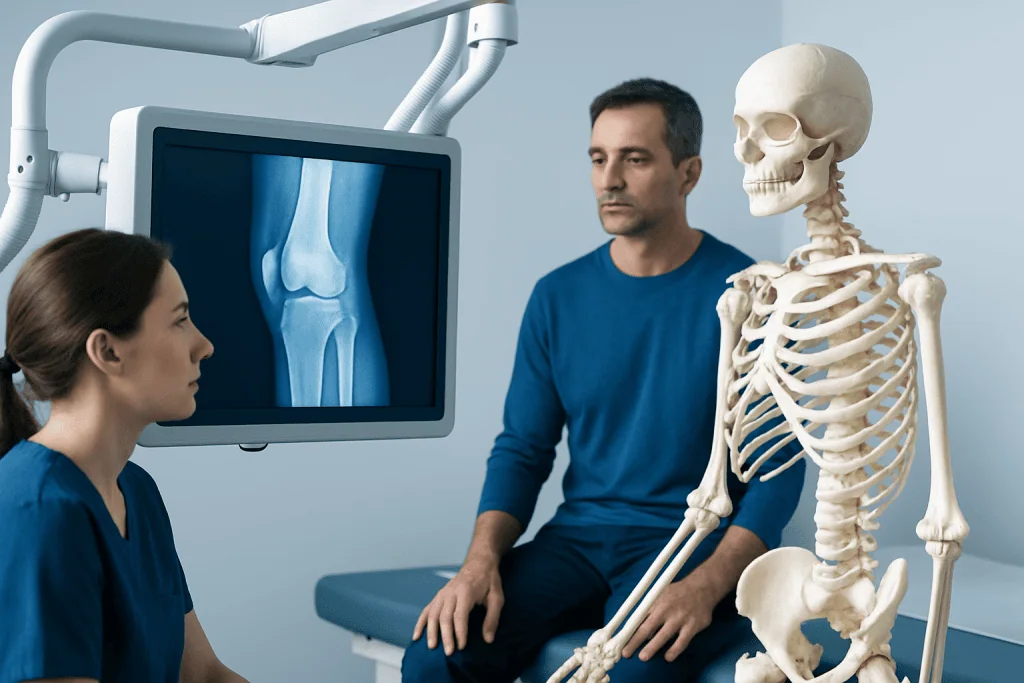
Each part of the musculoskeletal system has a distinct role, but none works in isolation. Bones form the body’s framework. They give shape, protect organs such as the brain, heart, and lungs, and create levers that muscles pull on during movement. Joints are the meeting points between bones, and their design determines how much a body part can move.
Muscles attach to bones through tendons. When a muscle contracts, it pulls on the tendon and moves the bone. Ligaments connect bone to bone and help stabilize joints. Cartilage covers the ends of bones inside many joints, helping reduce friction and absorb shock. Other connective tissues, including fascia and bursae, support smooth movement and organize structures throughout the body.
Together, these parts allow everyday actions such as walking, reaching, chewing, sitting upright, and maintaining balance. They also respond to changing demands. For example, weight-bearing exercise can help bones stay stronger, while repeated overuse without enough recovery can irritate tendons or wear down joint surfaces. This balance between use, strength, and recovery is a key part of musculoskeletal health.
- Bones: support, protection, mineral storage, blood cell production
- Muscles: movement, posture, heat production
- Joints: flexibility and range of motion
- Tendons: connect muscle to bone
- Ligaments: connect bone to bone
- Cartilage: cushioning and smoother joint motion
Common Symptoms and Signs of Musculoskeletal Problems

Musculoskeletal symptoms can start suddenly after an injury or develop gradually over time. Pain is one of the most common concerns. It may be felt in a joint, bone, muscle, tendon, or the spine. Some people describe aching, stiffness, soreness, or a pulling sensation, while others notice sharp pain during movement or after physical activity.
Other common symptoms include swelling, warmth, redness, bruising, weakness, cramping, numbness, or reduced range of motion. A person may find that climbing stairs, lifting objects, typing, or getting up from a chair becomes more difficult. Joint clicking or instability can also occur, especially after ligament or cartilage injury.
Long-standing musculoskeletal problems may change posture, balance, or walking pattern. For example, pain in the knee or hip can lead a person to shift weight unevenly, which may then affect the back or other joints. Persistent symptoms should not be ignored, especially if they limit daily activities, disturb sleep, or continue despite rest and basic home care.
What Can Affect the Musculoskeletal System?
Many factors can affect the musculoskeletal system. Acute injuries are common and include fractures, sprains, strains, dislocations, and tendon injuries. Repetitive motions at work, sports, or home can gradually overload tissues and lead to overuse problems such as tendinitis or stress injuries. Poor posture, prolonged sitting, and improper lifting can also contribute to pain in the neck, shoulders, or back.
Aging brings natural changes to bone density, muscle mass, cartilage resilience, and joint flexibility. These changes do not always cause symptoms, but they can increase the risk of osteoarthritis, fractures, and slower recovery after injury. Low physical activity, smoking, poor nutrition, obesity, and some chronic medical conditions may further weaken bones and muscles or increase strain on joints.
Inflammatory and autoimmune diseases can affect joints, muscles, and connective tissues. Common examples include arthritis and certain connective tissue disorders. Spine conditions are another important group, including disc-related pain and nerve compression such as herniated disc. Bone strength may also decline in osteoporosis, increasing fracture risk even after minor falls.
How Doctors Evaluate Musculoskeletal Health
Diagnosis starts with a careful medical history and physical examination. A doctor will usually ask where the pain is located, when it began, what makes it better or worse, whether there was an injury, and how symptoms affect daily activities. Questions about work, sports, exercise habits, previous injuries, medications, and family history can also be helpful.
During the examination, the doctor may assess posture, swelling, tenderness, muscle strength, joint stability, flexibility, gait, and range of motion. This can help identify whether symptoms are more likely to come from a bone, muscle, tendon, ligament, joint, or nerve. In some cases, comparison with the unaffected side gives useful clues.
Imaging and laboratory tests may be recommended when needed. X-rays can show fractures, alignment problems, and some signs of arthritis. Ultrasound and MRI can provide more detail about soft tissues such as muscles, tendons, ligaments, and cartilage. Blood tests may help if inflammation, infection, autoimmune disease, or mineral deficiency is suspected. A diagnosis is often made by combining symptoms, examination findings, and targeted testing rather than relying on one test alone.
Treatment Options for Musculoskeletal Conditions
Treatment depends on the cause, severity, duration of symptoms, and the person’s age, activity level, and overall health. Many mild musculoskeletal problems improve with activity modification, short-term rest, ice or heat, and guided return to movement. Pain relief medicines may be recommended by a doctor when appropriate, but treatment usually focuses not only on symptom control but also on restoring function and preventing recurrence.
Physical therapy is often an important part of care. A structured program can improve strength, flexibility, balance, posture, and joint mechanics. It may be especially useful for back pain, joint instability, sports injuries, and recovery after surgery or fracture. In selected cases, braces, orthotics, walking aids, or workplace adjustments may also help reduce strain and improve safety.
Some conditions need more specialized treatment. This may include orthopedic rehabilitation after injury, physical therapy and rehabilitation for pain and mobility problems, or surgical care when conservative treatment is not enough. Procedures such as knee replacement or spine surgery may be considered for advanced joint damage, instability, or persistent nerve-related symptoms after full assessment by a specialist.
For international patients with complex musculoskeletal concerns, Acibadem International’s multidisciplinary specialists and JCI-accredited hospitals provide diagnosis and treatment planning tailored to the underlying condition and the person’s functional needs.
Prevention and Everyday Self-care
Good musculoskeletal health is supported by regular movement, balanced nutrition, and injury prevention. Weight-bearing exercise and resistance training can help maintain bone strength and muscle mass, while flexibility and balance work may reduce falls and improve joint mobility. The right level of activity depends on age, fitness, and any underlying condition, so exercise plans should be realistic and sustainable.
Daily habits matter. Maintaining a healthy body weight reduces stress on weight-bearing joints such as the knees, hips, and spine. Proper lifting technique, supportive footwear, regular stretching breaks, and an ergonomic workspace can all help reduce strain. For athletes and active individuals, warming up, progressing training gradually, and allowing recovery time are important.
Nutrition also plays a role. Adequate protein supports muscle maintenance, while calcium and vitamin D are important for bone health. Avoiding smoking and limiting excess alcohol can also help protect bones and soft tissues. Self-care is useful for prevention and mild symptoms, but it should not replace medical evaluation when pain is persistent, severe, or associated with weakness, fever, or injury.
When to Seek Medical Care
Medical care is recommended if musculoskeletal symptoms last more than a few days, keep returning, or begin to interfere with walking, work, sleep, or daily activities. A person should also seek evaluation if there is visible swelling, joint deformity, loss of movement, or pain that does not improve with rest and simple self-care.
Urgent assessment is especially important after a fall, sports injury, or accident if there is severe pain, inability to bear weight, numbness, weakness, or suspected fracture or dislocation. Fever, redness, marked warmth, or unexplained night pain can also require prompt medical attention because these features may suggest infection or another condition that should not be managed at home.
Early evaluation can help clarify the cause and guide the right treatment before symptoms become more limiting. Many musculoskeletal conditions respond better when addressed early, with a combination of diagnosis, activity guidance, rehabilitation, and specialist care when needed.
Frequently asked questions
What is included in the musculoskeletal system?
The musculoskeletal system includes bones, skeletal muscles, joints, cartilage, tendons, ligaments, and other connective tissues. Together, these structures support the body, protect organs, and make movement possible.
What does the musculoskeletal system do besides movement?
In addition to movement, it helps maintain posture and balance, protects internal organs, and stores minerals such as calcium and phosphorus. Bone marrow inside certain bones also helps produce blood cells.
What are common musculoskeletal disorders?
Common examples include sprains, strains, fractures, tendon injuries, back pain, osteoarthritis, osteoporosis, and disc-related spine problems. Some inflammatory or autoimmune diseases can also affect joints and muscles.
How can a person keep the musculoskeletal system healthy?
Regular exercise, especially strength, balance, and weight-bearing activity, can support bones and muscles. Good nutrition, a healthy weight, proper posture, and avoiding smoking also help protect long-term musculoskeletal health.
When should musculoskeletal pain be checked by a doctor?
A doctor should evaluate pain that is severe, lasts more than a few days, keeps returning, or limits daily activities. Urgent care is important after trauma or when pain is associated with swelling, deformity, weakness, numbness, fever, or inability to bear weight.
Can musculoskeletal problems improve without surgery?
Yes, many conditions improve with rest, activity changes, physical therapy, pain management, and rehabilitation. Surgery is usually considered when symptoms are severe, structural damage is significant, or conservative treatment has not provided enough relief.
This article is for general information only and is not a substitute for professional medical advice. Please consult a qualified doctor about your individual situation.
Joint and spine care in Turkey — expert assessment & treatment
JCI-accredited · board-certified surgeons · reply within 24h
Add us as a Preferred Source to see more of our trusted health content across Google Search, AI Overviews and Discover.

More from the Health Library

Sleep Regression: An Evidence-Based Guide for Patients

Bump on Anus: An Evidence-Based Guide for Patients

Kick Counts: What Patients Need to Know

Soda and Baking Powder: An Evidence-Based Guide for Patients

Zeigarnik Effect: What Patients Need to Know