National Survey of Children’s Health: What Parents Should Know

The National Survey of Children’s Health collects nationwide information about children from infancy through adolescence. It looks at more than illness, including development, behavior, family environment, insurance, and access to healthcare.
Key Takeaways
- The National Survey of Children’s Health collects nationwide information about children from infancy through adolescence.
- It looks at more than illness, including development, behavior, family environment, insurance, and access to healthcare.
- Survey findings help guide public health planning, research, and child-focused policies.
- Parents do not use the survey to diagnose a child, but its results can help them better understand common child health concerns.
- Children’s needs are shaped by both medical and social factors, such as housing, school, stress, and family support.
The National Survey of Children’s Health is a large U.S. survey that gathers information about children’s physical health, mental health, development, family life, and access to care. For parents, it can be a helpful way to understand how child well-being is measured and why this information matters for healthcare, schools, and community support.
Overview
The National Survey of Children’s Health is a population-based survey in the United States that collects information about the health and well-being of children. It is designed to give a broad picture of how children are doing, not only in terms of medical conditions but also in areas such as emotional health, learning, family life, and access to services. Parents or guardians usually answer the survey questions on behalf of their children.
This survey matters because children’s health is influenced by many factors. A child’s physical growth, mental well-being, school experiences, home environment, nutrition, sleep, and access to healthcare all play a role. By gathering this information across many households, the survey helps experts understand patterns and needs at the national and state level.
For parents, the survey can be useful as a framework for thinking about a child’s overall well-being. It highlights the idea that children’s health is not limited to doctor visits or illnesses. Emotional resilience, supportive relationships, developmental progress, and a safe environment are also important parts of healthy childhood.
What the Survey Measures

The National Survey of Children’s Health covers a wide range of topics. It may include questions about general health status, chronic conditions, developmental milestones, emotional and behavioral concerns, healthcare access, dental care, physical activity, nutrition, sleep, and school experiences. It also asks about family and community factors that may affect a child’s health.
One of the survey’s strengths is its broad view of child well-being. Rather than focusing only on disease, it considers how children function in everyday life. For example, it may explore whether a child is able to participate in school, build friendships, cope with stress, and receive needed support. This approach reflects modern pediatric care, which looks at the whole child.
Topics commonly covered can include:
- Physical health and long-term medical conditions
- Mental, emotional, and behavioral health
- Early childhood development and learning
- Health insurance and access to medical care
- Family routines, stress, and support systems
- Neighborhood safety, school environment, and community resources
Because the survey collects information in these areas, it can help show where children are thriving and where gaps in support may exist.
Why It Matters for Parents
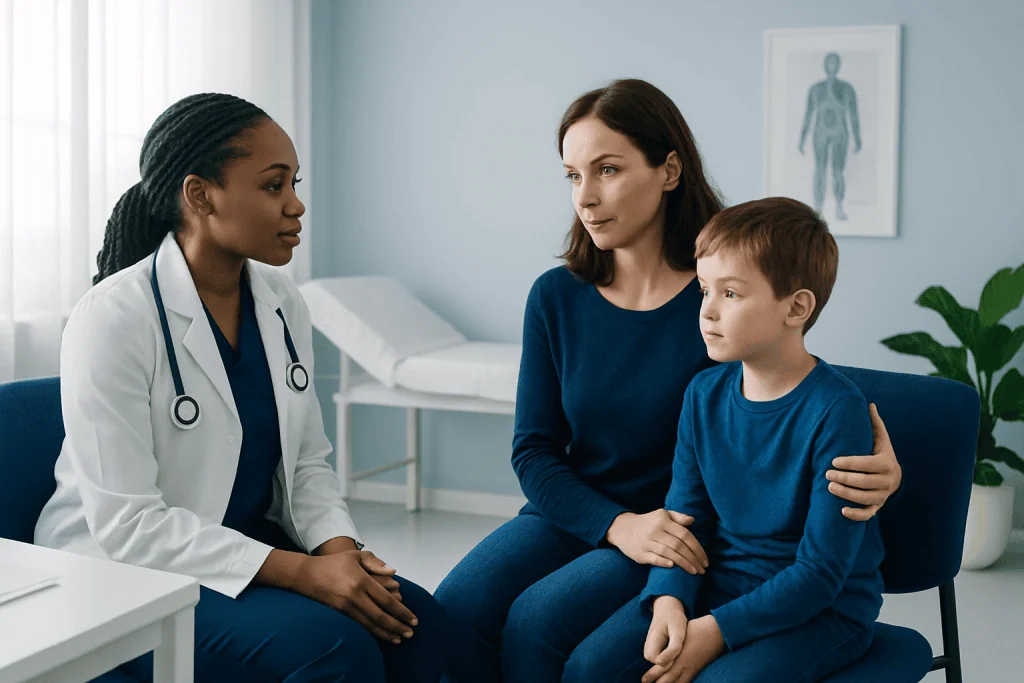
Although the National Survey of Children’s Health is not a medical test and cannot diagnose any condition, it can still be meaningful for families. It reminds parents that child health includes physical, developmental, emotional, and social dimensions. This can encourage a more balanced view of what children need to grow well.
The survey also helps normalize many everyday concerns parents may have. Sleep difficulties, school stress, behavior changes, access to routine care, and developmental questions are all part of the larger picture of child health. Seeing these topics included in a national survey reinforces that they are valid issues worth discussing with a pediatrician.
Parents may also find the survey relevant when trying to understand how healthcare systems and public programs are designed. When experts identify trends in children’s health, that information can influence preventive services, school-based support, mental health programs, and family resources. In that way, survey findings can indirectly shape the care and support available to children.
How the Information Is Used
Data from the National Survey of Children’s Health is used by public health professionals, pediatric researchers, educators, and policymakers. Their goal is to better understand what children and families need. The findings can help identify common health challenges, barriers to care, and differences between communities or age groups.
For example, survey results may help experts track how many children have ongoing health needs, how easy it is for families to obtain regular medical care, or whether children are receiving support for emotional or developmental concerns. This kind of information can guide planning for pediatric services, prevention programs, and parent education efforts.
The survey is also useful in research because it brings together medical and non-medical factors. Children’s health does not exist in isolation. Housing stability, caregiver well-being, family routines, and school experiences can all affect outcomes. By reflecting these connections, the survey supports a more realistic understanding of child health.
In clinical practice, pediatricians may not use the survey itself to make decisions about one child, but its broader findings can influence recommended priorities in preventive care. This may include attention to immunizations, developmental screening, nutrition, physical activity, mental health, and regular checkups.
What Parents Can Learn from It
Parents can use the ideas behind the National Survey of Children’s Health as a practical checklist for family life. A child’s health is supported when there is regular preventive care, good nutrition, age-appropriate sleep, physical activity, emotional safety, and opportunities for learning and connection. The survey encourages parents to think about these areas together rather than separately.
It can also be a reminder to watch for changes over time. A child who suddenly struggles in school, sleeps poorly, becomes withdrawn, or has frequent physical complaints may need attention even if there is no obvious illness. Sometimes these changes relate to stress, developmental differences, family transitions, or an underlying medical issue that deserves evaluation.
Common areas parents may want to reflect on include:
- Whether the child is attending regular well-child visits
- Whether vision, hearing, and dental care are up to date
- How the child is sleeping, eating, and staying active
- How the child is coping emotionally at home and at school
- Whether the child is meeting expected developmental milestones
- Whether the family has access to needed healthcare and community support
If a parent notices concerns in any of these areas, it can be helpful to discuss them with a pediatrician. Early attention often makes it easier to identify needs and arrange support.
Limits of the Survey
It is important to understand what the National Survey of Children’s Health can and cannot do. It provides valuable information about groups of children, but it does not replace an individual medical assessment. A survey response cannot determine whether one child has a disease, developmental delay, or mental health condition.
Because responses are usually given by parents or guardians, the information depends on what they know, remember, and observe. That does not make the survey unhelpful, but it does mean that findings should be interpreted as broad trends rather than exact clinical measurements. Children’s experiences can vary widely, even within the same age group or community.
Parents should also remember that a child can appear healthy in some areas while needing support in others. For example, a child may do well physically but struggle emotionally, or may have a chronic condition but thrive in school and social life. The survey’s wide lens is helpful precisely because it recognizes that health is complex and multidimensional.
Supporting a Child’s Overall Well-Being
The broader message of the National Survey of Children’s Health is that children benefit most from consistent, whole-child support. This includes preventive medical care, healthy family routines, nurturing relationships, safe environments, and attention to emotional needs. Small daily habits often make a meaningful difference over time.
Parents can support child well-being by keeping regular pediatric appointments, following recommended vaccinations and screenings, encouraging balanced meals and active play, and maintaining a predictable sleep routine. Open communication is equally important. Children should feel comfortable talking about worries, school pressures, friendships, and changes in how they feel.
When a child has ongoing symptoms or concerns, a multidisciplinary approach may be useful. Depending on the issue, this may involve pediatricians, child development specialists, mental health professionals, nutrition experts, or other clinicians. In some situations, evaluation through pediatric services such as comprehensive pediatrics care or child health check-up and screening may help clarify concerns and guide next steps.
For international families seeking coordinated care, Acibadem International’s multidisciplinary specialists and JCI-accredited hospitals provide evaluation and treatment for a wide range of children’s health needs.
When to Speak With a Doctor
Parents should consider speaking with a doctor whenever they have concerns about a child’s growth, development, behavior, mood, school functioning, sleep, or physical symptoms. Even when a problem seems mild, a professional discussion can offer reassurance or identify whether further assessment is needed.
Medical advice is especially important if a child has persistent symptoms, repeated infections, ongoing pain, changes in eating or sleeping, major mood shifts, loss of developmental skills, or difficulties with attention, learning, or social interaction. A pediatrician can help determine whether the issue is part of normal variation, a temporary challenge, or a sign of a condition that needs treatment.
Families may also need support when a child’s concerns extend beyond one area. For example, emotional changes may affect school performance, or a chronic health issue may influence growth and daily activities. In these situations, timely assessment can be helpful and may include referral for pediatric rehabilitation or other specialist care if appropriate.
Frequently asked questions
What is the National Survey of Children’s Health?
The National Survey of Children’s Health is a U.S. survey that gathers information about children’s health, development, and family circumstances. It is used to understand how children are doing across many areas of life, not just medical illness.
Does the survey diagnose health problems in children?
No. The survey is not a diagnostic tool and cannot confirm whether a child has a specific condition. It provides broad population-level information, while diagnosis requires evaluation by a qualified healthcare professional.
Why should parents care about this survey?
Parents may find the survey helpful because it reflects a whole-child view of health. It highlights the importance of physical health, emotional well-being, development, school experiences, and family support in a child’s overall wellness.
What kinds of topics are included in the survey?
The survey may ask about physical health, chronic conditions, behavior, mental health, development, healthcare access, dental care, sleep, nutrition, and school life. It also considers family and community factors that can affect a child’s well-being.
Can the survey results help improve child healthcare?
Yes. Survey findings can help guide public health programs, research, and policy decisions related to children and families. This can support better planning for preventive care, developmental services, and mental health resources.
When should a parent talk to a pediatrician instead of relying on general survey information?
A parent should speak with a pediatrician whenever a child has concerning symptoms, developmental delays, changes in mood or behavior, school difficulties, or ongoing sleep and eating problems. General survey information can be informative, but it should never replace personal medical advice.
References
- U.S. Health Resources and Services Administration
- Centers for Disease Control and Prevention
- American Academy of Pediatrics
- National Center for Health Statistics
This article is for general information only and is not a substitute for professional medical advice. Please consult a qualified doctor about your individual situation.
Explore treatments in Turkey — costs, top hospitals & a free quote
JCI-accredited · board-certified surgeons · reply within 24h
Add us as a Preferred Source to see more of our trusted health content across Google Search, AI Overviews and Discover.