Negative Corona Test Picture: A Complete Medical Overview

A negative result means the test did not detect SARS-CoV-2 in the sample at that moment. Test timing, sample collection and the type of test can affect the reliability of a negative result.
Key Takeaways
- A negative result means the test did not detect SARS-CoV-2 in the sample at that moment.
- Test timing, sample collection and the type of test can affect the reliability of a negative result.
- People with symptoms or a recent close exposure may need to repeat testing or speak with a healthcare professional.
- A negative rapid antigen test is generally less sensitive than a laboratory molecular test, especially early in infection.
- Urgent medical assessment is important for breathing difficulty, chest pain, confusion or other severe symptoms.
A negative corona test picture generally shows that a COVID-19 test did not detect the virus in the sample provided. However, it does not always rule out infection, particularly when testing is done very early after exposure or while symptoms are developing.
What a negative corona test picture means
A negative corona test picture usually refers to a photo of a home rapid test or laboratory report showing a negative result for COVID-19. In simple terms, the test did not find enough SARS-CoV-2, the virus that causes COVID-19, in the sample to produce a positive result. This is reassuring, especially when a person has no symptoms and no known recent exposure.
Still, a negative result is a snapshot in time rather than a permanent guarantee. The amount of virus in the nose or throat may be too low to detect early in an infection, near the end of an infection, or if the sample was not collected correctly. A person can therefore have a negative result and later test positive, particularly after a recent exposure or when symptoms continue.
When looking at a picture, it is also important to identify the test type and confirm that the test was read within the manufacturer’s stated time window. A photo alone cannot confirm whether the sample was collected properly, whether the test was stored correctly, or whether the result applies to a current illness. The original instructions and the person’s symptoms remain important context.
How to read a home rapid test result
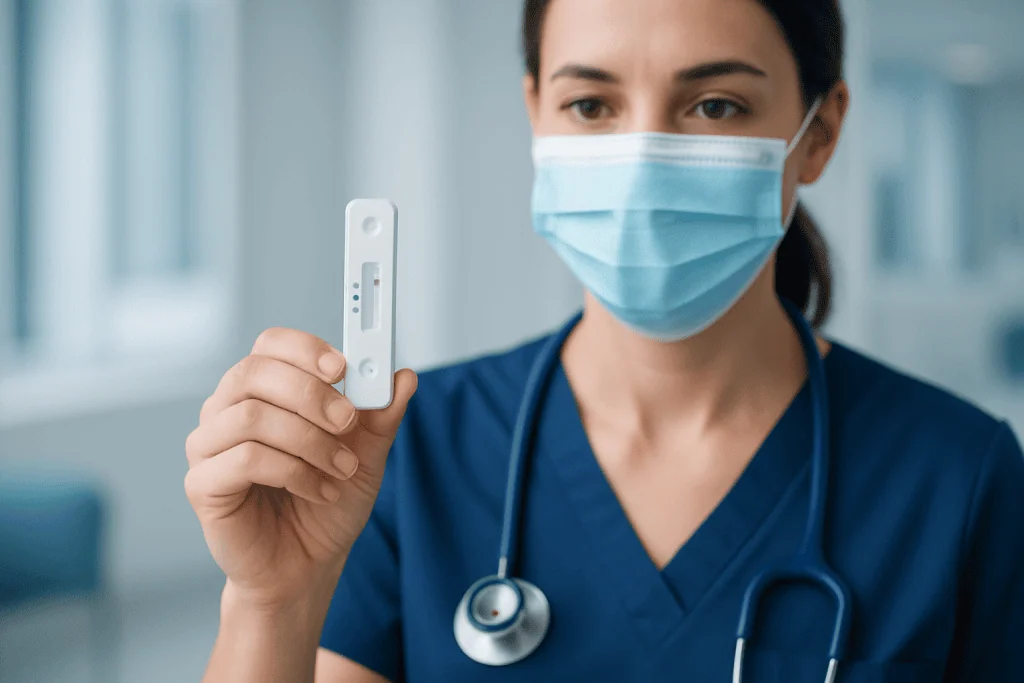
Most home COVID-19 rapid antigen tests use a cassette with a control line, often marked “C,” and a test line, often marked “T.” A valid negative result generally shows the control line only, with no visible test line. The control line indicates that the test fluid moved through the device as expected and that the test can be interpreted.
If there is no control line, the result is invalid, even if there is no test line. An invalid test should not be considered negative; it should be repeated with a new test device and careful attention to the instructions. Test kits should be used before their expiration date or within any officially approved extended-use date, and they should be stored at the temperature recommended by the manufacturer.
A faint line at the test marker during the specified reading period is generally treated as positive, not negative. Lines that appear after the permitted reading time may not be reliable. If a result is unclear, repeating the test or arranging a healthcare-guided laboratory test can provide a clearer answer.
Why a negative result can occur during COVID-19

Every diagnostic test has limits. Rapid antigen tests look for proteins from the virus and are useful because they provide results quickly, but they may miss infection when the viral amount is low. Molecular tests, commonly called PCR or NAAT tests, look for viral genetic material and are generally more sensitive, although results may take longer depending on the setting.
Testing too soon is a common reason for a negative result despite infection. After an exposure, the virus needs time to multiply to a detectable level. Likewise, a person who develops a sore throat, fever, cough, fatigue, body aches, changes in taste or smell, or nasal congestion may initially test negative and become positive later. Other respiratory illnesses, including influenza and common colds, can cause similar symptoms.
Collection technique also matters. A nasal swab may not collect enough material if it is inserted less far than directed, not swirled for the recommended time, or used after the person has not followed the kit instructions. For this reason, it is helpful to wash hands, check the instructions for the specific brand, and complete each step exactly as described.
What to do after a negative COVID-19 test
The next step depends on why the test was taken. A person without symptoms and without a known exposure can usually treat a valid negative result as reassuring while continuing sensible infection-prevention habits. These may include hand hygiene, staying home when unwell, improving ventilation in shared spaces, and following any requirements in workplaces, schools, travel settings or healthcare facilities.
A person with symptoms should not rely on one negative rapid test alone to decide that they are not contagious. It is reasonable to limit close contact with others while feeling unwell, especially around older adults, infants, pregnant people, and people with weakened immune systems. Repeating an antigen test according to the test instructions or local public health advice, often after a short interval, may improve the chance of detecting an infection.
Someone who has had close contact with a person with COVID-19 may also need repeat testing if the first result is negative. The appropriate timing can vary with the date of exposure, symptoms, vaccination status, local guidance and individual health risks. A clinician can advise whether a molecular test is appropriate, particularly for people at higher risk of complications.
Choosing between rapid antigen and molecular tests
Rapid antigen tests are convenient, widely available and can be useful when a quick decision is needed. They are more likely to detect COVID-19 when a person has a higher amount of virus, which often occurs around the time symptoms are present. Their main limitation is that a negative result does not exclude infection as confidently as a negative molecular test.
Molecular tests, including PCR tests, are usually performed in a laboratory or clinical setting. They can detect smaller amounts of viral material and may be particularly helpful when symptoms are suggestive of COVID-19 but repeated rapid tests are negative. They may also be considered when confirmation is important because of a person’s medical condition, planned treatment, or contact with vulnerable individuals.
The best test is not always the same for every situation. Access, timing, symptoms and the reason for testing all matter. Healthcare professionals may also consider testing for other respiratory infections, such as influenza, when symptoms are significant or when treatment decisions could be affected.
Practical steps to reduce spread while results are uncertain
When a person has respiratory symptoms but does not yet have a clear explanation, precautions can help protect others. Resting at home where possible, covering coughs and sneezes, washing hands, and avoiding close contact with people at high risk of severe illness are sensible measures. Wearing a well-fitting mask in crowded indoor spaces or around vulnerable people may further reduce the chance of passing on a respiratory virus.
Good ventilation is also useful. Opening windows when practical, meeting outdoors when possible, and avoiding poorly ventilated crowded spaces can reduce exposure to airborne respiratory viruses. These steps are not limited to COVID-19; they can also help lower spread of influenza and other common infections.
People should follow current guidance from local public health authorities, employers, schools and healthcare providers, as recommendations may change with local conditions. For international patients who need assessment for persistent symptoms or testing concerns, Acibadem International’s multidisciplinary specialists and JCI-accredited hospitals can provide diagnostic evaluation and treatment planning.
When to seek medical care
Medical advice is appropriate when COVID-19-like symptoms are severe, persistent, worsening, or occur in someone with a higher chance of complications. This includes older adults, people with chronic lung, heart or kidney disease, people with diabetes, people who are immunocompromised, and pregnant individuals. A clinician can assess symptoms, advise on testing, and determine whether treatment for COVID-19 or another illness should be considered.
Urgent medical care is needed for trouble breathing, persistent chest pain or pressure, new confusion, difficulty staying awake, bluish or grayish lips or face, signs of severe dehydration, or any rapidly worsening condition. Children, older adults and people who cannot clearly describe symptoms may show less specific warning signs, such as unusual sleepiness, poor feeding, or marked weakness.
A negative corona test picture should not delay care when someone feels seriously unwell. Healthcare teams assess the whole clinical picture, including symptoms, vital signs, examination findings, medical history and, when needed, repeat or alternative testing.
Frequently asked questions
Does a negative corona test picture mean I definitely do not have COVID-19?
No. It means the test did not detect COVID-19 in the sample collected at that time. Infection can still be present if testing occurred too early, the viral level was low, or the sample collection was not adequate.
What does one line on a COVID-19 rapid test mean?
On most rapid tests, one line at the control marker means a valid negative result. The exact interpretation depends on the test brand, so the kit instructions should always be checked. If there is no control line, the test is invalid.
Can I have COVID-19 symptoms and still test negative?
Yes. Symptoms may begin before a rapid antigen test can detect enough virus, and other respiratory infections can cause similar symptoms. If symptoms continue, repeat testing or medical advice may be appropriate.
Should a negative rapid test be repeated?
Repeat testing may be helpful for people with symptoms or a known recent exposure, particularly if the first rapid test is negative. The timing should follow the test manufacturer’s instructions and current local health guidance. A clinician may recommend a molecular test in some circumstances.
Is a PCR test more accurate than a rapid antigen test?
Molecular tests such as PCR are generally more sensitive than rapid antigen tests and can detect lower amounts of viral material. However, no test is perfect, and the timing of testing and quality of sample collection still affect results.
Can a photographed test result be used for travel, work or school?
A photograph may not meet documentation requirements, as organizations may require an official laboratory report, supervised test, or specific test date and format. Requirements vary by destination and institution. It is best to confirm the relevant policy before relying on a test image.
References
- World Health Organization
- Centers for Disease Control and Prevention
- U.S. Food and Drug Administration
- European Centre for Disease Prevention and Control
This article is for general information only and is not a substitute for professional medical advice. Please consult a qualified doctor about your individual situation.
Explore treatments in Turkey — costs, top hospitals & a free quote
JCI-accredited · board-certified surgeons · reply within 24h
Add us as a Preferred Source to see more of our trusted health content across Google Search, AI Overviews and Discover.

More from the Health Library

Soda Crackers: An Evidence-Based Guide for Patients

Bicep Stretch: An Evidence-Based Guide for Patients

Semaglutide: An Evidence-Based Guide for Patients

Hyperextended Elbow — Explained by Medical Evidence, Not Myths
Types of Toenail Fungus: What Patients Need to Know