Nerve Glides: An Evidence-Based Guide for Patients

Nerve glides are also called nerve flossing or neural mobilization exercises. They aim to improve nerve movement, not to force a stretch or work through sharp pain.
Key Takeaways
- Nerve glides are also called nerve flossing or neural mobilization exercises.
- They aim to improve nerve movement, not to force a stretch or work through sharp pain.
- These exercises can be helpful for some people with nerve irritation, but they are not right for every cause of pain or numbness.
- A clinician or physical therapist can help identify which nerve is involved and how to perform the movement safely.
- Symptoms that are worsening, severe, or linked to weakness or bowel or bladder changes need medical assessment.
Nerve glides are gentle, controlled movements designed to help a nerve move smoothly through surrounding tissues. When used appropriately, they may reduce irritation, improve mobility, and ease symptoms such as tingling, tightness, or mild nerve-related pain.
Overview: what nerve glides are and what they do
Nerve glides are gentle exercises that move a nerve and the tissues around it in a controlled way. They are sometimes called nerve flossing or neural mobilization. The goal is to help the nerve slide more freely through its natural pathway rather than become irritated by tight muscles, swollen tissue, repetitive strain, or certain postures.
Unlike a standard muscle stretch, nerve glides are not meant to create a strong pulling sensation. They usually combine movement in one area with easing in another area, so the nerve is encouraged to move without being overloaded. For example, a movement at the wrist may be paired with a change in neck position, or a knee movement may be paired with an ankle movement.
Some patients use nerve glides as part of rehabilitation for symptoms such as tingling, pins and needles, burning discomfort, radiating pain, or a feeling of tightness along an arm or leg. They are commonly recommended by rehabilitation professionals when symptoms suggest a sensitive but still mobile nerve. Because nerve symptoms can also come from conditions such as carpal tunnel syndrome or a herniated disc, correct assessment matters before starting exercises on one’s own.
How nerve glides may help
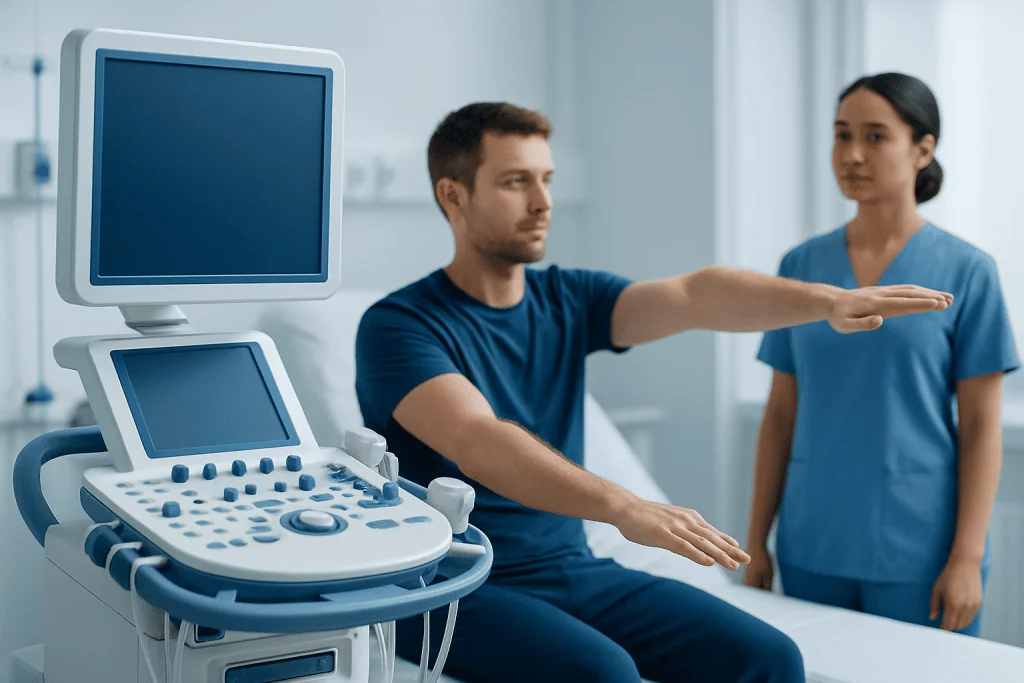
Nerves need to move as the body moves. When a person bends the elbow, straightens the knee, or tilts the head, nerves lengthen, shorten, and glide within surrounding tissues. If that movement becomes restricted or the nerve becomes more sensitive, normal motion may start to trigger symptoms.
Nerve glides are thought to help by improving mechanical movement and reducing local irritation. They may also help the nervous system tolerate movement more comfortably over time. In practice, this means a person may notice less pulling, less tingling, or better comfort during daily tasks such as sitting, typing, driving, or reaching overhead.
Evidence suggests neural mobilization can be useful for selected conditions, especially when it is part of a broader plan that may include posture changes, activity modification, strengthening, and manual therapy. However, results vary. These exercises are not a universal solution, and they work best when matched to the right diagnosis and performed with the right technique.
In rehabilitation settings, nerve glides may be included alongside physical therapy and rehabilitation to improve movement quality and symptom control. A physical therapist may adjust the exercise range, speed, and frequency based on how irritable the nerve is and how symptoms respond.
Common symptoms and situations where they are used

Nerve glides are most often discussed when symptoms suggest mild to moderate nerve irritation. These symptoms can include tingling, numbness, burning, radiating discomfort, electric-shock-like sensations, or sensitivity that travels along a known nerve pathway. Some people also describe tightness in a leg during sitting or a pulling sensation into the hand during repetitive use.
Clinicians may use nerve glides for symptoms involving the median, ulnar, radial, or sciatic nerves, among others. In the upper body, this can relate to hand tingling, wrist discomfort, or symptoms that travel from the neck or shoulder into the arm. In the lower body, it can relate to symptoms that move from the back or buttock down the leg.
These exercises may be considered in conditions such as nerve entrapment, postural strain, repetitive overuse, or recovery after some musculoskeletal injuries. They are sometimes used as part of care for sciatica or for symptoms related to neck and back problems, but only after the clinician is satisfied that movement-based treatment is appropriate.
Nerve glides are less likely to help when symptoms are caused mainly by severe compression, advanced weakness, widespread neuropathy, infection, fracture, or another condition that needs targeted medical treatment. This is why symptoms alone do not always reveal the full cause.
How to do nerve glides safely
The most important principle is that nerve glides should be gentle. A person should feel movement, but not forceful stretching or rising pain. Many therapists describe the goal as “sliding, not straining.” Symptoms should settle soon after the exercise ends, not build and remain worse for hours.
In general, nerve glides are started slowly and in a small range. Repetitions are usually controlled rather than fast. It is often better to do a few comfortable movements consistently than to do too much at once. Good breathing and relaxed shoulders, jaw, and hands can also help reduce unnecessary tension.
It is sensible to stop and seek professional advice if an exercise causes sharp pain, increasing numbness, new weakness, a heavy or dead feeling in the limb, or symptoms that spread significantly farther than before. People with recent injury, recent surgery, diabetes-related neuropathy, inflammatory conditions, or unexplained neurological symptoms should be especially cautious.
Because technique matters, many patients benefit from learning the first session from a qualified clinician. A rehabilitation plan may also include orthopedic rehabilitation or, when spinal causes are suspected, assessment through neurology to make sure treatment matches the source of symptoms.
Diagnosis: finding the cause before choosing exercises
Before recommending nerve glides, a clinician usually starts with a medical history and physical examination. They ask where symptoms begin, where they travel, what makes them better or worse, and whether there is weakness, clumsiness, neck pain, back pain, or night symptoms. This helps distinguish nerve irritation from muscle strain, tendon problems, circulation issues, or joint conditions.
The examination may include testing sensation, reflexes, muscle strength, posture, range of motion, and specific movements that reproduce symptoms. In some cases, clinicians use neurodynamic tests to see whether a nerve appears especially sensitive to movement. These tests are interpreted carefully and alongside the rest of the exam, because a positive test alone does not confirm a diagnosis.
If symptoms are persistent, severe, or unclear, additional tests may be needed. These can include imaging such as MRI or ultrasound, or nerve studies such as electromyography and nerve conduction studies. The aim is to identify whether there is a trapped nerve, a spinal cause, generalized neuropathy, or another explanation.
Accurate diagnosis matters because the right exercise for one condition may be the wrong exercise for another. For example, someone with mild mobility-related symptoms may improve with guided movement, while someone with major compression or progressive weakness may need a different treatment plan altogether.
Treatment options beyond nerve glides
Nerve glides are usually one part of care rather than the entire treatment. Depending on the diagnosis, treatment may also include temporary activity changes, ergonomic adjustments, anti-inflammatory strategies, strengthening, posture training, and education on how to pace daily tasks. The combination often matters more than any single exercise.
For upper-limb symptoms, treatment may involve wrist splinting, workstation changes, shoulder and neck exercises, or treatment for tendon and joint contributors. For lower-limb symptoms, clinicians may address sitting tolerance, hip and trunk strength, spinal mobility, and walking mechanics. The goal is to reduce the reason the nerve is being irritated in the first place.
Some patients may need medications prescribed by a doctor, targeted injections, or specialist review. When symptoms come from significant structural compression, surgery may be discussed. Examples can include treatment for severe entrapment or spine-related nerve pressure. In selected cases, further evaluation through neurosurgery may be appropriate after conservative treatment or when red flags are present.
Near the end of a treatment plan, nerve glides may also be used to support return to work, sport, or travel by improving confidence with movement. For international patients who need coordinated assessment, Acibadem International’s multidisciplinary specialists at JCI-accredited hospitals diagnose and treat nerve-related conditions using individualized rehabilitation and specialist care when needed.
Self-care, prevention, and when to seek medical care
Helpful self-care often starts with reducing repeated aggravation. This may mean changing hand position during computer work, taking movement breaks, adjusting driving posture, avoiding long periods of slumped sitting, or modifying activities that repeatedly trigger symptoms. Gentle general exercise, sleep support, and stress management can also help, since the nervous system often becomes more sensitive when the body is fatigued or under strain.
Prevention focuses on variety of movement rather than perfect posture all day. Alternating tasks, gradually building strength, and addressing flexibility or technique issues can lower the chance of repeated irritation. People returning to exercise after a flare may do better with gradual progression than with intense stretching or high-volume training.
Medical care should be sought promptly if symptoms are severe, rapidly worsening, linked to significant weakness, or follow trauma. Urgent assessment is also needed for bowel or bladder changes, numbness in the saddle area, fever with back or neck pain, unexplained weight loss, or loss of coordination. These are not typical situations for self-directed nerve glides.
A person should also arrange routine medical review if symptoms last more than a few weeks, keep returning, disturb sleep, or interfere with work and daily tasks. Early assessment can clarify the cause and help avoid exercises that may not be suitable for the specific problem.
Frequently asked questions
What are nerve glides?
Nerve glides are gentle movements intended to help a nerve slide normally through nearby tissues. They are different from deep stretching because the goal is controlled motion, not force. They are often used in rehabilitation for selected nerve-related symptoms.
Are nerve glides the same as nerve flossing?
Yes. The terms nerve glides, nerve flossing, and neural mobilization are commonly used to describe similar exercise approaches. Different clinicians may use slightly different techniques depending on the nerve involved and the person’s symptoms.
Can nerve glides make symptoms worse?
They can if they are too aggressive, done too often, or used for the wrong condition. Sharp pain, increasing numbness, new weakness, or symptoms that stay worse after exercise are signs to stop and seek advice. Proper assessment and technique lower this risk.
How long does it take for nerve glides to work?
Some people notice a change within days, while others need several weeks as part of a broader rehabilitation plan. Response depends on the underlying cause, symptom severity, daily activity demands, and how consistently the program is followed. Improvement is usually gradual rather than immediate.
Can nerve glides help sciatica?
They may help some people with sciatica, especially when symptoms are related to nerve sensitivity and movement restriction. However, sciatica has different possible causes, including disc problems and spinal narrowing, so exercises should be matched to the diagnosis. A clinician can advise whether they are appropriate.
Should nerve glides hurt?
They should not cause sharp, intense, or escalating pain. Mild awareness of movement or a brief, tolerable symptom response can occur, but symptoms should settle quickly afterward. If they do not, the exercise may need to be changed or stopped.
This article is for general information only and is not a substitute for professional medical advice. Please consult a qualified doctor about your individual situation.
Explore treatments in Turkey — costs, top hospitals & a free quote
JCI-accredited · board-certified surgeons · reply within 24h
Add us as a Preferred Source to see more of our trusted health content across Google Search, AI Overviews and Discover.

More from the Health Library

Carbonated Water: What Patients Need to Know

Novacaine — Explained by Medical Evidence, Not Myths

Nipple Clamps: A Complete Medical Overview

Herxheimer Reaction: An Evidence-Based Guide for Patients

Eye Test Chart — Explained by Medical Evidence, Not Myths