Neural Foraminal Stenosis: Diagnosis, Outlook, and Modern Treatment Approaches

Neural foraminal stenosis happens when the small openings for spinal nerves become narrower. Symptoms depend on the spinal level involved and may include radiating pain, numbness, tingling, or weakness.
Key Takeaways
- Neural foraminal stenosis happens when the small openings for spinal nerves become narrower.
- Symptoms depend on the spinal level involved and may include radiating pain, numbness, tingling, or weakness.
- Diagnosis usually combines a medical history, physical examination, and imaging such as MRI or CT.
- Treatment often starts with non-surgical care, while surgery may help when symptoms are severe or persistent.
- Early assessment is important if there is progressive weakness, balance trouble, or bowel or bladder changes.
Neural foraminal stenosis is a narrowing of the openings where spinal nerves leave the spine. It can cause pain, tingling, numbness, or weakness, but many people improve with the right combination of diagnosis, activity changes, medication, therapy, and sometimes procedures or surgery.
Overview: what neural foraminal stenosis means
Neural foraminal stenosis means narrowing of the foramen, the small passageways on each side of the spine where nerve roots exit the spinal canal. When these spaces become tighter, the nearby nerve may be irritated or compressed. This can lead to symptoms such as pain that travels into an arm or leg, tingling, numbness, or weakness.
This condition can affect the neck, mid-back, or lower back, but it is most often discussed in the cervical spine (neck) and lumbar spine (lower back). Some people have foraminal narrowing visible on imaging without any symptoms at all, while others develop clear nerve-related discomfort. The outlook depends on the degree of narrowing, the exact cause, the nerves involved, and the person’s overall health and activity level.
Neural foraminal stenosis is often related to age-related changes in the spine, but it can also occur with disc problems, arthritis, or changes in spinal alignment. A careful evaluation helps distinguish it from other causes of back or neck pain, including a herniated disc or broader spinal stenosis.
How symptoms can feel and where they appear
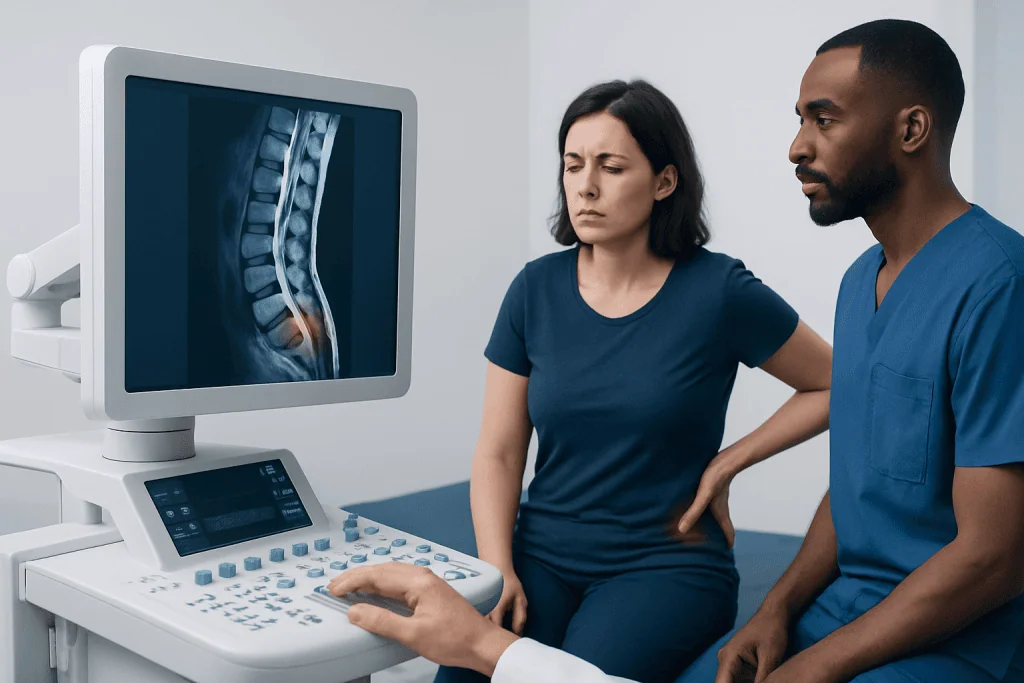
Symptoms vary depending on which nerve is affected and whether the narrowing is mild, moderate, or severe. In the neck, neural foraminal stenosis may cause pain radiating into the shoulder, arm, or hand. In the lower back, it may cause pain traveling into the buttock, thigh, calf, or foot. Some people describe burning, electric-shock sensations, pins and needles, or a deep aching discomfort.
Numbness and muscle weakness can occur if the nerve is more significantly compressed. For example, a person may notice reduced grip strength, difficulty lifting the front of the foot, or fatigue in a leg after walking. Symptoms may be worse with certain positions, such as twisting, extending the spine, prolonged standing, or sitting for long periods, depending on the location.
Symptoms do not always match the degree of narrowing seen on a scan. A person can have marked foraminal narrowing and few complaints, while another may have troublesome symptoms with only moderate imaging changes. This is one reason doctors combine imaging results with a physical examination rather than relying on scans alone.
- Neck involvement may cause arm pain, hand tingling, or weakness.
- Lower back involvement may cause sciatica-like leg pain, numbness, or weakness.
- Symptoms may come and go or gradually worsen over time.
- Back or neck pain may be present, but nerve-related symptoms are often the main concern.
Why it happens: causes and risk factors
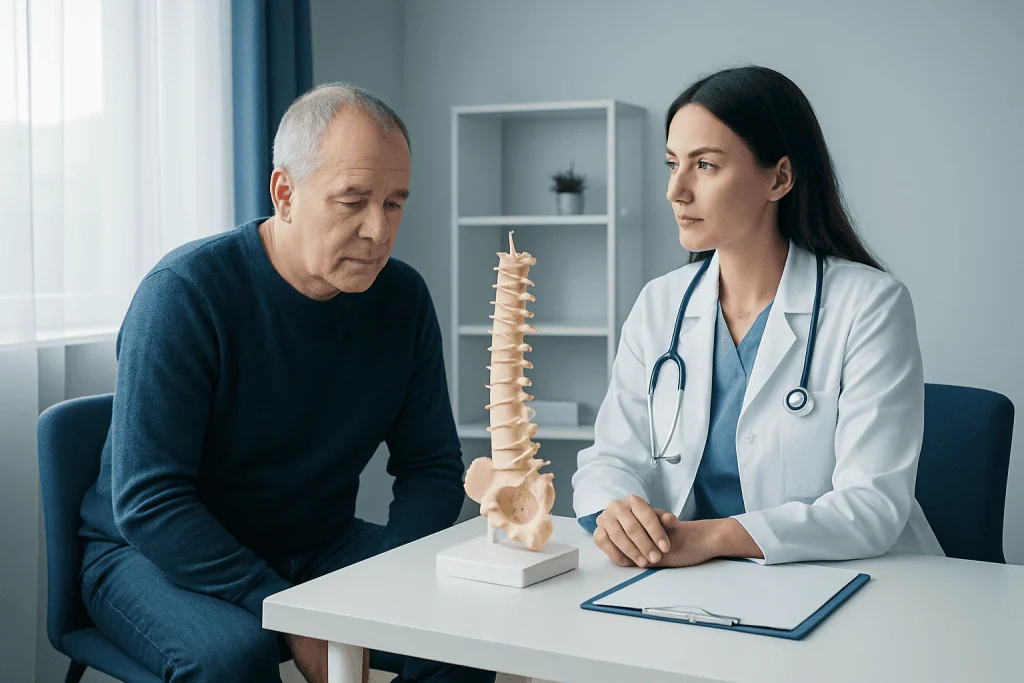
The most common cause of neural foraminal stenosis is wear-and-tear change in the spine over time. Discs can lose height as they age, which reduces the space available for nerves. Bone spurs from spinal arthritis, thickened ligaments, and changes in the small facet joints can also narrow the foramen.
Another important cause is a bulging or herniated disc that protrudes into the nerve exit space. In some people, slippage of one vertebra over another, scoliosis, past spinal injury, or prior surgery can alter alignment and contribute to narrowing. Less commonly, cysts, tumors, or inflammatory conditions may affect the foraminal space and need separate evaluation.
Risk increases with age, repetitive spinal strain, heavy physical work, smoking, poor bone and joint health, and a history of spinal degeneration in the family. However, having risk factors does not mean symptoms are inevitable. Many people can reduce strain on the spine and support function with regular movement, conditioning, weight management, and good ergonomic habits.
How doctors diagnose neural foraminal stenosis
Diagnosis begins with a detailed medical history and physical examination. The clinician asks about where the pain travels, whether there is numbness or weakness, what movements make symptoms worse, and how daily life is affected. During the examination, they may check posture, range of motion, reflexes, muscle strength, skin sensation, walking pattern, and tests that gently stress the involved nerve root.
Imaging is often helpful when symptoms are persistent, when weakness is present, or when another condition needs to be ruled out. MRI is commonly used because it shows discs, nerves, and soft tissues well. CT can help assess bone-related narrowing, and plain X-rays may show alignment changes, disc height loss, or arthritis. In selected cases, electrodiagnostic tests such as EMG and nerve conduction studies help clarify whether symptoms are coming from a compressed spinal nerve or from another nerve problem.
The goal is not only to confirm narrowing but also to match the scan findings to the person’s symptoms. This helps avoid overtreatment and supports a more individualized plan. If needed, a specialist may evaluate whether symptoms fit a cervical or lumbar nerve root pattern and whether conservative treatment or a procedure is more appropriate.
Modern treatment approaches and expected outlook
Treatment usually starts with non-surgical methods, especially if there is no progressive weakness or other urgent warning sign. Common options include modifying aggravating activities, using short-term pain-relieving or anti-inflammatory medicines when appropriate, and starting a structured physical therapy program. Therapy often focuses on posture, core support, flexibility, movement patterns, and gradual return to activity. Some people also benefit from heat, ice, or other symptom-relief measures.
If symptoms continue, image-guided injections may be considered in selected cases to reduce inflammation around the irritated nerve root. These procedures do not correct the underlying anatomy, but they may lessen pain enough to allow more effective rehabilitation. Depending on the source of compression, specialists may also discuss targeted procedures used within broader spine care pathways, including microdiscectomy when a disc is the main cause of nerve compression.
Surgery may be considered when symptoms remain disabling despite well-planned conservative care, or when there is significant or worsening weakness. The aim is to relieve pressure on the nerve and, if needed, stabilize the affected part of the spine. Depending on the problem, options may include decompression techniques or spine surgery tailored to the level and cause of narrowing. In some situations involving unstable alignment, spinal fusion may be part of treatment.
The outlook is often favorable, especially when diagnosis is timely and treatment is matched to the source of symptoms. Many people improve with non-surgical care, while others benefit from surgery when there is a clear structural reason for persistent nerve compression. Recovery varies from person to person and depends on how long symptoms have been present, nerve involvement, and overall spine health.
Self-care, prevention, and living well with the condition
Not all cases of neural foraminal stenosis can be prevented, especially when age-related spinal changes are involved. Still, everyday habits can support spinal health and may reduce symptom flare-ups. Regular low-impact exercise, staying active within comfort, and strengthening the core and supporting muscles can improve movement control and reduce mechanical stress on the spine.
Good posture, ergonomic workstation setup, safe lifting technique, and avoiding prolonged positions may also help. When symptoms affect the neck, frequent breaks from looking down at screens can reduce strain. When the lower back is involved, balancing rest with gentle movement is usually more helpful than prolonged bed rest.
People who smoke may benefit from smoking cessation support, since smoking can affect disc health and healing. Maintaining a healthy body weight may also reduce stress on the spine. It is best to discuss any home exercise plan with a qualified clinician, especially if pain radiates into a limb or weakness is present.
For international patients who need multidisciplinary assessment, Acibadem International’s specialists in JCI-accredited hospitals diagnose and treat spinal nerve compression conditions using coordinated neurology, orthopedics, neurosurgery, imaging, and rehabilitation services.
When to seek medical care
Medical evaluation is appropriate when back or neck pain begins to radiate into an arm or leg, when numbness or tingling keeps returning, or when symptoms interfere with work, sleep, walking, or daily activities. A prompt assessment can help identify whether a spinal nerve is involved and whether imaging or specialist care is needed.
Urgent medical attention is especially important if there is new or progressive muscle weakness, trouble walking, loss of coordination, severe unrelenting pain, or changes in bowel or bladder control. These symptoms do not always mean neural foraminal stenosis is the cause, but they can indicate significant nerve compression or another condition that needs timely treatment.
People with a history of cancer, major trauma, fever, unexplained weight loss, or immune suppression should also seek medical advice promptly if new spine-related symptoms develop. A qualified doctor can determine the cause and guide the next steps safely.
Frequently asked questions
Is neural foraminal stenosis the same as spinal stenosis?
Not exactly. Neural foraminal stenosis refers specifically to narrowing of the openings where spinal nerves exit the spine, while spinal stenosis is a broader term that can also describe narrowing of the central spinal canal. A person may have one or both conditions.
Can neural foraminal stenosis heal on its own?
The underlying narrowing usually does not fully reverse on its own, especially when it is related to arthritis or disc height loss. However, symptoms can improve significantly with conservative treatment, reduced inflammation, and better movement mechanics. Some people have long periods with little or no discomfort.
Does everyone with foraminal narrowing need surgery?
No. Many people improve without surgery through medication, physical therapy, activity adjustment, and sometimes injections. Surgery is usually considered when symptoms remain severe, daily function is limited, or there is progressive neurologic weakness.
What is the best scan for neural foraminal stenosis?
MRI is commonly the most useful test because it shows the nerves, discs, and surrounding soft tissues clearly. CT may add information about bone spurs or bony narrowing. The best test depends on the person's symptoms, medical history, and whether surgery is being considered.
Can exercise make neural foraminal stenosis worse?
The right kind of exercise is often helpful, but some movements may aggravate symptoms if they narrow the affected space further. A clinician or physical therapist can guide exercises that support posture, flexibility, and strength without provoking nerve pain. New weakness or severe radiating pain during exercise should be assessed.
Is neural foraminal stenosis permanent?
The structural changes causing the narrowing may be long-lasting, but symptoms are not always permanent. Many people manage the condition successfully and maintain a good quality of life. Treatment focuses on relieving nerve irritation, improving function, and reducing the chance of repeated flare-ups.
References
- National Institute of Neurological Disorders and Stroke
- American Academy of Orthopaedic Surgeons
- North American Spine Society
- National Institute of Arthritis and Musculoskeletal and Skin Diseases
This article is for general information only and is not a substitute for professional medical advice. Please consult a qualified doctor about your individual situation.
Joint and spine care in Turkey — expert assessment & treatment
JCI-accredited · board-certified surgeons · reply within 24h
Add us as a Preferred Source to see more of our trusted health content across Google Search, AI Overviews and Discover.

More from the Health Library



Related Specialists

Dr. Başak Bolluk Kılıç
Neurology
Dr. Şule Turgut
Anesthesiology
Dr. Yakup Tire
Cardiovascular Surgery
Prof. Dr. Tuluhan Yunus Emre
Orthopedic Surgery & Traumatology