Neuroendovascular Surgery: Procedure, Recovery and Results

Neuroendovascular surgery uses image-guided catheters, usually inserted through an artery in the groin or wrist. It may treat brain aneurysms, some strokes, arteriovenous malformations, and narrowed brain blood vessels.
Key Takeaways
- Neuroendovascular surgery uses image-guided catheters, usually inserted through an artery in the groin or wrist.
- It may treat brain aneurysms, some strokes, arteriovenous malformations, and narrowed brain blood vessels.
- Many patients recover more quickly than after open cranial surgery, but monitoring and follow-up imaging remain important.
- Potential risks include bleeding, stroke, vessel injury, contrast reactions, and recurrence or incomplete treatment in some conditions.
- Recovery instructions vary by procedure and should always take priority over general advice.
Neuroendovascular surgery is a minimally invasive approach that allows specialists to diagnose and treat selected blood-vessel conditions in the brain and spine using thin catheters guided through an artery. The right procedure, expected recovery, and results depend on the condition being treated, whether care is planned or urgent, and each person’s overall health.
Overview: What Is Neuroendovascular Surgery?
Neuroendovascular surgery is a group of minimally invasive procedures used to examine and treat blood-vessel conditions affecting the brain, spinal cord, head, and neck. Rather than opening the skull, a specialist guides a very thin tube called a catheter through an artery, commonly from the groin or wrist, while using real-time X-ray imaging to navigate safely toward the affected vessel.
A neuroendovascular procedure may be planned after imaging identifies a problem, or performed urgently, such as for certain types of stroke or a ruptured brain aneurysm. Depending on the diagnosis, the physician may place tiny coils, a stent, a flow-diverting device, medication, or another material designed to improve blood flow or block an abnormal vessel.
The term can sound like a major operation, but it describes catheter-based treatment performed by a highly specialized team. It is often part of coordinated care involving interventional neuroradiologists, neurosurgeons, neurologists, stroke specialists, anesthesiologists, and critical-care professionals.
How Neuroendovascular Surgery Works and What It Can Treat
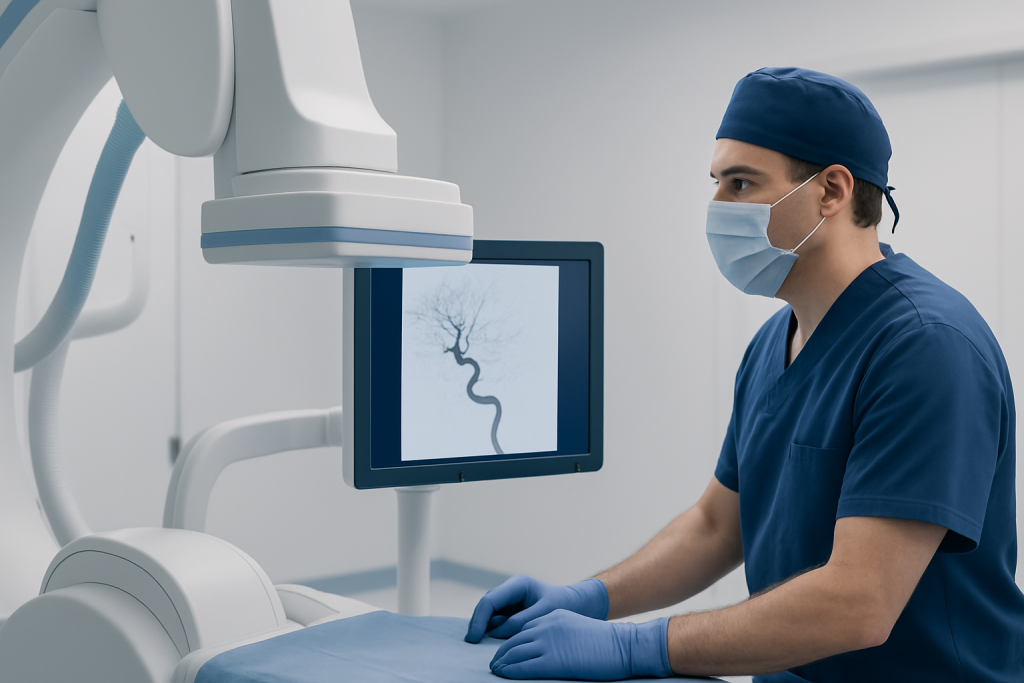
During neuroendovascular surgery procedures, contrast dye and detailed X-ray imaging help the clinical team see the blood vessels from inside. The catheter is advanced carefully to the treatment area, where small devices can be delivered with precision. The exact technique is tailored to the structure, location, and urgency of the vascular problem.
Neuroendovascular treatment may be considered for conditions such as brain aneurysms, acute ischemic stroke caused by a large-vessel blockage, arteriovenous malformations, dural arteriovenous fistulas, carotid artery disease, and selected vessel narrowings. Not every condition is suitable for a catheter-based approach; some people need open surgery, medication, observation, or a combination of treatments.
For example, an aneurysm may sometimes be treated with endovascular coiling, stent-assisted coiling, or flow diversion. In an acute ischemic stroke, mechanical thrombectomy may remove a clot from a major brain artery in eligible patients. These decisions require detailed imaging and careful assessment of the likely benefits and risks for the individual.
A cerebral angiogram is often an important part of evaluation and treatment planning. It provides a highly detailed map of brain blood vessels and may clarify findings seen on CT angiography or MR angiography.
Candidacy and Preparation Before the Procedure

Whether a person is a candidate depends on the diagnosis, symptoms, vessel anatomy, timing, medical history, medicines, kidney function, and ability to safely receive contrast dye and anesthesia. In urgent stroke care, candidacy is assessed rapidly using neurological examination and brain and vessel imaging. In planned care, the team usually has more time to compare available options.
Before a planned procedure, patients may have blood tests, an electrocardiogram, and imaging studies. The team should be told about all medicines, allergies, prior reactions to contrast dye, pregnancy, kidney disease, bleeding disorders, and any previous surgery or stent placement. Some people need blood-thinning medicines before or after placement of particular devices, while others may need to pause certain medicines under medical supervision.
Patients should follow the hospital’s instructions about eating, drinking, and taking regular medicines on the day of treatment. They should also arrange for support after discharge, as driving and strenuous activity may be restricted for a period. It is important not to stop antiplatelet or anticoagulant medicines independently, especially after a stent procedure.
Neuroendovascular surgery residency is advanced physician training undertaken after foundational medical and specialty training. Patients can ask who will perform the procedure, how the team’s expertise relates to their diagnosis, and whether open surgical or non-procedural alternatives have also been considered.
Step by Step: What Happens During a Neuroendovascular Procedure?
Most procedures take place in a specialized angiography suite. The patient lies on an imaging table and receives monitoring for heart rhythm, blood pressure, oxygen level, and neurological status. Depending on the procedure and clinical situation, anesthesia may be local with sedation or general anesthesia. The anesthesiology team discusses the safest approach in advance whenever time permits.
After cleaning and numbing the access site, the physician makes a very small puncture in an artery, usually at the groin or wrist. A catheter is then guided through the blood vessels under continuous imaging. Contrast dye may create a temporary warm sensation or metallic taste, which is usually brief.
Once the catheter reaches the target vessel, the team performs the planned treatment. This may involve removing a clot, placing coils within an aneurysm, deploying a stent or flow diverter, or blocking abnormal blood vessels with carefully selected materials. Afterward, the catheter is removed and the access site is closed with pressure or a closure device.
Procedure length varies considerably. Some diagnostic angiograms are relatively short, while complex aneurysm or vascular-malformation treatments may take longer. Patients and families should ask the treating team about the expected duration, immediate monitoring plan, and likely hospital stay for their specific neuroendovascular procedure.
What Should I Expect After Brain Aneurysm Surgery?
After brain aneurysm surgery, recovery differs according to whether the aneurysm was unruptured or ruptured, whether treatment was endovascular or open, and whether complications such as bleeding or vasospasm occurred. Following an uncomplicated planned endovascular aneurysm procedure, many people spend at least one night in hospital for neurological and access-site monitoring. Recovery after a ruptured aneurysm is usually longer and may require intensive care and rehabilitation.
After the procedure, staff regularly check alertness, speech, movement, pupils, blood pressure, and the catheter entry site. Mild fatigue, headache, groin or wrist tenderness, and bruising can occur. Any new severe headache, weakness, numbness, trouble speaking, vision change, confusion, chest pain, worsening access-site swelling, or active bleeding needs urgent medical assessment.
Patients may need follow-up brain and vessel imaging because aneurysms can require continued surveillance after coiling or flow-diversion treatment. The schedule is individualized. Some patients may also need antiplatelet medicines for a specified period when a stent or flow diverter has been used.
Returning to work, exercise, travel, and usual routines should be based on the care team’s advice. Recovery is not only physical; concentration, sleep, mood, and confidence can also take time to settle after a serious neurological event or hospital admission.
Benefits, Risks, and Results of Neuroendovascular Treatment
A key potential benefit of neuroendovascular surgery is that it reaches the affected blood vessel through a small arterial entry point, often avoiding a large incision and skull opening. For suitable patients, this can mean less tissue disruption and, in some situations, a shorter initial recovery. It can also provide treatment for blood-vessel problems that may be difficult to reach safely with open surgery.
However, no vascular brain procedure is without risk. Possible complications include stroke, bleeding, vessel injury, blood clots, infection, contrast-related kidney problems or allergic reactions, anesthesia complications, and bruising or bleeding at the wrist or groin. With aneurysm treatment, there may also be a need for further treatment if an aneurysm is not completely sealed or changes over time.
Results depend on the underlying condition and its severity. In acute stroke, timing strongly affects the chance of preserving brain function. For aneurysms and other vascular abnormalities, the treatment goal may be preventing future bleeding, reducing symptoms, or improving blood flow. The care team can explain what success means in the individual situation and what uncertainties remain.
Follow-up is a central part of treatment, not an optional extra. Imaging, medication review, management of blood pressure and other vascular risks, and rehabilitation when needed all help support long-term outcomes.
What Not to Do After Brain Surgery? Why Can’t You Bend Over After Brain Surgery?
Instructions after brain surgery differ between endovascular procedures and open craniotomy, so the treating surgeon’s plan should always be followed. After an uncomplicated catheter-based procedure, people are often asked to rest, avoid heavy lifting and strenuous exercise for a short time, protect the wrist or groin access site, and avoid driving until their clinician says it is safe. Alcohol, smoking, dehydration, and missed prescribed medicines can also interfere with recovery.
After open brain surgery, restrictions may be more extensive. Patients may be advised to avoid heavy lifting, forceful straining, high-impact activity, and contact sports while healing. They should not return to work, travel, or exercise beyond gentle activity without medical clearance, particularly after surgery for a ruptured aneurysm, stroke, or another serious brain condition.
People are sometimes told not to bend over after brain surgery because bending, straining, coughing forcefully, or lifting heavy objects may temporarily increase pressure in the head and can worsen headache, dizziness, or discomfort. Bending can also raise the risk of losing balance during early recovery. The degree and duration of this restriction vary, so patients should ask specifically when normal bending and activity can resume.
Helpful recovery habits usually include taking prescribed medicines as directed, attending follow-up visits, walking gently when approved, resting when tired, eating regular nourishing meals, and asking for help with tasks that involve lifting or repeated bending. New or worsening neurological symptoms should never be managed by waiting at home.
When to Seek Medical Care
Emergency medical care is needed for sudden symptoms that could indicate a stroke or bleeding in or around the brain. These include a sudden severe headache unlike usual headaches, facial drooping, weakness or numbness on one side, speech difficulty, new confusion, seizure, fainting, sudden vision loss, or difficulty walking. Calling local emergency services promptly is safer than driving to hospital.
After neuroendovascular surgery, patients should contact their clinical team urgently or seek emergency care for severe or worsening headache, new weakness, difficulty speaking, a seizure, marked drowsiness, fever with concerning symptoms, persistent vomiting, chest pain, shortness of breath, or bleeding that does not stop with firm pressure. Rapidly enlarging swelling, coldness, severe pain, or color change in the arm or leg used for catheter access also requires prompt assessment.
For planned assessment or ongoing follow-up, a neurologist, neurosurgeon, or neuroendovascular specialist can review symptoms, imaging, and treatment options. Acibadem International’s multidisciplinary specialists and JCI-accredited hospitals provide evaluation and neurovascular treatment planning for international patients when appropriate.
Frequently asked questions
What is neuroendovascular surgery?
Neuroendovascular surgery is minimally invasive treatment for selected blood-vessel problems in the brain, spinal cord, head, or neck. A specialist guides a catheter through an artery, usually from the wrist or groin, and uses imaging to deliver treatment without opening the skull in many cases.
Is neuroendovascular surgery the same as open brain surgery?
No. Neuroendovascular surgery is performed from inside the blood vessels using catheters, while open brain surgery generally involves creating an opening in the skull. Both approaches can be appropriate, and the best option depends on the condition, anatomy, urgency, and patient health.
How long does recovery take after a neuroendovascular procedure?
Recovery varies from person to person and depends greatly on the condition treated. After a planned uncomplicated procedure, some people go home the next day and gradually return to routine activities over days to weeks, while recovery after stroke or a ruptured aneurysm may take much longer.
What should I expect after brain aneurysm surgery?
Patients can expect close neurological monitoring, checks of the catheter access site, and individualized guidance on activity and medicines. Mild tiredness and local bruising are common after an endovascular procedure, but new severe headache, weakness, speech difficulty, or confusion needs urgent assessment.
What not to do after brain surgery?
Patients should avoid activities that their surgeon has restricted, such as heavy lifting, strenuous exercise, forceful straining, driving, or alcohol use while taking certain medicines. They should not stop prescribed blood-thinning or antiplatelet medicines unless their treating clinician instructs them to do so.
Why can’t you bend over after brain surgery?
Bending over can temporarily increase pressure in the head and may worsen headache, dizziness, or discomfort during early healing. It may also increase fall risk when balance or strength is reduced; the care team can explain how long this restriction applies.
References
- American Stroke Association
- National Institute of Neurological Disorders and Stroke
- Society of NeuroInterventional Surgery
- Radiological Society of North America
- Mayo Clinic
This article is for general information only and is not a substitute for professional medical advice. Please consult a qualified doctor about your individual situation.
Endovascular Surgery in Turkey — costs, top hospitals & a free quote
JCI-accredited · board-certified surgeons · reply within 24h
Add us as a Preferred Source to see more of our trusted health content across Google Search, AI Overviews and Discover.
Check your numbers in seconds
BMI, calories, due date, blood pressure and 30+ more clinical calculators — free, instant, doctor-reviewed ranges.

Cardiology Department
Diagnosis and treatment of heart and vascular conditions, from prevention to advanced interventional procedures.
91 specialists in this unitMore from the Health Library



Related Specialists

Dr. Jamila Ebrahimi
Emergency Service
Dr. Nilüfer Oğuz
Dermatology
Dr. Alper Koçak
Gynecology & Obstetrics
Assoc. Prof. Dr. Şafak Yılmaz Baran
Gynecology & Obstetrics