Neurogenic Bladder Surgery: Procedure, Recovery and Results

Neurogenic bladder occurs when nerve pathways controlling bladder storage or emptying are disrupted. Surgery is usually reserved for symptoms or complications not adequately controlled with medicines, catheterization, or other conservative measures.
Key Takeaways
- Neurogenic bladder occurs when nerve pathways controlling bladder storage or emptying are disrupted.
- Surgery is usually reserved for symptoms or complications not adequately controlled with medicines, catheterization, or other conservative measures.
- Procedures may increase bladder capacity, improve emptying, create a catheterizable channel, or divert urine away from the bladder.
- Recovery varies by procedure; follow-up is essential to monitor kidney function, infections, stones, and urinary continence.
- A urologist and the clinician managing the neurological condition should coordinate long-term care.
Neurogenic bladder surgery is considered when nerve-related bladder dysfunction causes unsafe urine storage, poor emptying, recurrent complications, or persistent incontinence despite non-surgical care. The right procedure depends on bladder pressure, kidney health, ability to catheterize, mobility, and the underlying neurological condition.
Overview: What is neurogenic bladder surgery?
Neurogenic bladder surgery includes several operations used to manage bladder problems caused by damage or disease affecting the brain, spinal cord, or peripheral nerves. It may be recommended when the bladder stores urine at unsafe pressure, does not empty effectively, leaks despite treatment, or contributes to repeated infections, kidney swelling, or kidney damage. The purpose is not always to restore normal bladder function; often, it is to make urine storage and drainage safer, more predictable, and easier to manage.
Neurogenic bladder can occur with spinal cord injury, multiple sclerosis, spina bifida, stroke, Parkinsonian disorders, diabetes-related nerve damage, pelvic nerve injury, or after certain spinal operations. Neurogenic bladder after spinal surgery, back surgery, or spine surgery may be temporary when nerves recover, but it can also persist if nerves remain affected. A new inability to pass urine after surgery needs prompt medical assessment.
Before surgery, the care team generally explores non-surgical measures such as timed voiding, pelvic-floor strategies when appropriate, medication, intermittent catheterization, indwelling or suprapubic catheter use, and selected injections or neuromodulation treatments. Surgery is individualized and planned around both day-to-day needs and long-term kidney protection.
How serious is a neurogenic bladder?
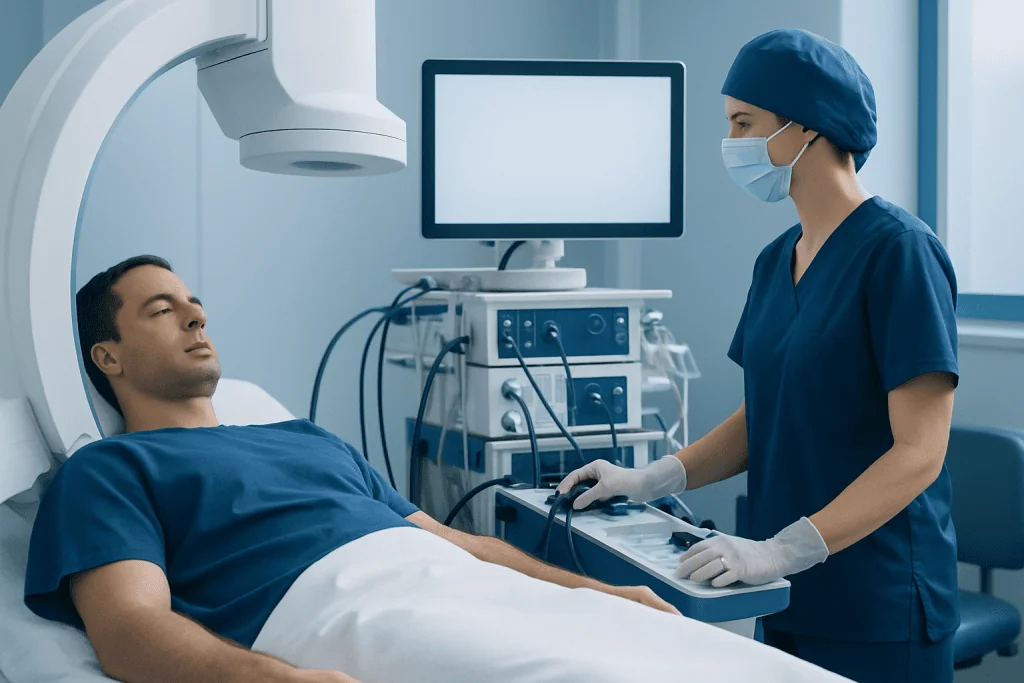
How serious a neurogenic bladder is depends mainly on bladder pressure, how well the bladder empties, and whether urine flow is affecting the kidneys. A bladder that fills under high pressure or sends urine backward toward the kidneys can cause upper urinary tract dilation and, over time, impair kidney function. Incomplete emptying can also increase the likelihood of urinary tract infections, bladder stones, and overflow leakage.
Some people have mild symptoms that can be managed with monitoring and non-surgical treatment. Others require close specialist follow-up because symptoms do not always reflect the level of risk: a person may have few symptoms while the bladder is still storing urine unsafely. Regular review may include urine testing when clinically indicated, kidney function blood tests, ultrasound imaging, and urodynamic testing.
Urgent assessment is particularly important for fever or flank pain with urinary symptoms, new severe lower abdominal swelling or pain, inability to drain urine, blood in the urine, or sudden changes in bladder function alongside new leg weakness, numbness, or bowel changes. Early care can help prevent avoidable complications.
Candidacy and choosing the right procedure

A urologist may discuss surgery when conservative treatment does not provide safe bladder pressures, reliable emptying, acceptable continence, or protection of kidney function. The decision is based on the person rather than a single diagnosis. Important considerations include urodynamic findings, kidney imaging, infection history, hand function and mobility, bowel health, cognitive ability, previous pelvic or abdominal operations, and support at home during recovery.
Common surgical approaches include bladder augmentation (augmentation cystoplasty), in which a section of bowel is used to enlarge a small or high-pressure bladder; a continent catheterizable channel, which provides an alternative route for catheter insertion; procedures to improve outlet resistance for selected forms of incontinence; and urinary diversion, which redirects urine into an internal reservoir or through a stoma. In some situations, a suprapubic catheter may be a safer long-term drainage option than complex reconstruction.
A neobladder is most often discussed after bladder removal for cancer and is not the standard operation for most people with neurogenic bladder. However, bowel-based reservoirs and diversions may occasionally be considered in complex cases. The team should explain why a particular procedure is being proposed, what ongoing catheterization or stoma care may be needed, and what alternatives remain available.
- Bladder augmentation may lower storage pressure and increase capacity.
- Catheterizable channels may make intermittent catheterization more accessible.
- Urinary diversion may be considered when reconstruction is unsuitable or has failed.
- Outlet procedures may help selected patients with stress-related leakage, but can make catheterization necessary.
What happens during neurogenic bladder surgery?
The exact steps depend on the operation. Before surgery, patients usually have an anesthetic assessment, laboratory testing, imaging, urine evaluation, and a medication review. The surgical team also plans infection prevention, blood-clot prevention, pain control, and postoperative bladder drainage. Operations are performed under general anesthesia and may be open, laparoscopic, or robot-assisted depending on the procedure and individual circumstances.
During bladder augmentation, the surgeon opens the bladder and adds a carefully prepared segment of bowel to create a larger, more compliant reservoir. If a catheterizable channel is created, the surgeon forms a small passage from the bladder or urinary reservoir to the skin, commonly on the abdomen, so a catheter can be inserted through a discreet opening. With urinary diversion, urine is redirected through bowel tissue to a stoma or, in selected cases, to a continent internal pouch.
After surgery, one or more catheters or drains are commonly left in place while tissues heal. A hospital stay is needed after major reconstruction, and bowel function is monitored closely because bowel surgery can temporarily slow digestion. Before discharge, patients and caregivers receive training in catheter care, bladder irrigation when needed, stoma care, warning signs, and follow-up arrangements.
For people needing complex reconstruction or diversion, neurogenic bladder treatment should be planned with an experienced urology team and the specialists caring for the underlying neurological condition.
Neurogenic bladder recovery: timeline, benefits and risks
Neurogenic bladder recovery after surgery differs substantially between procedures. In the first days, care focuses on pain relief, safe mobilization, return of bowel function, fluid balance, and correct drainage through catheters. After discharge, patients may have activity restrictions for several weeks and need follow-up visits to check healing. Catheters are removed only when the surgeon confirms that the reconstruction has healed adequately.
Learning new routines is an important part of recovery. Some people need regular intermittent catheterization after augmentation or outlet surgery, even if they were previously able to pass urine independently. Mucus production from bowel tissue is expected after bowel-based reconstruction and may require regular irrigation. Longer-term monitoring can include ultrasound, kidney function tests, urine assessment when symptoms occur, and repeat urodynamics in selected patients.
Potential benefits include lower bladder pressure, improved continence, fewer episodes of retention, more reliable urine drainage, and reduced risk to the upper urinary tract. No surgery can eliminate every complication, and results depend on the neurological condition, surgical approach, adherence to catheterization or irrigation routines, and ongoing follow-up.
Risks include bleeding, wound infection, urinary infection, blood clots, bowel obstruction, urine leakage from the reconstruction, stone formation, catheter blockage, metabolic changes related to bowel use, persistent or recurrent leakage, and the need for further procedures. The surgeon can discuss personal risk based on health history and the planned technique.
Is bladder surgery recovery painful?
Bladder surgery recovery can involve discomfort, especially after open abdominal surgery, but pain is expected to be actively managed. Patients may feel pain around the incision, pressure or cramping in the lower abdomen, tiredness, and temporary discomfort related to catheters or drains. The intensity and duration vary with the operation, individual pain sensitivity, and whether bowel reconstruction was required.
Hospitals use a tailored pain-management plan that may combine different medicines and non-medication measures such as early, supported movement and breathing exercises. Good pain control helps a person move, cough, sleep, and recover more comfortably. It is important to tell the care team if pain is not controlled, becomes suddenly worse, or occurs with fever, vomiting, swelling, or reduced urine drainage.
At home, discomfort should generally improve gradually rather than escalate. Patients should follow instructions about wound care, lifting, driving, diet, hydration, catheter care, and return to work or exercise. They should not change prescribed medicines or remove catheters independently without advice from their surgical team.
Does neurogenic bladder get better?
Neurogenic bladder may improve when the underlying nerve problem is temporary or recoverable, such as short-term nerve irritation after some operations, inflammation, or certain injuries. Improvement can be gradual and may take weeks to months. In other situations, especially with long-standing spinal cord injury, progressive neurological disease, or permanent nerve damage, bladder dysfunction may be long term.
Even when nerve function does not fully return, symptoms and bladder safety can often be improved through a structured management plan. This may include scheduled emptying, intermittent catheterization, medication, treatment of constipation, infection prevention measures, and surgery when appropriate. The goal is to preserve kidney health, avoid overdistension or high-pressure storage, and support independence and quality of life.
People with neurogenic bladder after surgery should not assume that urinary retention or leakage will resolve on its own. Follow-up with the operating surgeon, a urologist, and where relevant a neurologist or rehabilitation specialist can clarify whether recovery is expected and whether treatment should be adjusted.
How painful is neobladder surgery? When to seek medical care
Neobladder surgery is a major abdominal operation and recovery can be more demanding than many other bladder procedures because it involves creating a new urine reservoir from bowel. Pain is typically most noticeable in the first days after surgery and is managed with a planned combination of pain-relief methods. Recovery also involves adapting to changes in urination, potential nighttime leakage, pelvic-floor rehabilitation when advised, and regular follow-up.
For neurogenic bladder, a neobladder is not usually the first surgical option. The most suitable procedure depends on whether the main problem is high bladder pressure, poor emptying, leakage, inability to catheterize, or a severely damaged bladder. A detailed discussion of expected daily care is as important as discussing the operation itself.
Medical care should be sought promptly for fever, chills, flank or severe abdominal pain, vomiting, inability to catheterize or drain urine, catheter blockage, a large reduction in urine output, blood in the urine, worsening wound redness or discharge, or new weakness or numbness. Emergency care is appropriate for severe pain, confusion, fainting, or symptoms of a serious allergic reaction.
Acibadem International’s multidisciplinary specialists and JCI-accredited hospitals support international patients who need evaluation and treatment for complex neuro-urological conditions, with care coordinated across urology, neurology, rehabilitation, and other relevant specialties.
Frequently asked questions
What is the main goal of neurogenic bladder surgery?
The main goal is to protect the kidneys and create safer, more reliable urine storage and emptying. Depending on the procedure, surgery may reduce high bladder pressure, improve continence, enable catheterization, or redirect urine when the bladder cannot be managed safely.
Will a person need a catheter after neurogenic bladder surgery?
Many patients need one or more temporary catheters while the surgical area heals. Some procedures, particularly bladder augmentation or outlet surgery, may require long-term intermittent catheterization because the bladder may not empty completely on its own.
How long does recovery from neurogenic bladder surgery take?
Initial hospital recovery commonly lasts several days after major reconstruction, but the exact duration depends on the procedure and any complications. Returning to usual daily activities often takes weeks, while learning catheterization, irrigation, or stoma routines and assessing long-term results can take longer.
Can neurogenic bladder surgery cure the nerve damage?
Surgery does not repair the underlying nerve damage in most cases. It can, however, manage the bladder effects of nerve injury by lowering pressure, improving drainage, reducing leakage, and helping protect kidney function.
Is neurogenic bladder after back surgery permanent?
It may be temporary or persistent depending on why the nerves were affected and whether they recover. Any new urinary retention, incontinence, saddle-area numbness, or bowel changes after back or spine surgery should be assessed urgently.
What are signs that a reconstructed bladder needs urgent review?
Warning signs include fever, severe abdominal or flank pain, vomiting, inability to drain urine or pass a catheter, reduced urine output, significant bleeding in the urine, and worsening redness or discharge at a wound or stoma. These symptoms may indicate infection, obstruction, leakage, or another complication requiring prompt care.
References
- National Institute of Diabetes and Digestive and Kidney Diseases
- American Urological Association
- European Association of Urology
- Spinal Cord Injury Research Evidence
- National Health Service
This article is for general information only and is not a substitute for professional medical advice. Please consult a qualified doctor about your individual situation.
Neurogenic Bladder in Turkey — costs, top hospitals & a free quote
JCI-accredited · board-certified surgeons · reply within 24h
Add us as a Preferred Source to see more of our trusted health content across Google Search, AI Overviews and Discover.

Urology
Treatment of the urinary system and male reproductive health, including robotic and laser procedures.
63 specialists in this unit