

Neuroinflammation: What It Means and How Doctors Investigate It
Neuroinflammation means inflammation affecting the nervous system, not one specific diagnosis. Symptoms vary widely and may include headache, confusion, weakness, sensory changes, seizures, or changes in balance and vision.
Key Takeaways
- Neuroinflammation means inflammation affecting the nervous system, not one specific diagnosis.
- Symptoms vary widely and may include headache, confusion, weakness, sensory changes, seizures, or changes in balance and vision.
- Doctors investigate neuroinflammation by combining medical history, neurological examination, imaging, blood tests, and sometimes lumbar puncture.
- Treatment depends on the cause and may involve treating infection, controlling immune activity, or supporting recovery.
- Early assessment is important when symptoms are sudden, severe, or involve changes in consciousness or movement.
Neuroinflammation refers to inflammation involving the brain, spinal cord, or related nervous system tissues. It is not a single disease, but a process that can occur with infections, autoimmune conditions, injuries, and some chronic neurological disorders, so doctors investigate it carefully to find the underlying cause.
Overview: What neuroinflammation means
Neuroinflammation describes inflammation within the central or peripheral nervous system. In simple terms, it means the body’s immune response is active in tissues such as the brain, spinal cord, nerves, or the protective structures around them. This response may help protect the body in some situations, but when it is excessive, prolonged, or directed at healthy tissue, it can contribute to symptoms and nerve damage.
Importantly, neuroinflammation is not a diagnosis by itself. It is a biological process that can happen for different reasons, including infection, autoimmune disease, injury, toxic exposure, or as part of certain neurological conditions. Because the causes are varied, doctors do not assume that all inflammation in the nervous system behaves the same way or needs the same treatment.
The immune cells involved may include cells already present in the nervous system, such as microglia, as well as immune cells that travel through the bloodstream. When these cells release inflammatory signals, they can affect how nerve cells communicate. In some cases this leads to temporary symptoms, while in others it can contribute to more lasting neurological problems.
Symptoms and possible effects on the nervous system
Neuroinflammation can cause many different symptoms because the nervous system controls movement, sensation, thinking, mood, and body functions. Symptoms depend on which area is affected and how severe the inflammation is. Some people experience mild, vague problems at first, while others develop symptoms more quickly.
Possible symptoms may include headache, fever, neck stiffness, confusion, memory or concentration problems, unusual sleepiness, dizziness, balance problems, numbness, tingling, weakness, blurred or double vision, speech changes, tremor, or seizures. Mood and behavior changes can also happen, especially if brain regions involved in thinking and emotion are affected.
Not every symptom points to neuroinflammation, and many of these complaints can occur in more common conditions such as migraine, viral illness, vitamin deficiency, stroke, or medication side effects. That is one reason doctors look at the full pattern rather than one symptom alone. Warning signs such as sudden weakness, loss of consciousness, severe headache, or new seizures need urgent medical attention.
- Brain involvement may cause confusion, memory changes, seizures, or altered behavior.
- Spinal cord involvement may lead to weakness, numbness, bladder problems, or trouble walking.
- Peripheral nerve involvement may cause pain, tingling, burning sensations, or muscle weakness.
Causes and risk factors
There are several broad causes of neuroinflammation. Infections are one important group. Viruses, bacteria, fungi, and other infectious agents can directly affect the nervous system or trigger a strong immune response around it. In these cases, the body may be reacting both to the organism itself and to tissue injury caused during the infection.
Autoimmune and inflammatory disorders are another major cause. In these conditions, the immune system mistakenly targets components of the nervous system. Examples include inflammatory demyelinating disorders such as multiple sclerosis, autoimmune encephalitis, and some forms of myelitis or neuropathy. Systemic autoimmune diseases can also involve the brain or nerves.
Neuroinflammation may also appear after trauma, stroke, surgery, or exposure to certain toxins. In addition, researchers study how lower-grade inflammation may contribute to chronic neurological diseases, though this area is complex and not fully understood. Risk factors depend on the underlying cause and may include recent infection, a known autoimmune disease, immune suppression, cancer, recent travel, tick exposure, or a history of neurological symptoms.
How doctors investigate neuroinflammation
Evaluation begins with a detailed history and neurological examination. Doctors ask when symptoms started, whether they are worsening, and whether there has been fever, recent illness, vaccination, travel, injury, medication change, or autoimmune disease. The examination looks at strength, sensation, reflexes, coordination, speech, vision, and mental status to identify which part of the nervous system may be affected.
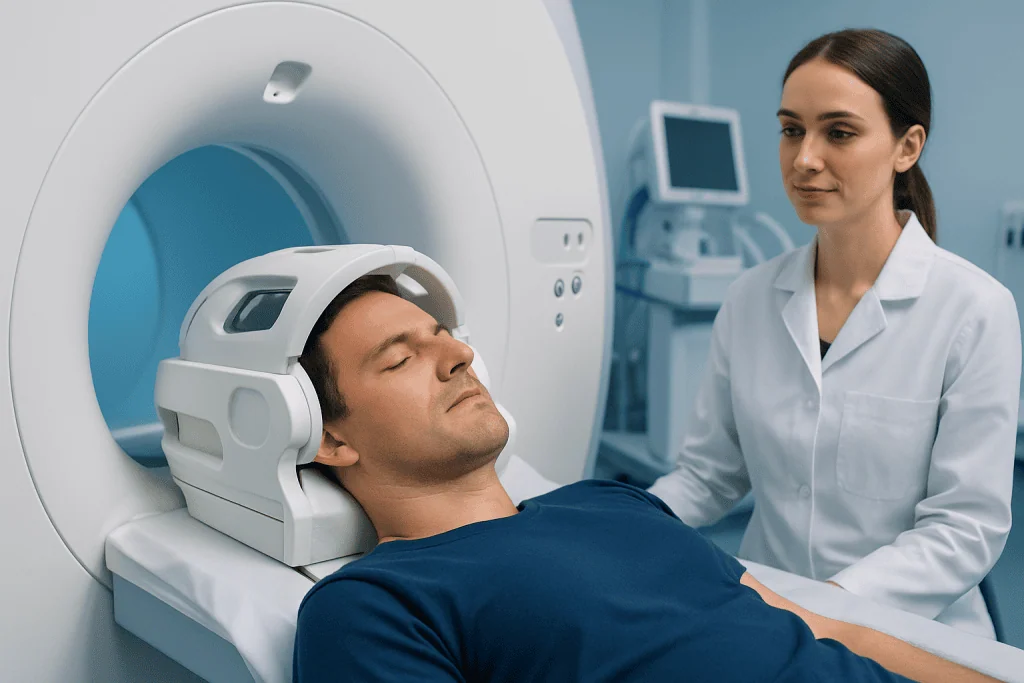
Imaging is often an important next step. MRI scanning can help show inflammation, swelling, demyelination, lesions, or structural changes in the brain and spinal cord. Depending on the situation, doctors may also use CT scans, electroencephalography for seizures or altered consciousness, or nerve conduction studies and electromyography if peripheral nerves are suspected.
Laboratory testing is tailored to the clinical picture. Blood tests may look for signs of infection, inflammation, autoimmune activity, metabolic problems, and vitamin deficiencies. In some patients, a lumbar puncture is recommended to examine cerebrospinal fluid for cells, protein levels, antibodies, and signs of infection or immune activation. These pieces of information are interpreted together rather than in isolation.
Sometimes further evaluation is needed, such as antibody panels for autoimmune encephalitis, cancer screening when a paraneoplastic cause is considered, or referral for specialist neurological evaluation. If a condition such as encephalitis is suspected, prompt assessment is especially important because treatment may need to start before every test result is available.
Diagnosis: finding the cause, not just the inflammation
The diagnosis of neuroinflammation is usually a step-by-step process. Doctors first confirm whether symptoms are likely coming from the nervous system and whether inflammation is a probable explanation. They then work to identify the most likely cause, since treatment for infection is very different from treatment for autoimmune disease.
In some patients, diagnosis can be made relatively quickly if the findings clearly fit a known pattern. In others, it takes time and repeat assessment, especially when symptoms are subtle or test results are mixed. Follow-up imaging or repeated neurological examinations may be useful to see whether a process is improving, stable, or progressing.
It is also common for doctors to rule out other conditions that can mimic neuroinflammation. These may include stroke, tumors, migraine, metabolic disturbances, medication reactions, psychiatric conditions, and neurodegenerative disorders. This careful approach helps avoid unnecessary treatment and supports safer, more accurate care.
Treatment options and supportive care
Treatment depends entirely on the underlying cause. If infection is responsible, care may involve antiviral, antibacterial, antifungal, or other antimicrobial therapy. If an autoimmune or inflammatory disorder is suspected, doctors may use medicines that reduce harmful immune activity, such as corticosteroids or other immunotherapies, while monitoring closely for benefits and side effects.
Some people need hospital care, especially if they have altered consciousness, seizures, breathing difficulties, severe weakness, or rapid progression of symptoms. Supportive treatment can be just as important as cause-specific therapy. This may include hydration, pain control, seizure management, rehabilitation, and monitoring of breathing, swallowing, or bladder function.
Recovery varies widely. Some patients improve fully after the underlying trigger is treated, while others need longer-term follow-up for persistent neurological symptoms. Physical therapy, occupational therapy, speech therapy, and neuropsychological support may help when movement, communication, memory, or daily function have been affected.
In complex cases, care is often coordinated by specialists in neurology, neuroimmunology, infectious diseases, rheumatology, rehabilitation, and imaging. Near the end of the care pathway, patients seeking international evaluation may also consider centers such as Acibadem International, where multidisciplinary specialists in JCI-accredited hospitals assess and treat neurological inflammatory conditions.
Prevention, self-care, and living with uncertainty
Not every cause of neuroinflammation can be prevented, but some general measures may lower risk. Staying up to date with recommended vaccinations, reducing exposure to infections, managing chronic medical conditions, and seeking prompt care for serious neurological symptoms can all be helpful. People with known autoimmune disease should attend regular follow-up visits and discuss any new neurological symptoms early.
Self-care does not replace medical evaluation, but it can support recovery. Rest, adequate fluids, good nutrition, and gradual return to daily activities may help depending on the diagnosis and symptoms. If concentration, balance, or fatigue are affected, it is often useful to simplify routines and avoid driving or hazardous activities until a doctor says it is safe.
Uncertainty can be stressful when doctors are still determining the cause. Keeping a record of symptoms, timing, triggers, and medications may make the evaluation more efficient. Patients and families may also benefit from asking clear questions about what has been ruled out, what test results mean, and what signs should prompt urgent reassessment.
When to seek medical attention
People should seek urgent medical care for severe headache, sudden weakness, new seizures, fainting, confusion, difficulty speaking, trouble walking, loss of vision, or high fever with neurological symptoms. These features do not always mean neuroinflammation, but they can signal a serious disorder affecting the brain, spinal cord, or nerves and should be assessed without delay.
Medical advice is also important if symptoms are persistent, progressive, or unexplained. Ongoing numbness, weakness, memory change, or balance problems deserve evaluation even if they seem mild at first. Early investigation may help identify treatable causes before more significant problems develop.
Families often notice changes before the patient does, especially when confusion or behavior change is present. If a loved one seems unusually drowsy, disoriented, or unlike themselves after an illness or with new neurological symptoms, it is reasonable to seek prompt medical assessment.
Frequently asked questions
Is neuroinflammation a disease on its own?
Usually, no. Neuroinflammation is a process or response within the nervous system rather than a single disease. Doctors use the term to describe inflammation and then look for the underlying cause, such as infection, autoimmunity, injury, or another neurological condition.
Can neuroinflammation go away?
Yes, in some cases it can improve or resolve, especially when the cause is identified and treated early. Recovery depends on why the inflammation happened, how severe it was, and which part of the nervous system was affected. Some people recover fully, while others may have lingering symptoms that need follow-up care.
What tests are most commonly used to check for neuroinflammation?
Doctors often combine a neurological examination with MRI, blood tests, and sometimes cerebrospinal fluid testing through lumbar puncture. Additional tests may include EEG, nerve studies, antibody testing, or infection testing depending on the symptoms. No single test explains every case, so results are interpreted together.
Does neuroinflammation always mean multiple sclerosis?
No. Multiple sclerosis is one possible cause of inflammation in the central nervous system, but it is far from the only one. Infections, autoimmune encephalitis, myelitis, systemic inflammatory diseases, and other conditions can also lead to neuroinflammation.
Are symptoms of neuroinflammation always severe?
Not always. Symptoms can range from subtle issues such as fatigue, headache, or concentration difficulty to more serious problems like seizures, confusion, or weakness. Because the signs are variable and sometimes nonspecific, medical assessment is important when symptoms are new, persistent, or worsening.
How is neuroinflammation treated?
Treatment depends on the cause rather than the term itself. Doctors may treat an infection, reduce abnormal immune activity, manage symptoms such as seizures or pain, and recommend rehabilitation if function has been affected. A personalized treatment plan is important because the safest and most effective approach differs from one patient to another.
References
- National Institute of Neurological Disorders and Stroke
- National Institute of Mental Health
- Mayo Clinic
- Cleveland Clinic
- World Health Organization
This article is for general information only and is not a substitute for professional medical advice. Please consult a qualified doctor about your individual situation.
Joint and spine care in Turkey — expert assessment & treatment
JCI-accredited · board-certified surgeons · reply within 24h
Add us as a Preferred Source to see more of our trusted health content across Google Search, AI Overviews and Discover.

More from the Health Library



Related Specialists

Dr. Enes Kanay
Orthopedic Surgery & Traumatology
Dr. Deniz Usal
Gynecology & Obstetrics
Prof. Dr. Mustafa Parildar
Interventional Radiology
Gizem Gürzoğlu
Physical Medicine & Rehabilitation