Neurological Balance Disorders in Older Adults: Causes and Evaluation

Balance problems in older adults often have more than one cause, including neurological, inner ear, vision, muscle, and medication-related factors. Symptoms such as unsteadiness, vertigo, falls, or a new change in walking should be assessed by a doctor, especially if they are sudden or worsening.
Key Takeaways
- Balance problems in older adults often have more than one cause, including neurological, inner ear, vision, muscle, and medication-related factors.
- Symptoms such as unsteadiness, vertigo, falls, or a new change in walking should be assessed by a doctor, especially if they are sudden or worsening.
- Evaluation usually includes a medical history, medication review, neurological exam, balance testing, and sometimes imaging or hearing and vestibular tests.
- Treatment depends on the cause and may involve physical therapy, medication adjustments, treatment of an underlying neurological condition, and fall-prevention strategies.
- Early assessment can improve safety, preserve independence, and reduce the risk of injury.
Neurological balance disorders in older adults are a common reason for dizziness, unsteadiness, and falls. Careful evaluation can help identify whether the problem comes from the brain, nerves, inner ear, medications, vision, or more than one contributing factor.
Overview
Neurological balance disorders in older adults refer to problems with steadiness, walking, posture, or spatial orientation that are linked to the nervous system. Balance is a complex function. It depends on the brain, spinal cord, peripheral nerves, inner ear, vision, muscles, and joints working together. When one or more of these systems is affected, an older person may feel dizzy, off-balance, lightheaded, or unsure while walking.
These symptoms become more common with age, but they should not be dismissed as a normal part of getting older. Some causes are mild and manageable, while others need prompt medical attention. Because balance problems increase the risk of falls, fractures, fear of movement, and loss of independence, proper evaluation is important.
In many older adults, the cause is not just one condition. For example, mild nerve damage in the feet, age-related vision changes, arthritis, and a sedating medication may all contribute at the same time. A geriatric neurology approach looks at the whole person rather than one symptom alone.
Symptoms and How They May Feel
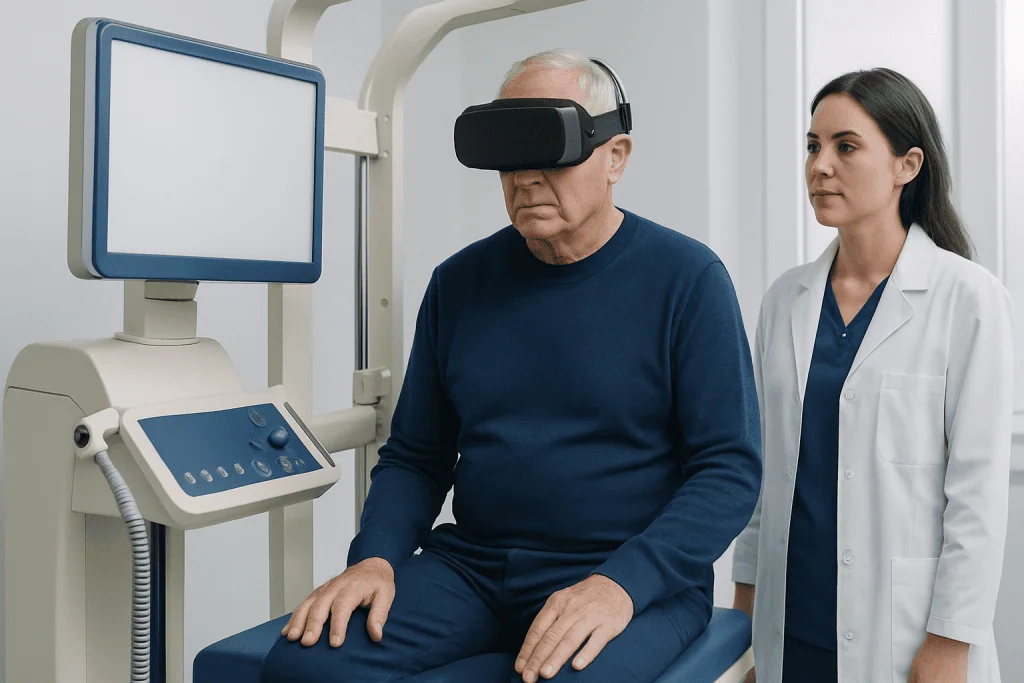
Balance disorders can feel different from person to person. Some people describe a spinning sensation, also called vertigo. Others feel unsteady, as if they are walking on a boat, drifting to one side, or about to fall. Some mainly notice that they need to hold onto furniture, widen their stance, or avoid walking in the dark or on uneven ground.
Symptoms may come and go or be constant. They may appear when standing up, turning the head, walking quickly, or changing position. In neurological causes, there may also be tremor, slower walking, numb feet, weakness, poor coordination, or difficulty judging where the body is in space.
Common symptoms include:
- Unsteadiness when standing or walking
- Vertigo or a sense of spinning
- Frequent stumbling or falls
- Feeling pulled to one side
- Difficulty walking in the dark
- Numbness or reduced sensation in the feet
- Double vision or blurred vision
- Nausea associated with dizziness
A sudden change in balance, especially with weakness, facial drooping, trouble speaking, severe headache, or new confusion, should be treated as urgent because it may signal a stroke or another serious neurological event.
Causes and Risk Factors

Neurological balance disorders in older adults can arise from several parts of the nervous system. Disorders affecting the brain may interfere with movement control and coordination. Examples include stroke, cerebellar disease, Parkinsonian syndromes, <a href="https://acibademinternational.com/diseases/normal-pressure-hydrocephalus/”>normal pressure hydrocephalus, or neurodegenerative conditions. Problems affecting peripheral nerves can reduce sensation in the feet, making it harder to detect ground position and maintain stability.
The inner ear is also closely connected to balance. Conditions such as benign paroxysmal positional vertigo, vestibular neuritis, or age-related vestibular decline may coexist with neurological disease. In some patients, a balance problem may relate to Parkinson's disease or another movement disorder, while in others it may be linked to diabetic neuropathy, cervical spine disease, previous head injury, or medication side effects.
Risk factors become more common with age. These include multiple medications, poor vision, hearing loss, diabetes, previous falls, reduced muscle strength, low blood pressure on standing, and chronic conditions affecting the brain or circulation. Alcohol use, dehydration, poor sleep, and anxiety may also worsen symptoms.
Sometimes the main issue is not dizziness itself but impaired gait. This may be seen in people with ataxia, small vessel disease in the brain, or disorders that affect the pathways needed for posture and coordination. A careful history helps distinguish whether the person is experiencing true vertigo, faintness, weakness, or a gait disorder.
How Doctors Evaluate Balance Problems
Evaluation begins with a detailed conversation about the symptoms. The doctor usually asks when the problem started, whether it is sudden or gradual, what makes it worse, and whether there have been falls or injuries. It is also important to review all medications, including sleep aids, blood pressure tablets, pain medicines, and over-the-counter products, because some can cause dizziness or sedation.
A physical and neurological examination follows. This may include checking eye movements, hearing, strength, reflexes, coordination, sensation in the feet, blood pressure lying and standing, and the way the person walks. The doctor may look for signs such as shuffling steps, wide-based gait, difficulty turning, tremor, or reduced position sense.
Additional tests depend on the suspected cause. These may include blood tests, hearing tests, vestibular testing, or imaging such as MRI when a central nervous system cause is possible. If stroke, bleeding, or head injury is a concern, CT scanning may be used. Some patients may benefit from formal balance and gait assessment or neurophysiological studies when nerve disease is suspected.
The main goal of evaluation is to identify treatable causes and reduce fall risk. Because symptoms can overlap, older adults are often best assessed with a multidisciplinary approach involving neurology, ENT or vestibular specialists, rehabilitation, and sometimes cardiology or ophthalmology.
Treatment Options
Treatment depends on the underlying cause. If medications are contributing, the doctor may reduce the dose, stop a nonessential drug, or switch to a safer alternative. If the problem is related to an inner ear disorder such as positional vertigo, specific repositioning maneuvers may provide relief. If a neurological disease is identified, treatment focuses on that condition while also improving safety and mobility.
Physical therapy is often a key part of care. Physical therapy and rehabilitation can help improve gait, leg strength, posture, and confidence with movement. Vestibular rehabilitation may be recommended for dizziness related to the inner ear or the brain’s processing of balance signals. Assistive devices such as a cane or walker may also help when chosen and fitted correctly.
Some patients need treatment for underlying disorders such as neuropathy, stroke after-effects, or degenerative neurological disease. Management may include blood sugar control, treatment of vitamin deficiency, hydration support, visual correction, hearing support, or management of Parkinsonian symptoms. In selected cases, further assessment by neurology helps guide diagnosis and long-term care.
The treatment plan is most effective when it addresses both the medical cause and the practical impact on daily life. That may include home safety changes, footwear advice, exercise planning, and support for fear of falling, which can itself lead to reduced activity and worsening balance.
Prevention and Self-care
Not every balance disorder can be prevented, but many steps can lower risk and improve function. Staying physically active helps preserve muscle strength, reaction time, and joint flexibility. Exercises that challenge balance safely, such as supervised balance training, walking programs, or chair-based strengthening, may be especially useful for older adults.
Daily self-care should also support safe movement. Good lighting, handrails, removing loose rugs, and wearing supportive shoes can reduce falls at home. Regular vision and hearing checks matter because the brain relies on these senses to maintain orientation. Managing long-term conditions such as diabetes, blood pressure problems, and foot disorders also plays an important role.
Other practical steps include drinking enough fluids, rising slowly from bed or chairs, avoiding excess alcohol, and reviewing medicines regularly with a doctor or pharmacist. If a person has numb feet, poor balance, or prior falls, they should not ignore these changes, even if symptoms seem mild.
For international patients seeking coordinated care, Acibadem International’s multidisciplinary specialists in JCI-accredited hospitals evaluate and treat balance disorders in older adults with input from neurology, imaging, rehabilitation, and related fields as needed.
When to See a Doctor
An older adult should see a doctor if balance symptoms are new, recurring, worsening, or causing fear of falling. Medical review is also appropriate when dizziness lasts more than a short time, walking becomes slower or less steady, or there is unexplained stumbling, weakness, or numbness.
Urgent medical attention is needed if balance problems begin suddenly or occur with one-sided weakness, numbness, slurred speech, fainting, chest pain, severe headache, new confusion, or loss of vision. These symptoms may indicate stroke, heart rhythm problems, bleeding, or another serious condition.
It is also wise to seek assessment after any fall, especially if there was head impact, injury, or a change in confidence or mobility afterward. Even when there is no major injury, a fall can be an important sign that the body or nervous system needs closer evaluation.
Frequently asked questions
Are balance problems a normal part of aging?
Some age-related changes can affect balance, such as slower reflexes, weaker muscles, or changes in vision and hearing. However, persistent dizziness, unsteadiness, or falls should not be considered normal and deserve medical assessment.
What is the difference between dizziness and vertigo?
Dizziness is a broad term that can include lightheadedness, unsteadiness, or a floating feeling. Vertigo is a specific type of dizziness that creates a spinning or movement sensation, often related to the inner ear or brain pathways that process balance.
Can medications cause balance problems in older adults?
Yes. Many medicines can contribute, including sedatives, some pain medicines, blood pressure treatments, and drugs that affect alertness or coordination. A medication review is an important part of evaluating balance symptoms in older adults.
What tests are usually done for neurological balance disorders in older adults?
Doctors often start with a detailed history, neurological examination, gait assessment, and blood pressure checks. Depending on the symptoms, they may also recommend blood tests, hearing or vestibular tests, nerve testing, or imaging such as MRI or CT.
Can physical therapy really help with balance disorders?
Yes, for many people it can. Targeted therapy may improve strength, walking pattern, confidence, and the brain's ability to use balance signals more effectively, especially when combined with treatment of the underlying cause.
When is dizziness or imbalance an emergency?
It should be treated urgently if it starts suddenly or happens with weakness, facial drooping, trouble speaking, severe headache, chest pain, fainting, or vision loss. These symptoms may point to stroke or another serious medical problem that needs immediate care.
References
- World Health Organization
- National Institute on Aging
- National Institute of Neurological Disorders and Stroke
- American Academy of Neurology
- Centers for Disease Control and Prevention
This article is for general information only and is not a substitute for professional medical advice. Please consult a qualified doctor about your individual situation.
Joint and spine care in Turkey — expert assessment & treatment
JCI-accredited · board-certified surgeons · reply within 24h
Add us as a Preferred Source to see more of our trusted health content across Google Search, AI Overviews and Discover.
Check your numbers in seconds
BMI, calories, due date, blood pressure and 30+ more clinical calculators — free, instant, doctor-reviewed ranges.

More from the Health Library



Related Specialists

Dt. Pelin Dülgeroğlu Karamık
Oral & Dental Health
Dr. Elvan Cevizci Akkılıç
Neurology
Assoc. Prof. Dr. Nicel Taşdemir
Gynecology & Obstetrics
Dr. Müzeyyen İyigün
Anesthesiology