Neuromuscular Disease Causes: Genetic, Autoimmune, and Acquired Triggers

Neuromuscular diseases affect muscles, peripheral nerves, motor neurons, or the connection between nerves and muscles. Some causes are inherited, while others develop later due to immune, metabolic, infectious, toxic, or inflammatory factors.
Key Takeaways
- Neuromuscular diseases affect muscles, peripheral nerves, motor neurons, or the connection between nerves and muscles.
- Some causes are inherited, while others develop later due to immune, metabolic, infectious, toxic, or inflammatory factors.
- Symptoms often include weakness, fatigue, cramps, numbness, swallowing problems, or changes in walking and coordination.
- Diagnosis usually combines a clinical exam with blood tests, nerve and muscle studies, imaging, and sometimes genetic testing or biopsy.
- Treatment depends on the cause and may include medicines, rehabilitation, respiratory support, nutrition, and symptom management.
- Early medical evaluation can help prevent complications and support better daily function.
Neuromuscular disease causes are diverse and may be genetic, autoimmune, infectious, metabolic, toxic, or idiopathic. Understanding the underlying trigger helps guide diagnosis, treatment, rehabilitation, and long-term support.
Overview of Neuromuscular Disease Causes
Neuromuscular diseases are a broad group of conditions that affect the parts of the body responsible for movement. These include the muscles themselves, the peripheral nerves that carry signals, the motor neurons that control muscle activity, and the neuromuscular junction, where nerves communicate with muscles. Because several structures can be involved, neuromuscular disease causes are varied rather than limited to a single problem.
Some neuromuscular conditions are present from birth because of inherited genetic changes. Others appear later in life after the immune system mistakenly attacks healthy tissue, after infections, due to endocrine or metabolic disorders, or as a result of medications and toxins. In some people, the exact cause remains unclear even after testing, especially early in the disease process.
Common examples include muscular dystrophies, inherited neuropathies, inflammatory muscle diseases, myasthenia gravis, peripheral neuropathies, and motor neuron disorders. Although these conditions differ, many share symptoms such as muscle weakness, fatigue, cramping, muscle wasting, numbness, tingling, or difficulty with balance and swallowing. The term neuromuscular diseases refers to this wider family of disorders rather than one single diagnosis.
Finding the cause matters because treatment is guided by the mechanism behind the symptoms. A genetic muscle disorder is managed differently from an autoimmune junction disorder or a neuropathy caused by diabetes, vitamin deficiency, or medication side effects. For this reason, careful evaluation by a neurologist or neuromuscular specialist is an important first step.
Symptoms That May Suggest a Neuromuscular Disorder
Symptoms depend on which part of the neuromuscular system is affected. When muscles are the main problem, people often notice difficulty climbing stairs, lifting objects, getting up from a chair, or raising the arms. If nerves are involved, symptoms may also include numbness, burning pain, tingling, reduced reflexes, or weakness that begins in the feet or hands.
Some conditions affect the neuromuscular junction, causing fluctuating weakness that worsens with activity and improves with rest. This may lead to drooping eyelids, double vision, slurred speech, chewing fatigue, or trouble swallowing. Disorders involving motor neurons can cause progressive weakness, muscle twitching, cramps, and muscle loss.
Symptoms may begin gradually or appear more suddenly, depending on the cause. Inherited conditions often progress slowly over years, while immune-related or infectious causes may develop over days to weeks. Certain symptoms, such as shortness of breath, choking, sudden inability to walk, or rapidly worsening weakness, need urgent medical attention.
A person may not have every symptom, and early signs can be subtle. Repeated falls, unexplained fatigue, a change in handwriting, foot drop, or difficulty keeping up with normal daily activity can all be clues. Persistent or progressive symptoms should be assessed rather than attributed only to aging, stress, or deconditioning.
Genetic Causes of Neuromuscular Disease
Genetic causes arise from inherited or newly occurring changes in genes that are important for muscle structure, nerve function, or signal transmission. These disorders may affect proteins that keep muscle fibers stable, maintain the myelin covering around nerves, or support communication between nerves and muscles. Depending on the gene involved, symptoms may begin in infancy, childhood, or adulthood.
Examples include muscular dystrophies, spinal muscular atrophy, hereditary neuropathies such as Charcot-Marie-Tooth disease, and some congenital myopathies or congenital myasthenic syndromes. In these disorders, the body may produce a faulty protein, too little of a necessary protein, or no functioning protein at all. Over time, this can lead to weakness, contractures, gait changes, and reduced endurance.
Family history may provide an important clue, but a negative family history does not rule out a genetic cause. Some genetic conditions result from new mutations, and others may be inherited in patterns that are not immediately obvious. Symptoms can also vary widely within the same family, making diagnosis more challenging.
Genetic testing has become a key tool in evaluating suspected inherited neuromuscular disease. It can help confirm the diagnosis, estimate the risk for relatives, and in some conditions guide specific therapy or eligibility for targeted care. In selected cases, specialists may discuss genetic testing as part of a broader diagnostic plan.
Autoimmune and Inflammatory Triggers
Autoimmune neuromuscular disease occurs when the immune system mistakenly attacks healthy tissue. The target may be the neuromuscular junction, the muscle fibers, the peripheral nerves, or the covering of the nerves. These conditions are often acquired rather than inherited, and many are treatable once recognized.
Myasthenia gravis is a classic example of an autoimmune condition affecting the communication between nerves and muscles. It often causes fluctuating weakness, especially in the eyes, face, throat, and limbs. Inflammatory muscle diseases, such as polymyositis, dermatomyositis, and immune-mediated necrotizing myopathy, can cause muscle weakness, elevated muscle enzymes, pain, and difficulty swallowing. Some inflammatory neuropathies, including chronic inflammatory demyelinating polyneuropathy, affect sensation and strength in the arms and legs.
Autoimmune disorders may occur on their own or alongside other immune conditions such as thyroid disease, lupus, rheumatoid arthritis, or celiac disease. Triggers are not always known, but infections, certain medications, or a predisposition to immune dysregulation may play a role. In some patients, cancer screening is recommended because specific inflammatory muscle diseases can be associated with underlying malignancy.
Diagnosis often involves blood tests for antibodies and markers of inflammation, electrophysiology, imaging, and sometimes biopsy. Treatment may include corticosteroids, immunosuppressive medicines, intravenous immunoglobulin, plasma exchange, and rehabilitation. When weakness appears related to an immune mechanism, doctors may consider approaches such as immunotherapy alongside supportive care.
Acquired Causes: Metabolic, Infectious, Toxic, and Other Factors
Many neuromuscular conditions are acquired later in life. Metabolic and endocrine problems can impair muscle and nerve function, including diabetes, thyroid disorders, kidney disease, liver disease, and electrolyte abnormalities. Vitamin deficiencies, especially deficiencies involving B vitamins or vitamin E in selected contexts, may also contribute to neuropathy or weakness.
Infections can directly or indirectly damage nerves and muscles. Viral, bacterial, and post-infectious immune reactions may all be involved. Examples include neuropathies after certain viral illnesses, muscle inflammation associated with infections, and rare but serious syndromes such as Guillain-Barré syndrome, which can cause rapidly progressive weakness after an infection.
Toxic and medication-related causes are another important group. Alcohol misuse, heavy metals, chemotherapy drugs, statins in susceptible individuals, and some antibiotics or other medicines may lead to neuropathy, myopathy, or neuromuscular junction problems. Intensive care illness can also weaken nerves and muscles, particularly after severe infection, prolonged immobilization, or mechanical ventilation.
Other acquired triggers include trauma, nerve compression, overuse, and systemic inflammatory disease. Sometimes doctors identify a reversible cause, such as uncontrolled diabetes or medication side effects, and treatment focuses on removing the trigger while supporting recovery. If there is concern that symptoms relate to a systemic nerve disorder, clinicians may also evaluate for peripheral neuropathy within the broader neuromuscular workup.
How Doctors Diagnose the Underlying Cause
Diagnosis begins with a detailed medical history and neurological examination. Doctors ask when symptoms started, whether they are stable or progressive, which muscles are affected, whether sensation is involved, and whether there is a family history of similar problems. The pattern of weakness can provide major clues: for example, weakness around the hips and shoulders may suggest muscle disease, while weakness that starts in the feet may point more toward neuropathy.
Blood tests may check muscle enzymes, inflammation markers, thyroid function, blood sugar, vitamin levels, kidney and liver function, and antibodies associated with autoimmune disease. Genetic testing may be appropriate when inherited disease is suspected. In some cases, specialists use imaging such as MRI to assess muscle inflammation or structural changes.
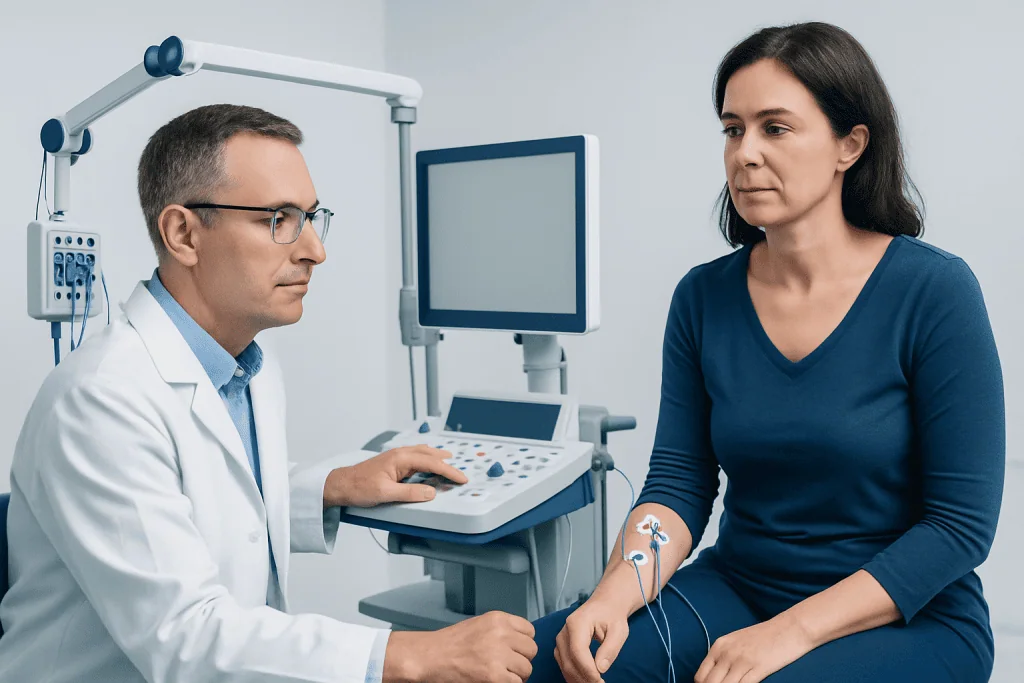
Electrodiagnostic studies are often central to diagnosis. Nerve conduction studies evaluate how well electrical signals move through the nerves, and electromyography assesses the electrical activity of muscles. These tests help distinguish muscle disease, nerve disease, and neuromuscular junction disorders. Depending on the suspected cause, doctors may also recommend electromyography (EMG) and nerve conduction testing.
When the diagnosis remains uncertain, a muscle biopsy or nerve biopsy may be considered in selected situations. Pulmonary function tests, swallowing studies, or heart evaluation may also be needed when a condition can affect breathing, swallowing, or cardiac muscle. The goal is not only to name the disease but also to identify complications that need prompt management.
Treatment Options and Long-Term Management
Treatment depends on the cause, severity, and body systems involved. Inherited conditions may not always be curable, but supportive treatment can improve function, comfort, and quality of life. Autoimmune and inflammatory causes may respond to immune-targeted treatment. Acquired conditions improve best when the underlying trigger, such as diabetes, thyroid disease, infection, or a problematic medication, is addressed early.
Rehabilitation is often a central part of care. Physical therapy can help maintain mobility, strength, and flexibility, while occupational therapy supports daily activities and energy conservation. Speech and swallowing therapy may help if facial, throat, or breathing muscles are affected. In some cases, orthotics, mobility aids, or respiratory support are needed to improve safety and independence.
Medical treatment may include pain control, immune therapies, medications to improve neuromuscular transmission in selected disorders, nutritional support, and treatment of associated heart or lung problems. Regular monitoring is important because needs can change over time. For some patients, a structured program that includes physical therapy and rehabilitation can be especially helpful in preserving function.
Near the end of the diagnostic and treatment journey, coordinated specialist care can be valuable. Acibadem International’s multidisciplinary specialists and JCI-accredited hospitals diagnose and treat neuromuscular conditions for international patients, with care plans that may involve neurology, rehabilitation, genetics, pulmonary medicine, and nutrition when appropriate.
Prevention, Self-Care, and When to See a Doctor
Not all neuromuscular diseases can be prevented, particularly those caused by inherited genetic changes. However, some acquired triggers can be reduced through good general health care. Managing diabetes, thyroid disease, and kidney disease, avoiding excess alcohol, reviewing medications regularly, correcting nutritional deficiencies, and seeking prompt care for infections may lower the risk of some nerve and muscle complications.
Self-care focuses on protecting function and avoiding complications. Gentle, specialist-guided exercise may help maintain mobility without overexertion. A balanced diet, adequate sleep, fall prevention at home, and pacing daily activities are often useful. People with swallowing difficulty should seek professional advice rather than making major diet changes on their own, because nutrition and aspiration risk need careful assessment.
A doctor should be consulted for persistent weakness, numbness, muscle wasting, frequent falls, double vision, swallowing difficulty, or unexplained fatigue that interferes with daily life. Medical review is especially important when symptoms are getting worse, affecting breathing, or appearing together with weight loss, rash, fever, or severe pain. Early assessment can identify treatable causes and help prevent avoidable complications.
Emergency care is needed for sudden or rapidly progressive weakness, shortness of breath, choking, inability to swallow saliva, or loss of mobility over hours to days. These symptoms can signal a serious neuromuscular problem requiring urgent evaluation. Timely treatment can be important for both recovery and safety.
Frequently asked questions
What are the main causes of neuromuscular disease?
Neuromuscular disease causes can be grouped into genetic, autoimmune, inflammatory, metabolic, infectious, toxic, and idiopathic categories. The exact cause depends on whether the problem affects muscles, peripheral nerves, motor neurons, or the neuromuscular junction.
Are all neuromuscular diseases inherited?
No. Some are inherited and related to changes in genes, while many others are acquired later in life. Autoimmune disease, diabetes, thyroid disorders, vitamin deficiencies, infections, and certain medications can all contribute to acquired neuromuscular conditions.
Can autoimmune disease cause muscle weakness?
Yes. Autoimmune conditions can attack muscles, nerves, or the connection between them, leading to weakness, fatigue, and sometimes swallowing or breathing problems. Examples include myasthenia gravis and inflammatory myopathies.
How do doctors find the cause of neuromuscular symptoms?
Doctors usually combine a medical history and physical examination with blood tests, nerve conduction studies, electromyography, and sometimes MRI, genetic testing, or biopsy. The pattern of symptoms often helps guide which tests are most useful.
Are neuromuscular diseases treatable?
Many are treatable, and almost all can be managed in ways that support daily function and quality of life. Treatment depends on the cause and may include immune therapies, treatment of underlying medical conditions, rehabilitation, symptom control, and monitoring for complications.
When should someone seek urgent care for neuromuscular symptoms?
Urgent care is important for rapidly worsening weakness, trouble breathing, choking, or sudden difficulty walking. These symptoms may signal a serious condition that needs immediate medical evaluation and support.
References
- National Institute of Neurological Disorders and Stroke
- National Institute of Arthritis and Musculoskeletal and Skin Diseases
- Muscular Dystrophy Association
- American Academy of Neurology
- MedlinePlus
This article is for general information only and is not a substitute for professional medical advice. Please consult a qualified doctor about your individual situation.
Explore treatments in Turkey — costs, top hospitals & a free quote
JCI-accredited · board-certified surgeons · reply within 24h
Add us as a Preferred Source to see more of our trusted health content across Google Search, AI Overviews and Discover.