Neurophysiology Department: Services, Specialists, and When to Ask for Referral

A Neurophysiology Department focuses on functional testing of the nervous system. Common tests include EEG, EMG, nerve conduction studies, and evoked potentials.
Key Takeaways
- A Neurophysiology Department focuses on functional testing of the nervous system.
- Common tests include EEG, EMG, nerve conduction studies, and evoked potentials.
- Referral may be helpful for seizures, numbness, weakness, muscle symptoms, sleep-related concerns, or unexplained nerve pain.
- These tests usually complement a neurological examination and imaging rather than replace them.
- Results can help confirm a diagnosis, assess severity, and guide treatment decisions.
- Most neurophysiology tests are outpatient procedures and are generally well tolerated.
A Neurophysiology Department helps evaluate how the brain, spinal cord, nerves, and muscles are working. It supports diagnosis and treatment planning through specialized tests such as EEG, EMG, and nerve conduction studies.
Overview: What a Neurophysiology Department Does
A Neurophysiology Department studies how the nervous system functions in real time. While scans such as MRI or CT show structure, neurophysiology tests help doctors understand how well the brain, spinal cord, peripheral nerves, and muscles are sending and receiving signals. This can be especially useful when symptoms suggest a problem, but the cause is not yet clear.
The department typically works closely with neurologists, neurosurgeons, rehabilitation specialists, pediatric specialists, sleep medicine teams, and other clinicians. Neurophysiology testing may help investigate symptoms such as seizures, blackout episodes, numbness, tingling, weakness, muscle twitching, chronic pain, balance problems, or changes in sleep-related breathing and movement.
In many hospitals, neurophysiology is not a single test but a group of services. These may include electroencephalography (EEG), electromyography (EMG), nerve conduction studies, evoked potentials, intraoperative monitoring, and sometimes sleep-related neurophysiological testing. The goal is to provide objective information that supports safe, accurate diagnosis and treatment planning.
Services Commonly Offered
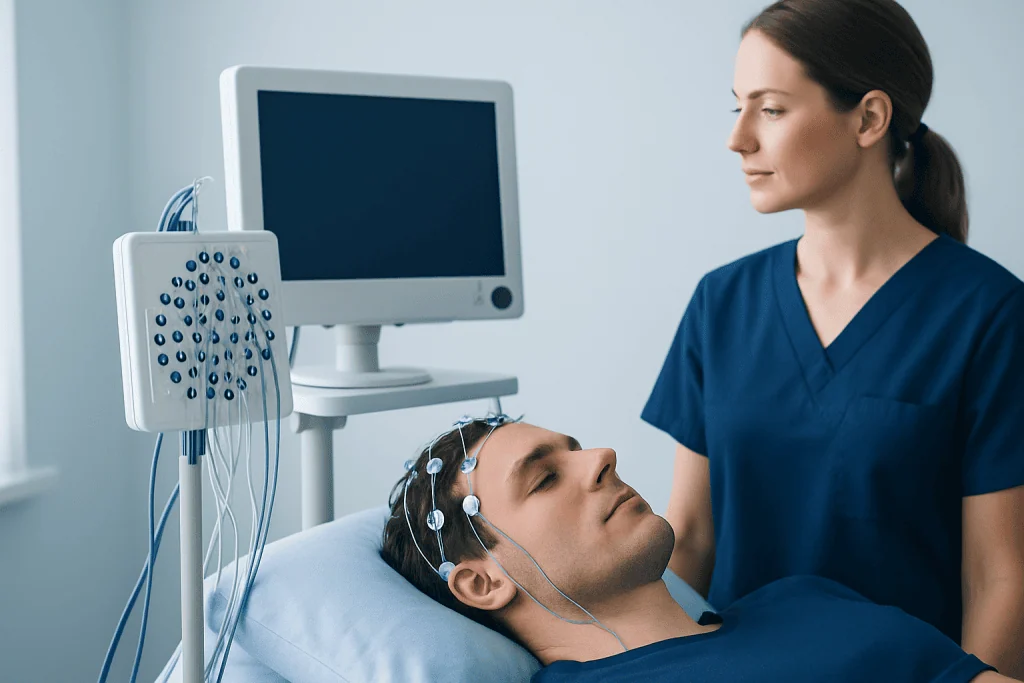
The exact services vary by hospital, but most Neurophysiology Departments provide tests for brain, nerve, and muscle function. EEG records the brain’s electrical activity and is often used when doctors are assessing seizures, fainting episodes, unusual spells, or some sleep-related conditions. It may be done in a clinic, over a longer period with video monitoring, or during sleep depending on the question being investigated.
EMG and nerve conduction studies are commonly used together. Nerve conduction studies measure how quickly and effectively electrical signals travel through peripheral nerves. EMG examines the electrical activity of muscles and can help show whether weakness or pain is coming from a nerve, a muscle disorder, or the connection between the nerve and muscle.
Other services may include:
- Evoked potentials: tests that measure the brain’s response to visual, auditory, or sensory stimulation.
- Intraoperative neurophysiological monitoring: monitoring during some surgeries to help protect nerve pathways.
- Sleep-related studies: in selected centers, neurophysiology contributes to evaluation of sleep movement disorders, seizure-like events during sleep, or related concerns.
- Autonomic testing: in some hospitals, testing for symptoms such as dizziness on standing, abnormal sweating, or suspected autonomic nerve dysfunction.
These tests are chosen based on the person’s symptoms and medical history. A clinician may also combine them with neurological examination, blood tests, imaging, or evaluation for related conditions such as epilepsy or peripheral neuropathy when that is clinically appropriate.
Which Specialists Work in a Neurophysiology Department?
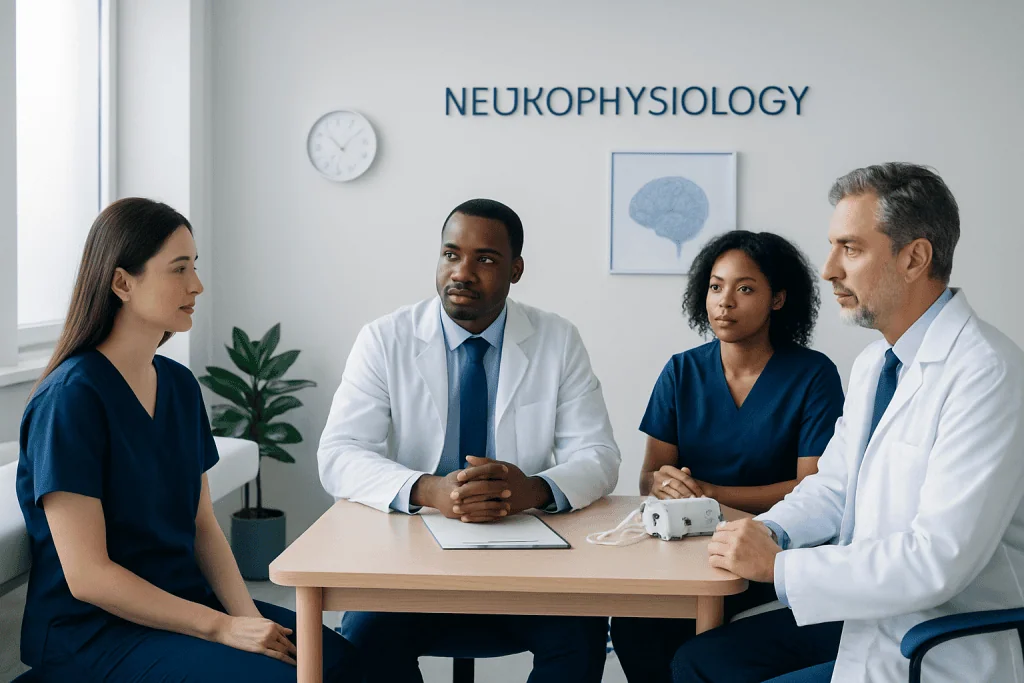
A Neurophysiology Department is usually led by physicians with training in clinical neurophysiology, most often neurologists with additional expertise in interpreting brain, nerve, and muscle tests. They review the person’s symptoms, choose the most appropriate study, supervise or interpret the testing, and integrate the results with the broader clinical picture.
The team often includes neurophysiology technologists, nurses, and allied health professionals who prepare the patient, place electrodes, perform recordings, and help ensure the quality and safety of the test. In pediatric settings, staff may have extra experience helping children feel calm and comfortable during procedures.
Depending on the hospital, neurophysiology specialists may also work closely with epilepsy teams, neuromuscular disease experts, sleep specialists, spine specialists, intensivists, and surgeons. This collaborative approach can be important because test results are most useful when they are interpreted alongside examination findings, symptoms, and other investigations.
For patients, this means the department is not only a testing area but part of a larger diagnostic pathway. The specialist’s role is to answer a practical question: where in the nervous system is the problem likely to be, how severe is it, and what should happen next?
When to Ask for a Referral
A referral to a Neurophysiology Department may be worth discussing when symptoms suggest a disorder of the brain, nerves, or muscles and the cause remains uncertain. Examples include recurrent fainting or blackout episodes, suspected seizures, unexplained numbness or tingling, burning nerve pain, hand or foot weakness, muscle cramps, twitching, or symptoms that seem to follow a nerve distribution.
Referral may also help when a doctor needs to confirm whether symptoms are coming from a peripheral nerve problem, a spinal nerve root problem, a muscle disorder, or a condition affecting the communication between nerves and muscles. People with persistent symptoms such as carpal tunnel-type hand numbness, facial twitching, foot drop, or suspected radiculopathy may be sent for testing to clarify the diagnosis.
There are also situations where neurophysiology supports ongoing care rather than initial diagnosis. For example, it may help monitor known conditions, assess progression, or support surgical planning. Some patients are referred after abnormal imaging, while others are referred because imaging is normal but symptoms continue.
Asking for a referral can be reasonable if symptoms are affecting daily life, worsening, recurring, or remaining unexplained after an initial assessment. A primary care doctor, pediatrician, neurologist, rehabilitation physician, or another specialist can advise whether neurophysiology testing is likely to be helpful in that specific case.
How Neurophysiology Tests Are Performed and What to Expect
Most neurophysiology tests are outpatient procedures. For an EEG, small electrodes are placed on the scalp to record brain activity. The test is painless, though the paste or adhesive used to secure the electrodes can feel unfamiliar. In some cases, the person may be asked to breathe deeply, look at flashing lights, or try to sleep during the recording, depending on the clinical question.
During nerve conduction studies, small electrical impulses are applied to the skin over a nerve to measure signal speed and strength. The sensation can be brief and uncomfortable, but it is usually well tolerated. During EMG, a fine needle electrode is inserted into selected muscles to record electrical activity at rest and during gentle movement. This can cause short-lived discomfort or muscle soreness afterward.
Preparation depends on the test. Patients may be asked to arrive with clean skin and hair, avoid lotions or oils, bring a medication list, and share details about implanted devices, bleeding disorders, pacemakers, or pregnancy. It is important to tell the clinical team about all medical conditions so they can tailor the procedure safely.
Results are interpreted by a trained specialist. Sometimes a preliminary impression is available soon after the test, but the full report may take longer because the findings need to be reviewed carefully in context. Neurophysiology results often guide the next step, such as observation, additional imaging, blood tests, medication review, rehabilitation, or referral for neurology care or neurosurgical evaluation.
How Results Help Diagnosis and Treatment Planning
Neurophysiology tests rarely provide a diagnosis in isolation. Instead, they add objective evidence that helps doctors narrow down the possibilities. For example, an EEG may support the assessment of seizure disorders, while nerve conduction studies and EMG can distinguish between nerve entrapment, generalized neuropathy, nerve root irritation, or a primary muscle disorder.
These results may also show the pattern and severity of a problem. That matters because treatment decisions often depend not only on whether a condition is present, but also on how extensive it is and whether the findings suggest active, chronic, or improving changes. In some cases, testing can help avoid unnecessary procedures by showing that symptoms are not arising from the area first suspected.
Once the cause is clearer, treatment may involve medication, monitoring, rehabilitation, lifestyle changes, splints or supportive devices, or treatment of an underlying condition such as diabetes, vitamin deficiency, inflammation, or compression of a nerve. Some patients may benefit from physical therapy and rehabilitation as part of recovery or symptom management.
For international patients seeking specialist assessment, Acibadem International’s multidisciplinary teams and JCI-accredited hospitals provide diagnosis and treatment for neurological and neurophysiological conditions. The best care plan depends on the person’s symptoms, examination, medical history, and test results.
Preparing for an Appointment and When to Seek Medical Advice
Before the appointment, it can help to write down symptoms clearly: when they started, how often they happen, what triggers them, and whether they involve pain, weakness, altered sensation, loss of awareness, or sleep-related changes. Bringing prior scan reports, blood test results, medication lists, and a note of any family history can make the assessment more efficient.
Patients should ask practical questions if they are unsure what a test involves. It is reasonable to ask whether the test is painful, how long it will take, whether driving is safe afterward, and when results are expected. Children, older adults, and people with communication needs may benefit from extra preparation and support from family members or caregivers.
Medical advice should be sought promptly for new or worsening neurological symptoms, especially sudden weakness, speech changes, severe or first-time seizure-like episodes, sudden loss of consciousness, trouble walking, or rapidly progressing numbness. These symptoms do not always require neurophysiology first and may need urgent medical evaluation.
If symptoms are persistent but not urgent, a routine referral may still be useful. The main aim of a Neurophysiology Department is to help answer focused clinical questions and support a more accurate path toward diagnosis, treatment, and follow-up.
Frequently asked questions
What is a Neurophysiology Department?
A Neurophysiology Department evaluates how the nervous system is functioning rather than only how it looks on imaging. It uses specialized tests to assess brain activity, nerve signaling, and muscle responses.
What is the difference between neurology and neurophysiology?
Neurology is the broader medical specialty that diagnoses and treats disorders of the nervous system. Neurophysiology is a focused area within that field that uses functional tests such as EEG and EMG to answer specific diagnostic questions.
Are neurophysiology tests painful?
Many tests are painless or cause only mild discomfort. EEG is painless, while nerve conduction studies and EMG can feel briefly uncomfortable, but most people tolerate them well.
Why would a doctor refer someone for EEG or EMG?
A doctor may request an EEG when investigating seizures, unusual episodes, or some sleep-related concerns. EMG and nerve conduction studies are often used for numbness, tingling, weakness, muscle symptoms, or suspected nerve compression.
Do neurophysiology tests replace MRI or CT scans?
No. Neurophysiology tests and imaging answer different questions and often complement each other. Imaging shows structure, while neurophysiology shows how nerves, muscles, and the brain are functioning.
How should someone prepare for a neurophysiology test?
Preparation depends on the test, but patients are often asked to arrive with clean skin or hair and avoid lotions or oils. It is also important to bring a medication list and mention any implanted devices, bleeding problems, or pregnancy.
References
- World Health Organization
- National Institute of Neurological Disorders and Stroke
- American Clinical Neurophysiology Society
- National Health Service
- International Federation of Clinical Neurophysiology
This article is for general information only and is not a substitute for professional medical advice. Please consult a qualified doctor about your individual situation.
Neurophysiology in Turkey — costs, top hospitals & a free quote
JCI-accredited · board-certified surgeons · reply within 24h
Add us as a Preferred Source to see more of our trusted health content across Google Search, AI Overviews and Discover.

More from the Health Library



Related Specialists

Dr. Savaş Gündoğan
Gynecology & Obstetrics
Dr. Mustafa Şener Yıldırım
Intensive Care
Prof. Dr. Cem Fiçicioğlu
Gynecology & Obstetrics
Prof. Dr. Javad Parvizi
Orthopedic Surgery & Traumatology