Neurophysiology Testing in Children: What Parents Can Expect
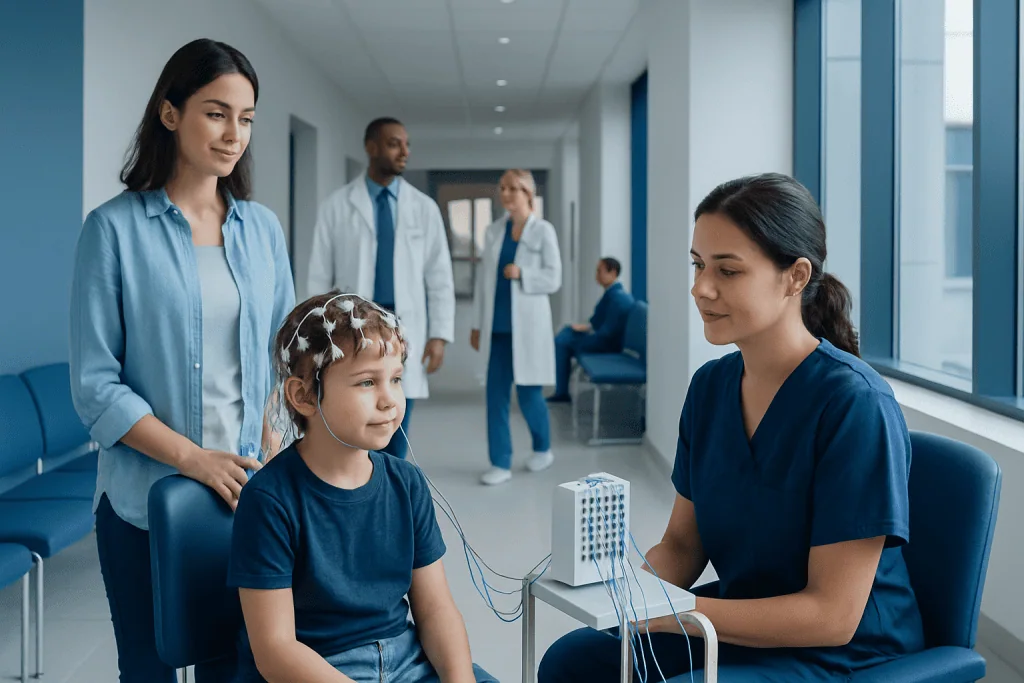
Neurophysiology tests measure how the brain, nerves, and muscles function rather than how they look on a scan. Common tests in children include EEG, EMG, nerve conduction studies, evoked potentials, and sleep-related studies.
Key Takeaways
- Neurophysiology tests measure how the brain, nerves, and muscles function rather than how they look on a scan.
- Common tests in children include EEG, EMG, nerve conduction studies, evoked potentials, and sleep-related studies.
- Most pediatric neurophysiology tests are noninvasive or minimally invasive and are tailored to the child’s age and needs.
- Preparation depends on the test and may include clean hair, comfortable clothing, medication review, or mild sleep deprivation for some EEGs.
- Results help guide diagnosis and treatment for symptoms such as seizures, weakness, developmental concerns, tingling, or unusual movements.
Neurophysiology testing in children helps doctors understand how a child’s brain, nerves, muscles, or sleep patterns are working. These tests are usually safe and are adapted to the child’s age, symptoms, and comfort needs so parents know what to expect at each step.
Overview: What Neurophysiology Testing Means
Neurophysiology testing in children refers to a group of tests that assess how the nervous system works in real time. Instead of taking pictures of body structures, these tests record electrical signals from the brain, spinal pathways, nerves, or muscles. This helps doctors understand whether signals are being sent and received normally.
In children, neurophysiology tests are often used to investigate symptoms such as seizures, fainting episodes, developmental concerns, weakness, numbness, unusual movements, sleep problems, or muscle symptoms. They can also help monitor known neurological conditions and evaluate recovery after illness or injury.
Parents may feel anxious when a child is referred for testing, but many neurophysiology studies are painless and completed in an outpatient setting. The pediatric team usually adjusts the environment, explanation, and timing to match the child’s age and emotional needs. Clear preparation and reassurance can make the experience much easier for both the child and parent.
Common Types of Neurophysiology Tests in Children
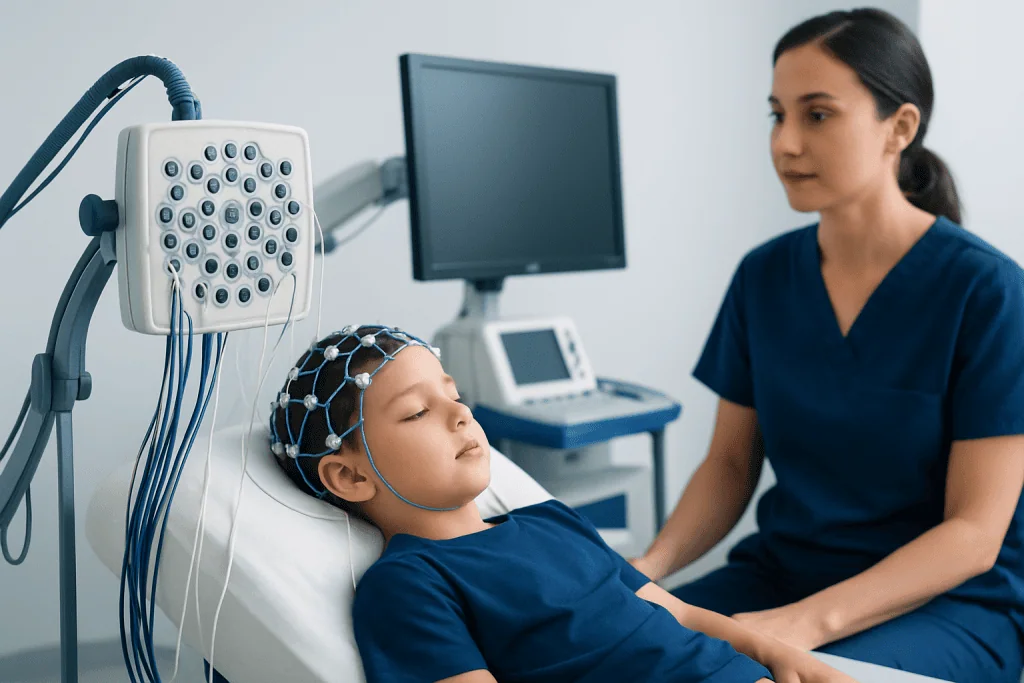
There are several kinds of pediatric neurophysiology tests, and the choice depends on the child’s symptoms. An electroencephalogram, or EEG, records brain wave activity through small sensors placed on the scalp. It is commonly used when a child has suspected seizures, staring spells, loss of awareness, or certain sleep-related events. In some children, doctors may evaluate conditions such as epilepsy with this type of study.
Electromyography (EMG) and nerve conduction studies assess how muscles and peripheral nerves are functioning. Nerve conduction studies use small electrical impulses on the skin to measure how quickly nerves carry signals. EMG may involve a very fine needle inserted into selected muscles to record muscle activity. These tests can help evaluate weakness, muscle disease, nerve injury, or suspected neuromuscular disorders.
Evoked potential tests measure how the brain responds to sensory stimulation such as sound, touch, or visual patterns. Sleep-related neurophysiology testing may also be recommended when symptoms occur during sleep or when there is concern about seizure-like events overnight. Depending on the child’s needs, specialists may recommend tests such as EEG testing, EMG, or a sleep study.
- EEG: records electrical activity in the brain
- Nerve conduction studies: assess signal speed and strength in nerves
- EMG: records electrical activity in muscles
- Evoked potentials: assess sensory pathways to the brain
- Sleep studies: evaluate brain activity, breathing, and movements during sleep
Why a Child May Need These Tests
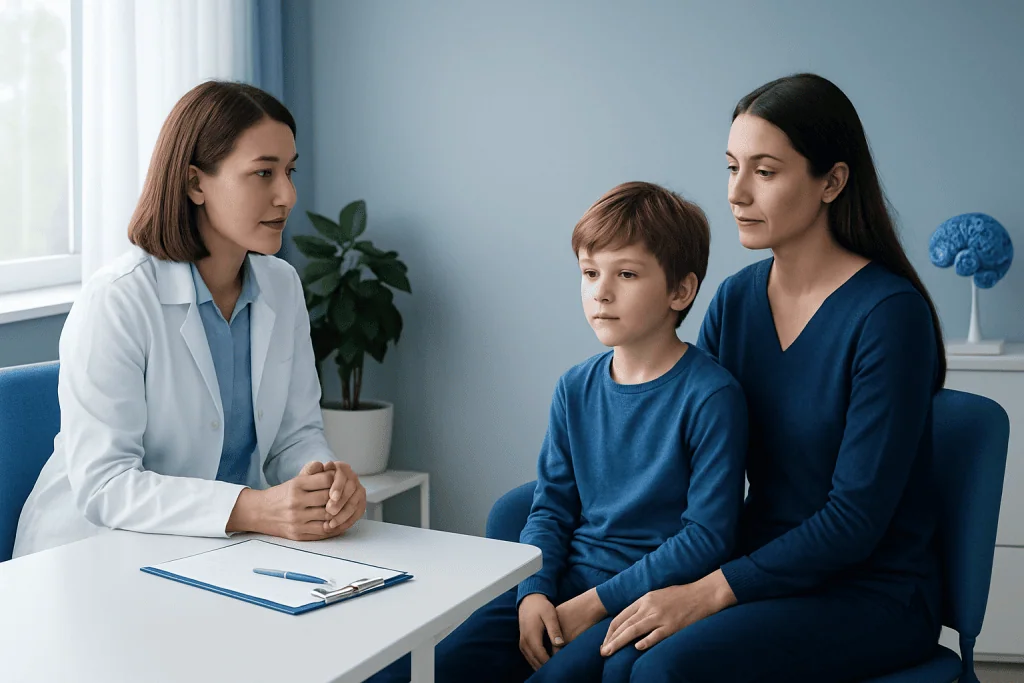
A doctor may recommend neurophysiology testing when symptoms suggest a problem affecting the brain, nerves, or muscles. These tests can help clarify whether events are neurological, sleep-related, muscular, or due to another cause. They are often part of a broader evaluation that also includes medical history, physical examination, and sometimes imaging or laboratory tests.
For example, a child who has episodes of shaking, staring, or sudden falls may need an EEG to see whether the events are associated with abnormal brain electrical activity. A child with ongoing tingling, foot drop, difficulty climbing stairs, or muscle cramps may need nerve and muscle testing. A child with unusual nighttime behaviors may benefit from a sleep-related study.
Neurophysiology tests do not always provide the full diagnosis on their own, but they can give important functional information. Results may help confirm a suspected condition, rule out certain causes, guide further testing, and support treatment planning. This can be especially helpful when symptoms are intermittent or difficult to describe.
How Parents Can Prepare Their Child
Preparation depends on the type of test. For an EEG, families are often asked to wash the child’s hair the night before and avoid hair oils, sprays, or gels so the scalp sensors attach well. Some EEGs require the child to be sleepy or sleep-deprived, so the care team may give specific instructions about bedtime and naps. If the child takes regular medicines, parents should check with the doctor before making any changes.
For EMG or nerve conduction studies, it helps to dress the child in loose, comfortable clothing that allows easy access to the arms or legs. Skin should be clean and free of lotions if possible. Parents can explain in simple, calm language that the test helps the doctor understand how the body’s signals are working. Honest preparation is usually better than saying there will be no discomfort at all.
Practical comfort measures can make a real difference. Bringing a favorite toy, blanket, book, or music may help younger children stay calm. Some centers encourage a parent to remain nearby during testing. It can also help to prepare the child for what they may feel, such as stickers on the head, brief tapping sensations, soft flashing lights, or small electrical pulses on the skin.
What Happens During the Test
During an EEG, a technologist places small sensors on the scalp using a gentle adhesive or paste. The sensors record electrical signals but do not send electricity into the child’s body. The child may be asked to rest quietly, breathe deeply, look at flashing lights, or try to sleep, depending on the reason for the study. The test may last from a short routine session to a longer recording if events are infrequent.
During nerve conduction studies, small electrodes are placed on the skin and brief electrical pulses are delivered to test nerve responses. These pulses can feel surprising or uncomfortable, but they are short. If EMG is also needed, a doctor inserts a very fine needle into selected muscles to record their activity at rest and with movement. This part can be uncomfortable, especially for anxious children, but the team works to keep the child as relaxed as possible.
Throughout pediatric testing, the staff watch the child’s comfort, cooperation, and safety closely. Some children need breaks, extra explanation, or distraction techniques. In selected situations, especially for longer or more complex recordings, the doctor may discuss whether sedation is appropriate, although many neurophysiology tests are ideally performed while the child is awake enough to follow simple instructions.
Safety, Risks, and How Children Usually Tolerate Testing
Most neurophysiology tests used in children are very safe. EEG and evoked potential studies are noninvasive and do not expose the child to radiation. Nerve conduction studies and EMG are also commonly performed when needed, although they can cause temporary discomfort. The healthcare team balances the value of the information against the child’s symptoms, age, and tolerance.
It is important for parents to know that EEG sensors only record activity; they do not shock the brain. In some EEG studies, deep breathing or flashing lights are used because they can help reveal abnormal patterns. If a child has a known sensitivity, the team takes this into account and monitors carefully throughout the test.
After testing, most children can return to usual activities right away unless the doctor advises otherwise. Some may have mild scalp stickiness after EEG or brief soreness after EMG. These effects are usually temporary. If sedation was used, recovery instructions are provided and the child may need observation until fully awake.
Understanding Results and Next Steps
Test results are interpreted by a specialist trained in neurophysiology, often in collaboration with a pediatric neurologist or another relevant doctor. The report looks at whether the electrical signals are normal for the child’s age and whether there are patterns that suggest seizure activity, nerve damage, muscle disease, or a problem in a sensory pathway. Some results are straightforward, while others need to be interpreted alongside the child’s symptoms and examination.
A normal result can still be helpful because it may rule out certain explanations and guide the doctor toward other causes. An abnormal result does not always mean a serious condition, but it does help direct further evaluation or treatment. In some cases, a child may need repeat testing if symptoms change or if the first study did not capture the event in question.
After results are reviewed, the doctor may recommend observation, medication, therapy, further blood tests, imaging, or referral to another specialist. In more complex cases, children may be assessed by a multidisciplinary team. Acibadem International’s multidisciplinary specialists and JCI-accredited hospitals diagnose and treat neurological conditions in international patients when further evaluation is needed.
When Parents Should Seek Medical Advice
Parents should contact a doctor if a child has episodes that look like seizures, repeated fainting, unexplained weakness, persistent numbness, frequent falls, new abnormal movements, or concerning changes during sleep. These symptoms do not always mean a neurological disorder, but they should be assessed, especially if they are recurring or worsening.
Urgent medical attention is important if a child has a prolonged seizure, difficulty breathing, sudden one-sided weakness, severe head injury, loss of consciousness that does not quickly resolve, or a rapid decline in alertness. In these situations, emergency care should not be delayed while waiting for outpatient testing.
For non-urgent concerns, families can prepare for the appointment by noting when symptoms happen, how long they last, what the child was doing beforehand, and whether there is video of the event. This information can help the doctor decide which test is most appropriate and whether studies such as nerve conduction testing are likely to be useful.
Frequently asked questions
Is neurophysiology testing in children safe?
Yes. Most neurophysiology tests in children are considered safe and are commonly used to assess brain, nerve, or muscle function. Some tests are completely noninvasive, while others may cause brief discomfort, but the care team monitors the child closely throughout.
Will my child feel pain during the test?
That depends on the type of test. EEG is generally painless, although some children may dislike the scalp paste or sitting still. Nerve conduction studies and EMG can cause short periods of discomfort, but the sensations are brief and the team usually uses child-friendly strategies to reduce distress.
How long does pediatric neurophysiology testing take?
The timing varies by test. A routine EEG may take less than an hour, while longer EEG recordings or sleep studies can take several hours or overnight. Nerve conduction studies and EMG often take longer when multiple nerves or muscles need to be tested.
Does my child need to stop medicines before testing?
Parents should not stop any medicine unless the doctor specifically advises it. Some medications can affect certain test results, so the team may review the child’s medication list ahead of time. It is best to ask for instructions well before the appointment.
Can a parent stay with the child during the test?
In many centers, yes, especially for younger children. Having a familiar adult nearby can help a child feel calmer and more cooperative. The exact policy may depend on the type of test, the child’s age, and the room setup.
What if my child cannot stay still?
This is a common concern, and pediatric teams are used to working with children who are anxious, active, or very young. They may use play, distraction, breaks, or scheduling around nap times to improve cooperation. In selected cases, the doctor may discuss whether another approach is needed.
References
- American Clinical Neurophysiology Society
- Child Neurology Foundation
- National Institute of Neurological Disorders and Stroke
- American Academy of Neurology
- MedlinePlus
This article is for general information only and is not a substitute for professional medical advice. Please consult a qualified doctor about your individual situation.
Neurophysiology in Turkey — costs, top hospitals & a free quote
JCI-accredited · board-certified surgeons · reply within 24h
Add us as a Preferred Source to see more of our trusted health content across Google Search, AI Overviews and Discover.