Newborn Screening: How It Works, Results and What to Expect

Newborn screening is usually offered to every baby shortly after birth, even when the baby appears healthy. The blood spot test involves a heel prick and commonly screens for metabolic, hormonal, blood and genetic conditions.
Key Takeaways
- Newborn screening is usually offered to every baby shortly after birth, even when the baby appears healthy.
- The blood spot test involves a heel prick and commonly screens for metabolic, hormonal, blood and genetic conditions.
- Results timing and the list of conditions vary by country, region and hospital program.
- An out-of-range result is not a diagnosis; confirmatory tests are needed before any condition is confirmed.
- Newborn screening does not diagnose autism, which cannot be reliably identified through a newborn blood test.
- Early follow-up can prevent or reduce complications for several conditions included in screening programs.
Newborn screening is a routine public health program that uses a small blood sample, hearing check and sometimes pulse oximetry to identify selected conditions soon after birth. A positive screen does not confirm a diagnosis, but it signals that prompt repeat or diagnostic testing is needed.
Overview: what newborn screening is
Newborn screening is a group of checks performed shortly after birth to look for certain health conditions that may not cause visible symptoms at first. Its purpose is to identify babies who may need further assessment or early treatment, often before illness develops. Screening is routinely offered because many of the conditions are uncommon but can be more effectively managed when recognized early.
The exact program differs between countries and regions. It commonly includes a dried blood spot test from the heel, a hearing screen and a check for some critical heart conditions using pulse oximetry. Parents should ask their maternity team which tests are included locally and how they will receive results.
Screening is different from diagnosis. A normal result lowers the likelihood of the screened conditions but does not rule out every health concern. An abnormal or positive result means the baby needs timely follow-up testing; many babies with an initial positive screen are ultimately found not to have the condition.
How does the newborn screening test work?
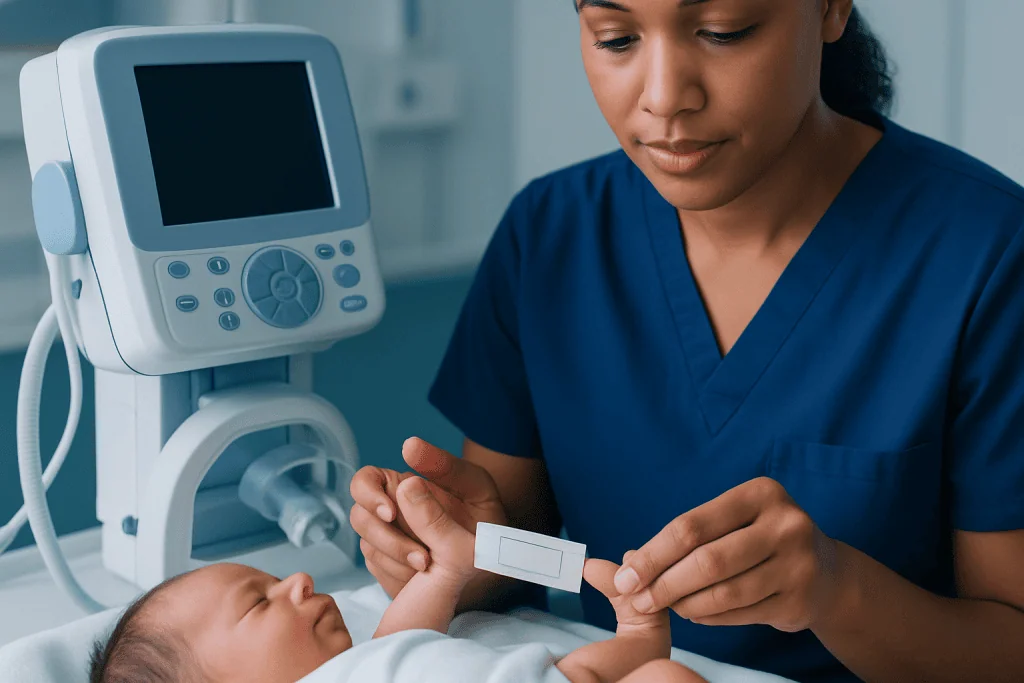
Newborn screening how does it work? For the blood spot portion, a trained healthcare professional warms or cleans the baby’s heel and takes a few drops of blood with a brief heel prick. The blood is placed onto a special card, dried and sent to a laboratory. The laboratory measures substances, hormones, enzymes or blood characteristics that can suggest specific inherited, metabolic or endocrine conditions.
Hearing screening is painless and is often done while the baby is asleep or calm. Depending on the method used, a small soft earpiece records sound responses from the ear, or sensors measure activity along the hearing pathway. Pulse oximetry uses a sensor placed on the skin to measure oxygen levels and may help identify some serious heart defects that need urgent evaluation.
Newborn screening is generally performed once during the first days of life. In some settings, a repeat blood sample is recommended for babies born prematurely, babies with low birth weight, babies receiving intensive care, or those tested very early after delivery. The maternity team will explain whether another sample is needed and when it should be collected.
Who is eligible and what happens step by step?
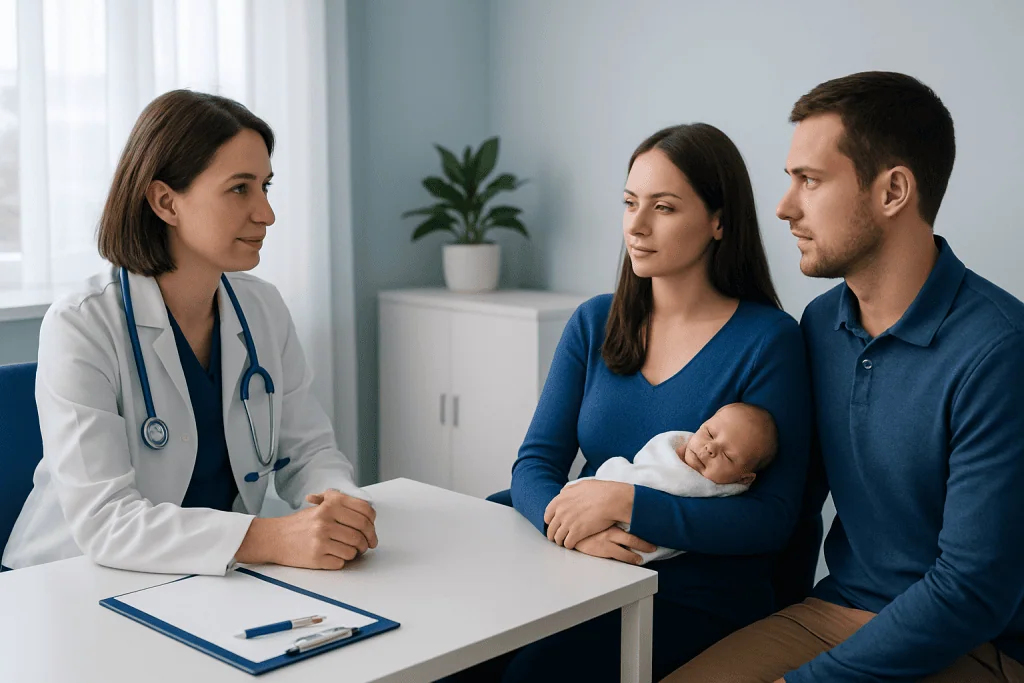
Newborn screening is intended for nearly all newborns, including babies who appear completely well. It is typically offered in the hospital or birth center before discharge. For babies born at home, a midwife, community health service or pediatric clinician can usually arrange screening promptly.
Most programs aim to collect the blood spot after the baby has started feeding and within the first few days after birth. If collection occurs too early, some tests may be less reliable and a repeat sample may be requested. Parents do not need to prepare their baby in a special way, although feeding, cuddling or comforting measures may help during the heel prick.
The usual process includes:
- Discussion of the local screening program and parental consent procedures.
- Collection of a small heel-prick blood sample onto a filter-paper card.
- Hearing screening and, where included, pulse oximetry screening.
- Laboratory analysis and review by the relevant screening service.
- Notification of parents if a result needs repeating or requires confirmatory testing.
Families should provide accurate contact details before leaving the birth setting. If they move soon after delivery, they should tell the maternity or pediatric team so important results and follow-up requests can reach them.
What are the 7 conditions for a newborn screening test?
There is no single worldwide list of seven newborn screening conditions. The panel varies widely by country and can include only a few disorders or several dozen. However, many programs include or have historically included conditions such as phenylketonuria (PKU), congenital hypothyroidism, congenital adrenal hyperplasia, cystic fibrosis, sickle cell disease or other hemoglobin disorders, medium-chain acyl-CoA dehydrogenase deficiency (MCADD), and galactosemia.
These conditions are screened because early treatment, monitoring or dietary changes may reduce the risk of complications. For example, congenital hypothyroidism can affect growth and brain development if untreated, while PKU requires early dietary management. A screening panel may also include disorders of fatty-acid oxidation, amino-acid metabolism, organic acids, immune function or other inherited conditions.
Parents should not assume that a condition is included simply because it is screened for elsewhere. The best source of information is the local newborn screening program, maternity hospital or pediatrician. If there is a known family history of an inherited disorder, families should discuss it during pregnancy or soon after birth, as targeted diagnostic testing may be appropriate in addition to routine screening.
How long does it take to get results from newborn screening?
How long does it take for newborn screening results to come back? Timing depends on the tests, laboratory capacity and local reporting system. Blood spot results are often available within several days to a few weeks after the sample is received, while hearing and pulse oximetry results may be discussed before the baby leaves the hospital.
Many screening programs contact parents and the baby’s clinician quickly when a result needs urgent follow-up. Some programs only contact families if there is an abnormal, unclear or incomplete result, whereas others record or share normal results as well. Parents can ask before discharge how results will be communicated and whom to call if they have not heard anything.
A newborn screening results example might be described as “screen negative” or “within expected range,” meaning no concerning marker was identified for the conditions tested. A result may also be reported as “screen positive,” “out of range,” “borderline,” or “repeat requested.” These terms indicate that another sample or diagnostic test is needed, not that the baby definitely has a disease.
Benefits, limitations and possible risks
The main benefit of newborn screening is the opportunity to act early. For several screened conditions, early referral, nutrition support, medication, specialist monitoring or other care can make an important difference to a child’s health. Screening can also provide families with clear next steps and access to appropriate expertise when a concern is identified.
The heel prick can cause brief discomfort, a small spot of bleeding or a tiny bruise. Hearing screening and pulse oximetry are noninvasive and do not hurt. Serious complications from standard newborn screening procedures are very unusual.
Screening also has limitations. A result can be falsely positive, which can create understandable worry until further testing is complete. Less commonly, a false-negative result can occur, and a child may develop symptoms of a condition that was not detected or was not part of the screening panel. Parents should seek medical advice for concerning symptoms regardless of a previous normal screen.
Some programs may identify findings that need long-term observation rather than immediate treatment. Clinicians can explain what the result means, whether genetic counseling is useful and what testing may be recommended for the baby or other family members.
Does newborn screening can detect autism?
No. Newborn screening does not diagnose autism spectrum disorder. Autism is a neurodevelopmental condition identified through a child’s developmental history, behavior, communication and social interaction over time; there is currently no routine newborn blood, hearing or oxygen-level test that can confirm it.
Newborn screening may identify a small number of genetic or metabolic conditions that can sometimes be associated with developmental differences, but this is not the same as screening for autism. A normal newborn screen does not predict whether a child will or will not be autistic.
Parents who have questions about a child’s development should discuss them with a pediatrician. Developmental surveillance at routine child health visits and prompt assessment of concerns about communication, social connection, play, movement or loss of skills are more appropriate approaches than relying on newborn screening.
When to seek medical care
Parents should contact the baby’s pediatrician or the screening service promptly if they are told that a repeat sample or confirmatory test is needed. It is important to attend follow-up appointments even if the baby looks well, because many screened conditions do not cause early symptoms. The clinical team can explain the result clearly and arrange the next test without delay.
Urgent medical assessment is appropriate for a newborn who is difficult to wake, feeding poorly, vomiting repeatedly, breathing unusually, becoming blue or gray around the lips, having a fever, showing seizures, or appearing significantly unwell. These signs can have many causes and should not be interpreted as proof of a screening condition, but they need prompt evaluation.
For families who need coordinated pediatric assessment after an abnormal screen, Acibadem International’s multidisciplinary specialists and JCI-accredited hospitals support international patients with diagnostic evaluation and ongoing care planning. Parents should bring the screening report, discharge summary and any family medical information to the appointment.
Frequently asked questions
Is newborn screening mandatory?
Requirements differ by country, region and individual test. In many places, newborn screening is routinely offered or required because it can identify conditions that benefit from early care. The maternity team can explain local consent rules and any options available to parents.
When is newborn screening done?
The blood spot sample is usually taken within the first few days after birth, often before the baby leaves the hospital. Timing matters because some tests are most accurate after feeding has begun. A repeat sample may be requested if the first test was done very early or if the baby was premature or medically unwell.
Can a positive newborn screen be wrong?
Yes. A positive or out-of-range screening result is not a diagnosis, and false-positive results can occur. Confirmatory laboratory tests and clinical assessment are needed to determine whether the baby truly has the condition.
What happens if a newborn screening sample is inadequate?
The laboratory or healthcare team will request another blood spot sample if the card did not contain enough blood, was collected too early, or could not be analyzed accurately. This is relatively common and does not by itself mean that the baby has a health condition. Parents should arrange the repeat test as soon as advised.
Does a normal newborn screening result mean my baby is completely healthy?
A normal result means the screening tests did not identify evidence of the specific conditions included in that program. It does not test for every genetic, medical or developmental condition. Regular pediatric visits and medical assessment for any new symptoms remain important.
How can parents make a heel prick easier for their baby?
Holding, swaddling, skin-to-skin contact, feeding when appropriate and using calm reassurance may help reduce discomfort. The procedure is brief, and the healthcare professional will use safe collection techniques. Parents can ask the team what comfort options are suitable in their birth setting.
References
- World Health Organization
- Centers for Disease Control and Prevention
- American Academy of Pediatrics
- European Commission Expert Group on Newborn Screening
- National Health Service
This article is for general information only and is not a substitute for professional medical advice. Please consult a qualified doctor about your individual situation.
Explore treatments in Turkey — costs, top hospitals & a free quote
JCI-accredited · board-certified surgeons · reply within 24h
Add us as a Preferred Source to see more of our trusted health content across Google Search, AI Overviews and Discover.

More from the Health Library



Related Specialists

Dr. Nadire Sevda İdil
Gynecology & Obstetrics
Dr. Bilginar Kovancı
Emergency Service
Assoc. Prof. Dr. Sinan Kırım
Endocrinology
Dr. Orçun Can
Medical Oncology