Night Terrors — Explained by Medical Evidence, Not Myths

Night terrors usually happen during deep non-REM sleep, not during dreaming. They are different from nightmares because the person is hard to wake and often has no memory of the episode.
Key Takeaways
- Night terrors usually happen during deep non-REM sleep, not during dreaming.
- They are different from nightmares because the person is hard to wake and often has no memory of the episode.
- Children commonly outgrow night terrors, but episodes can also occur in adults.
- Sleep loss, stress, fever, and irregular sleep schedules can trigger episodes in some people.
- Medical assessment is important if episodes are frequent, dangerous, begin in adulthood, or raise concern for seizures or other sleep disorders.
Night terrors are episodes of intense fear, crying, or agitation that happen during deep sleep, most often in children. Although they can look frightening, the person is usually not fully awake and typically does not remember the event in the morning.
What are night terrors?
Night terrors, also called sleep terrors, are sudden episodes of intense fear that arise out of deep sleep. A person may sit up, scream, breathe rapidly, sweat, or appear panicked, yet still remain partly asleep. In most cases, they are not aware of what is happening and are difficult to comfort or fully wake during the event.
These episodes are most common in children, especially in the preschool and school-age years, but they can also affect teenagers and adults. Night terrors often happen in the first third of the night, when deep non-rapid eye movement sleep is most prominent. This timing helps explain why they are different from nightmares, which usually occur later in the night during dream sleep.
Medical evidence shows that night terrors belong to a group of sleep conditions called parasomnias. These are behaviors or experiences that happen during sleep or while moving between sleep and wakefulness. Related parasomnias may include sleepwalking and confusional arousals, and some people can have more than one of these patterns over time.
How night terrors differ from nightmares
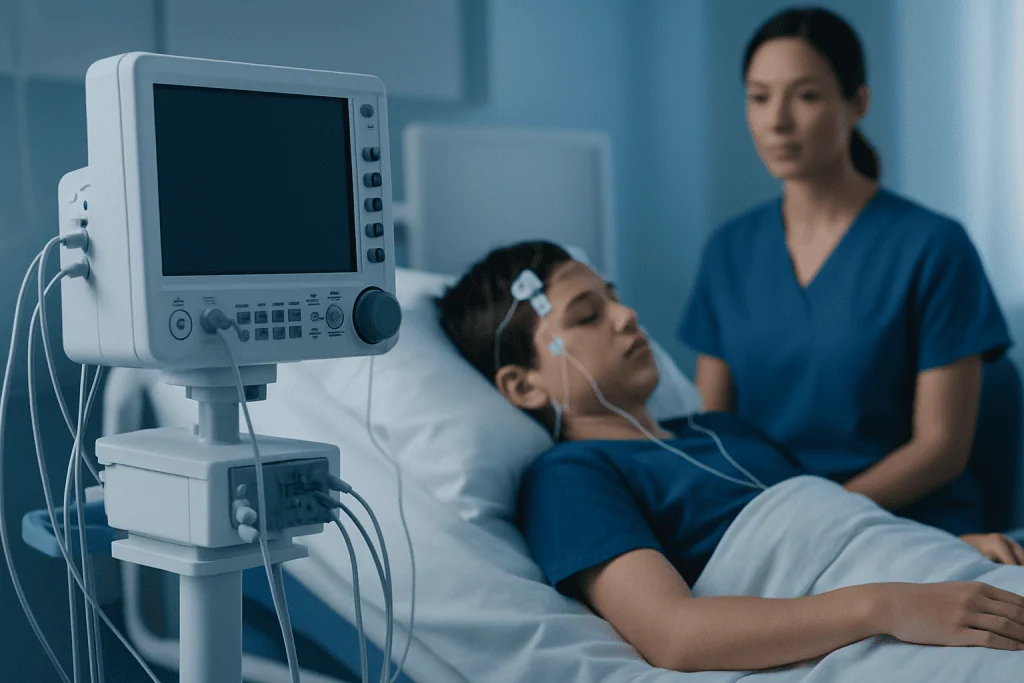
Night terrors and nightmares are often confused, but they are not the same. A nightmare is a disturbing dream that usually wakes the person, who can often describe what they dreamed. After a nightmare, the person is generally alert, responsive, and aware of their surroundings.
During a night terror, by contrast, the person may look awake but is actually in a state between sleep and wakefulness. They may cry out, stare, thrash, or seem extremely frightened, but they usually do not recognize family members and may resist being touched. Most people have little or no memory of the event afterward.
This distinction matters because it guides evaluation and treatment. Night terrors usually reflect a brief disruption in deep sleep rather than a psychological problem or a sign that someone is acting out a dream. For families, understanding the difference can reduce worry and help them respond calmly and safely.
Symptoms and what an episode can look like

A typical night terror begins suddenly. The person may sit upright in bed, scream, cry, or appear terrified. Their heart rate and breathing may increase, and signs of activation such as sweating, flushed skin, wide eyes, or restlessness are common.
Although the behavior can be dramatic, the person is usually not fully conscious. They may mumble, push someone away, or seem confused if spoken to. Trying to wake them completely may prolong the episode or make them more agitated, so gentle supervision is often more helpful than forceful awakening.
Episodes often last a few minutes, though some continue longer. Afterward, the person usually settles back to sleep and wakes in the morning with little or no recollection. In some cases, the event may overlap with sleepwalking, especially in children, because both conditions arise from deep non-REM sleep.
- Sudden screaming or crying during the first part of the night
- Sitting up abruptly or appearing fearful
- Rapid heartbeat, fast breathing, or sweating
- Confusion and poor response to comfort
- Little or no memory of the event the next day
Why night terrors happen: causes and risk factors
Night terrors are thought to result from incomplete arousal out of deep sleep. Instead of moving smoothly from one sleep stage to another, the brain briefly becomes caught in a mixed state. This can produce intense physical and emotional behavior without full awareness. It is not usually a sign of poor parenting, a personality problem, or a serious mental illness.
Several factors can make episodes more likely. In children, night terrors may run in families and often occur during periods of rapid development of sleep patterns. Triggers can include sleep deprivation, irregular bedtimes, illness with fever, emotional stress, sleeping in a new environment, or anything that fragments sleep.
In adults, other sleep or health conditions may play a role. Obstructive sleep apnea, restless legs syndrome, alcohol use, certain medications, high stress, and underlying neurological or mental health issues can contribute. When episodes begin for the first time in adulthood or occur alongside daytime sleepiness, loud snoring, or unusual movements, doctors may look for related conditions such as sleep apnea.
How doctors diagnose night terrors
Diagnosis usually begins with a careful medical history. A doctor asks when the episodes happen, how often they occur, what behaviors are seen, whether there is any memory afterward, and whether there are injuries or dangerous behaviors. Family observations are especially helpful because the person having the episode may not remember it.
The timing of the episodes is an important clue. Night terrors typically occur in the first third of the night, unlike nightmares, which are more common later. The doctor may also ask about stress, medications, alcohol use, fever, snoring, leg discomfort, or a family history of parasomnias.
Most children with typical features do not need extensive testing. However, if the pattern is unusual, severe, or begins in adulthood, further evaluation may be recommended. This can include a sleep study, sometimes with video recording, to help distinguish night terrors from seizures, REM sleep behavior disorder, or other sleep study evaluations. If episodes are frequent and complex, assessment by a neurology specialist or sleep medicine team may be helpful.
Treatment and practical management
Treatment depends on age, frequency, severity, and the presence of triggers or related sleep disorders. In many children, the main approach is reassurance and prevention of injury. Because night terrors often improve with age, medication is not routinely needed for occasional episodes.
Improving sleep habits is one of the most effective steps. A consistent bedtime, enough total sleep, and a calm pre-sleep routine can reduce episodes in many families. If fever, stress, or a disrupted schedule seems to trigger events, addressing those factors may help.
For frequent episodes that happen at a predictable time, a doctor may suggest scheduled awakenings. This involves gently waking the child shortly before the usual episode time for several nights or weeks, which can interrupt the cycle of partial arousal from deep sleep. When another sleep condition is contributing, treatment should focus on that problem, such as sleep apnea treatment if obstructive sleep apnea is found.
Adults may need broader evaluation and management. Treatment may include reviewing medications, reducing alcohol, managing anxiety or stress, and investigating other sleep disorders. In selected cases with severe, disruptive, or dangerous episodes, a specialist may consider additional therapies based on the individual situation.
Prevention, home safety, and self-care
Families can do a great deal to make night terrors less disruptive and safer. The first priority is to protect the person during an episode rather than to wake them abruptly. Keep the sleeping area safe, remove sharp or breakable objects nearby, and consider basic precautions if there is a risk of leaving the bed or room.
Healthy sleep habits are central to prevention. Regular bedtimes and wake times, enough sleep for age, and a quiet wind-down period before bed can lower the chance of episodes. Limiting overstimulation late in the evening and avoiding sleep deprivation are often helpful.
A simple sleep diary may reveal patterns. Recording bedtime, wake time, illness, stress, and episode timing can help identify triggers and support a more focused medical discussion if needed. If symptoms suggest another sleep disorder, such as loud snoring, pauses in breathing, or repeated leg movements, further assessment is sensible.
Near the end of the care journey, some families and adult patients seek specialist support for persistent sleep problems. Acibadem International’s multidisciplinary specialists and JCI-accredited hospitals evaluate and treat sleep-related conditions for international patients when a more detailed assessment is needed.
When to seek medical care
Night terrors are often harmless and temporary, especially in children, but some situations deserve medical review. A doctor should be consulted if episodes happen often, are increasing, lead to injury, or cause major family disruption. Evaluation is also wise when episodes start in adulthood or when the pattern is not typical for night terrors.
Medical advice is important if there are symptoms of another sleep or neurological problem. These may include loud snoring, choking during sleep, long pauses in breathing, daytime sleepiness, repetitive unusual movements, loss of bladder control, or events that happen many times a night. These features can point to conditions that need a different approach.
Parents and caregivers should also seek help if they are unsure whether the episodes are night terrors, nightmares, panic attacks, or seizures. A clinician can review the history and decide whether reassurance alone is enough or whether further testing is needed. Timely assessment can provide clarity, improve sleep quality, and reduce the risk of injury.
Frequently asked questions
Are night terrors dangerous?
Night terrors themselves are usually not dangerous, but they can lead to accidental injury if the person gets out of bed, thrashes, or runs. The main concern is safety during the episode. If injuries, frequent wandering, or risky behaviors occur, medical review is recommended.
Do night terrors mean a child has emotional trauma or a mental health disorder?
Not usually. Night terrors most often reflect a sleep arousal problem rather than trauma or a psychiatric condition. Stress can sometimes trigger episodes, but most children with night terrors are otherwise healthy and outgrow them over time.
Should someone be woken up during a night terror?
In most cases, trying to wake the person fully is not necessary and may make them more confused or agitated. It is usually better to stay nearby, keep them safe, and wait for the episode to pass. Gentle guidance back to bed may help if they try to get up.
Can adults have night terrors?
Yes, although night terrors are more common in children. In adults, they are more likely to be linked with sleep deprivation, alcohol, stress, medications, or other sleep disorders. Because adult-onset episodes can have other causes, medical assessment is often more important.
How long do night terrors last?
Many episodes last only a few minutes, but some can continue longer before the person settles back to sleep. The event often feels longer to caregivers because it can be intense and distressing to witness. Most people do not remember the episode the next morning.
What is the difference between night terrors and nightmares?
Nightmares are vivid bad dreams that usually wake the person, who can often recall the dream. Night terrors happen during deep sleep, usually early in the night, and the person is hard to wake and commonly has no memory of the episode. This difference helps doctors decide whether treatment is needed.
References
- American Academy of Sleep Medicine
- National Institute of Neurological Disorders and Stroke
- National Health Service
- Mayo Clinic
- Merck Manual
This article is for general information only and is not a substitute for professional medical advice. Please consult a qualified doctor about your individual situation.
Explore treatments in Turkey — costs, top hospitals & a free quote
JCI-accredited · board-certified surgeons · reply within 24h
Add us as a Preferred Source to see more of our trusted health content across Google Search, AI Overviews and Discover.
Check your numbers in seconds
BMI, calories, due date, blood pressure and 30+ more clinical calculators — free, instant, doctor-reviewed ranges.