Nits and — Explained by Medical Evidence, Not Myths

Nits are lice eggs attached firmly to hair shafts, usually close to the scalp. Head lice do not mean poor hygiene and can affect anyone, especially school-aged children.
Key Takeaways
- Nits are lice eggs attached firmly to hair shafts, usually close to the scalp.
- Head lice do not mean poor hygiene and can affect anyone, especially school-aged children.
- Treatment usually combines a lice-killing product with careful nit removal and repeat checks.
- Most itching is due to a reaction to bites, and some people have few or no symptoms.
- Medical care may be helpful if treatment fails, the scalp is irritated or infected, or the diagnosis is unclear.
Nits and lice are related but not the same: nits are the eggs of head lice, while lice are the tiny insects that live on the scalp and feed on blood. Understanding the difference helps families choose effective treatment, avoid common myths, and know when medical advice is needed.
Overview: What “nits and” usually means
The phrase “nits and” is most commonly part of the search for “nits and lice.” In medical terms, nits are the eggs laid by head lice, and lice are the small wingless insects that live on human hair and scalp. Nits alone do not move or bite, but their presence can suggest a current or recent head lice infestation.
Head lice are very common, especially in children who have close head-to-head contact during play, school, or sleepovers. They are not a sign of poor cleanliness. Lice survive by feeding on small amounts of blood from the scalp, and they spread mainly by direct contact rather than by jumping or flying.
Many myths make head lice seem more dangerous than they are. In most cases, they are uncomfortable and inconvenient rather than medically serious. What matters most is confirming whether live lice are present, because treatment decisions should focus on active infestation rather than on old, empty nits alone.
How to tell nits from dandruff or hair debris
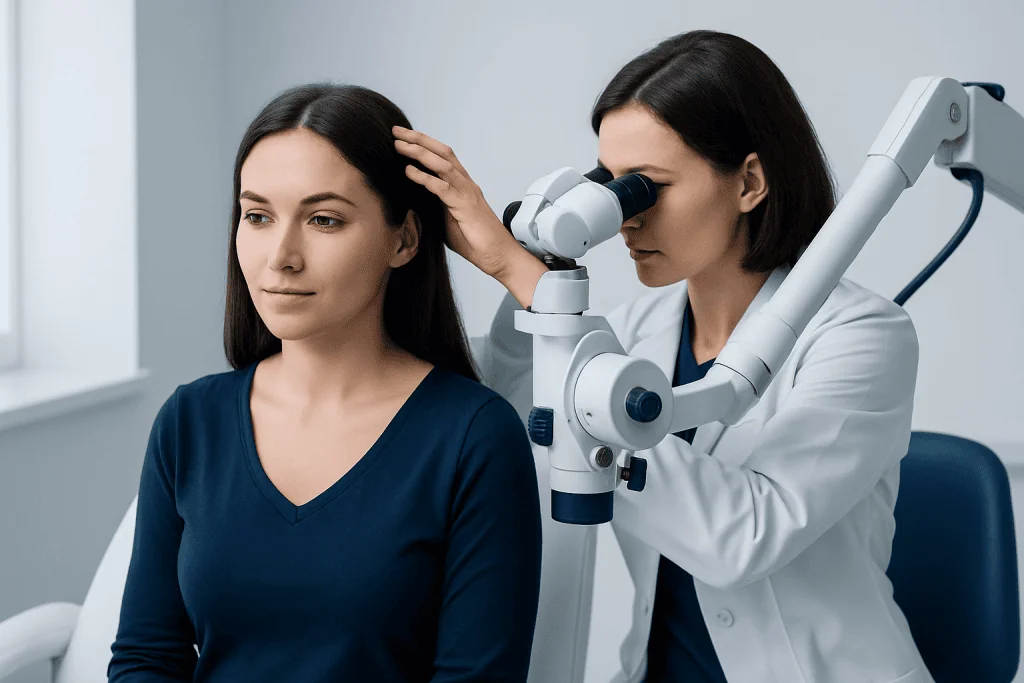
Nits are tiny oval eggs that are glued to the hair shaft. They are often yellow, tan, brown, or white, depending on their age and whether they have hatched. They are usually found within about one quarter of an inch of the scalp, especially behind the ears and at the back of the neck.
A key difference is that nits stick firmly to the hair and do not brush off easily. Dandruff, lint, hair spray residue, and skin flakes usually slide off or can be flicked away. Because nits are cemented in place, they often need to be removed with a fine-toothed nit comb or by hand.
Not every white speck on the hair is a nit. Empty egg casings may remain attached after treatment, and these do not always mean live lice are still present. The most reliable sign of active infestation is finding a live crawling louse on the scalp or hair.
- Nits: attached tightly to one side of the hair shaft
- Dandruff: loose flakes that move easily
- Hair casts or residue: often larger, irregular, and easy to slide along the hair
Symptoms and what people may notice
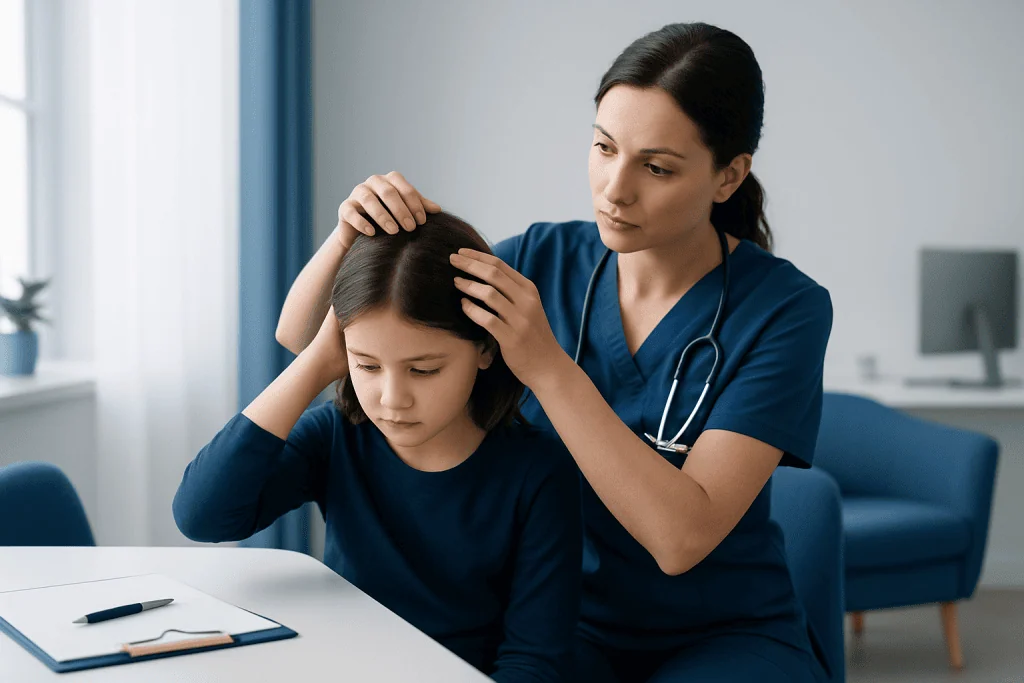
The most common symptom of head lice is itching of the scalp. This itch happens because the body reacts to louse saliva after bites. Itching may be mild at first, and some people do not itch at all, especially during an early infestation.
Other signs can include a tickling feeling in the hair, trouble sleeping, or seeing tiny insects moving near the scalp. Lice tend to be most active in the dark, so nighttime discomfort can be more noticeable. Scratching may lead to redness, small bumps, or irritation.
Sometimes parents or caregivers discover nits before any symptoms begin. In other cases, the scalp may look normal even when lice are present. If scratching becomes intense, the skin can break and become secondarily infected, which may require medical assessment.
Causes, spread, and common myths
Head lice spread mainly through direct head-to-head contact. This is why they are common among children, close family members, and anyone sharing prolonged physical closeness. Lice do not jump or fly; they crawl from one hair strand to another.
Spread through hats, scarves, pillows, hairbrushes, or headphones is possible but less common than many people think. Lice do not survive long away from the human scalp, and they need warmth and regular blood meals. Pets do not carry human head lice, so dogs and cats are not the source.
There is no link between head lice and poor hygiene. Clean hair and dirty hair can both be affected. People may also assume every scalp itch is lice, but other conditions can look similar, including eczema, seborrheic dermatitis, and fungal scalp disease such as scalp ringworm. If symptoms are confusing or persistent, a clinician can help distinguish among causes.
Diagnosis: when lice are confirmed
The diagnosis of head lice is best made by finding a live louse. This may require careful inspection under bright light and the use of a fine-toothed comb on wet, conditioned hair. Wet combing can slow lice down and make them easier to spot.
Finding only nits is less clear. Nits may be left over from an old infestation, especially if they are far from the scalp. A clinician will usually consider how close the nits are to the scalp, whether any are newly laid, and whether live lice are seen during combing.
Medical evaluation may be useful when the scalp is inflamed, symptoms continue despite treatment, or another diagnosis is possible. Conditions that cause itching, scaling, or patchy hair loss may need assessment by specialists in dermatology care to confirm the cause and guide treatment.
Treatment options supported by medical evidence
Treatment usually aims to kill live lice and remove as many nits as possible. Many people use an over-the-counter or prescription lice treatment recommended by a pharmacist or doctor, then repeat treatment if advised based on the product instructions. Because not all products kill unhatched eggs, follow-up is often important.
Nit combing is a central part of treatment. A fine metal nit comb is usually more effective than a standard brush or comb. Combing every few days for at least two weeks can help remove eggs and any newly hatched lice before they mature and lay more eggs.
Household cleaning should be practical rather than extreme. Washing recently used pillowcases, hats, and hair accessories in hot water and drying them with heat may help. Items that cannot be washed can be sealed aside for a period as advised by local guidance. Routine fumigation sprays are not recommended, as they add chemicals without improving outcomes.
If the first treatment does not work, reasons may include incorrect use, resistance to a product, reinfestation from close contacts, or mistaken diagnosis. A doctor may suggest a different medicine or a supervised treatment approach. In persistent cases, evaluation by clinicians experienced in pediatric dermatology or general skin care may be helpful.
Self-care, school advice, and prevention
Checking close household contacts can help identify others who may need treatment, but treatment should usually be reserved for people with confirmed live lice or clear evidence of active infestation. It is sensible to avoid sharing combs, hair accessories, hats, and pillows during an outbreak.
Children can usually return to school after appropriate treatment has started, depending on local school policy. Many medical organizations no longer support strict “no-nit” rules because nits alone do not always indicate active infestation. Open communication with the school nurse or teacher can help families respond calmly and effectively.
Preventing head lice completely is difficult, but simple habits can reduce spread. Hair tied back during group activities, avoiding head-to-head contact when possible, and regular scalp checks during an outbreak may help. Families should be cautious with home remedies such as essential oils, mayonnaise, or kerosene, as these are not reliably effective and some can be unsafe.
If a person has repeated scalp concerns or another underlying skin issue, broader skin evaluation and treatment may be appropriate. Near the end of the care pathway, Acibadem International’s multidisciplinary specialists in JCI-accredited hospitals evaluate and treat scalp and skin conditions for international patients when diagnosis or management is unclear.
When to seek medical care
Medical advice is a good idea if live lice continue to be found after correctly following treatment instructions, if the diagnosis is uncertain, or if a baby, pregnant person, or someone with a complex medical condition needs treatment guidance. A clinician can help choose a safer or more suitable option.
Care is also important when the scalp becomes very red, swollen, painful, or crusted, or when scratching seems to have caused infection. Enlarged lymph nodes, fever, or significant skin irritation should be assessed promptly. If hair loss, ring-shaped rash, or severe scaling is present, another condition may be responsible and should be checked.
Emergency care is rarely needed for head lice itself, but accidental swallowing or misuse of lice products needs urgent medical advice. When in doubt, a qualified doctor or pharmacist can explain the next steps and help avoid unnecessary repeat treatments.
Frequently asked questions
Are nits and lice the same thing?
No. Nits are the eggs of head lice, while lice are the live insects. This distinction matters because treatment is usually aimed at killing live lice and preventing newly hatched lice from surviving.
Do nits always mean there is an active infestation?
Not always. Empty or old nits can stay attached to hair after lice are gone, especially farther from the scalp. The clearest sign of active infestation is finding a live crawling louse.
Can head lice spread from pets or poor hygiene?
No. Human head lice live on people, not pets, and infestation is not a sign of being unclean. They spread mainly through close head-to-head contact.
How long does it take to get rid of nits and lice?
It often takes more than one step. Many treatments need repeat application or repeat combing over one to two weeks to catch newly hatched lice and remove remaining eggs.
Should everyone in the home be treated right away?
Not necessarily. Close contacts should be checked carefully, but treatment is usually recommended for people with confirmed live lice or clear evidence of current infestation. Treating everyone without checking may expose people to medication they do not need.
Can children go to school if they have nits or lice?
Policies vary, but many health authorities support return to school after appropriate treatment begins. Strict no-nit policies are less commonly recommended because nits alone do not always mean a child is contagious.
References
- American Academy of Pediatrics
- Centers for Disease Control and Prevention
- National Health Service
- Mayo Clinic
- American Academy of Dermatology
This article is for general information only and is not a substitute for professional medical advice. Please consult a qualified doctor about your individual situation.
Hair transplant in Turkey — costs, graft counts & a free assessment
JCI-accredited · board-certified surgeons · reply within 24h
Add us as a Preferred Source to see more of our trusted health content across Google Search, AI Overviews and Discover.

More from the Health Library
Fioricet: A Complete Medical Overview
E Stim — Explained by Medical Evidence, Not Myths
Seed Ticks: A Complete Medical Overview

Posterior Communicating Artery: An Evidence-Based Guide for Patients
Coconut Water: A Complete Medical Overview