Non Stick Cookware — Explained by Medical Evidence, Not Myths

Modern non stick cookware is usually safe for home cooking when used within recommended temperatures. The clearest practical risk is overheating, which can damage the coating and release irritating fumes.
Key Takeaways
- Modern non stick cookware is usually safe for home cooking when used within recommended temperatures.
- The clearest practical risk is overheating, which can damage the coating and release irritating fumes.
- Scratched or peeling pans should be replaced because the coating no longer performs as intended.
- PTFE non stick coatings are different from older PFAS-related manufacturing chemicals that raised health concerns.
- Good ventilation, medium heat, and nonmetal utensils help reduce wear and improve safe use.
Non stick cookware is generally considered safe for everyday cooking when it is used as directed, not overheated, and replaced if the coating is badly damaged. Most health concerns relate to very high temperatures, fumes from overheated pans, and confusion between older manufacturing chemicals and the coating used on modern cookware.
Overview: what medical evidence says about non stick cookware
Non stick cookware is widely used because it makes cooking and cleaning easier, and current medical evidence does not show that modern non stick pans are harmful when they are used properly. For most people, the key points are simple: avoid overheating, follow the manufacturer’s instructions, and replace pans when the surface becomes chipped, flaking, or severely scratched.
A common source of confusion is the difference between the non stick coating itself and chemicals once used in parts of the manufacturing process. Many pans use PTFE-based coatings, which are designed to remain stable at normal cooking temperatures. Concerns often center on older PFAS-related compounds, especially PFOA, which was historically used in manufacturing but has largely been phased out in many countries.
From a health perspective, the main everyday issue is not routine use at moderate heat. It is what happens when cookware is heated far beyond normal cooking ranges, left empty on a hot burner, or used after the coating has significantly deteriorated. In those situations, the surface can break down and release fumes that may irritate people and are especially dangerous for pet birds.
This topic also overlaps with broader questions about environmental chemical exposure. People who want to reduce exposure may choose alternative cookware materials, but that is different from saying all non stick cookware is unsafe. A balanced view is that safe handling matters more than fear-driven myths.
How non stick coatings work and why they raise questions
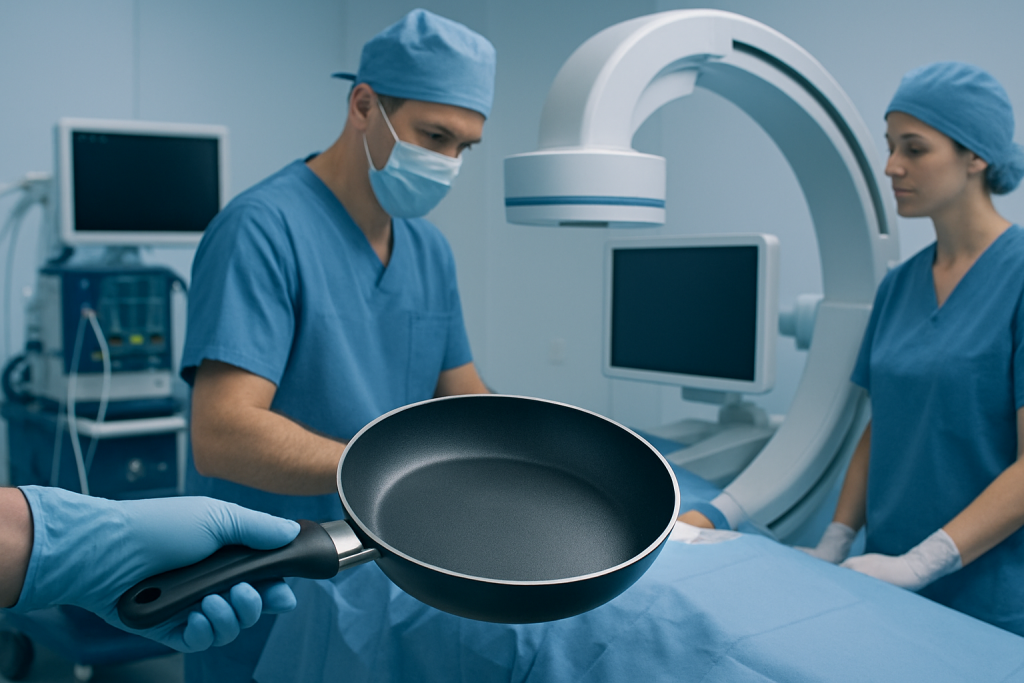
Non stick cookware usually works because its cooking surface is coated with a low-friction material that helps food release easily. In many products, that coating is PTFE. Ceramic non stick coatings are also available, although they behave differently and may wear in different ways over time.
Questions about safety often arise because PTFE, PFAS, and PFOA are frequently discussed together in media reports, even though they are not the same thing. PTFE is the polymer commonly used on the pan’s surface. PFOA was an older processing chemical associated with health concerns and was used in the production of some fluoropolymers in the past. Many current products are labeled PFOA-free, but consumers should still review the manufacturer’s information because standards and labeling can vary by region.
Another reason the topic attracts attention is that cookware is in direct contact with food. This naturally makes people wonder whether substances can migrate into meals. Under normal cooking conditions, any transfer from an intact, undamaged PTFE surface appears to be very low. Problems are more likely when a pan is old, visibly damaged, or repeatedly exposed to excessive heat.
People who already have concerns about chemical exposure may also want to understand the bigger picture of environmental health. Questions about long-term exposure can be discussed with a doctor, particularly if there are symptoms that may have another medical explanation such as lung conditions or chronic digestive complaints.
Potential health risks: what is known and what is often misunderstood

The most established health risk linked to non stick cookware is inhalation of fumes from overheated PTFE-coated pans. At very high temperatures, the coating can begin to degrade and release fumes that may cause a temporary flu-like reaction sometimes called polymer fume fever. Symptoms can include fever, chills, headache, and body aches, usually appearing several hours after significant exposure. This is uncommon in ordinary cooking but can happen if an empty pan is left on high heat.
Another concern is whether scratched coatings are toxic if tiny flakes are accidentally swallowed. While swallowing small particles from an occasional damaged coating is not thought to be a major poisoning risk for most people, a pan that is peeling or flaking should still be replaced. The reason is practical as well as health-related: the damaged coating no longer performs predictably and may continue to degrade.
There is also a broader discussion about PFAS chemicals in the environment. These substances have been studied for possible links to several health effects, but exposure from cookware should not automatically be assumed to be the same as exposure from contaminated water, industrial settings, or other sources. Health risk depends on the specific chemical, the amount, the route of exposure, and the duration over time.
Many internet claims overstate the evidence. Non stick cookware does not usually cause cancer simply by being used for normal cooking, and there is no good evidence that every scratch creates a medical emergency. At the same time, it is reasonable to use cookware carefully, maintain it well, and ask a clinician about persistent symptoms rather than relying on social media myths alone.
Who may be more cautious and which symptoms matter
Most healthy adults can use non stick cookware safely if they avoid overheating and keep the surface in good condition. Still, some households may want to be more cautious. People with asthma or other chronic respiratory conditions may be more sensitive to irritating fumes if a pan is accidentally overheated, and birds are particularly vulnerable to airborne fumes from damaged or overheated non stick coatings.
It is also reasonable for pregnant people, families with infants, and individuals who are trying to reduce chemical exposures overall to be selective about cookware choices. That does not mean non stick cookware must always be avoided. It means careful use, ventilation, and informed product selection may be worthwhile as part of a broader prevention approach.
Symptoms that deserve attention after possible fume exposure include sudden cough, shortness of breath, chest tightness, fever, chills, and a flu-like feeling that starts after heavy smoke or fumes from a very hot pan. These symptoms can overlap with other illnesses, so medical assessment may be important if they are moderate, persistent, or worsening. Depending on symptoms, doctors may evaluate for respiratory irritation or other causes and may use tests such as a medical check-up or a chest X-ray.
If a person has repeated breathing symptoms in the kitchen, the issue may not be the pan alone. Gas stoves, poor ventilation, household smoke exposure, and underlying lung disease can all contribute. A clinician can help identify whether the problem relates to cookware fumes, another inhaled irritant, or a separate condition altogether.
How to use non stick cookware more safely
Safe use is mostly about heat, handling, and maintenance. Non stick pans should generally be used on low to medium heat unless the manufacturer states otherwise. High heat is often unnecessary for non stick cooking because these surfaces are designed to release food easily without extreme temperatures.
Leaving a pan empty on a hot burner is one of the simplest ways to damage the coating. Preheating should be brief, and good kitchen ventilation is helpful during all cooking, not only with non stick cookware. Opening windows or using an exhaust fan can reduce inhalation of smoke and cooking fumes from any source.
- Use wood, silicone, or other nonmetal utensils when recommended.
- Wash gently with nonabrasive sponges to reduce wear.
- Replace pans that are peeling, chipping, warped, or heavily scratched.
- Do not use cookware above the manufacturer’s temperature limits.
- Avoid aerosol sprays if the brand advises against them, because residue can affect performance.
People who prefer alternatives can consider stainless steel, cast iron, or ceramic cookware depending on their cooking style. Each material has advantages and limitations. Switching materials may be a reasonable personal choice, but it is not medically necessary for everyone if existing non stick cookware is modern, intact, and used appropriately.
How doctors evaluate possible exposure or symptoms
There is no routine medical test needed just because someone uses non stick cookware at home. Evaluation is guided by symptoms, the timing of exposure, and any relevant health history. If a person becomes ill after obvious inhalation of fumes from an overheated pan, a clinician will usually ask about the event itself, breathing symptoms, fever, chest discomfort, and whether there are other possible causes such as infection or smoke inhalation.
For mild polymer fume irritation, symptoms often improve with fresh air, hydration, rest, and removal from the source. If symptoms are more significant, doctors may check oxygen levels, listen to the lungs, and consider imaging or other tests. In people with ongoing respiratory symptoms, assessment may overlap with workups for asthma, infection, or other lung problems, including chronic lung disease when clinically relevant.
Some patients ask for blood testing for PFAS after reading about chemical exposure online. This is not usually part of standard care for occasional cookware concerns, and results may not clearly explain symptoms or guide treatment. A doctor can help place environmental exposure worries into context and focus on what is most useful for that individual’s health.
Near the end of the evaluation process, prevention advice is often just as important as diagnosis. Clinicians may review cookware habits, household ventilation, and smoking or occupational exposures. If a more specialized workup is needed, centers such as Acibadem International offer multidisciplinary assessment in JCI-accredited hospitals for international patients.
When to seek medical care
Medical care is appropriate if someone develops significant breathing symptoms after inhaling fumes from an overheated pan. Warning signs include shortness of breath, wheezing, chest pain, persistent cough, blue lips, confusion, or symptoms that rapidly worsen. These are especially important in children, older adults, pregnant people, and anyone with asthma or heart or lung disease.
Care is also reasonable if flu-like symptoms appear after a known fume exposure and do not improve, or if there is concern about another cause such as infection, smoke inhalation, or an allergic reaction. A poisoned feeling after cooking is not specific to non stick coatings, so professional assessment can help identify the true source.
If a person accidentally swallows a small coating fragment from a scratched pan but feels well, urgent treatment is usually not needed. However, medical advice should be sought if there is choking, severe abdominal pain, vomiting, or if the swallowed object was not just a tiny coating fragment but part of damaged cookware.
For persistent health worries about cookware, especially in households trying to reduce environmental exposures, discussing concerns during a primary care visit can be useful. Personalized advice may be more reassuring and more accurate than generalized online claims.
Frequently asked questions
Is non stick cookware safe to use every day?
For most people, yes. Modern non stick cookware is generally considered safe for daily cooking when it is used at appropriate temperatures, kept in good condition, and replaced if the coating becomes damaged.
Can scratched non stick pans cause poisoning?
A scratched pan is not usually considered a poisoning emergency, especially if only tiny coating particles are involved. Still, badly scratched, peeling, or flaking pans should be replaced because the surface is deteriorating and may no longer behave safely or effectively.
What happens if a non stick pan overheats?
If a PTFE-coated pan becomes extremely hot, the coating can break down and release fumes. Inhaling these fumes may cause temporary flu-like symptoms in some people, and birds are particularly sensitive to them.
Is PTFE the same as PFOA or PFAS?
No. PTFE is the non stick polymer used on many pan surfaces, while PFOA was an older processing chemical associated with health concerns and used historically in manufacturing. PFAS is a broader chemical family, so these terms should not be used as if they all mean the same thing.
Are ceramic non stick pans safer than traditional non stick pans?
Ceramic non stick cookware may appeal to people who want to avoid PTFE-based coatings, but "safer" depends on the product, how it is made, and how it is used. Ceramic surfaces can also wear down over time, so proper use and replacement when damaged still matter.
Should people with asthma avoid non stick cookware?
Not necessarily, but they may want to be more careful about avoiding overheated pans and ensuring good kitchen ventilation. Anyone with asthma who develops cough, wheezing, or shortness of breath after cooking should discuss it with a doctor.
This article is for general information only and is not a substitute for professional medical advice. Please consult a qualified doctor about your individual situation.
Explore treatments in Turkey — costs, top hospitals & a free quote
JCI-accredited · board-certified surgeons · reply within 24h
Add us as a Preferred Source to see more of our trusted health content across Google Search, AI Overviews and Discover.

More from the Health Library

Broken Kneecap — Explained by Medical Evidence, Not Myths

Wellbutrin — Explained by Medical Evidence, Not Myths

Weight Loss Soup — Explained by Medical Evidence, Not Myths

Peritoneal Dialysis — Explained by Medical Evidence, Not Myths

L-glutamine — Explained by Medical Evidence, Not Myths