Occipital Lobe: A Complete Medical Overview

The occipital lobe is located at the back of the brain and is central to visual processing. Problems in the occipital lobe can cause blurred vision, visual field loss, visual hallucinations, or difficulty recognizing what is seen.
Key Takeaways
- The occipital lobe is located at the back of the brain and is central to visual processing.
- Problems in the occipital lobe can cause blurred vision, visual field loss, visual hallucinations, or difficulty recognizing what is seen.
- Common causes of occipital lobe dysfunction include stroke, head injury, seizures, tumors, infection, and inflammation.
- Diagnosis often combines a neurological exam with brain imaging and, when needed, eye testing or EEG.
- Treatment depends on the underlying cause and may involve emergency stroke care, medication, surgery, or rehabilitation.
- Sudden vision changes, severe headache, weakness, confusion, or seizures require urgent medical attention.
The occipital lobe is the part of the brain that mainly processes vision, helping a person interpret what the eyes see. When it is affected by injury, stroke, seizures, tumors, or other neurological conditions, changes may appear in sight, reading, recognition, or visual perception.
Overview: what the occipital lobe does
The occipital lobe is the region at the back of the brain that primarily handles visual information. It receives signals that begin in the eyes and helps the brain turn those signals into meaningful images, including shape, color, movement, depth, and spatial relationships. In simple terms, the eyes collect light, but the occipital lobe helps a person understand what is being seen.
This area works closely with other parts of the brain rather than acting alone. After the occipital lobe processes basic visual input, connected brain networks help identify faces, read words, judge motion, and recognize familiar objects and places. Because of this teamwork, a problem in the occipital lobe may affect more than eyesight alone; it can also change visual interpretation.
The occipital lobe is important in everyday life for reading, driving, navigating spaces, and reacting to the environment. Even when the eyes themselves are healthy, a disorder in this part of the brain can lead to major visual symptoms. That is why doctors distinguish between eye diseases and neurological causes of vision problems.
Where it is located and how it works with vision
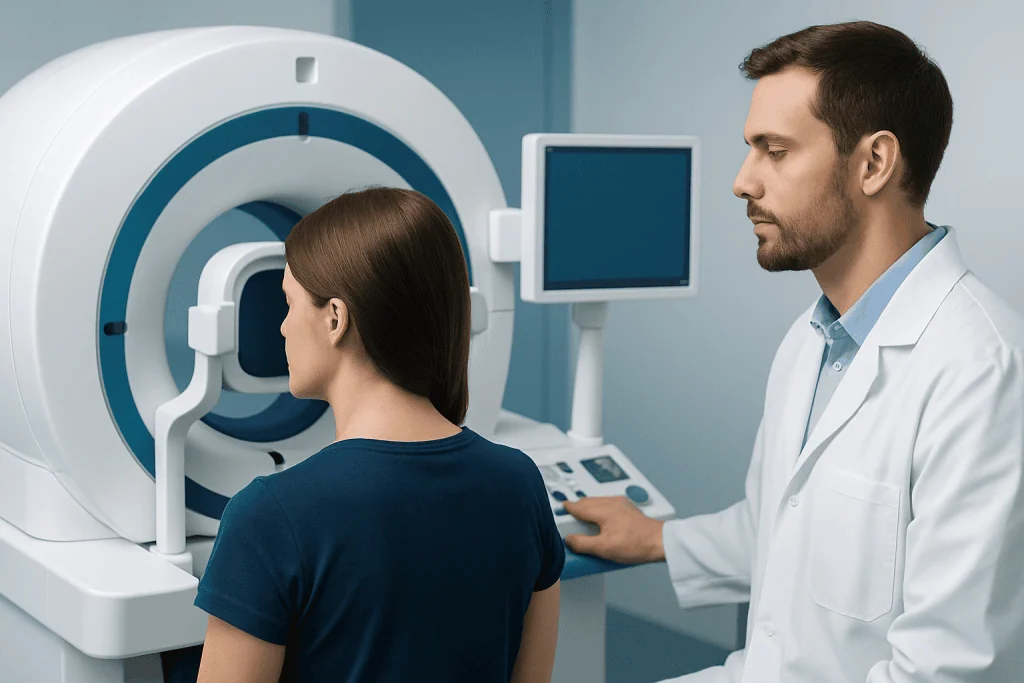
The occipital lobe sits in the posterior part of the brain, behind the parietal and temporal lobes and above the cerebellum. It contains the primary visual cortex, often called V1, which is the first cortical area to receive visual signals relayed from the eyes through the thalamus. From there, information is sent to surrounding visual areas for more detailed analysis.
Visual processing is often described as two major pathways. One pathway helps identify what an object is, such as a face, letter, or everyday item. The other helps determine where something is and how it is moving. This is why damage in or near the occipital lobe can cause different patterns of symptoms, from trouble reading to difficulty detecting movement or missing part of the visual field.
It is also possible for a person to have normal eye structures but impaired vision because the brain cannot process the incoming information correctly. In clinical care, this distinction matters because treatment may involve neurology, neurosurgery, stroke medicine, rehabilitation, or neuro-ophthalmology rather than eye treatment alone.
Symptoms of occipital lobe problems

Symptoms vary depending on which part of the occipital lobe is affected and whether the problem develops suddenly or gradually. Some people notice complete or partial loss of vision on one side of the visual field, while others have trouble seeing clearly despite a normal eye exam. Visual symptoms can affect one eye’s field of view, both eyes, or only specific areas of sight.
Other symptoms involve visual perception rather than simple clarity. A person may have difficulty recognizing familiar objects, faces, colors, or written words. Some may experience flashes of light, zigzag patterns, visual distortions, or visual hallucinations. In some cases, these symptoms are related to migraine aura or occipital seizures rather than permanent structural damage.
Possible symptoms include:
- Loss of part of the visual field
- Blurred or distorted vision
- Difficulty reading or recognizing words
- Trouble identifying objects, faces, or colors
- Sensitivity to visual motion or spatial disorientation
- Flashing lights or visual hallucinations
- Headache, confusion, weakness, or seizures when the cause is more widespread
Symptoms should always be interpreted in context. For example, sudden visual loss may suggest a neurological emergency such as stroke, while recurring brief episodes of visual disturbance may point to migraine or seizure activity. A medical assessment helps distinguish these possibilities safely.
Causes and risk factors
Occipital lobe dysfunction can result from many different conditions. One of the most important is stroke, which can interrupt blood flow to the visual cortex and cause sudden visual field loss. Bleeding in the brain, head trauma, and lack of oxygen can also injure this area. Because the occipital lobe depends on a steady blood supply, vascular problems can have a rapid impact.
Other causes include seizures starting in the occipital region, brain tumors, infections, inflammation, and neurodegenerative diseases. In some people, migraine aura causes temporary visual symptoms without permanent injury. Structural abnormalities, autoimmune disorders, or complications after severe illness may also affect visual processing pathways.
Risk factors depend on the underlying condition, but may include high blood pressure, diabetes, smoking, high cholesterol, atrial fibrillation, head injury, a personal history of seizures, or a known brain tumor. People with vascular risk factors may have a higher likelihood of an occipital stroke, while those with certain neurological conditions may be more prone to seizures or inflammatory disease.
Because causes range from benign and temporary to urgent and serious, self-diagnosis can be unreliable. A new visual symptom should be evaluated in light of the person’s age, medical history, symptom pattern, and neurological examination.
How doctors diagnose occipital lobe disorders
Diagnosis begins with a careful history and neurological examination. Doctors usually ask when symptoms started, whether they appeared suddenly or gradually, and whether they are linked to headache, trauma, seizures, weakness, speech difficulty, or confusion. A visual field exam may reveal missing areas of sight that a person had not fully noticed before.
Brain imaging is often central to diagnosis. Depending on the situation, doctors may use CT scanning in emergencies or MRI for a more detailed view of the brain. Imaging can help identify stroke, bleeding, inflammation, tumors, or structural lesions. If seizure activity is suspected, an electroencephalogram may be recommended. If the main complaint is visual, formal eye and visual field testing may also be useful.
Further tests depend on the suspected cause. Blood tests may look for infection, inflammation, clotting problems, or metabolic issues. When a brain mass is suspected, additional neurological or neurosurgical evaluation may be needed. In a hospital setting, specialists may collaborate across neurology, radiology, ophthalmology, and rehabilitation to clarify the diagnosis and plan treatment.
Treatment options and recovery
Treatment for an occipital lobe problem is guided by the cause rather than the symptom alone. If the problem is due to stroke, urgent hospital care is essential and may include stroke treatment to restore or protect blood flow where appropriate. If seizures are responsible, anti-seizure medication may help control episodes. Migraine-related visual symptoms are usually managed differently from stroke or seizures, so an accurate diagnosis matters.
When a structural lesion such as a mass is found, treatment may involve observation, medication, radiation therapy, or brain tumor surgery, depending on the diagnosis and location. Infections or inflammatory disorders may require targeted therapy. If symptoms follow head trauma, doctors focus on stabilizing the patient, identifying complications, and supporting recovery.
Rehabilitation can be an important part of care, especially when visual field loss or visual-perceptual difficulties persist. This may include neuro-ophthalmology assessment, occupational therapy, visual scanning training, and strategies to improve safety with reading, walking, and daily tasks. Recovery varies widely: some symptoms resolve, while others improve gradually with treatment and adaptation.
Near the end of a patient’s care pathway, coordinated follow-up is often helpful. Acibadem International’s multidisciplinary specialists and JCI-accredited hospitals diagnose and treat neurological conditions affecting the brain, including disorders that may involve the occipital region.
Prevention, daily support, and living with visual changes
Not all causes of occipital lobe problems can be prevented, but many vascular and injury-related risks can be reduced. Managing blood pressure, cholesterol, and diabetes, staying physically active, avoiding smoking, and following medical advice for heart rhythm disorders may lower the risk of stroke. Using seat belts, helmets where appropriate, and fall-prevention measures can help reduce head injuries.
For people living with visual field loss or visual processing changes, practical adjustments can improve safety and confidence. Good lighting, reducing clutter, organizing commonly used items in consistent places, and allowing extra time for reading or navigation may help. Some people benefit from scanning techniques that train them to turn the head and eyes toward the affected side more deliberately.
It is also helpful to review driving, work, and home safety with a clinician if vision has changed. Family support, rehabilitation input, and regular follow-up can make daily activities more manageable. New or worsening symptoms should not be assumed to be part of a stable condition; they deserve medical review.
When to seek medical care
Immediate medical care is needed if visual symptoms start suddenly, especially if they occur with severe headache, facial drooping, arm weakness, speech difficulty, confusion, loss of balance, or seizure. These features can signal a neurological emergency, including stroke or bleeding in the brain. Emergency assessment is also important after significant head trauma or if a person loses consciousness.
A prompt non-emergency medical review is recommended for recurring visual disturbances, unexplained reading difficulty, persistent blind spots, or new problems recognizing objects or faces. Even when symptoms seem mild, they may reflect a condition that benefits from evaluation and treatment. Depending on the findings, a doctor may recommend consultation with neurology or another specialist.
People already diagnosed with a neurological condition should seek advice if their symptoms change in frequency, intensity, or pattern. Early assessment can help protect vision, address the underlying cause, and support safer daily functioning.
Frequently asked questions
What is the occipital lobe responsible for?
The occipital lobe is mainly responsible for processing visual information. It helps the brain interpret color, shape, movement, spatial position, and parts of reading and object recognition.
Can occipital lobe damage cause blindness?
Yes, damage to the occipital lobe can cause partial or complete loss of vision, even if the eyes themselves are normal. The exact effect depends on which side and which part of the visual cortex is affected.
What does occipital lobe pain feel like?
The occipital lobe itself does not usually create a specific pain pattern a person can clearly identify. Pain felt at the back of the head may come from many causes, such as muscle tension, migraine, nerve irritation, or other neurological conditions, so symptoms should be assessed in context.
Can migraine affect the occipital lobe?
Migraine can cause visual symptoms that reflect altered activity in visual processing areas, including the occipital region. These symptoms may include flashing lights, blind spots, or zigzag lines and often pass, but sudden or unusual visual symptoms should still be medically evaluated.
How is an occipital lobe problem diagnosed?
Doctors usually combine a medical history, neurological examination, visual assessment, and brain imaging. CT may be used in emergencies, while MRI often provides more detailed information; some patients also need EEG or eye testing.
Can a person recover from an occipital lobe injury?
Recovery is possible, but it depends on the cause, severity, and how quickly treatment begins. Some people improve significantly, while others continue to have visual field loss or perception difficulties and benefit from rehabilitation and coping strategies.
References
- National Institute of Neurological Disorders and Stroke
- National Eye Institute
- American Stroke Association
- Mayo Clinic
- Merck Manual
This article is for general information only and is not a substitute for professional medical advice. Please consult a qualified doctor about your individual situation.
Explore treatments in Turkey — costs, top hospitals & a free quote
JCI-accredited · board-certified surgeons · reply within 24h
Add us as a Preferred Source to see more of our trusted health content across Google Search, AI Overviews and Discover.

More from the Health Library

Hydrocodone: An Evidence-Based Guide for Patients

Brca Testing: A Complete Medical Overview

Spina Bifida: An Evidence-Based Guide for Patients

Sporanox — Explained by Medical Evidence, Not Myths

A h3n2 symptoms: A Complete Medical Guide for Patients