Occupational Therapy for Knee Sprains: How It Works, Results and What to Expect
A knee sprain involves stretched or torn ligaments and can range from mild to severe. Occupational therapy supports safe independence with home, work, self-care and community activities.
Key Takeaways
- A knee sprain involves stretched or torn ligaments and can range from mild to severe.
- Occupational therapy supports safe independence with home, work, self-care and community activities.
- Treatment plans are individualized and may include activity modification, joint-protection education and functional strengthening.
- Most mild to moderate knee sprains improve with appropriate conservative care, although recovery time varies by ligament and injury severity.
- Sudden inability to bear weight, major swelling, deformity, locking or numbness requires prompt medical assessment.
Occupational therapy for knee sprains focuses on helping a person resume essential daily activities safely while the knee heals. It combines practical movement training, pacing strategies, adaptive tools when needed, and coordination with the wider rehabilitation team.
Overview: How occupational therapy helps after a knee sprain
Occupational therapy for knee sprains helps a person return safely to the activities that matter in everyday life, such as getting dressed, using stairs, caring for family, working, shopping or travelling. It does not replace medical assessment or physiotherapy; instead, it applies rehabilitation principles to practical daily tasks while protecting the healing knee.
A knee sprain occurs when one or more ligaments, the tough bands of tissue that stabilize the joint, are overstretched or torn. The injury may follow a twist, fall, sudden change of direction or direct impact. Care depends on the affected ligament, the extent of injury, associated damage to cartilage or menisci, and the person’s activity demands.
An occupational therapist may work alongside orthopaedic specialists, physiotherapists and other clinicians. The goal is not simply to reduce symptoms, but to help the person rebuild confidence and function without returning to demanding activities too quickly. A rehabilitation assessment can also identify whether a knee treatment assessment is needed for separate, ongoing joint problems rather than for the sprain itself.
How it works: a function-focused rehabilitation approach
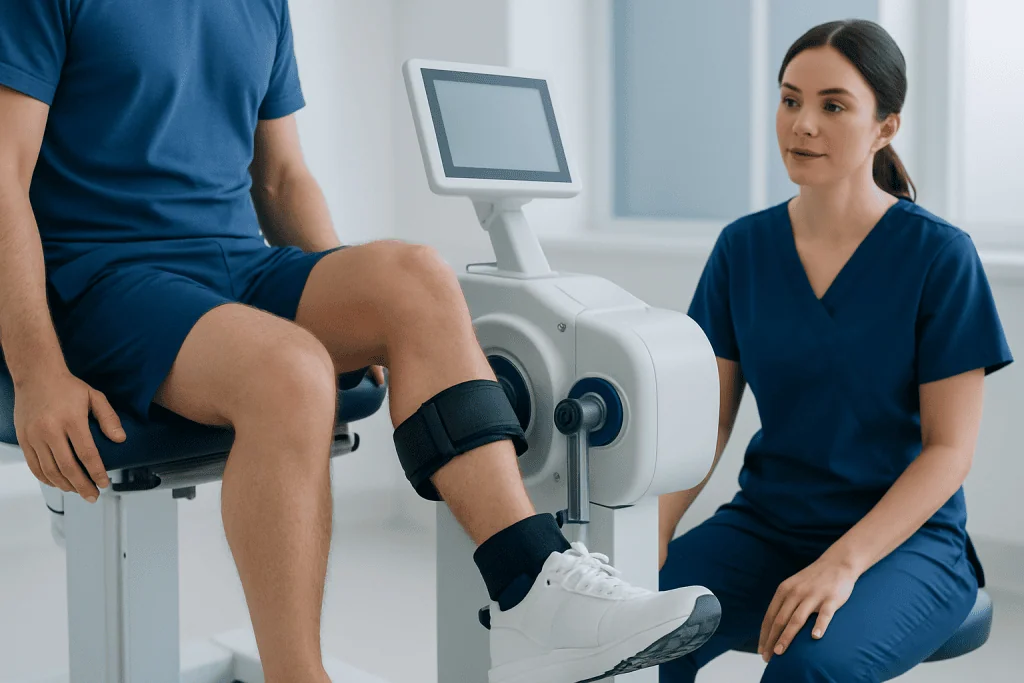
Occupational therapy begins by understanding how the knee injury affects daily routines. The therapist asks about pain, swelling, mobility, work duties, home layout, sleep, driving, sports and personal goals. They also consider practical factors such as access to stairs, caregiving responsibilities, footwear and the need to carry objects.
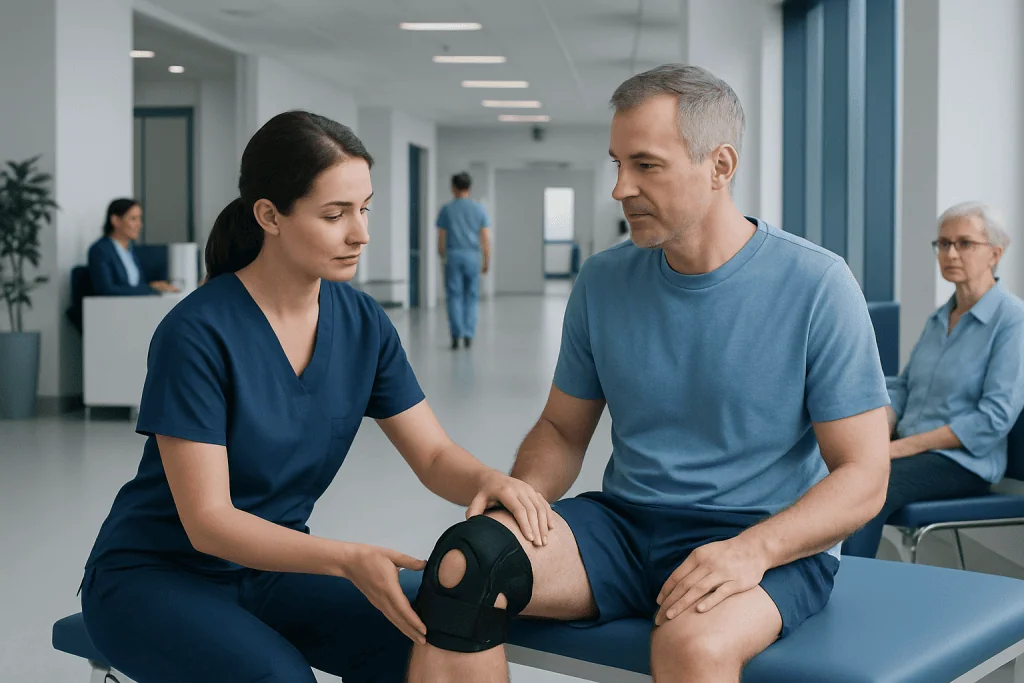
Based on this assessment, therapy may teach safer ways to sit, stand, transfer in and out of a car, use stairs, bathe, dress or prepare meals. A person who has been advised to use crutches, a brace or a walking aid can learn how to use it efficiently during real-life tasks. Temporary equipment, such as a shower chair, raised toilet seat or long-handled dressing aid, may be useful for some people.
Therapy commonly includes education on pacing: alternating activity with rest, avoiding repeated twisting or deep bending early in recovery, and gradually increasing demands as symptoms settle. The therapist may also coordinate with physiotherapy, where progressive exercises for range of motion, balance, strength and knee control are usually central to recovery.
For people whose injury disrupts employment, occupational therapy can address an ergonomic work setup, safe manual-handling methods and a staged return-to-work plan. Recommendations are adapted to the job rather than applying the same restrictions to every person.
Candidacy and the step-by-step therapy process
Occupational therapy may be helpful when a knee sprain makes ordinary activities difficult or unsafe. This can include people who have pain when standing at a kitchen counter, difficulty navigating stairs, trouble caring for children, concern about returning to a physical job, or reduced confidence leaving home. It can be particularly valuable when a person has other health conditions, reduced upper-body strength, limited home support or a complex work role.
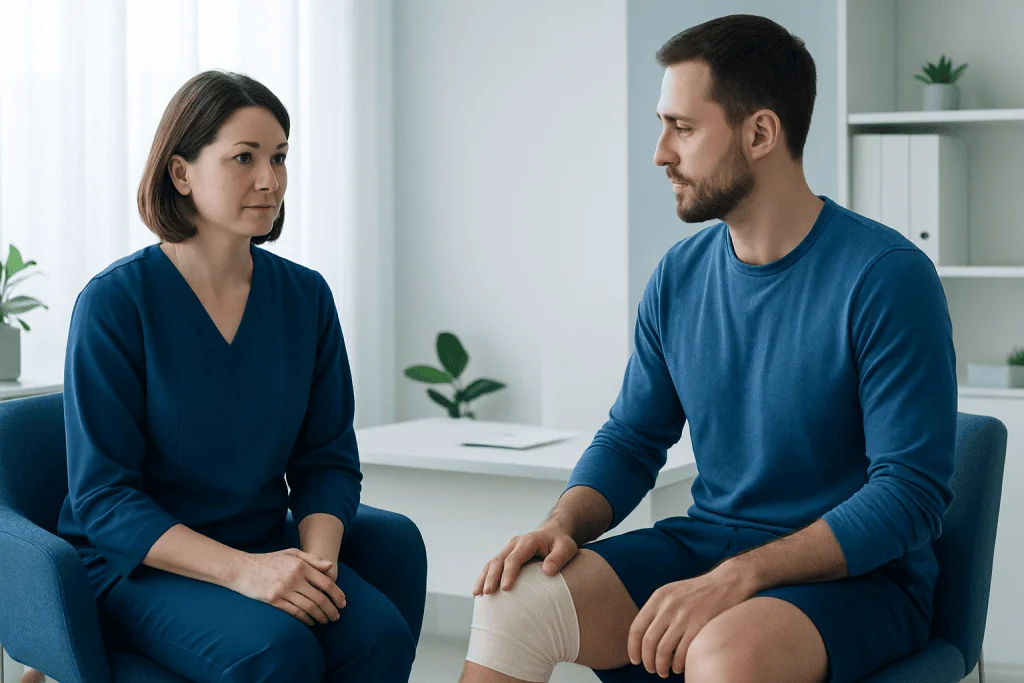
The first appointment usually includes a review of the diagnosis and medical advice already given, an activity assessment and a discussion of personal priorities. The therapist may observe functional movements such as rising from a chair, walking short distances, entering a shower or carrying a light item. They do not need to provoke severe pain to understand the limitations.
Next, the therapist and patient set realistic, measurable goals. Sessions then focus on practising specific activities, learning symptom-guided pacing and making suitable environmental or task changes. Home recommendations are reviewed and adjusted as swelling, pain and mobility improve.
At later visits, therapy often shifts toward more demanding tasks, such as prolonged standing, commuting, work simulation or recreational activities. If symptoms do not follow an expected pattern, or instability persists, the therapist may recommend reassessment by the treating doctor or orthopaedic team.
Benefits, limitations and possible risks
The main benefit of occupational therapy is practical recovery: it helps people continue essential routines safely while healing progresses. It may reduce unnecessary strain on the injured knee, support confidence with movement and make return to home and work roles more manageable. Education can also help a person recognize the difference between expected mild discomfort during rehabilitation and symptoms that should be discussed with a clinician.
Occupational therapy cannot repair a completely torn ligament, correct significant joint instability or replace medical treatment for fractures, major meniscal tears or dislocations. Some knee injuries need bracing, targeted physiotherapy, imaging, injections or surgery, depending on the diagnosis. An orthopaedic evaluation is important when a serious injury is suspected.
Risks from therapy are generally low when activities are tailored to the injury and current restrictions. However, doing too much too soon can increase pain or swelling. Exercise or functional practice should be stopped and reviewed if it causes sharp pain, repeated giving way, major swelling, locking, numbness or a clear decline in function.
People recovering after more complex knee procedures may require coordinated rehabilitation. In appropriate cases, a specialist may discuss arthroscopic knee surgery if a structural problem is identified and conservative treatment is not sufficient.
Recovery timeline and returning to daily life
Recovery from a knee sprain varies widely. A mild ligament stretch may begin improving within days to a few weeks, while partial or complete tears can require many weeks or longer. The timeline is influenced by the injured ligament, swelling, knee stability, muscle strength, previous injuries, general health and the physical demands of the person’s work or sport.
Early recovery usually emphasizes protecting the knee, controlling swelling as advised, maintaining safe movement and avoiding activities that cause the joint to buckle or twist. As healing progresses, rehabilitation focuses more on restoring normal walking, knee motion, balance and strength. Functional goals may progress from household tasks to stairs, community mobility, work duties and sport-specific activity.
A person should not judge readiness to return solely by the absence of pain. Good knee control, adequate strength, stable movement and the ability to perform relevant daily or work tasks without increased swelling are also important. A treating clinician can advise when it is appropriate to resume driving, heavy work, running or pivoting sports.
Acibadem International’s multidisciplinary specialists and JCI-accredited hospitals can assess knee injuries and coordinate orthopaedic care and rehabilitation for international patients when appropriate.
Do knee sprains ever fully heal?
Many knee sprains heal well, especially mild and moderate ligament injuries that receive appropriate protection and rehabilitation. People often return to their usual daily activities and, in many cases, to sport. However, “fully healed” can mean different things: symptoms may settle before strength, balance and confidence have completely returned.
More severe ligament tears, combined injuries or repeated episodes of instability may take longer and may not respond fully to conservative care alone. Persistent giving way, recurrent swelling, locking or difficulty returning to normal activities should be assessed by an orthopaedic clinician. A structured rehabilitation plan helps reduce the chance of ongoing weakness or compensatory movement patterns.
What are the three C's of knee injuries?
The phrase “three C’s of knee injuries” is not a single formal medical standard, and its meaning can vary between sports and rehabilitation settings. It is sometimes used as a simple reminder to consider the circumstances of the injury, the clinical examination and the care plan. Other clinicians use different three-word memory aids.
For patients, the most useful approach is to focus on clear information: what happened, what symptoms followed and what movements are now difficult. A qualified clinician uses this history together with examination findings and, when necessary, imaging to identify the type of knee injury. A memorable phrase should never be used to diagnose a sprain or determine whether it is serious.
How long does it take to rebuild knee strength?
Rebuilding knee strength commonly takes weeks, and it may take several months after a more significant sprain or a period of reduced activity. Muscles around the knee and hip can weaken quickly when pain, swelling or fear of movement limits walking and exercise. The exact pace depends on injury severity, previous fitness, age, medical conditions and adherence to an individualized rehabilitation plan.
Strength should be rebuilt gradually with guidance from a qualified clinician or physiotherapist. Progress is based on movement quality, joint stability, swelling response and functional ability, not only on how much weight a person can lift. Occupational therapy complements this work by transferring improved strength into safe performance of everyday tasks.
How bad do sprained knees hurt?
Pain from a sprained knee can range from mild tenderness to substantial pain that makes walking difficult. It may occur immediately after an injury or become more noticeable as swelling develops. Pain severity does not always match the seriousness of the injury: a minor sprain can feel very painful, while some significant injuries may initially seem manageable.
Symptoms that may accompany a sprain include swelling, stiffness, bruising, reduced range of motion, a popping sensation at the time of injury or a feeling that the knee is unstable. Severe pain, inability to bear weight, visible deformity, rapid large swelling, a cold or pale foot, numbness, or a knee that locks should be assessed urgently.
When to seek medical care
Medical assessment is advisable after a knee injury when pain or swelling is significant, walking is difficult, or the knee feels unstable. A clinician can determine whether the injury is likely to be a sprain and whether there may also be a fracture, tendon injury, meniscal tear or dislocation. Early guidance can help protect the knee and direct appropriate rehabilitation.
Urgent care is needed for a visibly deformed knee, inability to bear weight after a significant injury, severe or rapidly increasing swelling, loss of sensation, a cool or pale foot, fever with a hot swollen joint, or severe pain that is not manageable. These features may indicate a condition requiring prompt assessment.
People should also arrange review if symptoms fail to improve, the knee repeatedly gives way, movement becomes increasingly limited, or return to necessary work and home activities remains difficult. A rehabilitation plan can then be adapted to the diagnosis and current functional needs.
Frequently asked questions
Can occupational therapy replace physiotherapy for a knee sprain?
Occupational therapy and physiotherapy often have complementary roles. Physiotherapy commonly focuses on restoring knee motion, strength, balance and physical capacity, while occupational therapy concentrates on safely applying those abilities to self-care, home, work and community tasks. Some people benefit from one service, while others benefit from coordinated care from both.
Will I need a knee brace or crutches?
Some knee sprains are managed with a brace, crutches or another walking aid for a limited period, particularly when pain, swelling or instability makes walking unsafe. The need and duration depend on the diagnosis and medical assessment. A therapist can teach safe use during daily activities.
Can I work with a sprained knee?
Many people can continue working with temporary adjustments, but this depends on symptoms and job demands. Desk work may require changes to seating, movement breaks and travel, while jobs involving lifting, climbing, kneeling or rapid direction changes may need temporary restrictions. A clinician can advise on a gradual return plan.
Should I rest a sprained knee completely?
Complete prolonged rest is usually not the goal, unless a clinician has specifically advised it. Early protection is important, but safe, gradual movement often helps prevent stiffness and loss of strength. The appropriate level of activity depends on the injury and should follow medical guidance.
Can a knee sprain cause long-term instability?
It can, particularly after a more severe ligament injury or when rehabilitation is incomplete. Repeated giving way, persistent swelling or reduced trust in the knee should be reviewed by a clinician. Targeted strengthening, balance work and activity-specific training may improve stability.
When can I return to sport after a knee sprain?
Return to sport should be based on recovery of knee motion, strength, balance, stability and sport-specific movement, rather than time alone. The person should be able to complete relevant training activities without significant pain, swelling or instability. A clinician or rehabilitation professional can help determine readiness.
References
- American Academy of Orthopaedic Surgeons
- American Occupational Therapy Association
- National Institute of Arthritis and Musculoskeletal and Skin Diseases
- National Health Service
- Mayo Clinic
This article is for general information only and is not a substitute for professional medical advice. Please consult a qualified doctor about your individual situation.
Joint and spine care in Turkey — expert assessment & treatment
JCI-accredited · board-certified surgeons · reply within 24h
Add us as a Preferred Source to see more of our trusted health content across Google Search, AI Overviews and Discover.