

Oral Cancer: Mouth Sores, Tobacco Risk, and When to Get Checked

Oral cancer can appear as a sore, patch, lump, or pain in the mouth that does not improve. Tobacco use and heavy alcohol use are major risk factors, and the risk is higher when both are present.
Key Takeaways
- Oral cancer can appear as a sore, patch, lump, or pain in the mouth that does not improve.
- Tobacco use and heavy alcohol use are major risk factors, and the risk is higher when both are present.
- Any mouth sore or unusual change lasting more than two weeks should be evaluated.
- Diagnosis usually involves an oral examination, imaging when needed, and a biopsy to confirm the diagnosis.
- Treatment may include surgery, radiation therapy, chemotherapy, or a combination, depending on the stage and location.
Oral cancer refers to cancer that develops in the mouth, lips, tongue, gums, inner cheeks, roof of the mouth, or floor of the mouth. It can often be treated more effectively when found early, so persistent mouth changes should be checked by a doctor or dentist.
Overview
Oral cancer is a type of head and neck cancer that starts in the tissues of the mouth. It may affect the lips, tongue, gums, lining of the cheeks, roof of the mouth, floor of the mouth, or the area behind the wisdom teeth. Most oral cancers begin in the thin, flat cells that line these surfaces.
In its early stages, oral cancer may cause few symptoms or resemble common mouth problems such as irritation from biting, a canker sore, or gum inflammation. This is one reason it can be overlooked. A persistent change that does not heal deserves attention, even if it seems minor.
Early diagnosis is important because treatment is often simpler and more effective when the cancer is found before it spreads. Regular dental visits can help, as dentists often notice suspicious lesions during routine exams. People can also play an important role by checking their mouth and reporting any lasting changes.
Symptoms and Warning Signs
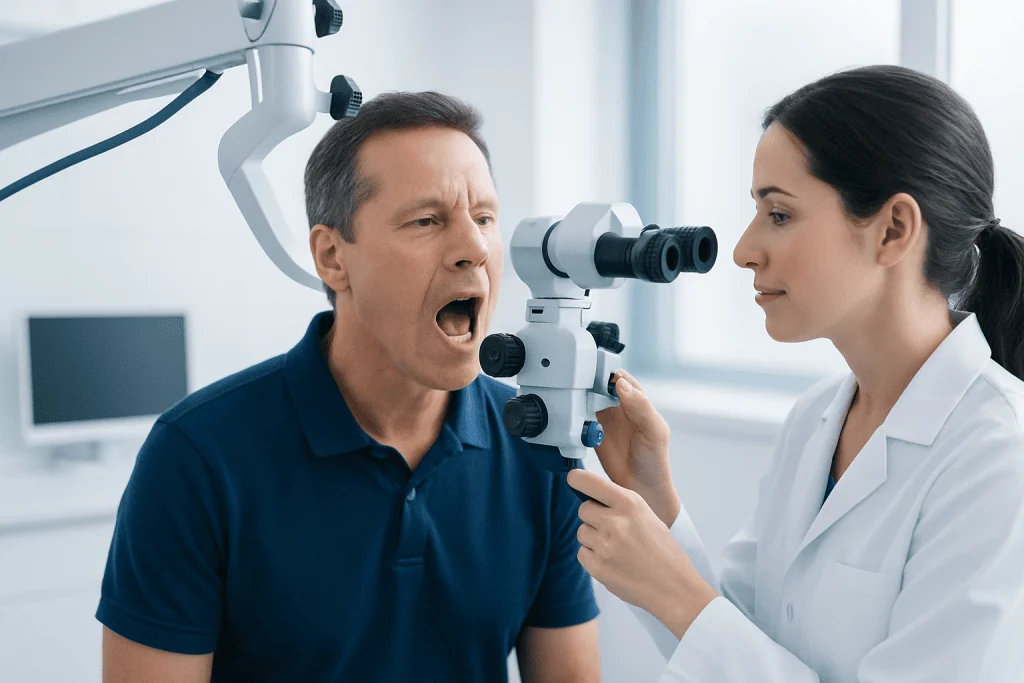
Oral cancer symptoms can vary depending on where the cancer begins. Some signs are painless at first, while others cause discomfort with eating, speaking, or swallowing. The key feature is persistence, especially if symptoms continue for more than two weeks.
Common warning signs include a mouth sore that does not heal, a red or white patch inside the mouth, a lump or thickened area, unexplained bleeding, numbness, or ongoing mouth pain. A person may also notice difficulty chewing, moving the tongue or jaw, or a feeling that something is stuck in the throat.
Other symptoms can include loose teeth without a clear dental cause, persistent bad breath, ear pain on one side, changes in speech, or swelling in the neck from enlarged lymph nodes. Not every mouth ulcer or patch is cancer, but a lasting or unusual change should be examined.
- Mouth ulcer or sore lasting longer than two weeks
- White, red, or mixed red-and-white patch
- Lump, thickening, or rough area in the mouth
- Pain with swallowing or chewing
- Numbness of the lip, tongue, or mouth
- Persistent hoarseness or speech changes
Causes and Risk Factors

Oral cancer develops when cells in the mouth acquire changes that cause them to grow uncontrollably. Several factors can increase this risk. Tobacco is one of the most important, including cigarettes, cigars, pipes, and smokeless tobacco. Heavy alcohol use is another major risk factor, and using tobacco and alcohol together increases risk further.
Some cancers in the mouth and throat are linked to human papillomavirus, or HPV, although HPV is more strongly associated with certain throat cancers than with many oral cavity cancers. Long-term sun exposure can raise the risk of cancer on the lips. Poor oral hygiene, chronic irritation, and a diet low in fruits and vegetables may also play a role, although these are not direct causes on their own.
Risk can also be higher in older adults, in people with a previous history of head and neck cancer, and in those with a weakened immune system. Even so, oral cancer can occur in people without obvious risk factors. That is why new or persistent symptoms should not be ignored simply because a person does not smoke.
How Oral Cancer Is Diagnosed
Diagnosis begins with a careful medical and dental history and a physical examination of the mouth, throat, and neck. The doctor or dentist looks for sores, patches, swelling, or areas that feel firm or irregular. They may also check for enlarged lymph nodes in the neck.
If an area looks suspicious, a biopsy is needed to confirm whether cancer is present. During a biopsy, a small tissue sample is removed and examined under a microscope. This is the only way to make a definite diagnosis. Depending on the location and appearance, the biopsy may be done in a clinic or in an operating room.
If cancer is confirmed, imaging tests may help show the size of the tumor and whether it has spread. These can include CT, MRI, PET, or ultrasound in selected cases. Staging helps the care team decide on the most appropriate treatment plan and may involve specialists in oncology, surgery, pathology, radiology, and dentistry.
Some patients are evaluated as part of a broader workup for head and neck cancer, especially when symptoms involve both the mouth and throat. A multidisciplinary review can be helpful because treatment planning often needs to consider speech, swallowing, appearance, and dental health together.
Treatment Options
Treatment for oral cancer depends on the tumor’s size, exact location, stage, and the person’s overall health. Surgery is often the main treatment for localized disease and aims to remove the cancer completely, sometimes along with nearby lymph nodes if there is concern about spread. Reconstruction may be considered if surgery affects appearance or function.
Radiation therapy may be used alone for some small cancers or after surgery to reduce the chance of recurrence. In more advanced cases, chemotherapy can be combined with radiation therapy or used in selected situations based on the tumor’s features. Some patients may also be candidates for newer systemic therapies depending on the specific diagnosis and stage.
Supportive care is an important part of treatment. This may include pain relief, nutritional support, dental care, speech and swallowing therapy, and help with stopping tobacco and alcohol use. When treatment planning is complex, options such as oral cancer treatment, radiation therapy, and medical oncology care may be coordinated across several specialties.
Because treatment can affect speaking, eating, and quality of life, many people benefit from care at centers experienced in oral cancer. Near the end of the care journey, rehabilitation and follow-up remain important to monitor healing, manage side effects, and check for recurrence.
Prevention and Self-Care
Not all oral cancers can be prevented, but risk can be lowered. Avoiding tobacco in all forms is one of the most effective steps. Limiting alcohol, especially heavy use, can also reduce risk. If a person uses both tobacco and alcohol, reducing or stopping both is especially beneficial.
Protecting the lips from long-term sun exposure with shade and lip products that include sun protection may help lower the risk of lip cancer. Good oral hygiene and regular dental checkups are also valuable because they support overall mouth health and may help identify suspicious changes early.
Self-care includes paying attention to the mouth’s normal appearance. A person can occasionally check the lips, gums, tongue, inner cheeks, and roof and floor of the mouth in a mirror. Any ulcer, patch, lump, or unexplained pain that lasts more than two weeks should be reviewed by a healthcare professional rather than treated repeatedly at home without a diagnosis.
When to See a Doctor
A doctor or dentist should evaluate any mouth sore, patch, swelling, or pain that lasts longer than two weeks. The same is true for difficulty swallowing, unexplained loosening of teeth, persistent hoarseness, numbness, or a lump in the neck. These symptoms are often caused by noncancerous conditions, but they still deserve assessment if they persist.
People with known risk factors, especially tobacco use, heavy alcohol use, or a previous head and neck cancer, should be especially attentive to mouth changes. Seeking care early does not mean the problem is serious; it simply allows a clear diagnosis and timely treatment if needed.
For international patients who need evaluation or treatment, Acibadem International’s multidisciplinary specialists and JCI-accredited hospitals diagnose and treat oral cancer with coordinated care across surgery, oncology, imaging, and rehabilitation services.
Frequently asked questions
What does oral cancer look like in the early stages?
Early oral cancer may look like a sore that does not heal, a white or red patch, or a small lump or thickened area. It may be painless at first, which is why persistent changes should not be ignored.
Is every mouth sore a sign of oral cancer?
No. Many mouth sores are caused by irritation, infection, or common ulcers. However, a sore or patch that lasts longer than two weeks should be checked by a doctor or dentist.
How strongly is tobacco linked to oral cancer?
Tobacco is one of the most important risk factors for oral cancer. Smoking and smokeless tobacco both increase risk, and the risk becomes even higher when tobacco use is combined with heavy alcohol use.
Can oral cancer happen in someone who does not smoke?
Yes. Although tobacco is a major risk factor, oral cancer can also occur in people who have never smoked. Other factors such as alcohol, HPV in some cases, sun exposure to the lips, age, and previous head and neck cancer may contribute.
How is oral cancer confirmed?
A biopsy is needed to confirm oral cancer. During a biopsy, a small sample of tissue is removed from the suspicious area and examined under a microscope.
Is oral cancer treatable?
Yes, oral cancer is treatable, and outcomes are often better when it is found early. Treatment may include surgery, radiation therapy, chemotherapy, or a combination chosen according to the stage and location of the cancer.
References
- World Health Organization
- National Cancer Institute
- American Cancer Society
- National Health Service
- American Dental Association
This article is for general information only and is not a substitute for professional medical advice. Please consult a qualified doctor about your individual situation.
Oncology care in Turkey — second opinion and treatment plan
JCI-accredited · board-certified surgeons · reply within 24h
Add us as a Preferred Source to see more of our trusted health content across Google Search, AI Overviews and Discover.

Medical Oncology Department
Medical treatment of cancer with chemotherapy, immunotherapy and targeted therapies under a multidisciplinary tumor board.
60 specialists in this unitMore from the Health Library



Related Specialists

Prof. Dr. Erdal Okur
Thoracic Surgery
Dr. Kamil Oğuzhan Döker
Emergency Service
Dr. Emre Kısa
Anesthesiology
Prof. Dr. Namık Şahin
Orthopedic Surgery & Traumatology