Overbite — Explained by Medical Evidence, Not Myths

A mild overbite is often normal, but a deep overbite may affect oral health and comfort. Overbite is different from overjet, which describes how far the upper front teeth protrude forward.
Key Takeaways
- A mild overbite is often normal, but a deep overbite may affect oral health and comfort.
- Overbite is different from overjet, which describes how far the upper front teeth protrude forward.
- Causes can include genetics, jaw growth patterns, tooth alignment problems, and certain childhood habits.
- Treatment depends on age, severity, symptoms, and the health of the teeth, gums, and jaw.
- Orthodontic care, bite correction, and in some cases jaw surgery may be considered.
An overbite is a vertical overlap of the upper front teeth over the lower front teeth. A small overbite can be normal, but a deeper overbite may contribute to tooth wear, jaw discomfort, or bite problems and should be assessed by a dental professional.
Overview: what an overbite means
An overbite describes how much the upper front teeth vertically overlap the lower front teeth when the mouth is closed. In many people, a slight overlap is a normal part of a healthy bite. The term usually becomes clinically important when the overlap is deeper than expected and begins to affect appearance, tooth function, gum health, or jaw comfort.
People often use the words overbite and overjet as if they mean the same thing, but they are different. An overbite refers to vertical overlap, while overjet refers to how far the upper front teeth project forward over the lower teeth. A person can have one, the other, or both at the same time, which is why a careful dental examination is helpful.
Overbite is a type of malocclusion, meaning the teeth or jaws do not align ideally. Some overbites are mild and cause no symptoms. Others are deeper and may increase the risk of uneven tooth wear, gum irritation behind the upper front teeth, chewing difficulty, speech changes, or strain on the jaw joints.
Because the causes and effects vary widely, overbite should not be judged by appearance alone. The most useful question is whether the bite is functioning well and whether it is harming teeth, gums, or jaw structures over time.
Signs and symptoms of an overbite
Many people with a mild overbite have no symptoms and only learn about it during a routine dental visit. In more pronounced cases, the bite may be visible when smiling or speaking, and the lower front teeth may seem partly hidden behind the upper front teeth. Some people notice that their front teeth contact each other in an unusual way when they close their mouth.
Symptoms can develop gradually. Repeated tooth contact may lead to enamel wear, small chips, tooth sensitivity, or irritation of the gums or roof of the mouth. In some cases, the lower front teeth may press into the tissue behind the upper front teeth, causing soreness.
Jaw-related symptoms are also possible, although not everyone with an overbite develops them. Some people experience fatigue when chewing, a sense that the bite does not fit together evenly, or discomfort around the jaw joints and facial muscles. These concerns can overlap with other bite problems, including temporomandibular joint disorders.
- Excessive vertical overlap of the front teeth
- Tooth wear, chipping, or sensitivity
- Gum irritation or tissue trauma behind the upper teeth
- Chewing difficulty or an uneven bite
- Jaw discomfort, clicking, or muscle tension
- Speech changes in some cases
Causes and risk factors

Overbite can result from the size and shape of the teeth, the position of the jaws, or both. Genetics plays a major role. A person may inherit a tendency toward a small lower jaw, a larger upper jaw, crowded teeth, or growth patterns that make a deep bite more likely. This is why overbite often runs in families.
Childhood habits can also influence bite development, especially while the jaws and teeth are still growing. Frequent thumb sucking, prolonged pacifier use, tongue thrusting, and extended bottle use may contribute to changes in how the front teeth erupt and meet. Mouth breathing linked to nasal blockage or enlarged adenoids may also affect facial growth and bite patterns in some children.
Dental factors matter as well. Missing teeth, delayed tooth eruption, tooth grinding, and abnormal wear can change the way the upper and lower teeth come together. In adults, restorations that alter biting surfaces or drifting teeth after tooth loss may worsen an existing deep bite.
Not every overbite is preventable, especially when jaw growth is the main factor. Still, early dental monitoring can help identify habits or eruption problems before they become more difficult to manage.
How an overbite is diagnosed
Diagnosis starts with a clinical examination by a dentist or orthodontist. The clinician evaluates how the upper and lower teeth meet, measures the amount of overlap, looks for signs of tooth wear or gum injury, and checks whether the bite is contributing to chewing or jaw problems. The face and jaw profile may also be assessed because overbite can be related to underlying jaw position.
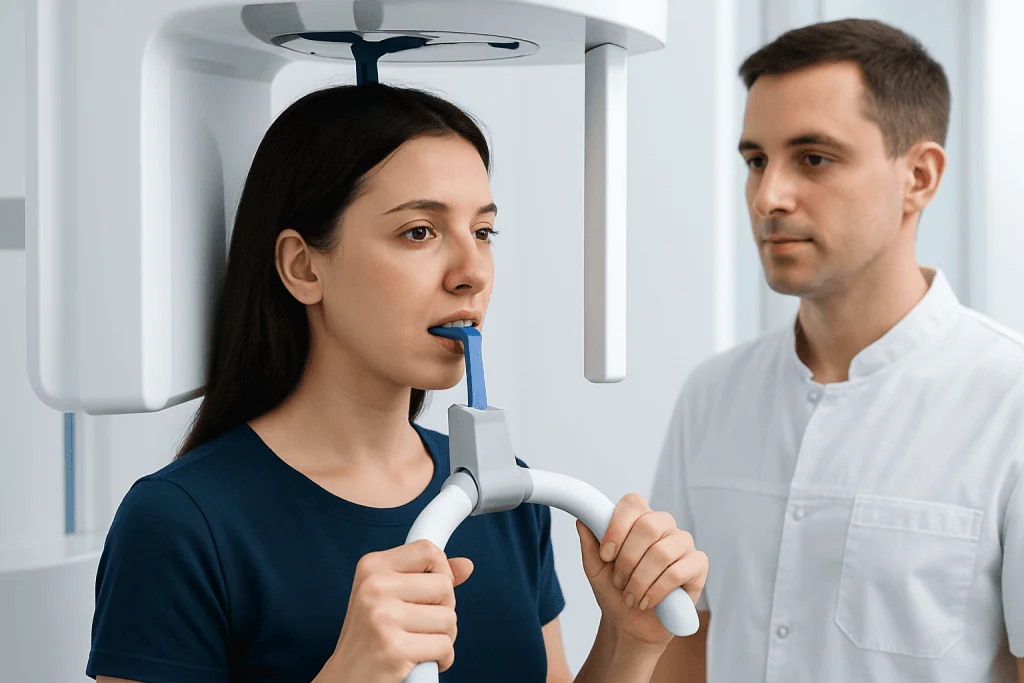
Dental records often help guide treatment planning. These may include photographs, digital scans or impressions of the teeth, and dental X-rays. In children and teenagers, imaging can help show how the jaws are growing and whether permanent teeth are erupting in a way that may deepen the bite over time.
Diagnosis is not based on one measurement alone. A dentist also considers age, growth stage, gum health, tooth crowding, speech concerns, and whether symptoms are present. This broader view helps distinguish a harmless variation from a bite problem that could cause long-term wear or discomfort.
If jaw symptoms are prominent, the clinician may also assess the chewing muscles and jaw joints. This can be important because pain or clicking does not automatically mean the overbite is the only cause, and other conditions may need attention too.
Treatment options and when they are used
Not every overbite needs treatment. If the overlap is mild, the teeth and gums are healthy, and there are no functional symptoms, regular observation may be enough. When treatment is recommended, the goal is usually to improve how the bite works, reduce unnecessary wear, protect oral tissues, and support long-term stability.
Orthodontic treatment is commonly used to correct overbite. Braces or clear aligners can reposition teeth and improve the way the upper and lower arches fit together. In younger patients, treatment may sometimes guide dental eruption or make use of ongoing growth. In adults, tooth movement is still possible, but the plan depends more on the existing jaw structure and periodontal health. Where relevant, a person may be advised to explore orthodontic treatment as part of a tailored plan.
Some cases involve more than tooth alignment alone. If the overbite is linked to a significant jaw discrepancy, a combined orthodontic and surgical approach may be considered after careful planning. This may include evaluation by specialists in maxillofacial surgery when skeletal correction is needed to improve function and bite balance.
Additional care may address contributing problems rather than the overbite itself. For example, a dentist may recommend protecting worn teeth, managing grinding, or replacing missing teeth if bite collapse is part of the problem. Comprehensive care can also involve prosthodontic treatment when restoring damaged or missing teeth is important for a stable result.
Prevention and self-care
Because many overbites are influenced by inherited jaw shape and growth, prevention is not always possible. However, good oral habits and early monitoring can reduce the chance that a developing bite problem will worsen. Children benefit from regular dental visits so that eruption patterns, habits, and jaw development can be observed over time.
Parents can help by limiting prolonged thumb sucking or pacifier use and by asking a dentist about persistent mouth breathing, speech habits, or tongue thrusting. Early intervention does not always mean immediate treatment, but it can help identify the best time to act if correction is needed later.
Adults and teenagers can support oral health by keeping up with routine dental care, brushing and flossing consistently, and discussing tooth grinding or jaw clenching with a clinician. If an overbite is already causing tooth wear or sensitivity, avoiding very hard foods and seeking advice early may help prevent further damage.
For people already in treatment, following instructions matters. Wearing aligners as prescribed, attending adjustment visits, and using retainers after treatment can improve the chances of a stable outcome and reduce the risk of relapse.
When to seek medical care
Dental evaluation is advisable if an overbite seems pronounced, is changing over time, or is accompanied by symptoms. Common reasons to seek care include difficulty biting or chewing, repeated chipping of the front teeth, gum injury behind the upper teeth, jaw pain, headaches linked to clenching, or concerns about speech and appearance.
Children should be assessed if there are persistent oral habits, visible bite changes, delayed or crowded tooth eruption, or mouth breathing that does not improve. Early review can help determine whether monitoring is enough or whether orthodontic assessment would be helpful during growth.
Urgent medical care is not usually needed for overbite itself, but prompt attention is sensible if there is sudden severe jaw pain, inability to open or close the mouth properly, facial trauma, or signs of infection such as swelling and fever. These symptoms may point to another problem that needs timely treatment.
For international patients who need multidisciplinary evaluation, Acibadem International’s dental, orthodontic, and surgical specialists in JCI-accredited hospitals diagnose and treat bite and jaw alignment conditions with individualized care plans.
Frequently asked questions
Is an overbite normal?
A small overbite is often a normal part of a healthy bite. It becomes a concern when the overlap is pronounced enough to cause tooth wear, gum trauma, chewing problems, or jaw discomfort.
What is the difference between overbite and overjet?
Overbite describes the vertical overlap of the upper front teeth over the lower front teeth. Overjet describes how far forward the upper front teeth project horizontally. A person can have one or both.
Can an overbite cause jaw pain?
It can contribute to jaw strain in some people, especially if the bite is deep or uneven. However, jaw pain has many possible causes, so a dental or medical assessment is important before assuming the overbite is solely responsible.
Can adults fix an overbite?
Yes. Adults can often improve an overbite with orthodontic treatment, and some cases may need restorative care or jaw surgery depending on the cause and severity. The best option depends on tooth health, gum support, and jaw structure.
Do all children with an overbite need braces?
No. Some children only need monitoring because a mild overbite may not cause any harm. Treatment is considered when the bite is worsening, affecting function, or likely to lead to future dental or jaw problems.
Can an overbite get worse over time?
Yes, it can, especially if there are habits, tooth loss, tooth grinding, or ongoing jaw growth factors that deepen the bite. Regular dental follow-up can help detect changes before they cause significant wear or discomfort.
References
- American Association of Orthodontists
- American Dental Association
- National Institute of Dental and Craniofacial Research
- Mayo Clinic
- Merck Manual Consumer Version
This article is for general information only and is not a substitute for professional medical advice. Please consult a qualified doctor about your individual situation.
Explore treatments in Turkey — costs, top hospitals & a free quote
JCI-accredited · board-certified surgeons · reply within 24h
Add us as a Preferred Source to see more of our trusted health content across Google Search, AI Overviews and Discover.

More from the Health Library

Ck Lab Test: An Evidence-Based Guide for Patients

Genicular Nerve Block: A Complete Medical Overview

Artificial Insemination Images — Explained by Medical Evidence, Not Myths

Micro Preemie — Explained by Medical Evidence, Not Myths

Audiology — Explained by Medical Evidence, Not Myths