Ozempic and Alcohol: An Evidence-Based Guide for Patients

Alcohol is not specifically prohibited with Ozempic, but it can affect blood glucose and worsen nausea, vomiting or dehydration. The risk of low blood sugar is higher for people who use Ozempic with insulin or a sulfonylurea medicine, especially if they drink without eating.
Key Takeaways
- Alcohol is not specifically prohibited with Ozempic, but it can affect blood glucose and worsen nausea, vomiting or dehydration.
- The risk of low blood sugar is higher for people who use Ozempic with insulin or a sulfonylurea medicine, especially if they drink without eating.
- Heavy alcohol use may increase concerns related to pancreatitis, liver disease, poor nutrition and missed diabetes self-care.
- People who choose to drink should avoid binge drinking, eat regular meals, stay hydrated and monitor blood glucose as advised.
- Severe abdominal pain, persistent vomiting, confusion or symptoms of severe low blood sugar require prompt medical care.
Ozempic and alcohol do not have a known direct drug interaction, but drinking alcohol can worsen Ozempic-related stomach symptoms and make blood sugar less predictable. The safest approach depends on a person’s diabetes medicines, alcohol intake, medical history and current symptoms, so discussing alcohol use with a clinician is important.
Ozempic and Alcohol: The Short Answer
For many adults, having an occasional alcoholic drink while taking Ozempic may be possible, but it should be approached carefully. Ozempic is the brand name for semaglutide, a prescription medicine used to improve blood glucose control in adults with type 2 diabetes. Alcohol does not have a well-established direct interaction with semaglutide, yet it can influence blood sugar, digestion, hydration and overall diabetes management.
Whether alcohol is appropriate depends on factors such as other medicines, how well diabetes is controlled, a history of pancreatitis or liver disease, and the amount and pattern of drinking. A prescribing clinician or diabetes care team can give individual guidance. People should not skip, delay or change their Ozempic dose simply because they plan to drink alcohol unless their clinician has instructed them to do so.
Why Alcohol Can Matter While Taking Ozempic
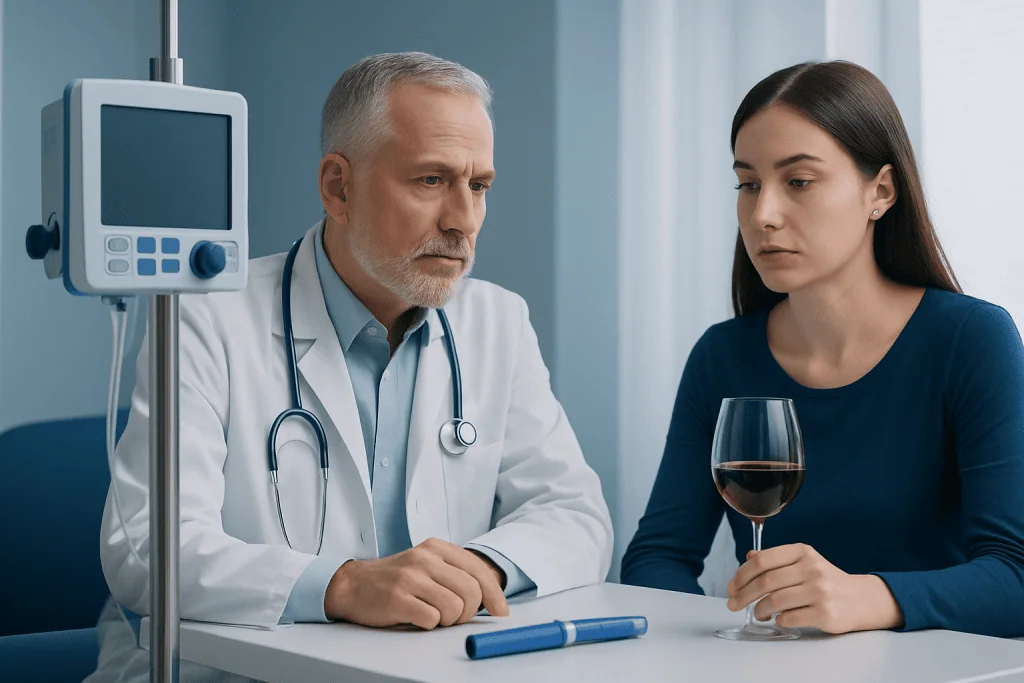
Ozempic belongs to a group of medicines called GLP-1 receptor agonists. It helps the body release insulin when blood glucose is high, reduces glucagon release in certain situations and slows stomach emptying. These effects can help with glucose management, but they may also cause nausea, early fullness, constipation, diarrhea or vomiting, particularly when treatment begins or the dose is increased.
Alcohol can irritate the stomach and may contribute to nausea, reflux, vomiting and dehydration. Therefore, alcohol may make digestive side effects harder to tolerate for some people taking Ozempic. Drinking may also affect appetite and food choices. Because regular meals and adequate fluid intake can support stable glucose levels and reduce medication-related discomfort, these changes may be especially relevant during early treatment.
Alcohol itself can alter blood glucose in different directions. Some drinks contain carbohydrates that can raise glucose initially. However, the liver prioritizes processing alcohol and may release less stored glucose into the bloodstream. This can contribute to delayed low blood sugar, particularly after drinking without food, after exercise, overnight, or when alcohol is combined with medicines that lower glucose.
Blood Sugar: Who Has the Greatest Risk?

Ozempic used on its own generally has a low risk of causing hypoglycemia, also called low blood sugar. The risk becomes more important when Ozempic is used with insulin or with a sulfonylurea, such as glimepiride, gliclazide or glipizide. Alcohol can further increase the likelihood of low glucose in these situations, especially if a person eats less than usual or misses a meal.
Symptoms of low blood sugar can include shakiness, sweating, hunger, dizziness, headache, fast heartbeat, blurred vision, irritability, confusion or difficulty concentrating. Alcohol intoxication can resemble or hide some of these symptoms. This makes it harder for a person, family member or friend to recognize hypoglycemia promptly.
- Do not drink alcohol on an empty stomach.
- Follow the blood glucose monitoring plan provided by the diabetes care team.
- Carry a fast-acting source of glucose if a clinician has advised this for hypoglycemia management.
- Tell trusted companions that low blood sugar can occur and explain what help may be needed.
- Ask a clinician whether insulin or sulfonylurea doses need review if low glucose episodes occur.
Digestive Symptoms, Dehydration and Pancreatitis Concerns
Nausea, vomiting and diarrhea can occur with Ozempic, often improving as the body adjusts. Alcohol may aggravate these symptoms and can contribute to dehydration. Dehydration may cause thirst, dry mouth, dark urine, dizziness, weakness or reduced urination. It can also be more difficult to maintain regular eating and glucose monitoring when a person feels unwell.
Pancreatitis is inflammation of the pancreas. Although it is uncommon, pancreatitis has been reported in people using GLP-1 receptor agonists, and Ozempic prescribing information advises stopping the medicine and seeking evaluation if pancreatitis is suspected. Heavy alcohol use is also a recognized cause of pancreatitis. This does not mean that every person who drinks alcohol while taking Ozempic will develop pancreatitis, but people with previous pancreatitis, substantial alcohol intake, gallbladder disease or unexplained recurrent abdominal pain should discuss their risks carefully with a clinician.
Severe, persistent pain in the upper abdomen that may spread to the back, particularly with ongoing vomiting, should not be managed by simply waiting for symptoms to pass. A healthcare professional should assess these symptoms promptly to identify the cause and provide appropriate care.
Making a Safer Plan If You Choose to Drink
For a person whose clinician considers alcohol use appropriate, moderation and preparation are important. It may be sensible to avoid alcohol when starting Ozempic, after a dose increase, or during periods of nausea, vomiting, diarrhea or poor food intake. Avoiding binge drinking is particularly important because a large amount of alcohol can destabilize glucose levels, impair judgment and increase dehydration.
Choosing to drink with a balanced meal rather than on an empty stomach can help reduce the risk of low blood sugar. Water or other non-alcoholic drinks can help maintain hydration. People should also remember that cocktails, sweet wines, liqueurs and some beers may contain substantial amounts of carbohydrate. A diabetes clinician or registered dietitian can help a person account for beverages within an individualized eating plan.
It is helpful to keep a record of glucose readings, meals, alcohol intake and symptoms if there are concerns about patterns. This information can help the care team determine whether medication adjustments or a change in alcohol habits is needed. Ozempic should be taken exactly as prescribed, and it should not be used as a substitute for nutrition, exercise or other parts of a diabetes care plan.
Who May Need to Avoid Alcohol or Seek Individual Advice
Some people need more individualized advice before drinking alcohol while taking Ozempic. This includes people who use insulin or sulfonylureas, have frequent low blood sugar episodes, have poorly controlled diabetes, or have difficulty recognizing symptoms of hypoglycemia. It also includes those with a history of pancreatitis, significant liver disease, alcohol use disorder, severe gastrointestinal symptoms or dehydration.
Alcohol may interfere with the routines needed to manage diabetes, including taking medicines, eating consistently, checking glucose and getting enough sleep. For someone who is trying to reduce alcohol intake or is worried about their drinking, support from a primary care clinician, mental health professional or addiction specialist can be beneficial. Seeking support is a practical health step and does not require waiting for a crisis.
Pregnant people, people trying to become pregnant and people with other complex health conditions should ask their clinician for individualized medication and alcohol guidance. Ozempic is not recommended during pregnancy, and a clinician can advise on safe planning before conception.
When to Seek Medical Care
Urgent medical assessment is needed for severe or persistent abdominal pain, especially pain that spreads to the back, or for repeated vomiting and an inability to keep fluids down. These symptoms can have several causes, including pancreatitis, gallbladder problems or significant dehydration, and should be evaluated without delay. People should also seek prompt care for signs of a severe allergic reaction, such as swelling of the face or throat, trouble breathing or widespread hives.
Emergency help is appropriate for severe low blood sugar symptoms, including confusion, fainting, seizures, inability to swallow safely or loss of consciousness. A person who has symptoms of low blood sugar should follow their clinician’s treatment plan if they are awake and able to swallow, but they should not drive or remain alone if symptoms are severe or not improving.
For non-urgent concerns, contact the prescribing clinician if nausea, vomiting, diarrhea, poor appetite or low glucose episodes are recurring, or if alcohol use is becoming difficult to control. Acibadem International’s multidisciplinary specialists and JCI-accredited hospitals can assess diabetes medicines and related digestive or metabolic concerns for international patients.
Frequently asked questions
Can a person drink alcohol while taking Ozempic?
There is no well-established direct interaction that automatically prohibits alcohol with Ozempic. However, alcohol can affect blood sugar and worsen nausea, vomiting or dehydration. A clinician should advise based on the person’s diabetes medicines, medical history and usual alcohol intake.
Does alcohol make Ozempic less effective?
Alcohol is not known to directly stop Ozempic from working. However, drinking may make blood glucose more variable, affect food intake and interfere with medication routines or self-care. These effects can make diabetes management more difficult overall.
Can Ozempic and alcohol cause low blood sugar?
Ozempic alone has a relatively low risk of hypoglycemia. The risk is higher when it is combined with insulin or a sulfonylurea, and alcohol can increase that risk, especially when consumed without food. People taking these medicines should ask their clinician about glucose monitoring and hypoglycemia planning.
Should alcohol be avoided when starting Ozempic?
Avoiding alcohol may be sensible during the first weeks of treatment or after a dose increase, particularly if nausea, vomiting, diarrhea or reduced appetite occur. This can make it easier to see how the medicine affects the body and to prevent dehydration. A healthcare professional can provide personalized advice.
What alcohol-related symptoms should concern a person taking Ozempic?
Persistent vomiting, severe stomach pain, marked dizziness, confusion or signs of low blood sugar need medical attention. Severe upper abdominal pain that may spread to the back should be assessed promptly because it can signal pancreatitis or another serious condition. Emergency care is needed for fainting, seizures, inability to swallow or loss of consciousness.
Can alcohol worsen Ozempic nausea?
Yes, alcohol can irritate the digestive system and may intensify nausea, reflux, vomiting or diarrhea in some people. These symptoms can also increase the risk of dehydration. Avoiding alcohol when digestive side effects are active is generally a cautious approach.
This article is for general information only and is not a substitute for professional medical advice. Please consult a qualified doctor about your individual situation.
Persistent digestive symptoms? Get evaluated in Turkey
JCI-accredited · board-certified surgeons · reply within 24h
Add us as a Preferred Source to see more of our trusted health content across Google Search, AI Overviews and Discover.

More from the Health Library

Pyoderma Gangrenosum: What Patients Need to Know

Skyr Yogurt — Explained by Medical Evidence, Not Myths

Aerobics: An Evidence-Based Guide for Patients

COPD Alternative Remedies: An Evidence-Based Guide for Patients

Monocytes: What Patients Need to Know