Parastomal Hernia: An Evidence-Based Guide for Patients
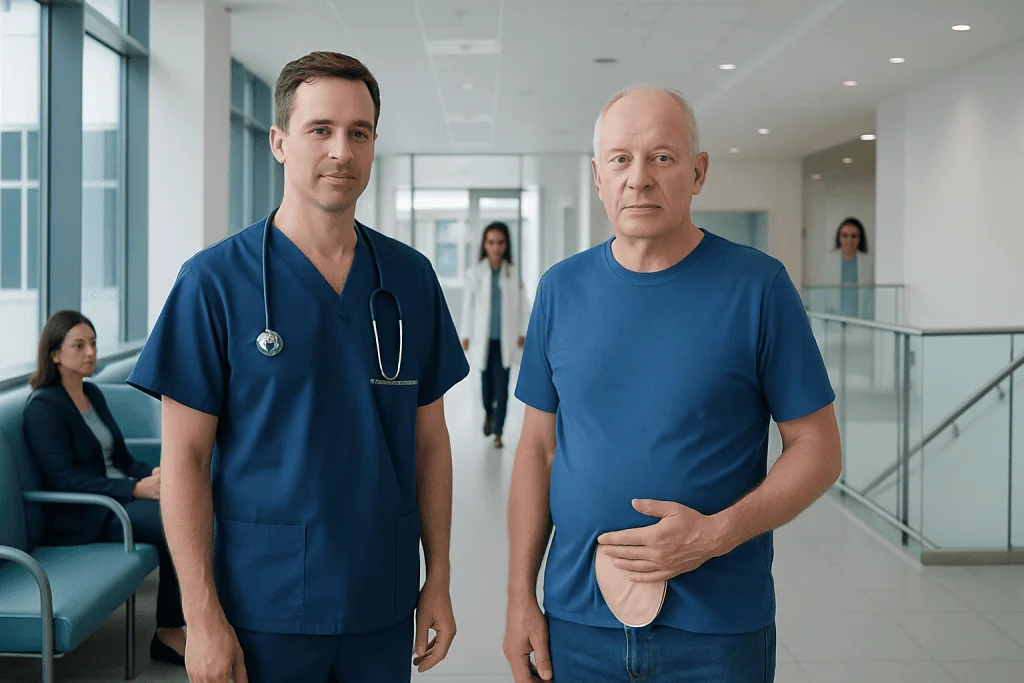
A parastomal hernia causes a bulge around or beside a colostomy, ileostomy, or urostomy. Not every parastomal hernia requires surgery; the decision depends mainly on symptoms, daily impact, and complication risk.
Key Takeaways
- A parastomal hernia causes a bulge around or beside a colostomy, ileostomy, or urostomy.
- Not every parastomal hernia requires surgery; the decision depends mainly on symptoms, daily impact, and complication risk.
- A changing stoma appliance fit, discomfort, or bowel symptoms should be discussed with a stoma nurse or surgeon.
- Sudden severe pain, vomiting, a hard tender bulge, or a stoma that changes color requires urgent medical assessment.
- Maintaining a healthy weight, avoiding smoking, and using safe lifting techniques may help reduce strain on the abdominal wall.
A parastomal hernia is a common complication of stoma surgery in which abdominal tissue, often bowel or fatty tissue, pushes through a weak area around the stoma. Many hernias can be monitored with practical stoma support and symptom management, while surgery may be considered when symptoms are persistent or complications develop.
Overview: what is a parastomal hernia?
A parastomal hernia is a type of incisional hernia that develops next to a stoma. A stoma is a surgically created opening on the abdomen that allows stool or urine to leave the body after procedures involving the bowel or urinary tract. Because the abdominal wall has been opened to create the stoma, the surrounding muscle and connective tissue may be less strong than before surgery.
With a parastomal hernia, abdominal fat or a loop of bowel can press outward through this weaker area, creating a visible or palpable bulge beside the stoma. The bulge may be more noticeable when standing, coughing, or straining, and may reduce when lying down. It is not usually a sign that a person has done anything wrong; it is a recognized complication after ostomy surgery.
Parastomal hernias vary widely. Some cause little discomfort and are found during a routine examination or scan. Others affect stoma appliance adhesion, clothing choices, physical activity, confidence, or bowel function. Assessment by a clinician experienced in stoma care helps distinguish a hernia from other causes of swelling around a stoma and supports an individualized care plan.
How a parastomal hernia may feel and look
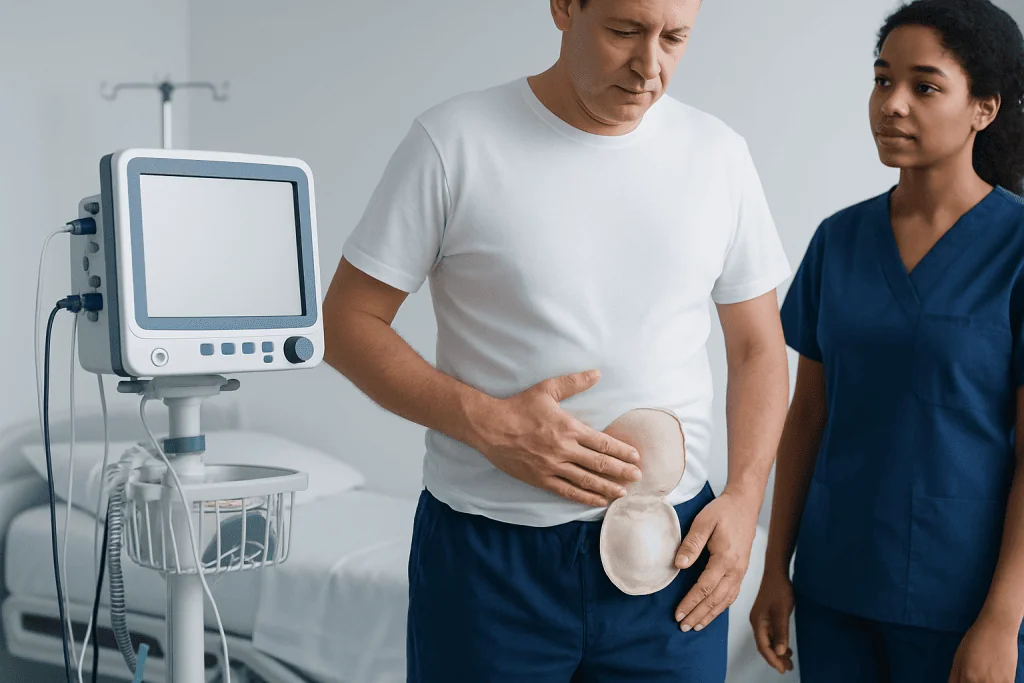
The most typical sign is a soft swelling or bulge adjacent to the stoma. It may gradually become larger over months or years. The stoma itself may appear to sit lower, protrude differently, or seem to change direction because the skin and abdominal wall around it are being stretched.
Some people have no pain. Others experience a feeling of pressure, pulling, fullness, aching, or discomfort that worsens after prolonged standing, coughing, lifting, or activity. A hernia can also change the contours of the skin, making it harder for the pouching system to form a secure seal. This may lead to leakage, skin irritation, or more frequent appliance changes.
Bowel-related symptoms can occur if bowel is involved in the hernia. These may include intermittent cramping, bloating, constipation, difficulty passing stool, or periods of reduced stoma output. Such symptoms do not always mean there is an emergency, but they should be reported to a healthcare professional, particularly if they are new, recurrent, or becoming more severe.
- A bulge that is softer or smaller when lying down is a common hernia pattern.
- Leaks and skin problems may be caused by a changed abdominal contour rather than the appliance itself.
- A sudden, painful, firm bulge needs prompt assessment because tissue can occasionally become trapped.
Why parastomal hernias develop and who may be at risk
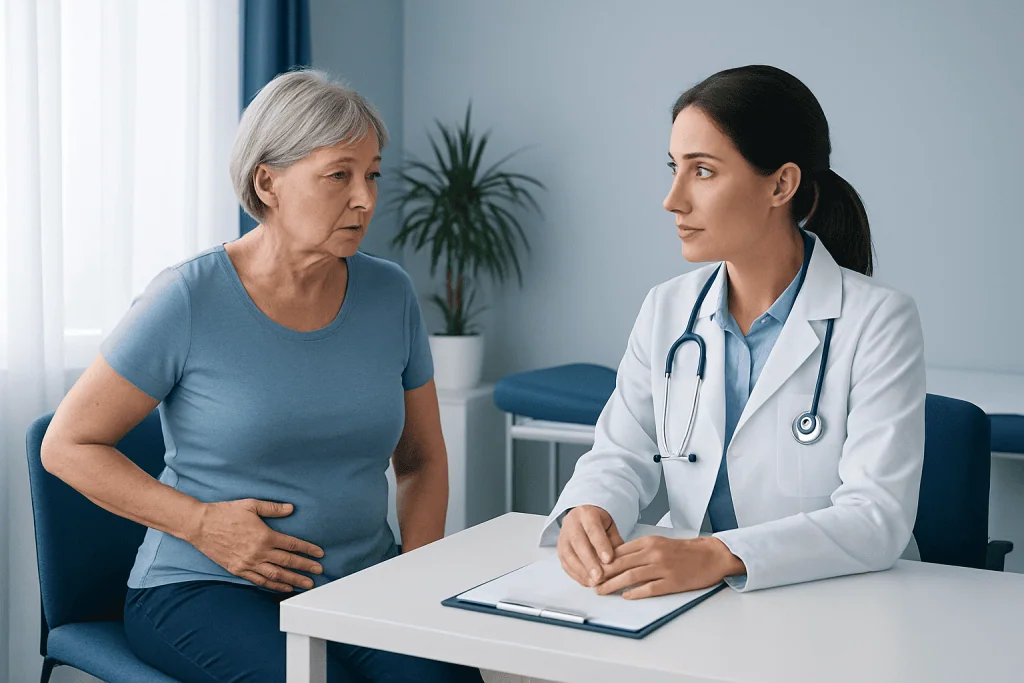
A parastomal hernia develops when pressure inside the abdomen acts on the naturally weaker opening created for the stoma. Healing after surgery, the location and size of the stoma opening, and the strength of the abdominal wall all influence risk. A hernia may be noticed soon after surgery, but it can also appear much later.
Factors associated with a higher likelihood include older age, excess body weight, smoking, poor nutritional status, diabetes, chronic lung disease with frequent coughing, constipation, and conditions that increase abdominal pressure. Wound infection or delayed healing after the original operation may also affect tissue strength. Long-term steroid use and previous abdominal surgery can be relevant in some patients.
Risk factors are not guarantees. Many people with several risk factors never develop a parastomal hernia, while others do despite careful recovery. It is important not to blame oneself or avoid normal movement unnecessarily. Instead, patients can discuss modifiable factors with their surgical and stoma-care teams, particularly if they are preparing for elective stoma surgery or considering hernia repair.
How clinicians diagnose and assess a parastomal hernia
Diagnosis often begins with a medical history and physical examination. A clinician may inspect the stoma and surrounding skin while the person is standing and lying down, and may ask them to cough or gently tense the abdomen. They will also ask about discomfort, pouch leakage, skin complications, bowel output, diet, and how symptoms affect daily activities.
Imaging is not always necessary when the finding is clear on examination. However, a CT scan of the abdomen may be useful if the diagnosis is uncertain, symptoms suggest a blockage, or surgery is being considered. CT imaging can show the hernia contents, its size, and other abdominal wall changes that may influence treatment planning.
Assessment is broader than measuring a bulge. The care team considers whether the hernia is reducible, meaning the tissue returns inward with position or gentle pressure, whether it is interfering with appliance function, and whether there are signs of obstruction or trapped tissue. Consultation with a specialist stoma nurse is particularly valuable because pouch fit and skin protection are major parts of symptom control.
Treatment options: observation, stoma support, and surgery
Treatment is based on symptoms and individual circumstances rather than the appearance of the hernia alone. If a parastomal hernia is comfortable, reducible, and does not interfere with stoma care or bowel function, watchful waiting may be appropriate. This involves regular review, education about warning signs, and attention to factors that can reduce abdominal strain.
Non-surgical management may include review by a stoma nurse to select a pouching system that better accommodates the changed body contour. Convex appliances, seals, barrier rings, belts, or customized support garments may improve comfort and reduce leakage for some people. Support garments should fit well and should not be so tight that they cause pain, impair stoma output, or damage the skin. A clinician can advise on safe use.
Surgery may be considered when there is repeated obstruction, severe or persistent pain, major appliance problems, significant skin injury from leakage, or a meaningful reduction in quality of life. Surgical approaches may involve repairing the abdominal wall, reinforcing it with mesh, relocating the stoma, or using minimally invasive or open techniques. The most suitable approach depends on the hernia, prior operations, general health, the reason for the stoma, and whether the stoma is temporary or permanent.
Hernia repair has potential benefits but also limitations, including the possibility of recurrence and the usual risks of surgery. A colorectal surgeon or abdominal wall specialist can explain the expected benefits, alternatives, recovery considerations, and risks in the context of the individual patient. Decisions are ideally made jointly by the patient, surgeon, and stoma-care team.
Everyday self-care and reducing abdominal strain
People with a parastomal hernia can often remain active, but it is sensible to adapt activities if they consistently trigger pain or a marked increase in bulging. Gentle walking and gradually progressed exercise may support general wellbeing. A physiotherapist or clinician with experience in abdominal surgery can provide guidance on safe core movement and return to activity.
Preventing constipation and managing cough are useful because straining and repeated coughing increase pressure on the abdominal wall. Adequate fluids, an appropriate fiber intake, and individualized dietary advice can support regular bowel function, although dietary needs differ for people with ileostomies, colostomies, and certain bowel conditions. People should seek advice before making major dietary changes, especially if they have had bowel obstruction or have a restricted diet.
Maintaining a weight that is appropriate for the individual, stopping smoking, and managing long-term conditions such as diabetes can support tissue health and may reduce surgical risks if repair is needed. When lifting is necessary, using good technique, avoiding sudden heavy loads, and asking for help with difficult tasks can reduce strain. No belt, exercise, or lifestyle measure can reliably reverse an established hernia, but these measures may help people manage symptoms and protect overall health.
When to seek medical care
A new bulge beside a stoma should be reported to a stoma nurse, surgeon, or primary care clinician, even if it is not painful. Non-urgent assessment is also advisable if there are recurring leaks, skin soreness, worsening discomfort, reduced confidence in leaving home, or changes in bowel or urinary stoma function. Early advice can often improve appliance fit and reduce skin complications.
Urgent medical care is needed for sudden severe or worsening abdominal pain, a firm and tender hernia bulge that does not soften or reduce, nausea or vomiting, marked bloating, or little to no stoma output when output would normally be expected. These symptoms may indicate bowel obstruction or strangulation, in which blood flow to trapped tissue is affected. A stoma that becomes dark, pale, purple, or otherwise significantly discolored should also be assessed urgently.
Patients should not try to force a painful bulge back into the abdomen or take laxatives to treat severe pain and absent output without medical advice. If urgent symptoms occur, they should contact local emergency services or go to an emergency department. Acibadem International’s multidisciplinary specialists and JCI-accredited hospitals can assess and treat parastomal hernias for international patients when specialist care is needed.
Frequently asked questions
Can a parastomal hernia go away on its own?
A parastomal hernia usually does not disappear on its own because it involves a weakness in the abdominal wall. However, many remain stable or cause manageable symptoms for long periods. A clinical review can help determine whether observation and stoma support are appropriate.
Does every parastomal hernia need surgery?
No. Surgery is generally not needed solely because a hernia is present. It is more often considered when symptoms are troublesome, appliance management is difficult, bowel obstruction occurs, or the hernia significantly affects daily life.
Can wearing a support belt treat a parastomal hernia?
A support belt or garment cannot repair the abdominal wall defect. It may improve comfort, provide a sense of support, and help some people manage their stoma appliance. It should be chosen with advice from a stoma nurse or clinician to ensure it fits safely.
What foods should a person avoid with a parastomal hernia?
There is no single diet for every person with a parastomal hernia. Some people find that avoiding foods that cause excessive gas or constipation improves comfort, but dietary needs depend on the type of stoma and the underlying condition. New abdominal cramps, bloating, or reduced output should be discussed with a clinician rather than managed through restrictive dieting alone.
Can exercise make a parastomal hernia worse?
Appropriate exercise is usually beneficial and does not automatically worsen a hernia. Activities that cause pain, strong pressure, or repeated straining may need modification. A healthcare professional or physiotherapist can suggest an individualized, gradual activity plan.
How is an emergency parastomal hernia different from a usual bulge?
A usual hernia bulge may be soft, painless, and less noticeable when lying down. An emergency may involve sudden intense pain, vomiting, a hard tender bulge, increasing abdominal swelling, or absent stoma output. These symptoms require urgent medical evaluation because bowel may be obstructed or trapped.
References
- American Society of Colon and Rectal Surgeons
- European Hernia Society
- United Ostomy Associations of America
- National Health Service
- Cleveland Clinic
This article is for general information only and is not a substitute for professional medical advice. Please consult a qualified doctor about your individual situation.
Persistent digestive symptoms? Get evaluated in Turkey
JCI-accredited · board-certified surgeons · reply within 24h
Add us as a Preferred Source to see more of our trusted health content across Google Search, AI Overviews and Discover.