Parkinson’s Disease Rehabilitation: Mobility, Balance, and Voice Support
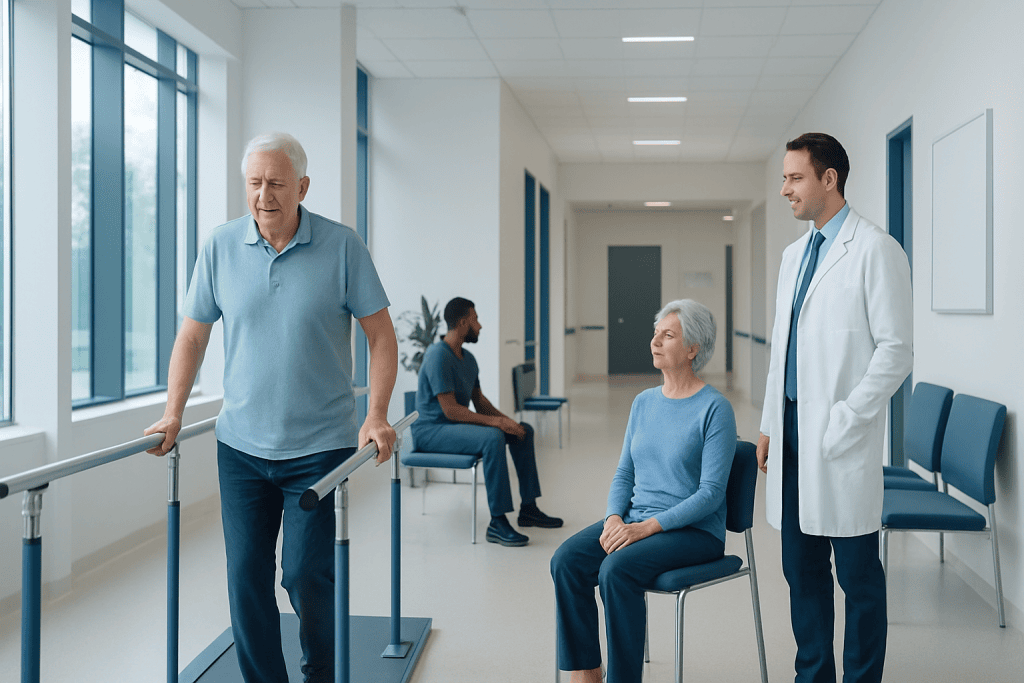
Rehabilitation is an important part of Parkinson’s disease care alongside medication and medical follow-up. Physical therapy focuses on walking, posture, balance, strength, flexibility, and fall prevention.
Key Takeaways
- Rehabilitation is an important part of Parkinson’s disease care alongside medication and medical follow-up.
- Physical therapy focuses on walking, posture, balance, strength, flexibility, and fall prevention.
- Speech and voice therapy can help with softer speech, unclear articulation, facial expression, and swallowing safety.
- Occupational therapy supports daily tasks such as dressing, cooking, writing, home safety, and energy conservation.
- Exercise and therapy plans should be tailored to symptoms, fitness level, medications, and personal goals.
Parkinson’s disease rehabilitation helps people manage movement, balance, voice, swallowing, and daily activities through coordinated therapy. With an individualized plan, many patients can improve confidence, safety, and independence at different stages of the condition.
Overview
Parkinson’s disease is a progressive neurological condition that affects movement, coordination, and several non-motor functions. Common movement-related features include slowness, stiffness, tremor, changes in posture, reduced arm swing, and shuffling steps. Rehabilitation does not replace medical treatment, but it plays a central role in helping people move more safely, communicate more clearly, and remain as independent as possible.
Parkinson’s Disease Rehabilitation usually involves a team approach. Depending on a person’s needs, the care team may include a neurologist, rehabilitation physician, physiotherapist, occupational therapist, speech and language therapist, dietitian, psychologist, and specialized nurses. The plan is adjusted over time because symptoms, medication response, fitness level, and daily challenges can change.
The goals of rehabilitation are practical and patient-centered. Therapy may aim to improve walking, balance, transfers, posture, voice volume, swallowing comfort, handwriting, dressing, and confidence in community activities. Early rehabilitation can also teach exercise habits and movement strategies before disability becomes more limiting.
How Parkinson’s Affects Mobility, Balance, and Voice
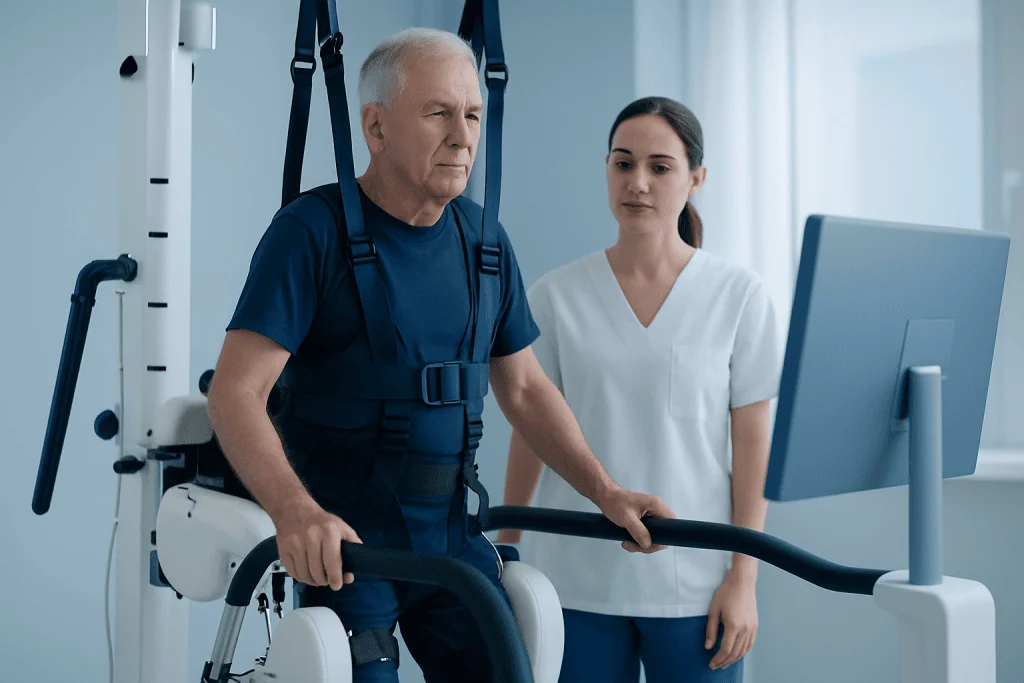
Parkinson’s disease can affect automatic movements that people usually perform without thinking. Walking may become slower, steps may become shorter, and turning may feel more difficult. Some people experience freezing of gait, where the feet feel briefly stuck to the floor, especially in doorways, crowded spaces, or when starting to walk.
Balance problems can occur because Parkinson’s may reduce posture control and the ability to make quick protective reactions. A stooped posture, reduced trunk rotation, stiffness, vision changes, low blood pressure, and medication fluctuations can all influence fall risk. Rehabilitation addresses these factors with targeted exercises, safety education, and strategies for challenging situations.
Voice and communication can also change. Speech may become softer, faster, less clear, or more monotone, and facial expression may be reduced. Some people have difficulty projecting the voice in conversation, on the phone, or in noisy environments. Speech therapy helps retrain voice effort, breathing, articulation, and communication habits.
Physical Therapy for Mobility and Balance
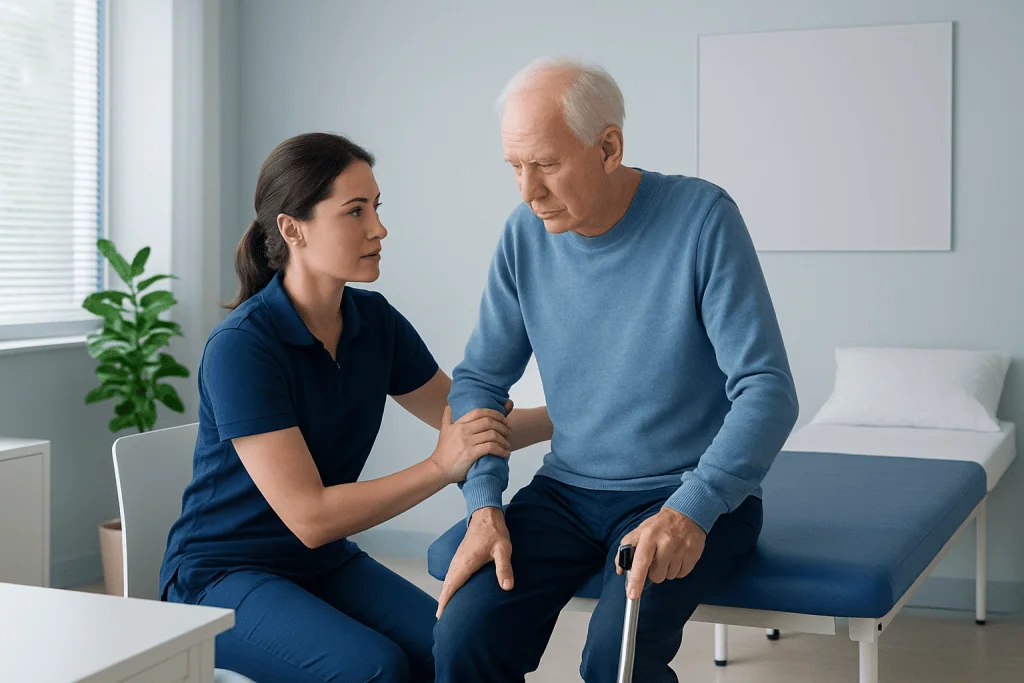
Parkinson’s physical therapy focuses on movement quality, strength, flexibility, endurance, and confidence. A physiotherapist assesses walking pattern, balance, posture, transfers, joint mobility, strength, fall history, and home or community challenges. Therapy is then tailored to the person’s stage of Parkinson’s disease and personal goals.
Common therapy elements include gait training, balance exercises, stretching, strengthening, posture work, turning practice, and training for sit-to-stand movements. Many patients benefit from external cueing, such as stepping to a rhythm, counting, visual floor markers, or using a metronome. These cues can help bypass some of the automatic movement difficulties seen in Parkinson’s disease.
A rehabilitation plan may include:
- Large-amplitude movement exercises to encourage bigger steps, arm swing, and trunk motion.
- Balance tasks that safely challenge weight shifting, reaching, turning, and dual-task walking.
- Strength exercises for the legs, hips, trunk, and postural muscles.
- Flexibility routines for the shoulders, chest, hips, calves, and spine.
- Fall-prevention strategies, including safe footwear, home modifications, and assistive device assessment when appropriate.
Exercise intensity should be appropriate and safe. People with heart disease, joint problems, dizziness, severe balance impairment, or a recent fall should seek medical and rehabilitation guidance before starting a new program.
Speech, Voice, and Swallowing Support
Speech and language therapy is an important part of Parkinson’s Disease Rehabilitation. A speech therapist can assess voice volume, speech clarity, breathing support, facial movement, communication confidence, and swallowing function. Therapy often works best when started early, before communication changes become more noticeable.
Voice therapy may focus on producing a stronger, clearer voice with better breath support and intentional effort. Many people with Parkinson’s do not realize how soft their speech has become because their own perception of loudness may change. Structured voice exercises and feedback can help patients recalibrate what normal speaking volume feels like.
Swallowing difficulties can occur in Parkinson’s disease, though they may develop gradually. Warning signs may include coughing during meals, a wet-sounding voice after drinking, taking much longer to eat, food sticking in the throat, unexplained weight loss, or repeated chest infections. A speech and language therapist can recommend swallowing strategies, food texture adjustments, posture changes, and further assessment if needed.
Communication support may also involve family education. Simple changes, such as facing the person when speaking, reducing background noise, allowing enough time to respond, and encouraging one person to speak at a time, can make daily conversations easier and less tiring.
Occupational Therapy and Daily Independence
Occupational therapy helps people with Parkinson’s disease manage everyday tasks at home, work, and in the community. The occupational therapist evaluates how symptoms affect dressing, bathing, cooking, writing, using technology, driving, hobbies, and household activities. The aim is to support independence while reducing fatigue and safety risks.
Therapy may include practical movement strategies for daily routines. For example, a person may learn to sit while dressing, use clothing with easier fastenings, organize the kitchen to reduce reaching and bending, or break tasks into shorter steps. Adaptive tools may help with handwriting, eating, buttoning, showering, or getting in and out of bed.
Home safety is often a key part of care. Recommendations may include removing loose rugs, improving lighting, installing grab bars, using non-slip mats, arranging furniture to create clear walking paths, and reviewing bathroom safety. The therapist may also advise on energy conservation, planning activities around medication timing, and managing fatigue during the day.
Exercise, Self-Care, and Lifestyle Habits
Regular exercise is one of the most important self-care habits for people living with Parkinson’s disease. While exercise is not a cure, it can support mobility, balance, mood, sleep, cardiovascular health, and general well-being. The best program is one that is safe, sustainable, enjoyable, and adapted to the person’s ability.
A balanced routine may include aerobic activity, strengthening, flexibility, balance practice, and functional movement training. Walking, stationary cycling, swimming, dance, tai chi, yoga, and supervised group classes may be suitable for some patients. People with significant balance problems should choose activities with appropriate supervision and safety support.
Medication timing can influence therapy performance. Some people move best during their medication on periods, while others experience wearing-off symptoms or involuntary movements at certain times. Patients should discuss patterns with their neurologist and therapists so exercise and therapy sessions can be scheduled as effectively and safely as possible.
Self-care also includes sleep routines, hydration, constipation management, nutrition, skin care, and mental health support. Anxiety, depression, apathy, and cognitive changes can affect motivation and participation in rehabilitation, and these concerns deserve medical attention just as much as movement symptoms.
Treatment Planning and Multidisciplinary Care
Rehabilitation is most effective when it is coordinated with the broader Parkinson’s treatment plan. Medication, rehabilitation, nutrition, mental health support, and sometimes advanced therapies are considered together. The care team reviews symptoms, functional goals, home environment, fall risk, swallowing safety, caregiver needs, and changes over time.
Rehabilitation plans are usually individualized rather than one-size-fits-all. A newly diagnosed person may focus on education, exercise habits, posture, and voice awareness. Someone with more advanced symptoms may need fall prevention, assistive devices, caregiver training, swallowing management, and strategies for safe transfers and daily routines.
Follow-up is important because Parkinson’s disease changes gradually. Reassessment allows therapists to update exercises, adjust safety recommendations, and identify new needs. Families and caregivers may also benefit from guidance on safe assistance, communication strategies, and ways to encourage independence without increasing risk.
When to See a Doctor or Rehabilitation Specialist
A person with Parkinson’s disease should speak with a doctor or rehabilitation professional if walking becomes slower, falls occur, balance feels uncertain, daily tasks become harder, or speech becomes difficult for others to hear. Early support can prevent small problems from becoming larger barriers to independence.
Medical advice is especially important if there is choking, coughing during meals, sudden worsening of movement, new confusion, fainting, repeated falls, rapid weight loss, or significant mood changes. These symptoms may need prompt evaluation to check for medication issues, infection, swallowing problems, blood pressure changes, or other medical causes.
For international patients seeking coordinated assessment, Acibadem International provides multidisciplinary evaluation and treatment for Parkinson’s disease rehabilitation through specialists working in JCI-accredited hospitals. Care decisions should always be based on an individual medical assessment and discussion with qualified clinicians.
Frequently asked questions
Can rehabilitation slow Parkinson’s disease progression?
Rehabilitation does not cure Parkinson’s disease or stop the underlying neurological process. However, regular therapy and exercise can improve function, reduce fall risk, support communication, and help people maintain independence for longer. It is best used alongside medical treatment and follow-up.
When should a person with Parkinson’s start physical therapy?
Physical therapy can be helpful soon after diagnosis, even if symptoms are mild. Early therapy teaches safe exercise habits, posture awareness, walking strategies, and ways to stay active. It can also provide a baseline assessment for future comparison.
What exercises are best for Parkinson’s disease?
A good program usually includes aerobic exercise, strength training, stretching, balance practice, and large-amplitude functional movements. The best choices depend on fitness level, balance, other medical conditions, and personal preference. A physiotherapist can help design a safe and realistic plan.
Can speech therapy help a soft voice in Parkinson’s disease?
Yes. Speech therapy can help many people improve voice volume, clarity, breath support, and communication confidence. Therapy often includes structured practice and feedback because people with Parkinson’s may not accurately perceive how soft their voice has become.
What should families do to help with Parkinson’s rehabilitation?
Families can support regular exercise, encourage therapy practice, reduce trip hazards at home, and make communication easier by allowing enough time for responses. They should avoid doing every task for the person unless safety requires it, because independence is an important rehabilitation goal. Caregivers should also seek support for their own well-being.
Are falls always part of Parkinson’s disease?
Falls are not inevitable, but the risk can increase as Parkinson’s disease affects balance, posture, walking, and reaction time. Medication timing, low blood pressure, vision problems, footwear, and home hazards may also contribute. A fall-risk assessment and targeted rehabilitation can help reduce risk.
References
- World Health Organization
- National Institute for Health and Care Excellence
- Parkinson’s Foundation
- Movement Disorder Society
- American Physical Therapy Association
This article is for general information only and is not a substitute for professional medical advice. Please consult a qualified doctor about your individual situation.
Joint and spine care in Turkey — expert assessment & treatment
JCI-accredited · board-certified surgeons · reply within 24h
Add us as a Preferred Source to see more of our trusted health content across Google Search, AI Overviews and Discover.
Check your numbers in seconds
BMI, calories, due date, blood pressure and 30+ more clinical calculators — free, instant, doctor-reviewed ranges.