Patellar Tendon Rupture: Symptoms and Treatment

The patellar tendon is essential for straightening the knee, standing from a chair, climbing stairs, and walking safely. A complete patellar tendon rupture usually requires surgical repair, while selected partial tears may be managed without surgery.
Key Takeaways
- The patellar tendon is essential for straightening the knee, standing from a chair, climbing stairs, and walking safely.
- A complete patellar tendon rupture usually requires surgical repair, while selected partial tears may be managed without surgery.
- Sudden pain below the kneecap, swelling, a visible change in kneecap position, and inability to actively straighten the knee need urgent medical evaluation.
- Recovery includes a structured rehabilitation program and usually takes months, with activity progression guided by the orthopedic team.
- Some health conditions and medications can weaken tendons and increase the risk of rupture.
A patellar tendon rupture is a partial or complete tear of the strong tendon connecting the kneecap to the shinbone. A complete rupture commonly causes sudden pain, swelling, and difficulty straightening the knee, and prompt assessment helps support the best recovery.
Overview: What Is a Patellar Tendon Rupture?
The patellar tendon is a thick, strong band of tissue at the front of the knee. It connects the lower part of the kneecap, also called the patella, to the upper shinbone, or tibia. Together with the quadriceps muscle and quadriceps tendon above the kneecap, it forms the knee’s extensor mechanism—the system that allows the leg to straighten.
A patellar tendon rupture occurs when this tendon tears partially or completely. In a complete rupture, the connection between the kneecap and shinbone is disrupted. This can make it very difficult or impossible to actively straighten the knee, lift the straight leg while lying down, or bear weight normally.
This injury is less common than some other knee injuries but is important to assess promptly. Early diagnosis and appropriate treatment can help restore knee function and reduce the chance of long-term weakness, stiffness, or persistent instability.
Symptoms and Signs
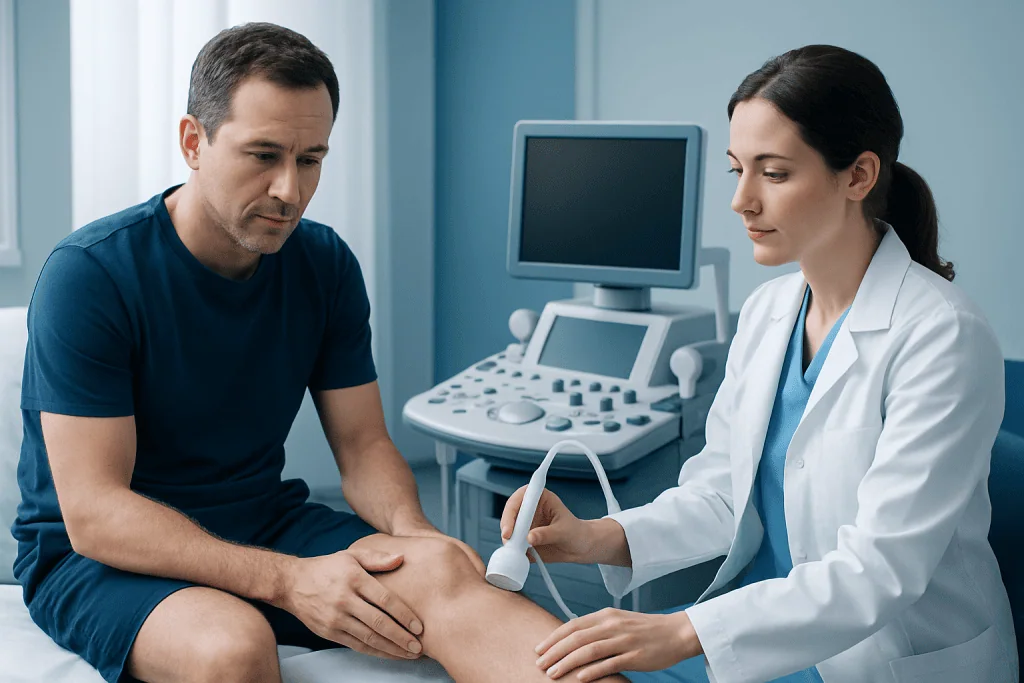
A rupture often happens suddenly, sometimes with a popping or snapping sensation in the knee. Pain is commonly felt just below the kneecap and may be severe at first. Swelling and bruising can develop quickly, although swelling alone does not confirm a tendon rupture.
A key symptom of a complete tear is loss of active knee extension. The person may be unable to straighten the knee against gravity or raise the whole leg while keeping the knee straight. Walking may be difficult, and the knee may buckle because the quadriceps muscles can no longer work effectively through the damaged tendon.
The kneecap may sit higher than usual because it is pulled upward by the quadriceps tendon. A gap below the kneecap can occasionally be felt, but this may be hard to detect when there is swelling. Partial tears may cause pain, weakness, and reduced movement without complete loss of knee-straightening ability.
- Sudden pain and swelling at the front of the knee
- A pop or tearing feeling at the time of injury
- Difficulty walking, standing from a seated position, or climbing stairs
- Inability to actively straighten the knee or perform a straight-leg raise
- Bruising or a change in the position of the kneecap
Causes and Risk Factors
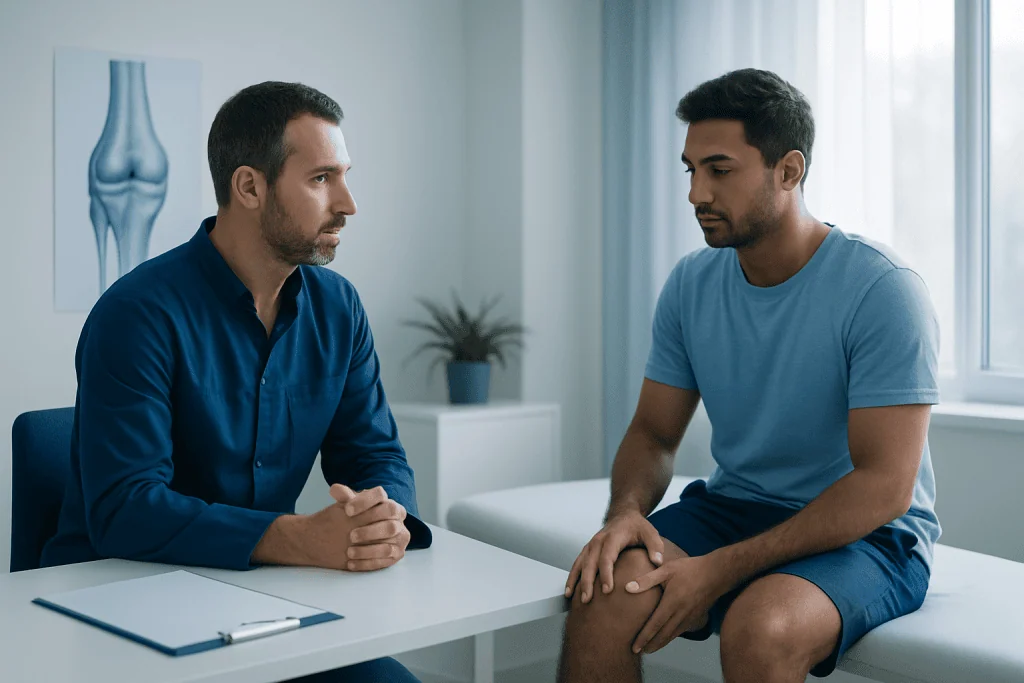
Most ruptures occur when a powerful force is placed on a bent knee while the quadriceps muscle is contracting. This may happen during a jump, landing, fall, sudden change of direction, or attempt to stop quickly. Direct injury to the front of the knee can also damage the tendon.
In some people, the tendon has become weakened before the injury. Long-standing patellar tendinopathy, often called jumper’s knee, may affect tendon quality. Previous surgery or injury around the knee can also contribute. A rupture can therefore occur with a force that might not ordinarily cause such a serious injury.
Medical conditions associated with tendon weakening include chronic kidney disease, diabetes, rheumatoid arthritis, systemic lupus erythematosus, and disorders affecting calcium or parathyroid hormone balance. Long-term systemic corticosteroid use and some other medicines may also affect tendon health. These factors do not mean a rupture will occur, but they are important for clinicians to consider during assessment and treatment planning.
Patellar tendon ruptures are seen more often in active adults, particularly during sports or physically demanding activities. However, anyone with a significant knee injury and inability to straighten the leg should be evaluated, regardless of age or activity level.
How It Is Diagnosed
Diagnosis begins with a clinical assessment by a qualified clinician, often an orthopedic specialist. They will ask how the injury occurred, review symptoms and relevant medical history, and examine the knee. Testing the ability to extend the knee and perform a straight-leg raise is particularly useful when evaluating the extensor mechanism.
Plain X-rays are often performed first. Although an X-ray does not show the tendon directly, it can identify fractures and may show a high-riding kneecap, known as patella alta, which can support the diagnosis of a complete rupture. It also helps rule out other injuries that may cause similar symptoms.
Ultrasound or magnetic resonance imaging (MRI) may be used when the diagnosis is uncertain, when a partial tear is suspected, or to define the location and extent of the injury. MRI provides detailed images of soft tissues, including the tendon, surrounding muscles, cartilage, and ligaments. Imaging results are considered alongside the physical examination rather than in isolation.
Prompt assessment is important because delays can allow the tendon and quadriceps muscle to shorten or scar. This can make later repair more complex and may affect rehabilitation. A person with suspected rupture should avoid forcing the knee to move and should seek urgent medical care.
Treatment Options
Treatment depends on whether the tear is partial or complete, the person’s ability to actively straighten the knee, activity needs, overall health, and the timing of the injury. A complete patellar tendon rupture generally requires surgery to restore the extensor mechanism. Repair is usually recommended as soon as it is safely practical after injury, following assessment by an orthopedic surgeon.
During surgery, the torn tendon is reattached to the kneecap or repaired at the tear site using strong sutures and, in some cases, fixation devices or reinforcement techniques. The exact approach depends on where the tendon has torn, tissue quality, and whether the injury is acute or longstanding. Chronic ruptures may need more complex reconstruction, sometimes using tissue graft material.
Selected small or partial tears may be managed without surgery if the extensor mechanism remains functional. Non-surgical care may include a brace to keep the knee in extension for a period, activity modification, pain management, and supervised physiotherapy. Close follow-up is important because worsening weakness or a progressing tear may change the treatment plan.
After surgical repair, the knee is commonly protected in a brace while healing begins. The rehabilitation plan gradually introduces safe movement, quadriceps activation, strengthening, balance work, and return-to-activity exercises. Orthopedic rehabilitation is individualized; advancing too quickly can place stress on the repair, while inadequate movement can contribute to stiffness.
Recovery, Rehabilitation, and Self-care
Recovery from a patellar tendon rupture is gradual and requires patience. The early goal is to protect the healing tendon while controlling pain and swelling. A clinician may advise elevation, cold packs protected by a cloth, prescribed or recommended pain relief, and use of crutches or other walking support. The care team will explain when weight-bearing and knee bending are appropriate.
Physiotherapy is central to recovery. Early exercises may focus on maintaining safe movement and gently activating the quadriceps. As healing progresses, rehabilitation typically works on restoring knee motion, improving muscle strength, retraining gait, and building confidence with everyday tasks. Later stages may include sport- or work-specific exercises where relevant.
Return to running, jumping, heavy lifting, or pivoting sports should be guided by the orthopedic surgeon and rehabilitation professional. It depends on healing, strength, knee control, range of motion, and the demands of the activity rather than a fixed calendar date. Some people continue to notice weakness, numbness near the incision, or stiffness for a period even with appropriate treatment.
To support recovery, people should attend follow-up appointments, use braces or supports as instructed, and report increasing pain, new swelling, wound concerns, fever, calf pain, chest pain, or shortness of breath promptly. These symptoms have several possible causes and should be assessed rather than managed independently.
Prevention and When to See a Doctor
Not every patellar tendon rupture can be prevented, especially when it follows an unexpected accident. However, maintaining leg strength, building training intensity gradually, using good landing and movement technique, and allowing adequate rest may reduce stress on the knee. Persistent pain below the kneecap should be assessed rather than repeatedly trained through, particularly in people who jump or run frequently.
People with conditions that affect tendon health should discuss safe activity plans with their clinician. It is also sensible to review medicines with the prescribing professional and not stop any medication without medical advice. Addressing underlying medical conditions and following rehabilitation guidance after prior knee injury may help protect long-term knee function.
Urgent medical assessment is recommended after a knee injury if the person cannot straighten the knee, cannot lift the straight leg, cannot walk safely, or notices marked swelling, deformity, or a high-riding kneecap. Emergency care is also appropriate for a cold or pale foot, loss of sensation, severe uncontrolled pain, or signs of serious infection.
Acibadem International’s multidisciplinary orthopedic specialists and JCI-accredited hospitals diagnose and treat patellar tendon injuries for international patients, with rehabilitation planned around the individual’s clinical needs and recovery goals.
Frequently asked questions
Can a patellar tendon rupture heal without surgery?
A small partial tear may sometimes be treated without surgery if the knee extensor mechanism remains intact and the person can actively straighten the knee. A complete rupture usually needs surgical repair because the tendon no longer provides the connection needed for normal knee extension. An orthopedic specialist can determine the appropriate approach after examination and imaging when needed.
How can someone tell the difference between a patellar tendon rupture and a sprain?
A rupture commonly causes major weakness or inability to straighten the knee and lift a straight leg, often after a pop and sudden swelling. A sprain affects a ligament and may cause pain or instability but does not always prevent active knee extension. Because symptoms can overlap, a medical examination is needed to make an accurate diagnosis.
How long does recovery from patellar tendon repair take?
Recovery usually takes several months and includes protected healing followed by progressive physiotherapy. The exact timeline varies with the severity and timing of injury, surgical technique, tissue quality, health conditions, and rehabilitation progress. Return to strenuous activity should only occur when the treating team confirms that strength and control are adequate.
Can a person walk with a ruptured patellar tendon?
Some people may be able to take a few steps, especially if swelling and pain are limited or if the tear is partial. However, a complete rupture often makes walking unsafe because the knee may buckle and cannot be actively straightened. Walking should be minimized until the knee has been assessed by a clinician.
What happens if a patellar tendon rupture is not treated promptly?
Without appropriate treatment, a complete rupture can lead to ongoing inability to straighten the knee, weakness, instability, and difficulty with daily activities. Over time, tendon retraction and scarring can make surgical reconstruction more complex. Prompt orthopedic evaluation provides the best opportunity to plan suitable treatment.
Can patellar tendon rupture happen again after repair?
Re-rupture is uncommon but possible, particularly if the tendon is overloaded before it has healed or if underlying tendon weakness is present. Following brace, weight-bearing, exercise, and return-to-sport instructions is important for reducing risk. New popping, sudden weakness, or loss of knee extension after repair should be assessed urgently.
References
- American Academy of Orthopaedic Surgeons
- OrthoInfo – American Academy of Orthopaedic Surgeons
- National Institute of Arthritis and Musculoskeletal and Skin Diseases
- Merck Manual Consumer Version
- Mayo Clinic
This article is for general information only and is not a substitute for professional medical advice. Please consult a qualified doctor about your individual situation.
Joint and spine care in Turkey — expert assessment & treatment
JCI-accredited · board-certified surgeons · reply within 24h
Add us as a Preferred Source to see more of our trusted health content across Google Search, AI Overviews and Discover.