

Pcl Ligament Injuries: What Patients Need to Know

The PCL helps keep the shinbone from moving too far backward under the thighbone. PCL ligament injuries often happen during sports, falls, or dashboard-type injuries in car accidents.
Key Takeaways
- The PCL helps keep the shinbone from moving too far backward under the thighbone.
- PCL ligament injuries often happen during sports, falls, or dashboard-type injuries in car accidents.
- Symptoms may include knee pain, swelling, stiffness, and a feeling that the knee is unstable.
- Diagnosis usually combines a physical examination with imaging such as X-ray or MRI.
- Treatment depends on injury grade and may include rest, bracing, physiotherapy, or surgery.
- Early assessment can help protect the knee and support a safer recovery.
PCL ligament injuries affect the ligament at the back of the knee and range from mild sprains to complete tears. Many improve with bracing and rehabilitation, while some cases need surgery, especially when the knee is unstable or other structures are also injured.
Overview: what PCL ligament injuries mean
PCL ligament injuries are injuries to the posterior cruciate ligament, one of the main stabilizing ligaments inside the knee. The PCL sits behind the anterior cruciate ligament and helps prevent the shinbone from sliding too far backward. When this ligament is stretched, partially torn, or fully torn, the knee may become painful, swollen, or less stable during movement.
These injuries can happen on their own, but they are also seen with damage to other parts of the knee, such as the meniscus, cartilage, or other ligaments. This is one reason proper diagnosis matters. A person may appear to have a simple knee sprain at first, yet the deeper stabilizing structures may also be affected.
Unlike some other knee injuries, PCL damage may not always cause immediate dramatic instability. Some people can still walk after the injury and may delay care. Even so, untreated instability can place extra stress on the knee over time, so persistent symptoms should be evaluated by a qualified doctor.
How the PCL works and why it matters
The knee is stabilized by four major ligaments: the ACL, PCL, MCL, and LCL. The PCL connects the thighbone to the shinbone in a crossing pattern with the ACL. Its main role is to resist backward movement of the shinbone, especially when the knee is bent.
This function becomes important during activities such as going downstairs, stopping suddenly, kneeling, or landing from a jump. The PCL also contributes to the overall control of knee motion, helping the joint move smoothly under load. When it is injured, the knee may feel weak, tight, or unreliable even if the person can still bear weight.
PCL injuries differ from ACL tears in both mechanism and recovery patterns. They are often caused by a direct force to the front of the shin with the knee bent, rather than a twisting movement alone. Understanding this difference helps explain why symptoms, treatment choices, and rehabilitation plans may not be the same.
Symptoms patients may notice
The symptoms of PCL ligament injuries can vary widely. Some people feel a sudden pain or pop at the time of injury, while others mainly notice swelling and stiffness over the next several hours. Pain is often felt deep in the knee or around the back of the joint, especially when bending, walking on stairs, or kneeling.
Common symptoms include:
- Pain in or around the knee
- Swelling that develops after the injury
- Stiffness or reduced range of motion
- A feeling of instability or the knee “giving way”
- Difficulty walking, running, or changing direction
- Discomfort when going down stairs or walking on uneven ground
Severity does not always match how serious the injury is. A mild sprain may settle quickly, while a complete tear can sometimes be missed because the person remains able to stand and walk. If symptoms persist beyond the first few days, or if there is obvious instability, medical assessment is important.
People with more complex knee trauma may also have symptoms linked to related injuries, such as locking, catching, major swelling, or marked tenderness along the joint line. In these situations, a broader evaluation for meniscus injury or damage to other structures may be needed.
Causes and risk factors
PCL ligament injuries most often result from a strong force applied to the upper shin while the knee is bent. A classic example is the “dashboard injury” in a car accident, where the shin strikes the dashboard and is pushed backward. Sports injuries are another common cause, especially in football, soccer, basketball, skiing, and activities involving falls or direct contact.
A PCL injury can also happen after landing awkwardly on a bent knee, falling onto the front of the knee, or experiencing a high-energy twist combined with impact. In some cases, the PCL is injured together with other ligaments, creating a more unstable and complex knee injury that needs prompt specialist care.
Risk factors include participation in contact sports, previous knee injuries, poor lower-limb muscle control, and activities with frequent pivoting or sudden deceleration. Although not every injury can be prevented, strong muscles around the knee and good movement technique may reduce risk.
Because PCL injuries may be part of a broader pattern of knee ligament injuries, doctors often look beyond the PCL itself. Identifying associated damage helps guide treatment and gives a more realistic picture of recovery.
How doctors diagnose PCL ligament injuries
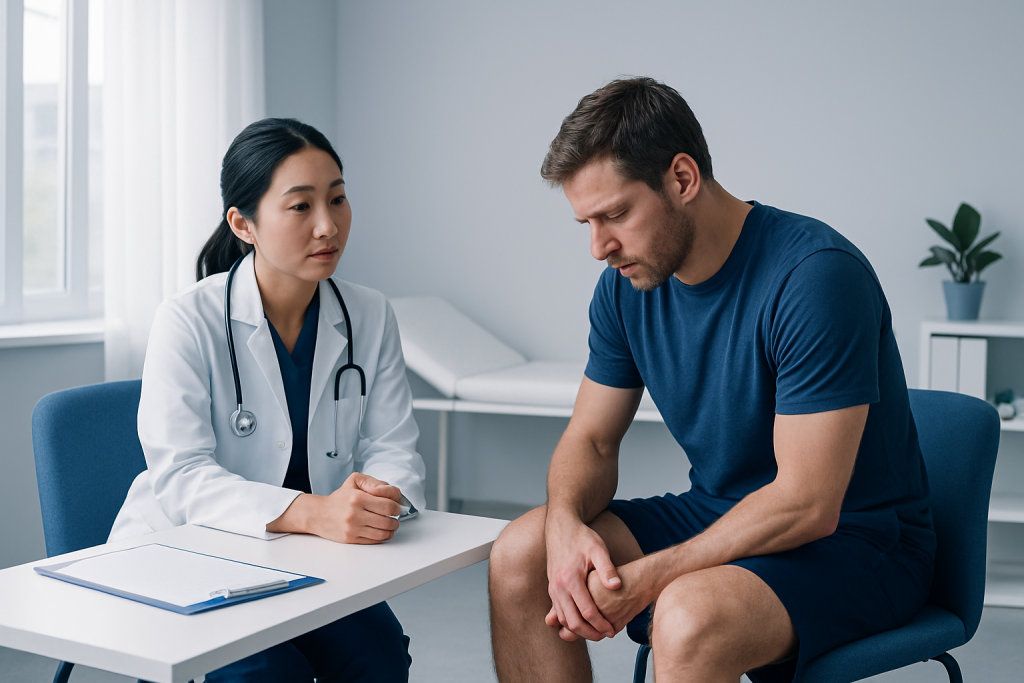
Diagnosis begins with a detailed history. A doctor will ask how the injury happened, where the pain is felt, whether swelling appeared quickly, and whether the knee feels unstable. The mechanism of injury can provide important clues, especially if the person describes a direct blow to the shin or a fall on a bent knee.
The physical examination usually includes checking swelling, tenderness, range of motion, and specific ligament tests. One key test is the posterior drawer test, which helps assess whether the shinbone moves too far backward. The doctor may compare both knees and look for signs of injury to other ligaments or the meniscus.
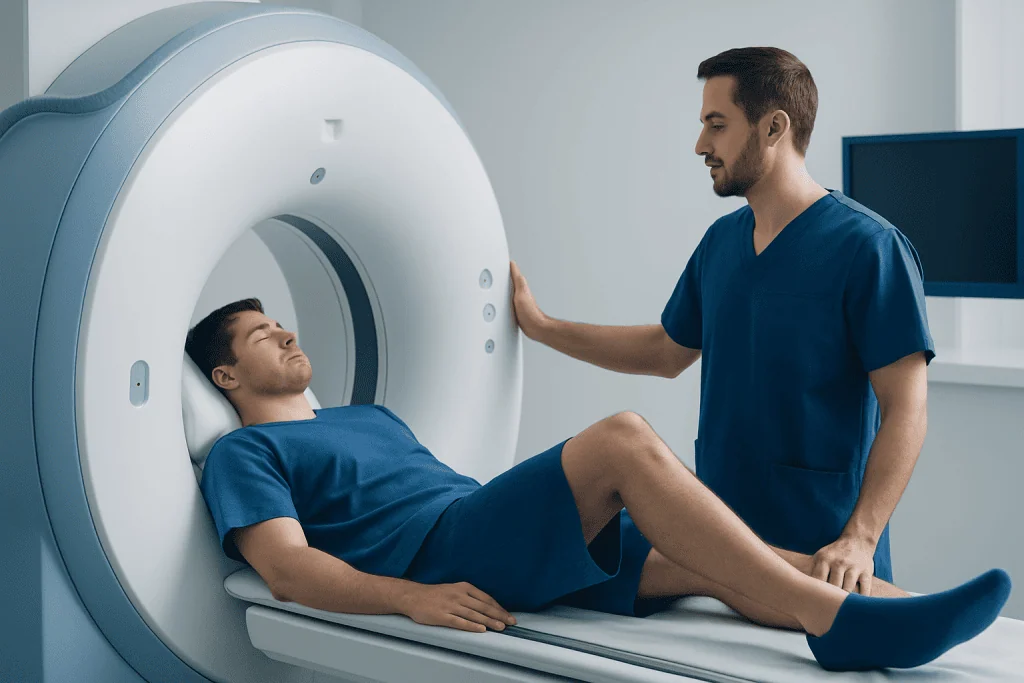
Imaging may be used to confirm the diagnosis and rule out related damage. X-rays can help detect fractures or changes in knee alignment, while MRI is especially useful for showing the PCL itself and nearby soft tissues. In more complicated cases, advanced imaging and orthopedic assessment may be needed to plan treatment.
If the diagnosis remains uncertain or multiple structures are involved, referral to a knee specialist is often appropriate. In centers that provide comprehensive orthopedic rehabilitation, the assessment may also include early planning for mobility, muscle strength, and return to activity.
Treatment options and recovery
Treatment depends on how severe the injury is, whether the knee is stable, and whether other structures are damaged. Mild or isolated PCL sprains and partial tears are often treated without surgery. Early care usually includes rest, ice, compression, elevation, temporary activity reduction, and sometimes a brace to support the knee while healing begins.
Physiotherapy is a central part of recovery. A rehabilitation program typically focuses on restoring range of motion, improving quadriceps strength, and rebuilding balance and functional control while protecting the healing ligament. Structured rehab may be especially important for active patients and for anyone hoping to return to sports safely.
Surgery may be considered when there is a complete tear with significant instability, combined ligament injury, bone avulsion, or ongoing symptoms despite non-surgical treatment. In these cases, doctors may discuss knee ligament surgery to restore stability. The exact approach depends on the injury pattern and the patient’s goals, activity level, and overall knee condition.
Recovery time varies. Some people improve over weeks with conservative care, while more severe injuries or reconstructive procedures may require several months of rehabilitation. A gradual return to work, exercise, or sport is usually safest and should follow medical and physiotherapy guidance rather than symptoms alone.
Self-care, prevention, and daily living
In the early stage after injury, protecting the knee is important. Limiting painful activity, using cold packs, elevating the leg, and following the advice given by a doctor or physiotherapist can help manage symptoms. Some people benefit from a brace or walking aid for a short time, especially if the knee feels unstable.
As pain and swelling improve, rehabilitation becomes the main form of self-care. Exercises are usually tailored to strengthen the muscles that support the knee, improve movement quality, and reduce the risk of re-injury. It is generally best to avoid returning to running, jumping, contact sports, or heavy twisting movements too soon.
For prevention, attention to technique, conditioning, and lower-body strength can be helpful. Warm-up routines, balance training, and sport-specific drills may support safer movement patterns. Wearing appropriate footwear and using protective equipment where relevant can also reduce risk.
For patients with persistent instability or complex injuries, specialist follow-up is useful. If needed, care may involve orthopedic assessment, imaging, and rehabilitation planning. Acibadem International’s multidisciplinary specialists in JCI-accredited hospitals diagnose and treat knee ligament conditions for international patients, including options such as physical therapy and rehabilitation when this fits the care plan.
When to seek medical care
Medical care should be sought if knee pain is significant, swelling develops quickly, the knee cannot bear weight comfortably, or there is a clear feeling that the joint is unstable. Care is also important after traffic accidents, sports collisions, or falls onto a bent knee, even if symptoms seem manageable at first.
Urgent assessment is advisable if the knee looks deformed, there is severe swelling, numbness, increasing pain, or the foot becomes cold or pale. These symptoms may suggest a more serious injury that needs prompt evaluation. A doctor can check for fractures, combined ligament damage, or circulation and nerve problems.
If symptoms are mild but do not improve, or if stiffness and weakness continue to interfere with daily activities, a non-urgent orthopedic review is still worthwhile. Early diagnosis can help prevent prolonged instability, guide rehabilitation, and support a safer long-term outcome.
Frequently asked questions
Can a PCL injury heal without surgery?
Yes, many isolated PCL injuries, especially mild sprains and some partial tears, can improve with non-surgical treatment. Bracing, activity modification, and a structured rehabilitation program are often the main parts of care. Surgery is more likely to be considered if the knee remains unstable or if other structures are also injured.
What does a torn PCL feel like?
A torn PCL may cause pain, swelling, stiffness, and a sense that the knee is not fully reliable. Some people notice discomfort when walking downstairs or on uneven ground. Others may have relatively mild early symptoms, which is why professional assessment can be important.
How is a PCL injury different from an ACL injury?
The PCL and ACL are both knee ligaments, but they have different roles and are often injured in different ways. PCL injuries commonly happen after a direct blow to the front of the shin with the knee bent, while ACL injuries are often linked to twisting or sudden pivoting. Symptoms and treatment plans may overlap, but they are not identical.
How long does recovery from a PCL injury take?
Recovery time varies depending on the severity of the injury and whether surgery is needed. Mild injuries may improve over several weeks, while more severe tears or reconstruction can require months of rehabilitation. A doctor or physiotherapist can give the most accurate estimate based on the individual case.
Is walking safe after a PCL injury?
Some people can walk after a PCL injury, but that does not always mean the knee is stable or the injury is minor. Walking may be possible with pain, swelling, or weakness still present. It is safest to follow medical advice about weight-bearing and activity, especially in the first days after injury.
Will I be able to return to sports after a PCL injury?
Many people do return to sports after appropriate treatment and rehabilitation. The timing depends on knee stability, muscle strength, range of motion, and the demands of the sport. Returning too early can increase the risk of re-injury, so clearance from a qualified clinician is recommended.
This article is for general information only and is not a substitute for professional medical advice. Please consult a qualified doctor about your individual situation.
Joint and spine care in Turkey — expert assessment & treatment
JCI-accredited · board-certified surgeons · reply within 24h
Add us as a Preferred Source to see more of our trusted health content across Google Search, AI Overviews and Discover.

More from the Health Library

Clonidine and: A Complete Medical Overview

Hydrops Fetalis: What Patients Need to Know

Hitchhiker’s Thumb: An Evidence-Based Guide for Patients
Xcopri — Explained by Medical Evidence, Not Myths
Protan Color Blindness: An Evidence-Based Guide for Patients
Hymen: An Evidence-Based Guide for Patients
Physical Medicine & Rehabilitation Specialists at Acibadem

Dr. Burak Boynuk
Orthopedic Surgery & Traumatology
Assoc. Prof. Dr. Burak Özturan
Orthopedic Surgery & Traumatology
Burcu Kocabey
Physical Medicine & Rehabilitation
Fzt. Busenur Sezer
Physical Medicine & Rehabilitation