Pediatric Dysphagia Treatment: How It Works, Results and What to Expect

Dysphagia means difficulty moving food, drinks, saliva or medicine safely from the mouth to the stomach. Children may cough, choke, refuse feeds, take a long time to eat or have poor weight gain, but some aspiration can occur silently.
Key Takeaways
- Dysphagia means difficulty moving food, drinks, saliva or medicine safely from the mouth to the stomach.
- Children may cough, choke, refuse feeds, take a long time to eat or have poor weight gain, but some aspiration can occur silently.
- A multidisciplinary assessment helps identify whether the problem is in the mouth, throat or esophagus and guides treatment.
- Many children benefit from individualized feeding and swallowing therapy alongside treatment for the underlying cause.
- Urgent assessment is important for breathing problems, blue lips, repeated choking, dehydration or concerns about aspiration pneumonia.
Pediatric dysphagia treatment is tailored to the reason a child has difficulty swallowing and to their feeding, growth and breathing needs. Care may include a swallowing assessment, feeding therapy, changes to food texture or feeding position, treatment of an underlying condition, and occasionally a procedure.
Overview: how pediatric dysphagia treatment works
Pediatric dysphagia treatment helps children swallow more safely, comfortably and effectively. It begins by identifying what is interfering with swallowing, because a child may have difficulty in the mouth, throat or esophagus. The care plan is then matched to the child’s age, development, nutrition needs and medical condition.
Treatment is not one single procedure. It may involve feeding and swallowing therapy, changes to food or drink consistency, positioning strategies, treatment for reflux or another medical condition, and support from nutrition specialists. If a structural narrowing, airway issue or other physical cause is found, an endoscopic or surgical procedure may sometimes be appropriate.
The main aims are to reduce choking and aspiration risk, help the child receive enough fluids and nutrition, make mealtimes less stressful, and support healthy growth. Progress varies: some children improve with therapy over weeks or months, while others need longer-term management when dysphagia is related to a neurological, developmental or complex medical condition.
What swallowing difficulty can look like in children
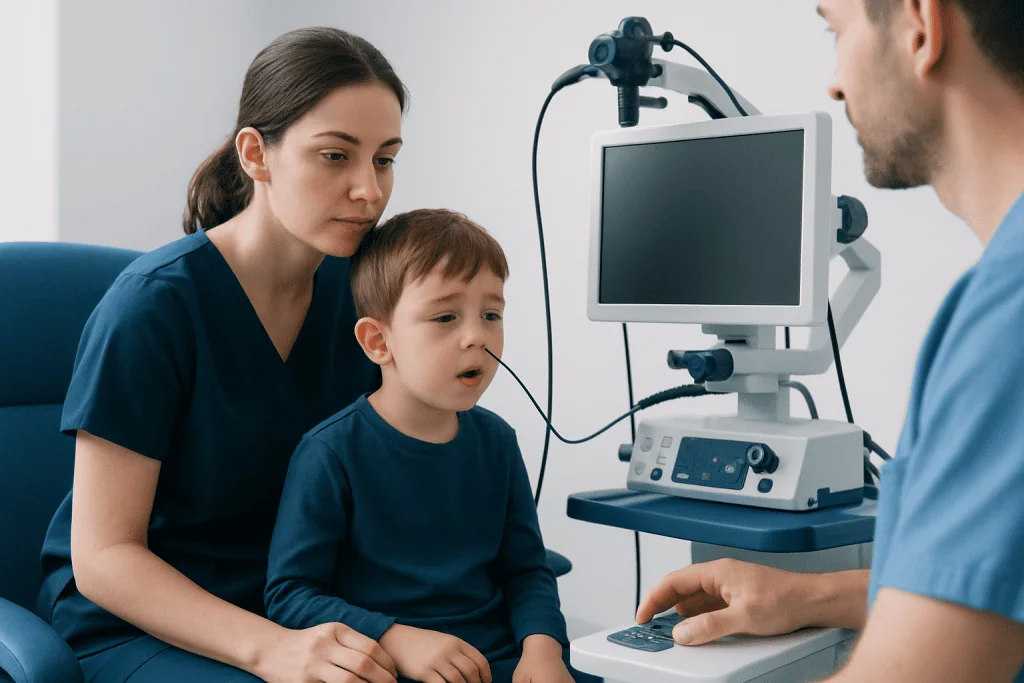
Symptoms differ by age and by the stage of swallowing affected. Babies may have trouble latching, cough or sputter during feeds, leak milk from the mouth, feed very slowly, arch or become distressed while eating, or have frequent spit-up. Older children may avoid certain textures, chew for a long time, keep food in the cheeks, complain that food feels stuck, or need repeated drinks to clear food.
Other signs can include recurrent chest infections, noisy or wet-sounding breathing after meals, a wet or gurgly voice, unexplained fever, poor weight gain, dehydration, or fatigue during feeding. These signs do not always mean dysphagia, but they warrant discussion with a qualified clinician.
A child can sometimes aspirate, meaning food, liquid or saliva enters the airway, without obvious coughing. This is known as silent aspiration. Because it may not be visible at home, clinicians consider the child’s respiratory history, feeding observations and, when needed, specialized swallowing tests.
Feeding challenges may also overlap with sensory preferences, oral-motor delays, reflux, allergies or behavioral stress around meals. A careful assessment avoids assuming that every food refusal is simply “picky eating.”
Who may benefit and how candidacy is assessed

Children may be referred for assessment when swallowing symptoms affect safety, nutrition, hydration, growth, breathing or family mealtimes. Dysphagia can occur in infants born prematurely and in children with developmental differences, cerebral palsy, neuromuscular conditions, cleft palate, heart or lung disease, reflux, eosinophilic esophagitis, previous airway surgery, or anatomical differences of the mouth, throat or esophagus.
The first step is usually a detailed history. The team asks about birth and medical history, feeding development, foods and textures accepted, coughing or vomiting, bowel habits, medications, weight changes and respiratory illnesses. A feeding specialist may observe a typical meal and assess posture, alertness, oral control, chewing, coordination and signs of airway compromise.
Not every child needs an invasive test. However, an instrumental assessment may be recommended if aspiration is suspected, the cause remains unclear, or the team needs to test which feeding strategies are safest. Common tests include a videofluoroscopic swallowing study, sometimes called a modified barium swallow, and fiberoptic endoscopic evaluation of swallowing. Depending on symptoms, the child may also need evaluation by gastroenterology, ear, nose and throat, pulmonology, neurology or nutrition specialists.
Families should share any previous scan results, growth charts and feeding records. This helps clinicians make recommendations that are medically appropriate and practical for daily life.
Step by step: the treatment pathway
After assessment, the care team explains the likely cause, priorities and treatment options. For many children, the initial plan focuses on immediate safety and adequate nutrition. This can include adjusting the child’s upright positioning, pacing feeds, choosing suitable utensils or nipples, offering manageable bite sizes, and modifying food textures or liquid thickness when clinically recommended.
A speech and language therapist or feeding therapist may provide targeted exercises and skill-building activities. Therapy can support lip closure, chewing, tongue movement, coordination of breathing and swallowing, and gradual tolerance of age-appropriate textures. Therapy is individualized; exercises or techniques should not be started without professional guidance, especially if aspiration is a concern.
Doctors also treat contributing conditions. This may involve managing reflux, constipation, inflammation of the esophagus, food allergy, infection, airway problems or neurological symptoms. If tests show an esophageal narrowing, a swallowing-related procedure may be considered, such as upper endoscopy to examine the upper digestive tract and, in selected cases, treat a problem found during evaluation.
When oral feeding is temporarily unsafe or does not meet nutrition needs, a nutrition plan may include supplemental tube feeding. This decision is individualized and may be short-term or longer-term. It does not necessarily prevent a child from continuing safe oral-skill practice under specialist guidance.
Benefits, limitations and possible risks
The expected benefit of treatment is safer and more efficient feeding, with better hydration, nutrition, growth and participation in family meals. Parents and caregivers often gain clearer guidance about which foods, positions and feeding routines are appropriate. Treating an underlying cause can also improve discomfort, vomiting, respiratory symptoms or the sensation of food sticking.
Results depend on the reason for dysphagia. A child whose swallowing issue is related to a temporary illness or a correctable structural problem may improve relatively quickly. Children with long-term neurological or developmental conditions may need ongoing support, with goals that change as they grow and develop new feeding skills.
Texture modification and thickened liquids can be helpful for some children, but they are not suitable for everyone. They may affect hydration, digestion, food acceptance or nutritional variety if used without monitoring. Families should use only the consistency and method recommended by the child’s clinical team, and should ask before changing products or stopping a plan.
Tests and procedures also have specific risks. A swallowing X-ray involves a small amount of radiation, while endoscopy and related procedures may require sedation or anesthesia. The specialist team reviews anticipated benefits, alternatives and risks before recommending any intervention.
Recovery timeline, follow-up and home support
Recovery is usually a process rather than a single event. After a feeding assessment, families may begin practical changes immediately, but it can take time for a child to learn new skills or accept different textures. Follow-up is commonly arranged to review symptoms, intake, growth and whether the plan remains safe and realistic.
Following an instrumental swallowing study, children can generally return to usual activities unless the clinician gives different instructions. After sedation, endoscopy or surgery, the recovery plan depends on the procedure and the child’s health. Caregivers should receive written guidance about eating and drinking, medicines, activity, discomfort and symptoms that require urgent contact.
At home, a calm, upright and closely supervised eating environment can be useful. Caregivers should follow recommended pacing, portion sizes and textures, allow adequate time for meals, and avoid pressuring a child to eat. Keeping a brief record of coughing, choking, vomiting, food acceptance and respiratory symptoms can help at review appointments.
Acibadem International’s multidisciplinary specialists and JCI-accredited hospitals assess and treat swallowing disorders in children, coordinating feeding, digestive, airway and nutritional care for international patients when needed.
When to seek medical care
Parents or caregivers should arrange medical assessment if a child repeatedly coughs, chokes or gags during meals; has persistent difficulty with bottles, breastfeeding or solids; seems to have food stuck; refuses feeding because it is uncomfortable; or is not gaining weight as expected. Recurrent chest infections, wheezing or wet-sounding breathing after meals also deserve prompt evaluation.
Emergency care is needed if a child has trouble breathing, turns blue or gray, becomes unusually drowsy, cannot clear a choking episode, has signs of severe dehydration, or suddenly cannot swallow saliva. These symptoms may indicate an immediate airway or medical emergency.
For non-emergency concerns, a pediatrician can coordinate referral to the appropriate specialists. Early assessment may reduce complications and can help families receive practical, individualized support before feeding difficulties become more disruptive.
Frequently asked questions
What is pediatric dysphagia treatment?
Pediatric dysphagia treatment is care for a child who has difficulty swallowing food, drinks, saliva or medicines. It is based on the cause and may include feeding therapy, changes to feeding technique or texture, nutritional support, medicines, and sometimes a procedure.
Which specialist treats dysphagia in children?
A pediatrician often coordinates the first evaluation. Depending on the child’s needs, care may involve a speech and language therapist, pediatric gastroenterologist, ear, nose and throat specialist, pulmonologist, neurologist, dietitian and feeding therapist.
Will a child with dysphagia always need thickened liquids?
No. Thickened liquids are recommended only for some children after a clinical assessment, often supported by a swallowing study. The appropriate consistency and duration should be reviewed regularly because needs can change as the child grows or the underlying condition improves.
Can pediatric dysphagia improve with therapy?
Many children improve with individualized therapy and treatment of contributing medical issues. The degree and speed of improvement depend on the cause, the child’s development and whether there are associated neurological, airway or digestive conditions.
How is aspiration diagnosed in a child?
Clinicians assess feeding symptoms, breathing history and growth, then may recommend a specialized swallowing test. A videofluoroscopic swallowing study or fiberoptic endoscopic evaluation can show whether material enters the airway and which strategies may improve safety.
Is dysphagia in children an emergency?
Dysphagia is not always an emergency, but repeated choking, poor intake and respiratory symptoms should be assessed promptly. Seek emergency help for breathing difficulty, blue or gray color, inability to clear a choking episode, sudden inability to swallow saliva, or marked drowsiness.
References
- American Academy of Pediatrics
- American Speech-Language-Hearing Association
- National Institute of Diabetes and Digestive and Kidney Diseases
- North American Society for Pediatric Gastroenterology, Hepatology and Nutrition
This article is for general information only and is not a substitute for professional medical advice. Please consult a qualified doctor about your individual situation.
Dysphagia in Turkey — costs, top hospitals & a free quote
JCI-accredited · board-certified surgeons · reply within 24h
Add us as a Preferred Source to see more of our trusted health content across Google Search, AI Overviews and Discover.

Gastroenterology
Diagnosis and treatment of the digestive system and liver, with advanced endoscopy.
45 specialists in this unit