Dysphagia Treatment
Dysphagia is difficulty swallowing solids, liquids, or saliva and may result from throat, esophageal, neurological, or reflux-related problems. Care focuses on identifying the cause and preventing aspiration or malnutrition.

Quick answer
Dysphagia means difficulty swallowing food, liquid, saliva or tablets. It is a symptom with many possible causes, from reflux-related narrowing and inflammation to muscle, nerve and brain disorders. Evaluation typically involves clinical assessment, swallowing studies, endoscopy and oesophageal function tests. Treatment depends on the cause and may combine swallowing therapy, diet changes, medication, endoscopic dilation, surgery and nutritional support.
What Is Dysphagia? A Plain Dysphagia Definition
Dysphagia is the medical term for difficulty swallowing: trouble moving food, liquid, saliva or tablets from the mouth through the throat and oesophagus into the stomach. It is a symptom rather than a disease in its own right, and it has many possible causes, from a temporary throat inflammation to disorders of the oesophageal muscles, the nerves that control swallowing, or the brain itself. Because the causes differ so widely, useful treatment always begins with an accurate diagnosis, not with a standard prescription. A person who feels food sticking in the chest may need a very different approach from someone who coughs when drinking water, or from someone who cannot coordinate a swallow after a neurological event.
Swallowing is something you do hundreds of times a day without thinking about it. When it becomes slow, painful or unsafe, the effects reach far beyond mealtimes. People with dysphagia often describe anxiety about choking, embarrassment about coughing in public, trouble taking medication, gradual weight loss, or fear of pneumonia caused by food or liquid entering the airway. For some, the problem builds gradually over months or years. For others, it begins abruptly after a stroke, an operation, cancer treatment or a severe episode of reflux. Both patterns deserve evaluation, and both can usually be explained once the right tests are done.
What is dysphagia in medical terms?
In medical terms, the dysphagia definition covers any impairment in the safe and efficient transfer of food or liquid from the mouth to the stomach. Clinicians divide it into two broad categories according to where the swallow goes wrong, because the two patterns point towards different causes, different tests and different specialists.
Oropharyngeal dysphagia
Oropharyngeal dysphagia means difficulty moving food or liquid from the mouth and throat into the oesophagus: the swallow fails at the start. Typical features include coughing or choking during meals, a wet or gurgly voice after swallowing, food remaining in the mouth, liquid escaping through the nose, and aspiration, where material enters the airway instead of the food pipe. This pattern is commonly linked to stroke, Parkinson’s disease, dementia, neuromuscular disorders such as myasthenia gravis, head and neck cancers and their treatment, certain operations, prolonged intubation in intensive care, and the muscle changes that come with advanced age.
Oesophageal dysphagia
Oesophageal dysphagia (spelled “esophageal dysphagia” in US English) means difficulty moving food or liquid down the oesophagus towards the stomach after the swallow has started normally. Patients typically describe food sticking in the throat, behind the breastbone or lower in the chest. Causes include gastro-oesophageal reflux disease and the scarring it can leave behind, strictures, rings and webs, eosinophilic oesophagitis, achalasia, oesophageal spasm, diverticula, changes after surgery or radiotherapy, and tumours of the oesophagus or surrounding structures.
How do you pronounce dysphagia?
Dysphagia is pronounced “dis-FAY-juh”; some speakers say “dis-FAY-jee-uh”, and both are accepted. The word comes from Greek: dys-, meaning difficult or disordered, and phagein, meaning to eat. It should not be confused with dysphasia, which is a language disorder, although the two can occur together after a stroke, which is one reason the pronunciation question comes up so often in clinics.
What Causes Dysphagia?
Dysphagia is caused by anything that narrows the swallowing passage, weakens or stiffens the muscles that move food along, disrupts the nerves that coordinate the swallow, or inflames the tissues involved. The most useful way to think about the causes is in groups, because each group is diagnosed differently and treated differently.
- Structural causes: peptic strictures from long-standing reflux, Schatzki rings, oesophageal webs, diverticula such as Zenker’s diverticulum, narrowing after surgery or radiotherapy, enlarged thyroid tissue or cervical spine changes pressing on the food pipe, and benign or malignant tumours.
- Motility disorders: achalasia, in which the lower oesophageal sphincter fails to relax; oesophageal spasm; weak or uncoordinated oesophageal contractions; and cricopharyngeal dysfunction at the top of the oesophagus.
- Neurological causes: stroke, Parkinson’s disease, multiple sclerosis, motor neurone disease (amyotrophic lateral sclerosis), myasthenia gravis, dementia and other conditions that impair the nerves and muscles of swallowing.
- Inflammatory and infectious causes: reflux oesophagitis, eosinophilic oesophagitis, and fungal or viral infections of the oesophagus.
- Treatment-related causes: swallowing changes after head and neck cancer therapy, radiotherapy scarring, surgery in the neck or chest, or prolonged intubation.
- Other contributors: dry mouth, dental and chewing problems, connective tissue diseases, medication effects, and functional or psychologically influenced swallowing disorders.
Medication review matters more than most people expect. Some drugs dry the mouth, some relax the lower oesophageal sphincter and worsen reflux, some irritate the oesophageal lining if a tablet lodges on the way down, and some affect the coordination of the swallow itself. Identifying these effects is part of a thorough assessment. Any change to a medicine, however, is a decision for the treating doctor, made with the full clinical picture in view, never something to attempt alone.
The pattern of symptoms gives the first clue to the cause. Difficulty that begins with solid foods and later extends to liquids suggests a physical narrowing that is progressing. Difficulty with both solids and liquids from the outset points more towards a motility or neurological problem. Trouble that occurs the moment a swallow starts suggests an oropharyngeal cause, while food that sticks several seconds later, lower in the chest, suggests an oesophageal one. Experienced clinicians read these patterns carefully before ordering a single test.
Symptoms: When Difficulty Swallowing Needs Proper Evaluation
Difficulty swallowing that is new, worsening, recurrent or unexplained deserves a medical evaluation, particularly when it comes with weight loss, coughing during meals, chest discomfort, food impaction or repeated chest infections. Dysphagia should not be put down to stress, ageing or “just reflux” without assessment, because it can signal a treatable condition, and occasionally a serious one caught at a stage when the options are still wide.
Common symptoms include:
- difficulty starting a swallow, or needing several attempts
- coughing or choking during meals
- food sticking in the throat or chest
- regurgitation of food, sometimes hours after eating
- drooling or difficulty managing saliva
- repeated throat clearing, or hoarseness after eating or drinking
- a sensation of a lump in the throat
- painful swallowing
- heartburn or chest discomfort related to meals
- needing much longer than others to finish a meal
Behaviour often changes before anyone names the problem. People start avoiding certain foods, cutting everything into very small pieces, drinking large amounts of water to push food down, or quietly losing interest in eating because meals have become stressful. These adaptations are worth naming precisely because they are so easy to normalise: they are often the earliest measurable sign that swallowing has changed.
In older adults and in people with neurological conditions, dysphagia can be subtle. A patient may never complain about swallowing at all, yet develop recurrent chest infections, unexplained fevers, dehydration, weight loss or a shrinking appetite. Silent aspiration, food or liquid entering the airway without triggering an obvious cough, is a particular concern after stroke and in certain neurological diseases, and it is one of the main reasons formal swallowing studies exist.
Certain features prompt clinicians to prioritise assessment: a sudden inability to swallow saliva, food stuck in the oesophagus, steadily progressive difficulty, vomiting blood, black stools, severe chest pain, unexplained weight loss, repeated aspiration pneumonia, new neurological symptoms, or a history of cancer. These features do not always mean a serious diagnosis is present, but they are the reasons a doctor will move testing forward rather than watch and wait.
Conditions and Indications Addressed by Dysphagia Care
Dysphagia care covers a broad range of conditions affecting the mouth, throat, oesophagus, nervous system and digestive tract. The treatment plan is shaped by the diagnosis, the patient’s age and medical history, the risk of aspiration, and how far nutrition has been compromised. It helps to see the breadth of what a swallowing service actually treats.
Structural oesophageal disease includes peptic strictures left by years of reflux, Schatzki rings and oesophageal webs that catch solid food, narrowing after surgery or radiotherapy, diverticula, and tumours of the oesophagus. Many of these respond to endoscopic treatment once they are properly characterised.
Motility disorders include achalasia, oesophageal spasm and cricopharyngeal dysfunction, along with Zenker’s diverticulum, which develops when the upper oesophageal muscle fails to relax and a pouch forms above it. These conditions can look normal on a standard endoscopy, which is why function tests matter.
Inflammatory conditions include reflux oesophagitis and eosinophilic oesophagitis, an allergy-associated inflammation that increasingly explains food impaction in younger adults, as well as infections of the oesophagus in people with weakened immunity.
Neurological dysphagia follows stroke and accompanies Parkinson’s disease, multiple sclerosis, motor neurone disease, myasthenia gravis and dementia. Swallowing can also be impaired after prolonged intubation or a long intensive care stay, when the muscles of the throat have weakened through disuse.
Contributing conditions include dry mouth, dental and chewing problems, thyroid enlargement, cervical spine abnormalities, connective tissue diseases such as scleroderma, medication side effects, and functional swallowing disorders in which no structural or neurological cause is found but the symptom is real and treatable.
In children, swallowing problems may involve developmental, neurological, anatomical or reflux-related causes. Paediatric assessment follows its own pathways, tailored to age, growth and feeding development, and is handled by teams trained specifically for it.
How Dysphagia Is Diagnosed
The first consultation
Diagnosis begins with a careful history. Your physician will want to know when the symptoms began, whether the problem involves solids, liquids or both, whether trouble starts at the moment of swallowing or after food has passed down, and whether there are associated symptoms such as heartburn, regurgitation, voice changes, neurological symptoms or weight loss. A full medication review is part of this conversation. Previous reports, endoscopy images, pathology results, radiology scans and swallowing study videos all add value at this stage: good records prevent unnecessary repetition, although key tests are sometimes repeated when image quality, timing or a change in the patient’s condition makes that sensible.
The physical examination may cover the mouth, throat, neck, voice, cranial nerves, breathing, nutritional status and signs of dehydration. In many services, a speech and swallowing therapist also assesses oral muscle control, swallowing coordination, posture, cough strength and which food and liquid textures are safest to test. This early therapist assessment often shapes everything that follows.
Swallowing studies: seeing the swallow in motion
A videofluoroscopic swallowing study, sometimes called a modified barium swallow, records X-ray video while you swallow different textures mixed with contrast material. It shows whether food or liquid enters the airway, whether residue remains in the throat after the swallow, and, crucially, which postures and strategies make swallowing safer in real time. A fibre-optic endoscopic evaluation of swallowing (FEES) uses a slim flexible camera passed through the nose to watch the throat during swallowing; it can be done at the bedside or in clinic and is particularly useful for assessing how well secretions are managed.
Endoscopy and imaging
Flexible laryngoscopy lets an ear, nose and throat specialist inspect the throat, larynx and vocal cord movement, important when aspiration, voice change, vocal cord weakness, throat tumours or post-surgical changes are suspected. Upper gastrointestinal endoscopy gives a direct view of the oesophagus, stomach and upper small intestine. It can identify inflammation, narrowing, rings, webs, ulcers, tumours or impacted food, and tissue samples can be taken when eosinophilic oesophagitis, infection, Barrett’s oesophagus or malignancy is in question. If a narrowing is found, dilation can sometimes be performed in the same session, depending on safety and the agreed plan. A barium oesophagram outlines the oesophagus on X-ray and can reveal strictures, diverticula and motility patterns that are hard to judge by endoscopy alone. Cross-sectional imaging, CT or MRI, is added when tumours, enlarged structures or surgical planning require it.
Oesophageal function tests
Oesophageal manometry measures pressure and coordination along the oesophagus and at the lower oesophageal sphincter. It is the essential test for diagnosing achalasia and other motility disorders, which can be invisible on a standard camera examination. Reflux monitoring with pH testing clarifies whether acid exposure explains persistent symptoms or oesophageal injury. Blood tests support the wider picture: nutrition, inflammation, thyroid function and markers relevant to specific suspected conditions.
Difficulty Swallowing Treatments: The Main Options
Difficulty swallowing treatments range from simple changes in how you eat, through medication and swallowing therapy, to endoscopic procedures and surgery, and the right combination depends entirely on the diagnosis. What follows is the honest range of options a well-run dysphagia service works with, and where each one fits.
How the treatment plan is built
Once the cause is identified, the team sets priorities: symptom relief, airway protection, nutritional recovery, control of inflammation, restoring the opening of the oesophagus, cancer treatment, neurological rehabilitation, or long-term adaptation for a chronic condition. In complex cases the findings are reviewed by multidisciplinary boards, gastrointestinal, head and neck, neurological, thoracic, oncological or nutrition-focused, so that more than one perspective shapes the recommendation. A typical pathway runs in stages:
- Clinical assessment and review of any previous records.
- Targeted testing: swallowing studies, endoscopy, imaging or manometry as the pattern dictates.
- Diagnosis and, where needed, multidisciplinary review.
- Treatment, conservative first where reasonable, procedural where necessary.
- Reassessment: symptoms, nutrition, hydration and aspiration risk are checked, and the plan is adjusted.
Swallowing therapy, diet and daily strategies
For many patients, treatment begins with conservative measures: eating slowly, taking smaller bites, changing head or body position during swallowing, avoiding problem textures, thickening liquids when needed, improving oral hygiene, and managing dry mouth. A speech and swallowing therapist can teach exercises that strengthen the swallowing muscles, improve coordination and reduce aspiration risk. These techniques sound modest, but for oropharyngeal dysphagia, especially after stroke, they are often the core of treatment, and consistent daily practice is what makes them work.
Medical treatment
Medication targets the underlying cause where one exists. Acid-suppressing therapy treats reflux-related inflammation and helps prevent strictures from re-forming after dilation. Eosinophilic oesophagitis may respond to topical anti-inflammatory treatment or dietary adjustment. Infections of the oesophagus are treated with antibiotics or antifungal medicines. When a tablet itself is irritating the oesophagus, the prescribing doctor can review the regimen. Neurological and muscular disorders have their own disease-specific therapies, managed by the relevant specialist.
Endoscopic dilation
When dysphagia is caused by a narrowing, endoscopic dilation is often the recommended treatment. The narrowed segment is gently expanded using specialised balloons or dilators passed through the endoscope. Dilation is used for peptic strictures, Schatzki rings, some post-surgical narrowings, radiation-related strictures and other benign narrowed areas. Some patients need more than one session, particularly when the narrowing is long, tight or has been present for years: a staged approach is safer than forcing a result in a single visit.
How is achalasia treated?
Achalasia is treated by reducing the obstruction at the lower oesophageal sphincter, and there are several ways to do it: pneumatic dilation, peroral endoscopic myotomy, or laparoscopic surgical myotomy. The choice depends on the type of achalasia shown on manometry, the patient’s overall health and anatomy, and the expertise available. Each approach aims to help food pass from the oesophagus into the stomach more easily; each also carries a trade-off in reflux risk afterwards, which is weighed openly during planning rather than discovered later.
Surgery and other interventions
Zenker’s diverticulum and cricopharyngeal dysfunction may need endoscopic or surgical treatment to open the passage through the upper oesophagus and reduce regurgitation and aspiration. Endoscopic division of the muscular bar in Zenker’s diverticulum can be performed with stapling, cutting instruments or laser techniques: an area where the tools overlap with other laser treatmentsdepending on anatomy and the surgeon’s approach. Tumours, severe strictures and cancer-related dysphagia require individualised planning that may include endoscopic stenting, surgery, radiotherapy, chemotherapy, immunotherapy, nutritional support or palliative approaches focused on swallowing comfort. There is no single right answer here; there is a right answer for a specific patient with a specific diagnosis.
Nutrition support and feeding tubes
When oral intake is unsafe or insufficient, nutrition support keeps the rest of the treatment plan possible. Options include high-calorie supplements, texture-modified diets, structured hydration plans and, when needed, temporary feeding tube support. Patients with neurological dysphagia often need rehabilitation and safety strategies rather than a single procedure: the goals are to reduce aspiration, preserve oral eating where it remains safe, protect dignity and comfort at mealtimes, and adapt the plan as the condition changes. In severe or progressive disease, longer-term feeding tube placement may be discussed as part of a broader plan that respects both medical realities and the patient’s own preferences.
Can you fix dysphagia?
Sometimes, yes, and sometimes the honest answer is management rather than resolution. People searching for “curing dysphagia” usually want to know whether swallowing can return to normal, and the truthful reply is that it depends on the cause. A Schatzki ring stretched by dilation, an inflamed oesophagus settled by treating eosinophilic oesophagitis, or an achalasia relieved by myotomy can each transform eating. Stroke-related dysphagia often improves substantially with rehabilitation, though the timeline varies. Progressive neurological diseases usually require ongoing adaptation instead of a one-time fix. What every patient can reasonably expect is a clear diagnosis, an explanation of what is realistic, and a plan matched to it.
Technology used in dysphagia care
Modern dysphagia care relies on technology that lets the team see swallowing function, examine the oesophagus directly, measure its movement and treat specific abnormalities precisely. High-definition endoscopic imaging supports detailed inspection and accurate biopsies. Fluoroscopic swallowing studies show the swallow in motion, allowing therapists and physicians to identify aspiration and test protective strategies live. Manometry systems detect motility disorders invisible to the camera. Endoscopic dilation tools, therapeutic endoscopy instruments and minimally invasive surgical techniques reduce the need for open surgery in selected patients. The value lies less in the equipment itself than in how the findings are interpreted: the right test at the right time, read in the context of your symptoms and history.
Recovery After Dysphagia Evaluation and Treatment
The duration of dysphagia treatment varies widely. A consultation and swallowing study may be completed in a single day, and endoscopy is usually a planned outpatient or short-stay procedure. Some patients return to routine activities within a day of diagnostic testing or a straightforward dilation. Others, particularly those having surgery, cancer treatment or neurological rehabilitation, follow a longer recovery and follow-up plan measured in weeks or months.
After endoscopy or dilation, you are monitored until sedation has worn off. Mild throat discomfort, bloating or a temporary awareness in the chest can occur. Diet is advanced according to your physician’s instructions, sometimes starting with liquids or soft foods. After swallowing therapy sessions, you leave with specific exercises, safe-swallowing techniques and diet guidance; steady practice between sessions is usually what drives progress. Patients undergoing staged care, a series of dilation sessions, for example, are given a clear schedule so that each session builds on the previous one and the intervals between them do the healing work they are designed to do.
| Time Period | What Patients Can Expect |
|---|---|
| Day 1 | Diagnostic tests or endoscopic procedures are completed. After sedation, you are monitored and given instructions about eating, drinking, medication timing and symptoms to report. |
| First week | Swallowing exercises, diet texture changes, reflux treatment or gradual diet advancement begin. Mild throat irritation after endoscopy usually settles quickly. |
| First month | Symptoms are reassessed. Patients treated for inflammation, reflux or narrowing may notice improvement; others may need repeat therapy sessions, further tests or a planned second procedure. |
| Longer term | Chronic conditions may need ongoing follow-up: medication review, repeat dilation, nutritional monitoring or continued swallowing therapy to maintain safety and quality of life. |
Recovery is best understood as a staged process rather than a single moment. Some causes improve quickly once inflammation is treated or a narrowing is opened. Others require repeat procedures or long-term adaptation. Throughout, the care team tracks symptom improvement, nutrition, hydration and aspiration risk, and adjusts the plan as your swallowing changes.
Why Acting Early Matters
Early evaluation matters because swallowing problems can cause complications before the underlying cause is even recognised. When food or liquid enters the airway, aspiration pneumonia can follow. When eating becomes difficult, intake falls, leading to weight loss, dehydration, weakness and a reduced ability to tolerate treatment for other conditions. In older adults, even a modest decline in nutrition increases frailty and fall risk.
Delay also gives treatable conditions time to progress. Reflux-related inflammation can scar into a stricture. Eosinophilic oesophagitis tends to become more fibrotic over time. Motility disorders can lead to food retention and progressive dilation of the oesophagus. Tumours and precancerous changes need timely diagnosis for the widest range of options. And neurological swallowing problems become more dangerous when unsafe textures are eaten without guidance.
Not every swallowing symptom is dangerous, and many causes are managed with straightforward treatment. But persistent dysphagia should not be dismissed as stress, ageing or reflux without a proper look. Timely evaluation clarifies the diagnosis, prevents avoidable complications and, importantly, keeps the least invasive effective treatment on the table.
What Are the Benefits of Dysphagia Treatment?
The benefits depend on the cause, but the overall aims are consistent: safer swallowing, better nutrition and a clear understanding of what is actually wrong.
| Benefit | What It Means for You |
|---|---|
| Accurate diagnosis | Testing identifies whether the problem lies in the throat, oesophagus, nervous system, reflux, inflammation, narrowing or another cause, which is the foundation of every good decision that follows. |
| Reduced aspiration risk | Swallowing strategies, diet changes, therapy and selected procedures can lower the chance of food or liquid entering the airway. |
| Improved nutrition and hydration | A tailored plan makes eating and drinking safer and more manageable, supporting strength, recovery and daily function. |
| Relief of obstruction or narrowing | Endoscopic or surgical treatment can restore the passage of food when dysphagia is caused by strictures, rings, diverticula or motility disorders. |
| Personalised long-term management | Patients with chronic neurological, reflux-related, inflammatory or cancer-related conditions receive a plan built around their changing needs, not a one-off intervention. |
What Influences the Outcome?
The outcome of dysphagia treatment depends first on the underlying cause. A reflux-related narrowing may respond well to dilation and medication, while dysphagia from a progressive neurological disease calls for ongoing adaptation rather than complete resolution. Cancer-related dysphagia depends on tumour type, stage, the treatment plan and the patient’s overall health. There is no honest way to generalise across these situations, which is exactly why diagnosis comes first.
Timing matters too. Patients evaluated before significant weight loss, dehydration or recurrent aspiration pneumonia usually have more treatment options and a stronger reserve for recovery. The duration and severity of a narrowing, the degree of muscle weakness, prior radiotherapy or surgery, and coexisting conditions such as lung disease, diabetes or frailty all shape the result.
A good result is not always defined as eating every food normally. For some patients it means swallowing without fear, holding weight steady, avoiding pneumonia, taking medication safely, or enjoying meals with practical modifications. For others it means relief from food sticking after dilation, better oesophageal emptying after achalasia treatment, or the ability to continue cancer therapy with adequate nutrition. Defining the goal openly at the start prevents disappointment later.
Your own participation carries real weight: swallowing exercises, posture techniques, diet recommendations, reflux precautions, medication adherence, oral hygiene and follow-up appointments all influence progress. So does clinical coordination. Dysphagia sits at the intersection of several specialties, and when gastroenterologists, ENT specialists, neurologists, radiologists, speech and swallowing therapists, dietitians, surgeons and rehabilitation teams communicate clearly, the plan you receive is coherent rather than fragmented, especially valuable when symptoms involve both the throat and oesophageal phases of swallowing.
Can you live a long life with dysphagia?
Many people do. Dysphagia itself does not set a lifespan; the underlying cause and the management of complications do. Someone whose stricture is dilated, whose reflux is controlled or whose achalasia is treated may go on to eat and live essentially as before. Even with chronic neurological disease, the combination of swallowing therapy, appropriate food textures, aspiration precautions and nutritional monitoring lets many people maintain weight, avoid pneumonia and eat with their families for years. The realistic risks, aspiration and malnutrition, are precisely the ones a structured care plan is designed to control.
Can a person with dysphagia eat scrambled eggs?
Often, yes. Scrambled eggs are soft, moist and cohesive, which makes them one of the foods most commonly tolerated on texture-modified diets. Whether they are right for a particular person, though, depends on the type and severity of the dysphagia: someone with a tight stricture manages soft foods differently from someone with poor throat coordination. A speech and swallowing therapist or dietitian assesses which texture level is safe and builds the diet from there, which is why individual assessment, not a generic food list, is the reliable guide.
How Acibadem Organises Dysphagia Care
Dysphagia rarely belongs to one department, so Acibadem organises it across several: gastroenterology, otolaryngology, neurology, radiology, speech and swallowing therapy, nutrition, oncology, thoracic surgery and general surgery, with intensive care involved when severity demands it. When cases are complex, findings are discussed in multidisciplinary boards so that diagnostic results and treatment options are weighed from more than one specialist perspective before anything is recommended.
The diagnostic pathway draws on endoscopic assessment, swallowing studies, oesophageal function testing, imaging, laboratory work and biopsy review: the tools needed to separate structural, inflammatory, neurological, reflux-related and motility causes from one another. For patients who have already been tested elsewhere, previous reports and images are reviewed to determine which studies remain valid and which genuinely need updating, so that testing is repeated only when it changes the answer.
Personalised planning matters in this field more than most. Two patients may describe the same symptom, food sticking, yet one has a reflux-related narrowing, another eosinophilic oesophagitis, another achalasia, and another an early tumour. Coughing with liquids may need therapy and diet modification in one patient, neurological treatment in another and vocal cord evaluation in a third. Careful diagnosis protects patients from both undertreatment and unnecessary procedures. The same discipline applies to second opinions: a structured review of previous endoscopy, pathology, manometry, imaging and swallowing studies can clarify whether a proposed dilation, myotomy, stent, feeding tube, operation or cancer treatment plan is appropriate, or whether conservative treatment and rehabilitation deserve a trial first.
Clear communication is treated as part of the treatment itself. Instructions about diet textures, medication timing, aspiration precautions, swallowing exercises and follow-up only work if they are understood exactly, so care teams take time to confirm that patients and families know what to do between appointments, what to watch for, and how the plan will be reassessed. Clinical decisions remain individual; the coordination around them is what stays consistent.
A Clearer Path Forward
Dysphagia can be frightening because it touches breathing, eating, strength and social life all at once. Yet most causes are diagnosable, and many patients are helped substantially by the right combination of medical treatment, swallowing therapy, endoscopic procedures, surgery, nutritional support or structured long-term management. The essential first step is always the same: understanding why swallowing has become difficult, and whether the airway or nutrition is at risk. Once that question is answered properly, the path forward, whatever it involves, becomes far clearer than the uncertainty that came before it.
Preparation
- Patients should share symptoms, medications, prior surgeries, reflux history, and any choking or weight loss. Fasting may be required if endoscopy or imaging with contrast is planned. Bring previous test results, scans, and medication lists to the appointment.
Aftercare
- After evaluation, treatment may include diet changes, swallowing therapy, reflux treatment, endoscopic procedures, or referral to ENT or neurology when needed. Patients should follow swallowing safety advice and report coughing during meals, fever, chest pain, or worsening weight loss promptly.
Frequently Asked Questions
What affects the cost of dysphagia treatment?
The main factors are the suspected cause, required diagnostic tests, whether endoscopy or a procedure is needed, anesthesia requirements, hospital stay, pathology review, and follow-up care. Costs also vary with specialist involvement, hospital services, and international patient support.
How can I get a personalised quote?
You can request a free consultation by sharing your symptoms, medical history, previous test results, endoscopy reports, imaging, medication list, and any swallowing or nutrition assessments. A specialist team can then suggest the likely evaluation pathway and provide a personalised quote.
Is dysphagia always treated with a procedure?
No. Some patients improve with diet changes, swallowing therapy, reflux treatment, or medication. Others may need endoscopic or surgical treatment if there is narrowing, obstruction, motility disorder, or another structural cause. The correct option depends on specialist assessment.
What is usually included in an international patient package?
A package may include appointment coordination, specialist consultation, selected diagnostic tests, endoscopy or procedure planning if required, interpreter support, hospital coordination, and follow-up guidance. The exact inclusions should be confirmed before travel.
When should dysphagia be assessed urgently?
Urgent assessment is important if swallowing difficulty is worsening, food is getting stuck, there is coughing or choking during meals, unexplained weight loss, dehydration, vomiting, bleeding, chest discomfort, or signs of aspiration. These symptoms may require prompt specialist evaluation.
Medically reviewed by the Acıbadem International Medical Board September 1, 2026
See our medical review board →
Update history
- PublishedJune 8, 2026
- Medical review approvedSeptember 1, 2026
- Last content updateSeptember 8, 2026
References3
- Swallowing Disorders medlineplus.gov
- Dysphagia (swallowing problems) nhs.uk
- Dysphagia (Difficulty Swallowing) my.clevelandclinic.org
Trusted care for international patients
From the Acibadem Blog

Swallowing Therapy, Endoscopy or Surgery for Dysphagia: How Each Option Is Chosen
Treatment for dysphagia is chosen by cause, not by severity alone. Swallowing therapy with a speech-language pathologist is usually first when the problem sits…
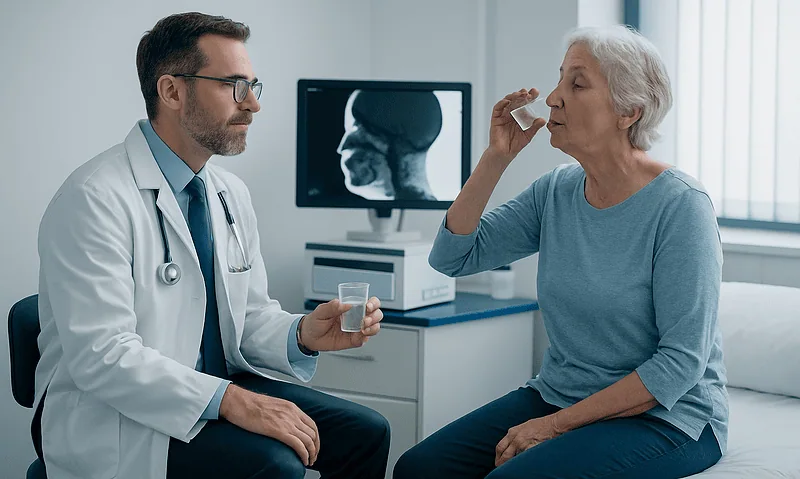
What Does a Swallowing Study Show? Endoscopy and Imaging Tests Used in Dysphagia Care
A swallowing study for dysphagia records what happens to food and liquid as you swallow, most often with a moving X-ray (videofluoroscopy) or a…