Pediatric EEG: How Brain Wave Testing Helps Diagnose Seizures and More

A pediatric EEG measures brain wave patterns using small sensors placed on the scalp. The test does not give off electricity and is painless, though younger children may need reassurance and preparation.
Key Takeaways
- A pediatric EEG measures brain wave patterns using small sensors placed on the scalp.
- The test does not give off electricity and is painless, though younger children may need reassurance and preparation.
- EEG is especially helpful in evaluating suspected seizures, epilepsy, staring spells, and sleep-related episodes.
- Results are interpreted together with a child’s symptoms, examination, and sometimes brain imaging or other tests.
- Sleep deprivation, natural sleep, or video EEG monitoring may improve the chance of capturing abnormal brain activity.
A pediatric EEG is a safe, painless test that records electrical activity in a child’s brain. It is commonly used to help diagnose seizures, but it can also support the evaluation of fainting spells, unusual movements, sleep-related events, and other neurological concerns.
Overview of Pediatric EEG
A pediatric EEG, or electroencephalogram, is a test that records the brain’s electrical activity. The brain communicates through tiny electrical signals, and an EEG captures these signals as wave patterns using small sensors placed on the scalp. In children, this test is often requested when a doctor wants to better understand unusual episodes such as seizures, staring spells, fainting, sudden jerking movements, or changes in behavior that may have a neurological cause.
EEG is one of the most important tools in clinical neurophysiology because it can show patterns that suggest irritation of the brain, seizure tendency, or changes related to sleep and wakefulness. It does not diagnose every condition by itself, but it can provide valuable information when combined with a child’s medical history, developmental background, physical examination, and other tests.
Parents are often reassured to learn that a pediatric EEG is noninvasive and painless. The test does not send electricity into the brain. Instead, it only records the signals that the brain naturally produces. Depending on the reason for testing, the EEG may be done while the child is awake, asleep, sleep-deprived, or during longer video monitoring in a hospital or specialized unit.
Why Doctors Order a Pediatric EEG
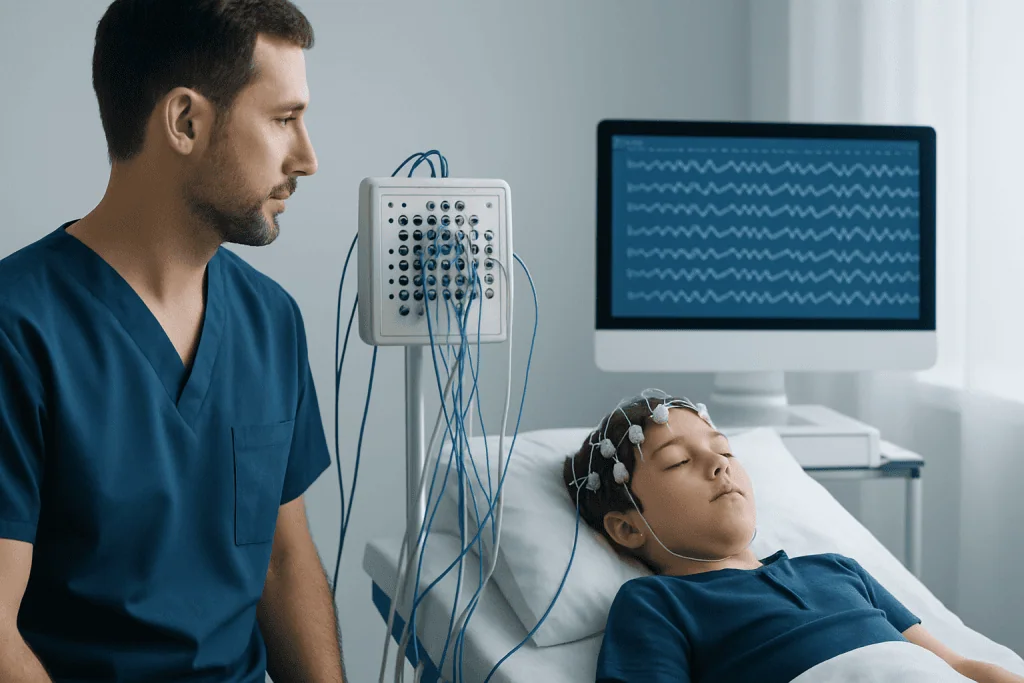
The most common reason for ordering a pediatric EEG is to help evaluate possible seizures or epilepsy. A child who has repeated convulsions, sudden pauses in awareness, unexplained falls, stiffening episodes, or brief jerks may need an EEG to look for brain wave changes associated with seizures. The test can also help classify the seizure type, which is important for choosing the most appropriate treatment.
However, seizures are not the only reason for EEG testing. Doctors may recommend it for children with unusual nighttime events, episodes of confusion, developmental regression, unexplained changes in alertness, or behaviors that are difficult to distinguish from neurological events. In some cases, EEG helps tell the difference between epileptic seizures and non-epileptic events such as tics, breath-holding spells, fainting, or certain sleep disorders.
EEG may also be used in broader neurological evaluation. For example, it can support assessment in children with suspected encephalopathy, brain inflammation, metabolic disturbances, or altered consciousness. When symptoms suggest a structural or other neurological issue, the child may also need related tests such as brain MRI or specialist review in pediatric neurology to create a fuller clinical picture.
What the Test Is Like for a Child
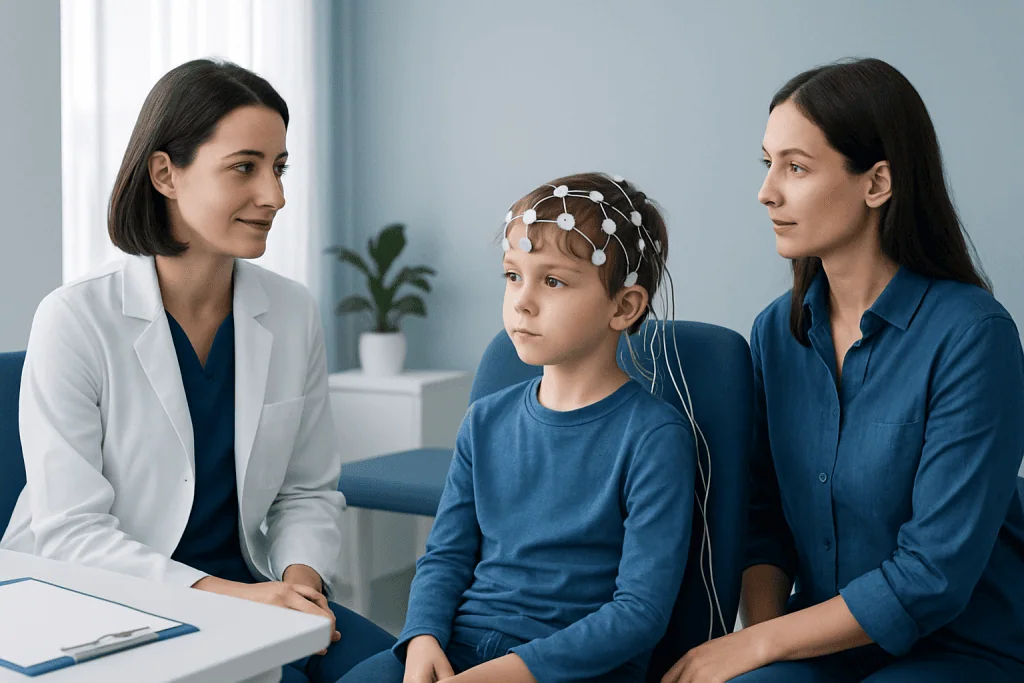
During a routine pediatric EEG, a technician measures the child’s head and places several small electrodes on the scalp with a special paste, adhesive, or cap. These sensors are connected to the recording system, which displays the brain’s electrical patterns. The child may be asked to lie still, rest quietly, open and close the eyes, breathe deeply for a short period, or look at a flashing light, depending on age and the reason for the test.
The test itself is painless, but younger children may find the setup unfamiliar or inconvenient. Parents can often stay nearby to provide comfort. Bringing a favorite toy, blanket, book, or music can help. For infants and toddlers, scheduling the EEG around nap time may make it easier to record natural sleep, which can reveal abnormalities that are not always visible during wakefulness.
Some children are asked to sleep less than usual before the appointment. Sleep deprivation can make certain abnormal brain wave patterns easier to detect, especially when seizures are suspected. In more complex cases, doctors may recommend prolonged or video EEG monitoring, which records both brain waves and the child’s behavior over many hours or days to match visible events with EEG changes.
Conditions a Pediatric EEG Can Help Evaluate
Pediatric EEG is best known for helping diagnose epilepsy and characterize seizure disorders. Different seizure types can produce different EEG patterns, and identifying these patterns helps doctors understand whether seizures begin in one area of the brain or involve both sides more widely. This information can guide treatment choices and long-term planning, especially in children with recurrent episodes or difficult-to-classify symptoms.
EEG may also help evaluate episodes that resemble seizures but may have another explanation. For example, children can have staring spells due to absence seizures, daydreaming, attention difficulties, or sleep problems. Sudden movements might be seizures, but they can also be tics, reflexes, or movement disorders. Nighttime events may overlap with parasomnias, including sleepwalking or confusional arousals, and EEG can sometimes help clarify the difference.
In some children, EEG is used during the assessment of broader neurological or developmental concerns. It may support evaluation when there is developmental delay, autism with possible seizure-like events, unexplained regression, or abnormal spells after a brain injury or infection. If doctors suspect an underlying disorder such as epilepsy or need a structural assessment alongside EEG findings, additional imaging or laboratory testing may be advised.
- Suspected seizures or epilepsy
- Staring spells or brief loss of awareness
- Unusual movements, jerks, or collapses
- Sleep-related events or nighttime episodes
- Altered consciousness, confusion, or encephalopathy
- Monitoring known seizure disorders over time
How Results Are Interpreted
An EEG is interpreted by a trained physician, often a pediatric neurologist or neurophysiologist. The specialist looks at the background rhythm, how brain waves change with wakefulness and sleep, and whether there are abnormal discharges that may suggest a seizure tendency. Certain patterns can indicate generalized or focal abnormalities, while others may suggest slowing related to irritation or reduced brain function in a specific area or more diffusely.
It is important to understand that EEG results are only one part of diagnosis. A normal EEG does not completely rule out epilepsy, because abnormal electrical activity may not occur during the brief time of recording. Likewise, some abnormal EEG findings do not automatically mean a child has epilepsy. The doctor interprets the test in the context of the child’s symptoms, developmental history, medications, and examination findings.
If the routine EEG is inconclusive but concern remains high, the doctor may recommend repeating the study, performing a sleep EEG, or arranging prolonged video EEG monitoring. In selected cases, children may also need further evaluation with tests such as electrophysiologic testing or other neurological investigations, depending on the pattern of symptoms and the questions that still need to be answered.
Safety, Preparation, and After the Test
Pediatric EEG is considered very safe. The electrodes only record electrical signals and do not deliver shocks or radiation. Occasionally, parts of the test such as deep breathing or flashing lights may provoke symptoms in a child who is already prone to seizures, but this is done in a controlled setting with trained staff present. If a child is unwell, has a fever, or has had a major change in symptoms, parents should inform the medical team before the test.
Preparation instructions vary. Parents may be asked to wash the child’s hair the night before and avoid oils, sprays, or hair creams so the electrodes stick properly. Some children may need less sleep than usual before the appointment. Unless a doctor says otherwise, regular medications are usually continued, because stopping seizure medicines or other treatments without medical advice can be unsafe.
After the EEG, most children can return to normal activities right away. The paste used for the electrodes may leave the hair sticky until it is washed. Results are usually reviewed later rather than immediately, because careful interpretation takes time. Families should ask when and how they will receive the report and what the next steps may be if the findings are normal, unclear, or abnormal.
What Happens If the EEG Suggests a Problem
If the EEG shows changes that support a diagnosis of seizures or epilepsy, the next step is usually a discussion with a pediatric neurologist about what the pattern means and whether treatment is recommended. Some children need anti-seizure medication, while others may need more observation or additional testing before a final diagnosis is made. The decision depends on the child’s symptoms, age, seizure type, examination, and any associated findings.
Doctors may also investigate possible underlying causes. Depending on the situation, this may include brain MRI to look for structural brain changes, blood tests, genetic evaluation, or developmental assessment. In children whose events happen often but remain difficult to define, longer video EEG monitoring can be especially useful because it links EEG changes with what the child is doing or experiencing during an event.
For families, it can help to know that an abnormal EEG does not always mean a severe condition. Some children have mild or age-related EEG changes, and many seizure disorders can be managed effectively with careful follow-up. Near the end of the diagnostic journey, some families seek care in centers with multidisciplinary pediatric specialists. Acibadem International’s JCI-accredited hospitals care for international patients with pediatric neurological conditions through coordinated evaluation and treatment planning.
When to Seek Medical Advice
Parents should seek medical advice if a child has episodes of shaking, stiffening, blank staring with unresponsiveness, sudden collapse, repeated unusual nighttime events, or unexplained confusion. It is also wise to speak with a doctor if teachers or caregivers notice repeated lapses in awareness, brief jerks, or unusual behaviors that interrupt learning, safety, or daily activities. A pediatrician can help decide whether EEG or referral to a specialist is appropriate.
Urgent medical care is needed if a seizure lasts several minutes, the child has trouble breathing, suffers an injury during an event, does not recover as expected, or has a first seizure with concerning symptoms such as persistent weakness, severe headache, fever, or ongoing altered consciousness. Parents should follow any emergency plan already provided by the child’s doctor.
Keeping a simple record can be very helpful before the appointment. Families may note when events happen, how long they last, what the child was doing beforehand, whether there was sleep loss or illness, and what the child was like afterward. Video taken safely on a phone can also help doctors interpret episodes more accurately, sometimes even before the EEG is performed.
Frequently asked questions
What does a pediatric EEG show?
A pediatric EEG shows the brain’s electrical activity as wave patterns. It can reveal changes that suggest a tendency toward seizures, as well as slowing or other abnormalities that may help doctors understand a child’s neurological symptoms.
Is a pediatric EEG painful?
No. The test is painless because the electrodes only record signals from the scalp and do not send electricity into the body. Some children may dislike having sensors placed on the head, but the procedure itself does not hurt.
Can a child have a normal EEG and still have seizures?
Yes. A normal EEG does not completely rule out seizures or epilepsy because abnormal activity may not occur during the recording period. Doctors interpret the result together with the child’s history, examination, and sometimes repeat testing.
Why might a child need to stay awake before an EEG?
Sleep deprivation can make certain abnormal brain wave patterns easier to see. It may also help the child fall asleep during the test, which can improve the chance of detecting abnormalities that appear more clearly in sleep.
How long does a pediatric EEG take?
A routine EEG often takes about 20 to 60 minutes of recording time, though preparation can add extra time. Some children need prolonged or video EEG monitoring over many hours or even several days, depending on the clinical question.
What should parents do to prepare for the test?
Parents are usually asked to wash the child’s hair and avoid using oils, gels, or sprays beforehand. They should also follow any instructions about sleep, meals, and medications, and bring comfort items that may help the child stay calm.
References
- International League Against Epilepsy
- American Clinical Neurophysiology Society
- National Institute of Neurological Disorders and Stroke
- American Academy of Neurology
- American Academy of Pediatrics
This article is for general information only and is not a substitute for professional medical advice. Please consult a qualified doctor about your individual situation.
Hair transplant in Turkey — costs, graft counts & a free assessment
JCI-accredited · board-certified surgeons · reply within 24h
Add us as a Preferred Source to see more of our trusted health content across Google Search, AI Overviews and Discover.

More from the Health Library



Related Specialists
Assoc. Prof. Dr. Nurcan Kızılcık
Anesthesiology
Dt. Shabana Canbolat
Oral & Dental Health
Dr. Arzu Ercan
Cardiovascular Surgery
Prof. Dr. Cevdet Düger
Anesthesiology