Pediatric Gait Treatment: How It Works, Results and What to Expect
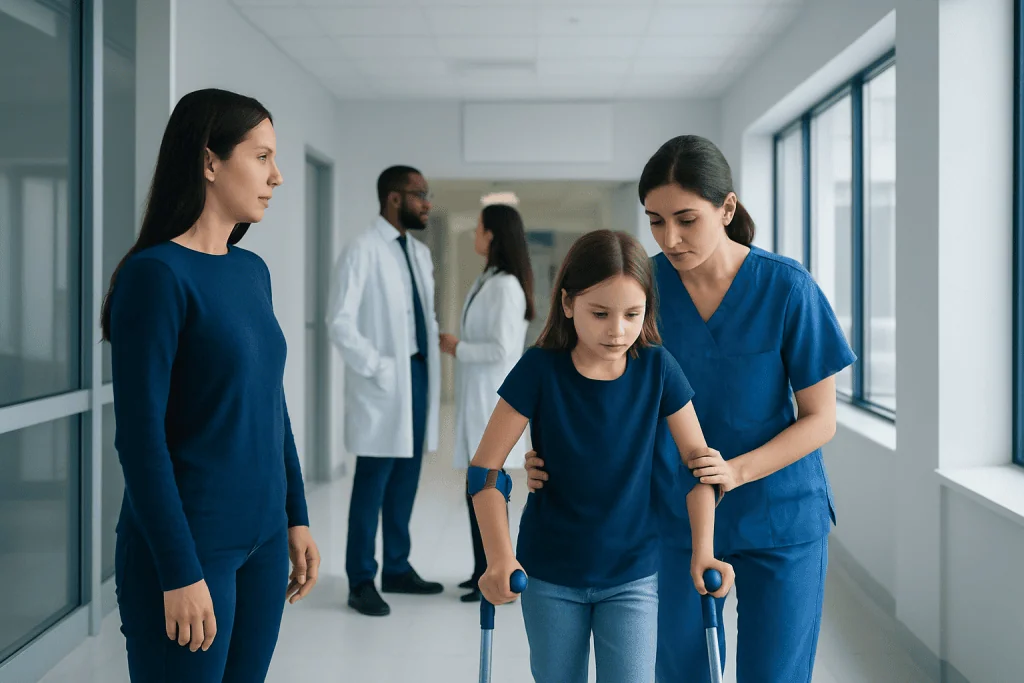
A different walking pattern can be a normal developmental variation or a sign of an orthopedic, neurological, muscular, or developmental condition. A pediatric gait study measures movement, muscle activity, forces, and energy use to help guide an individualized treatment plan.
Key Takeaways
- A different walking pattern can be a normal developmental variation or a sign of an orthopedic, neurological, muscular, or developmental condition.
- A pediatric gait study measures movement, muscle activity, forces, and energy use to help guide an individualized treatment plan.
- Many children benefit from monitoring, physiotherapy, and supportive devices; surgery is considered only for carefully selected problems.
- New limping, pain, loss of walking skills, weakness, fever, or refusal to bear weight needs prompt medical assessment.
- Treatment goals usually focus on comfort, safety, function, participation, and long-term joint health rather than making gait look a particular way.
Pediatric gait treatment begins with understanding why a child walks differently, using a clinical examination and, when needed, a detailed gait study. Care may include observation, physiotherapy, orthoses, medication for selected conditions, or surgery when a structural or neurological problem requires it.
Pediatric gait treatment: how it works
Pediatric gait treatment is an individualized approach to assessing and managing differences in how a child stands, walks, runs, or balances. It starts by identifying the reason for the gait pattern rather than treating the appearance of walking alone. Depending on the findings, care may range from reassurance and follow-up to physiotherapy, braces or shoe inserts, medicines for selected disorders, or orthopedic and neurosurgical procedures.
Children’s walking changes rapidly as they grow. Some patterns, including early in-toeing, mild bowing of the legs, or occasional toe walking, may be developmental and improve naturally. Other patterns may be related to muscle tightness, hip or foot alignment, joint problems, nerve or muscle disorders, injury, or conditions affecting movement control, including cerebral palsy.
The central goals are practical: helping the child move comfortably and safely, reduce falls or pain, conserve energy, protect joints where possible, and participate in school, play, and family activities. A gait difference does not always require treatment, but a structured assessment can clarify whether support is likely to help.
Who may benefit from pediatric gait assessment and treatment?
A child may be referred for gait assessment when walking is persistently uneven, painful, inefficient, or limiting daily activities. Referral can also be useful when parents or caregivers notice frequent falls, toe walking that continues beyond the early walking years, one-sided walking differences, marked in-toeing or out-toeing, knee hyperextension, a crouched posture, or difficulty keeping up with peers.
Children with known conditions affecting bones, muscles, nerves, or brain development may benefit from periodic review. Examples include cerebral palsy, developmental hip dysplasia, clubfoot, leg-length difference, spina bifida, muscular disorders, and recovery after fractures or surgery. Assessment is also useful when treatment decisions are complex, such as deciding whether therapy alone is appropriate or whether surgery may improve function.
Not every child with an unusual gait needs a laboratory gait study. A pediatrician or pediatric orthopedic specialist may first use history-taking and examination to decide whether observation, imaging, physiotherapy assessment, or a more detailed multidisciplinary evaluation is appropriate. The child’s age, development, symptoms, family history, and functional goals all guide candidacy.
How a pediatric gait study is performed
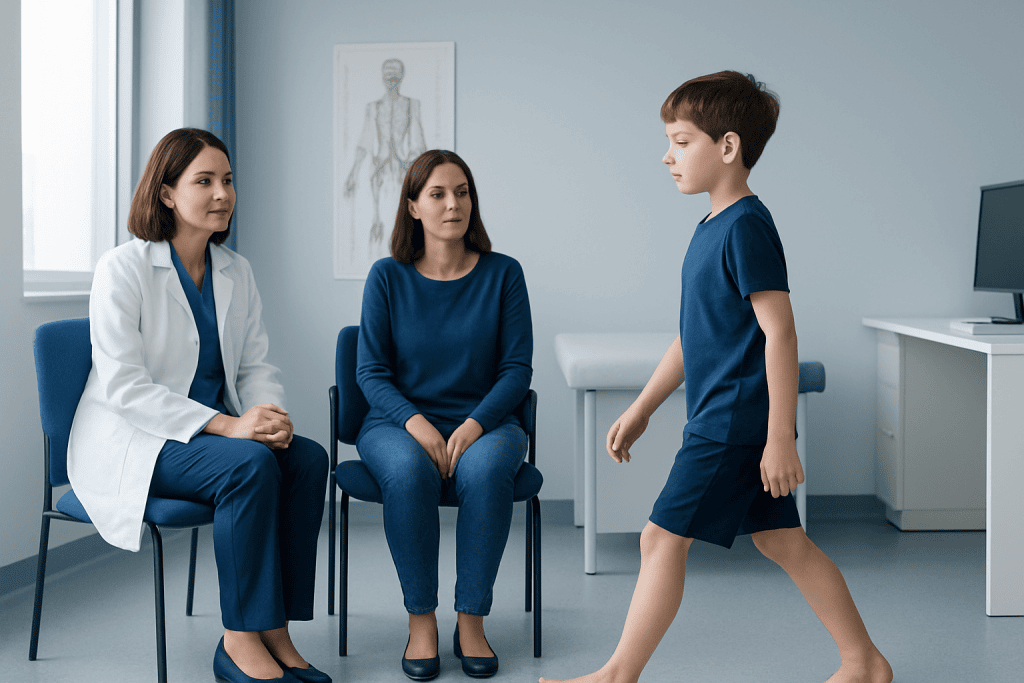
A gait study, also called instrumented gait analysis or a motion analysis study, provides objective information about walking. It is typically performed by a team that may include pediatric rehabilitation physicians, orthopedic surgeons, physiotherapists, orthotists, engineers, and sometimes neurologists. The child usually wears comfortable clothing and walks barefoot or in usual footwear, depending on the question being assessed.
First, the team discusses the child’s medical history, mobility, pain, falls, prior treatments, footwear, and family goals. A physical examination may measure joint range of motion, muscle strength, muscle tone, limb alignment, balance, and leg length. Video recording may document walking from several angles.
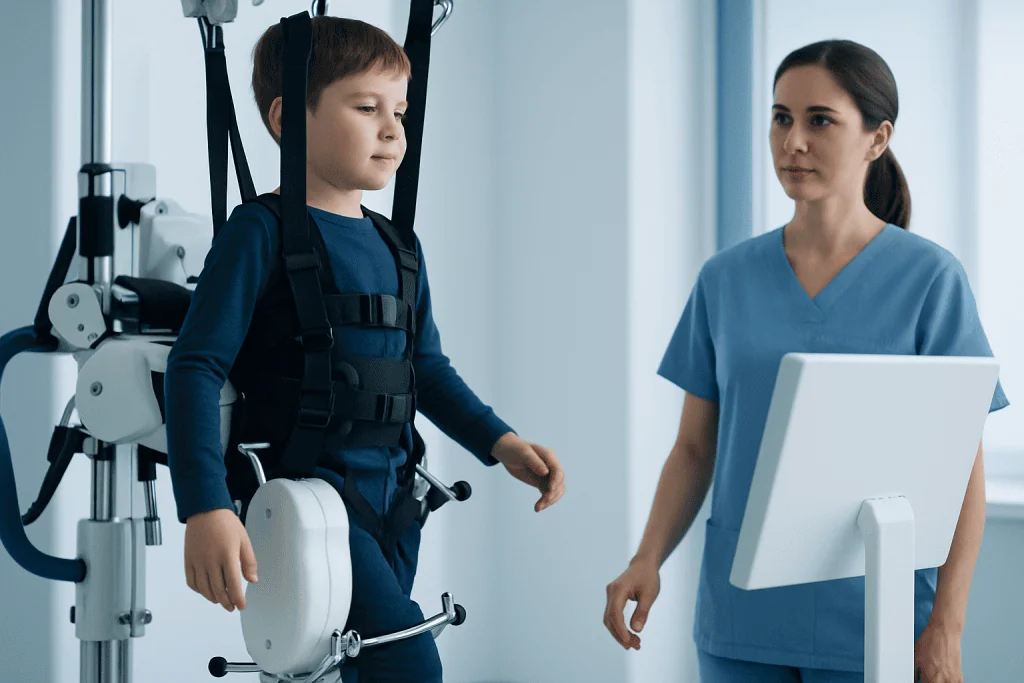
For a three-dimensional study, small reflective markers are placed on the skin at specific body landmarks. Cameras track these markers while the child walks along a walkway. Force plates in the floor measure how forces pass through the feet, and surface electromyography may record the timing of selected muscle activity. Some laboratories also assess oxygen use or energy expenditure during walking.
The recorded data are analyzed alongside the examination findings. The final report helps the clinical team understand whether a gait pattern is driven mainly by weakness, spasticity, poor motor control, bone rotation, joint contracture, pain, or a combination of factors. The results should always be interpreted in the context of the individual child, not as a stand-alone diagnosis.
How long does a gait study take?
A pediatric gait study commonly takes about two to three hours from arrival to completion, although the exact duration varies by the child’s age, ability to cooperate, number of tests needed, and whether the visit includes a full medical consultation. The active walking portion is usually shorter, with time also needed for preparation, placing markers or sensors, resting, and repeating trials.
Young children, children who fatigue easily, or children with sensory needs may need a slower pace and breaks. Families can often help by bringing comfortable shorts, familiar shoes if requested, water, snacks, and a favorite calming item. Staff may use play, encouragement, and practice walks to make the assessment easier.
Results are not always available immediately because motion, force, and muscle-activity data require review and interpretation. The team generally discusses the findings at a follow-up appointment or multidisciplinary meeting, then explains whether they support continued conservative care, changes to therapy or orthoses, or consideration of another treatment option.
What are the 8 stages of gait?
The gait cycle describes the movements from one heel contact of a foot to the next heel contact of the same foot. Clinicians commonly describe eight phases: initial contact, loading response, mid-stance, terminal stance, pre-swing, initial swing, mid-swing, and terminal swing. Together, these phases include the time the foot is on the ground, called stance, and the time it moves through the air, called swing.
Initial contact occurs when the foot first reaches the ground. Loading response transfers body weight onto that leg, while mid-stance and terminal stance support the body as it moves forward over the foot. Pre-swing is the transition as the foot prepares to leave the ground. Initial swing, mid-swing, and terminal swing bring the leg forward and position the foot for the next step.
In children, these phases may differ from adult patterns because gait matures with growth, body proportions, coordination, and walking experience. A gait assessment considers timing, joint angles, symmetry, foot contact, muscle activation, and overall function. It does not judge a child against a single “perfect” style of walking.
Treatment options, expected benefits, and possible risks
Pediatric gait treatment is based on the cause and the child’s priorities. For a developmental pattern that is painless and not limiting function, the best plan may be observation with scheduled review. Physiotherapy may help improve strength, balance, coordination, flexibility, endurance, and confidence in movement. Occupational therapy can support daily activities, while an orthotist may recommend ankle-foot orthoses, shoe modifications, or other devices when they improve stability or foot position.
For certain neurological movement patterns, clinicians may consider targeted medication or injections to manage problematic muscle overactivity, always alongside rehabilitation. If a fixed bone or joint deformity, severe contracture, hip problem, or other structural issue substantially affects function or comfort, surgery may be discussed. Preoperative gait analysis can be especially valuable when several joints or muscles contribute to the walking pattern.
Potential benefits include less pain, fewer falls, improved walking efficiency, better brace tolerance, safer mobility, and improved participation. Benefits vary, and no treatment can promise a particular walking pattern. Therapy and bracing can cause temporary fatigue, skin pressure, or discomfort if not adjusted properly. Procedures carry risks such as infection, bleeding, pain, stiffness, blood clots, anesthesia-related complications, overcorrection or undercorrection, and the need for further treatment.
A multidisciplinary plan helps balance expected benefit against burden and risk. For international patients, Acibadem International’s multidisciplinary specialists and JCI-accredited hospitals can assess and treat pediatric gait concerns with coordinated orthopedic, rehabilitation, neurological, and therapy input.
Recovery timeline and supporting a child at home
Recovery depends greatly on the treatment used. After a diagnostic gait study, children can usually return to normal activities the same day. After starting physiotherapy or receiving an orthosis, adjustment may take several weeks, with progress usually assessed over time rather than after a few sessions. Families should follow the clinician’s guidance on exercises, brace wear, footwear, activity levels, and follow-up visits.
Recovery after surgery is more variable. A child may need pain management, casts or braces, mobility aids, physiotherapy, and temporary changes to school or sports participation. Rehabilitation often continues for months because muscles, coordination, and confidence need time to adapt to altered alignment or length. The surgical team provides an individualized plan and explains expected milestones.
At home, caregivers can support treatment by encouraging prescribed exercises without forcing painful movements, noting changes in falls or endurance, checking skin under braces, and sharing concerns early. Keeping a simple record of pain, activity tolerance, and functional changes can help the care team judge whether the plan is meeting the child’s real-life needs.
When to seek medical care
Arrange a medical review if a child has a persistent gait difference, repeatedly trips or falls, avoids walking or playing, complains of leg, hip, knee, or foot pain, or has a walking pattern that is becoming more noticeable. Parents should also seek advice if a child walks on the toes most of the time, has a clear difference between the two sides, or does not meet expected movement milestones.
Prompt assessment is important for sudden limping, refusal to bear weight, severe pain, swelling, fever, a recent significant injury, new weakness, loss of previously acquired walking ability, or changes in bladder or bowel control. These symptoms can have different causes, and a clinician can determine the appropriate next step.
A pediatrician can coordinate initial assessment and referral. Depending on the concern, the child may see a pediatric orthopedic specialist, pediatric neurologist, rehabilitation physician, physiotherapist, or other professionals. Early evaluation is not about assuming a serious problem; it is a way to understand the child’s needs and provide appropriate reassurance or care.
Frequently asked questions
What are some signs of an abnormal gait in a toddler?
Possible signs include persistent limping, frequent falls beyond what is expected for the child’s developmental stage, consistent toe walking, marked in-toeing or out-toeing, or a clear difference between the two legs. Pain, refusal to walk, loss of a skill the child previously had, or a sudden change in walking should be assessed promptly. Many gait variations are temporary, but an examination can determine whether monitoring or treatment is needed.
What are the normal scores for the functional gait assessment?
The Functional Gait Assessment is primarily validated for adults and is not generally used as a standard normal-score test for toddlers or young children. It has 10 items scored from 0 to 3, for a maximum of 30 points; higher scores indicate better performance on the tested tasks. Pediatric clinicians usually select age-appropriate tools and interpret any score in relation to the child’s age, diagnosis, development, and safety.
Is gait analysis painful for children?
A standard gait study is noninvasive and should not be painful. Reflective markers and surface electrodes are placed on the skin, and the child is asked to walk several times. A child may become tired or shy, but breaks and child-friendly support can be provided.
Does toe walking always need treatment?
No. Toe walking can occur while children are learning to walk and may resolve without treatment. Persistent toe walking, tight calf muscles, falls, pain, asymmetry, developmental concerns, or difficulty placing the heels down are reasons to discuss it with a clinician.
Can physiotherapy improve an abnormal gait?
Physiotherapy can help many children by improving strength, balance, joint movement, coordination, endurance, and confidence. Its effect depends on the underlying reason for the gait pattern and the child’s individual needs. A therapist sets functional goals and adjusts the program as the child grows.
Will a child need surgery for an abnormal gait?
Most children with gait differences do not automatically need surgery. Surgery is usually considered only when a structural problem, fixed tightness, pain, or functional limitation is substantial and less invasive options are unlikely to be sufficient. Careful assessment, sometimes including gait analysis, helps the team and family make an informed decision.
References
- American Academy of Pediatrics
- American Academy of Orthopaedic Surgeons
- American Academy for Cerebral Palsy and Developmental Medicine
- National Institute of Neurological Disorders and Stroke
- World Health Organization
This article is for general information only and is not a substitute for professional medical advice. Please consult a qualified doctor about your individual situation.
Joint and spine care in Turkey — expert assessment & treatment
JCI-accredited · board-certified surgeons · reply within 24h
Add us as a Preferred Source to see more of our trusted health content across Google Search, AI Overviews and Discover.