Pediatric Lipid Screening: How It Works, Results and What to Expect

A lipid panel measures total cholesterol, LDL cholesterol, HDL cholesterol and triglycerides; some reports also include non-HDL cholesterol. Most children should have at least one cholesterol screening between ages 9 and 11 and again between 17 and 21, with earlier testing for certain risk factors.
Key Takeaways
- A lipid panel measures total cholesterol, LDL cholesterol, HDL cholesterol and triglycerides; some reports also include non-HDL cholesterol.
- Most children should have at least one cholesterol screening between ages 9 and 11 and again between 17 and 21, with earlier testing for certain risk factors.
- A nonfasting blood sample is often suitable for initial screening, while an abnormal result may need confirmation with a fasting panel.
- One abnormal result does not establish a diagnosis; clinicians consider age, family history, health conditions, medicines and repeat testing.
- Healthy eating patterns, regular activity and treatment of underlying conditions can improve many lipid abnormalities in children.
Pediatric lipid screening is a simple blood test that measures cholesterol-related fats in a child’s blood. It helps clinicians identify inherited or acquired lipid abnormalities early, so families can understand cardiovascular risk and discuss appropriate next steps.
Overview: how pediatric lipid screening works
Pediatric lipid screening is a blood test used to measure fats and fat-carrying particles in a child’s bloodstream, including cholesterol and triglycerides. These measurements help a clinician assess whether a child may have a higher long-term risk of cardiovascular disease or an inherited lipid disorder. The test is usually performed during routine preventive care or earlier when a child has relevant risk factors.
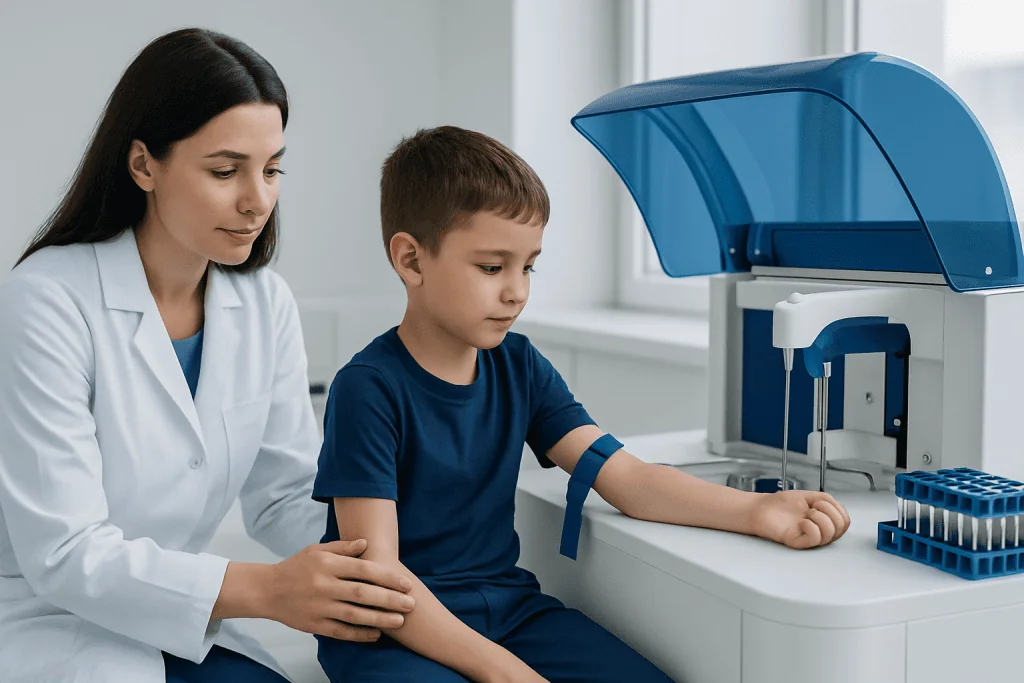
The procedure is brief. A trained professional collects a small blood sample from a vein, usually in the arm, and sends it to a laboratory. Initial screening can often be done without fasting, although a clinician may request a fasting lipid panel to clarify an elevated triglyceride level or confirm an abnormal result.
Screening is not a diagnosis of heart disease, and an out-of-range result is not usually an emergency. It is a starting point for a careful review of the child’s overall health, family history and possible causes. When needed, pediatric care may involve nutrition, endocrinology and cardiology specialists.
What does a lipid panel test for in kids?
A pediatric lipid panel commonly reports total cholesterol, low-density lipoprotein (LDL) cholesterol, high-density lipoprotein (HDL) cholesterol and triglycerides. LDL is often called “bad” cholesterol because higher levels can contribute to cholesterol buildup in arteries over time. HDL is commonly called “good” cholesterol because it helps transport cholesterol away from the bloodstream for processing by the body.
The report may also show non-HDL cholesterol, calculated by subtracting HDL cholesterol from total cholesterol. Non-HDL cholesterol reflects several cholesterol-containing particles that may contribute to cardiovascular risk and is particularly useful when a sample was not collected after fasting.
Results are interpreted using pediatric reference ranges rather than adult targets. A clinician considers the full pattern, not one number alone, alongside the child’s age, puberty stage, diet, activity, body size, medical history and family history of early cardiovascular disease or high cholesterol.
- Total cholesterol: the overall amount of cholesterol in the blood.
- LDL cholesterol: a key marker for identifying elevated atherosclerotic risk.
- HDL cholesterol: lower levels may be associated with higher cardiovascular risk.
- Triglycerides: fats that can rise after meals and may be influenced by diet, insulin resistance and some health conditions.
Who should have pediatric lipid screening?

Many professional organizations recommend universal lipid screening once between ages 9 and 11 years and again between ages 17 and 21 years. These age ranges help identify children with high cholesterol who may not have obvious symptoms or a known family history. Screening during these periods can also avoid some of the normal lipid changes that occur during puberty.
Selective screening may be recommended earlier, sometimes from age 2, for children with a parent or close relative who has markedly high cholesterol, early cardiovascular disease, a known inherited lipid condition, or a history that is unavailable. Earlier or more frequent testing may also be appropriate for children with obesity, high blood pressure, diabetes, kidney disease, liver disease, hypothyroidism, chronic inflammatory conditions or certain medications.
A clinician may also recommend screening after finding physical signs that are uncommon but can occur with severe inherited lipid disorders, such as cholesterol deposits in the skin or around tendons. The decision is individualized, and parents or caregivers can ask whether a lipid test is appropriate at a routine pediatric visit.
Step by step: preparing for the test, blood draw and recovery
Before the appointment, the parent or caregiver should ask whether fasting is needed. For nonfasting screening, the child can generally eat and drink normally. For a fasting test, the care team will provide instructions about avoiding food for a specified period beforehand; water is usually allowed. Families should also tell the clinician about medicines, supplements, recent illness and relevant family history.
During the procedure, the child sits or lies comfortably while the skin is cleaned. A small needle is used to collect blood into one or more tubes. The draw usually takes only a few minutes. Younger children may benefit from calm reassurance, distraction with a toy or video, and clear age-appropriate explanations of what they will feel.
Afterward, gentle pressure and a small bandage are applied. Most children return to school, play and usual activities immediately. Mild soreness or a small bruise at the puncture site can occur and typically resolves within a few days. Drinking fluids and having a meal after a fasting test may help the child feel more comfortable.
The benefits of screening are early identification of treatable lipid problems and an opportunity to support heart-healthy habits as a family. Risks from the blood draw are minor and include temporary pain, bruising, light-headedness or, rarely, infection at the puncture site.
How long does it take to get results back from a lipid panel?
Many laboratories report lipid panel results within one to several business days, although timing depends on the laboratory, the healthcare setting and whether additional tests are needed. Some practices release results through a patient portal, while others contact families directly or discuss them at a follow-up visit.
If a value is outside the expected pediatric range, the clinician may recommend repeating the panel, often after fasting, rather than making decisions from a single test. Lipid values can be affected by recent illness, nonfasting status, changes in diet and normal biological variation.
Families should review the results with the child’s clinician instead of comparing them with adult laboratory ranges alone. The clinician can explain whether the result is acceptable, borderline or high for the child’s age and whether any follow-up is needed.
What are the AAP guidelines for pediatric lipid screening?
The American Academy of Pediatrics supports lipid screening as part of preventive child health care and aligns with widely used pediatric cardiovascular guidance recommending universal screening once between ages 9 and 11 years and once between ages 17 and 21 years. A nonfasting non-HDL cholesterol measurement can be used for routine initial screening, making testing more convenient for many families.
Risk-based screening is advised for younger children and for those with factors that raise the likelihood of dyslipidemia. These include a family history of early cardiovascular disease or high cholesterol, diabetes, obesity, hypertension, tobacco exposure, kidney disease, chronic inflammatory disorders and conditions associated with altered metabolism.
When screening identifies an abnormal value, clinicians usually confirm or further evaluate it with a complete fasting lipid panel and assess possible secondary causes. Management often begins with nutrition, activity and treatment of contributing health conditions. Children with markedly elevated LDL cholesterol or suspected inherited disorders may need referral for specialized evaluation, including assessment for familial hypercholesterolemia.
What are the normal values for a pediatric lipid panel?
Pediatric lipid values are classified by age-specific guidelines. For children and adolescents, total cholesterol below 170 mg/dL is generally considered acceptable, 170 to 199 mg/dL borderline, and 200 mg/dL or higher high. LDL cholesterol below 110 mg/dL is generally acceptable, 110 to 129 mg/dL borderline, and 130 mg/dL or higher high.
For non-HDL cholesterol, a value below 120 mg/dL is generally acceptable, 120 to 144 mg/dL is borderline, and 145 mg/dL or higher is high. HDL cholesterol of 45 mg/dL or higher is generally desirable, while a value below 40 mg/dL is considered low. Triglyceride interpretation differs by age: for ages 0 to 9 years, below 75 mg/dL is generally acceptable; for ages 10 to 19 years, below 90 mg/dL is generally acceptable.
These ranges are guides rather than a substitute for clinical interpretation. A child with values near a cutoff may simply need follow-up testing and supportive lifestyle guidance, while a child with significantly elevated values may need evaluation for genetic, endocrine, liver, kidney or metabolic causes. A pediatrician can explain the meaning of the individual report and the appropriate follow-up interval.
Follow-up, healthy habits and when to seek medical care
When lipid levels are mildly or moderately abnormal, clinicians commonly recommend family-centered changes rather than restrictive dieting. Helpful habits include regular meals based on vegetables, fruits, whole grains, beans, lean protein sources and unsaturated fats; reducing highly processed foods and sugar-sweetened drinks; and encouraging enjoyable age-appropriate physical activity. These steps support overall health regardless of the lipid result.
Follow-up testing may be scheduled after a period of lifestyle support or after treatment of a contributing condition, such as hypothyroidism or diabetes. Medication is not needed for most children with an abnormal screening result, but may be considered by specialists for selected children with persistent, substantial LDL elevation or an inherited lipid disorder. Pediatric cardiology care can help coordinate assessment when cardiovascular risk is complex.
Parents or caregivers should contact the child’s clinician to discuss an abnormal lipid result, especially if there is a strong family history of very high cholesterol or heart attack, stroke or other vascular disease at a young age. Prompt medical advice is also appropriate if the child has diabetes, kidney or liver disease, or is taking a medicine that may affect lipid levels. Lipid abnormalities themselves usually do not cause immediate symptoms, so routine follow-up is important.
Acibadem International’s multidisciplinary specialists and JCI-accredited hospitals can assess pediatric lipid concerns and coordinate care for international patients when specialized evaluation is appropriate.
Frequently asked questions
Does a child need to fast before a lipid panel?
Not always. A nonfasting lipid test is often appropriate for routine pediatric screening, particularly when non-HDL cholesterol is being assessed. A clinician may request a fasting panel if triglycerides are elevated, results are abnormal or more detailed confirmation is needed.
What happens if a child has high cholesterol?
The clinician will review the result in context and may repeat the test to confirm it. They may ask about family history, eating patterns, activity, medical conditions and medicines, and may check for contributing causes. Many children begin with family-based lifestyle support, while some need specialist assessment.
Can high cholesterol in children be inherited?
Yes. Familial hypercholesterolemia is an inherited condition that can cause very high LDL cholesterol from childhood. Identifying it early allows the family to receive counseling, assess relatives where appropriate and discuss monitoring or treatment options with a qualified clinician.
Are lipid panel reference ranges the same for adults and children?
No. Children’s lipid results should be interpreted using pediatric guideline ranges, which differ from adult ranges and may vary by age for triglycerides. A pediatric clinician should interpret the report rather than relying only on the laboratory’s general reference interval.
How often should children have cholesterol screening?
Universal screening is commonly recommended once between ages 9 and 11 and once between ages 17 and 21. Children with certain health conditions, a significant family history or previously abnormal results may need testing sooner or more often. The child’s clinician can recommend an individual schedule.
Can diet and exercise improve a child’s lipid levels?
For many children, consistent family habits such as balanced meals, fewer sugar-sweetened beverages and regular physical activity can improve lipid patterns and overall cardiometabolic health. The approach should support growth and development rather than focus on restrictive dieting. A pediatrician or registered dietitian can provide individualized guidance when needed.
References
- American Academy of Pediatrics
- National Heart, Lung, and Blood Institute
- American Heart Association
- Centers for Disease Control and Prevention
This article is for general information only and is not a substitute for professional medical advice. Please consult a qualified doctor about your individual situation.
Heart care in Turkey — expert evaluation and treatment
JCI-accredited · board-certified surgeons · reply within 24h
Add us as a Preferred Source to see more of our trusted health content across Google Search, AI Overviews and Discover.
Check your numbers in seconds
BMI, calories, due date, blood pressure and 30+ more clinical calculators — free, instant, doctor-reviewed ranges.