Peeling Newborn: What Patients Need to Know

Peeling skin in a newborn is often normal and usually settles on its own. Post-term babies and babies exposed to dry air may peel more noticeably.
Key Takeaways
- Peeling skin in a newborn is often normal and usually settles on its own.
- Post-term babies and babies exposed to dry air may peel more noticeably.
- Gentle bathing, fragrance-free moisturizers, and avoiding harsh products can help protect the skin barrier.
- Redness, oozing, fever, poor feeding, or widespread rash are reasons to seek medical care.
- Not all peeling is simple dryness; eczema, infections, or rare skin conditions may need treatment.
Peeling newborn skin is common and is usually a normal adjustment after birth, especially in the first one to three weeks of life. Most babies improve with gentle skin care, but persistent peeling or signs of irritation, rash, or infection should be assessed by a doctor.
Overview: Is peeling newborn skin normal?
Peeling newborn skin is usually normal. Many babies shed the outer layer of skin during the first days or weeks after birth as their skin adapts from a fluid-filled womb environment to the outside world. This type of peeling often appears on the hands, feet, ankles, or abdomen and tends to improve without special treatment.
Newborn skin is thinner and more delicate than adult skin. After delivery, the outer skin barrier continues maturing, so some dryness and flaking can happen even in healthy babies. Babies born after their due date may have more noticeable peeling because they may have less of the white protective coating called vernix on the skin at birth.
Although peeling is commonly harmless, not every case is the same. Doctors look at the baby’s age, whether the skin is simply dry or also red and inflamed, and whether there are other symptoms such as rash, blisters, fever, or poor feeding. These details help distinguish normal newborn shedding from conditions that may need care.
What peeling newborn skin looks like

Normal peeling usually looks like fine flakes or thin sheets of dry skin coming away from the surface. It often affects the hands, feet, wrists, and ankles first, but mild peeling can appear on other parts of the body as well. The baby is otherwise well, comfortable, and feeding normally.
The skin underneath may look healthy and soft, without marked redness, swelling, or discharge. In many babies, peeling is most noticeable after a bath or when the skin is rubbed by clothing or blankets. The process is generally temporary and gradually lessens as the skin barrier becomes stronger.
Parents and caregivers may notice other harmless newborn skin changes at the same time, such as tiny white bumps, mild newborn acne, or brief color changes in the hands and feet. These are separate from peeling but can make the skin seem more concerning than it is. If there is uncertainty, a pediatrician or a skin specialist can help tell normal changes from eczema or other skin conditions.
Why a newborn's skin peels
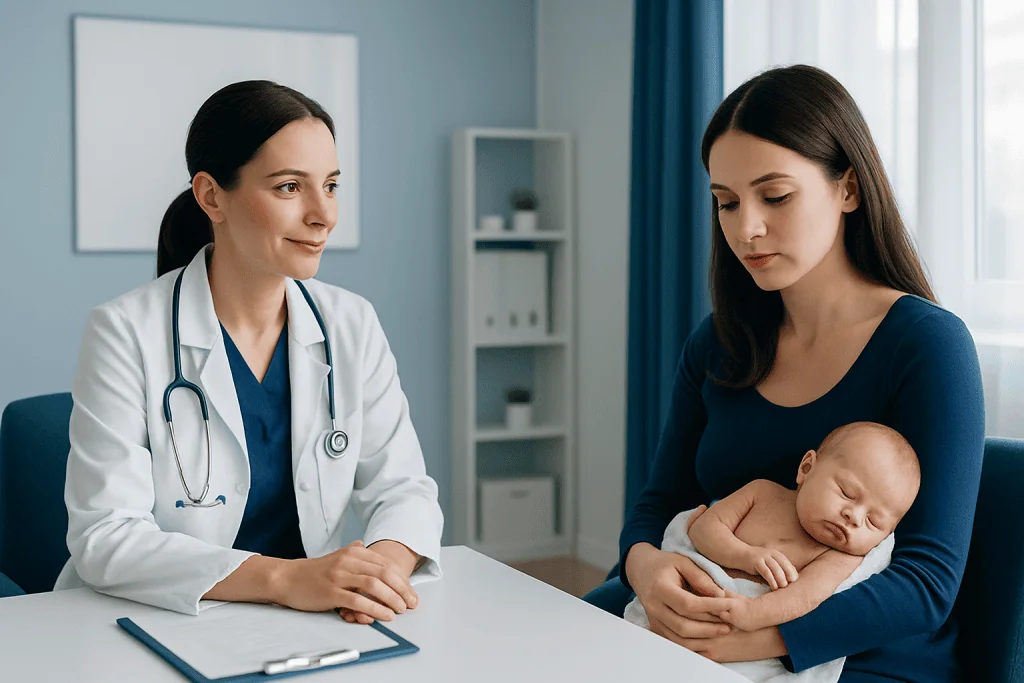
The most common reason is simple adjustment after birth. In the womb, the baby’s skin is protected by amniotic fluid and vernix. After delivery, that protection changes suddenly, and the outermost skin cells begin to dry and shed. This is especially common in babies born at or after full term.
Several factors can make peeling more noticeable. Dry indoor air, frequent bathing, hot water, fragranced soaps, and rough fabrics can all remove natural oils from the skin. Babies who were overdue may peel more because they often have less vernix remaining on the skin.
Sometimes peeling is linked to a skin condition rather than normal newborn shedding. Examples include irritation from soaps or wipes, atopic dermatitis, seborrheic dermatitis, fungal infection in skin folds, or less commonly inherited disorders that affect the skin barrier. When peeling is persistent, widespread, or associated with inflamed skin, doctors consider these possibilities carefully.
How doctors tell normal peeling from a problem
Diagnosis usually starts with a careful physical examination and a detailed history. A doctor will ask when the peeling began, whether the baby was born early or late, what skin products are used, and whether there are symptoms such as itching, fussiness, blisters, fever, or poor feeding. In many cases, the appearance alone is enough to confirm that the peeling is a normal newborn change.
Doctors pay attention to warning signs that suggest something beyond simple dryness. These include bright redness, cracks that bleed, honey-colored crusting, blisters, swelling, warmth, or peeling around the mouth and diaper area. If the baby seems unwell, has trouble feeding, or has a widespread rash, evaluation should not be delayed.
Most babies do not need tests. If the doctor suspects infection, allergy, or an uncommon skin disorder, further assessment may be arranged with a pediatrician or dermatologist. In some cases, a child may benefit from a specialist dermatology evaluation to guide skin care and treatment choices.
Safe treatment and skin care at home
For typical peeling newborn skin, treatment is usually gentle supportive care rather than medication. Brief baths in lukewarm water, not hot water, can help keep the skin clean without over-drying it. Fragrance-free cleansers should be used sparingly, and many babies do well with plain water on most days.
After bathing, the skin should be patted dry rather than rubbed. A simple fragrance-free emollient can then be applied to help lock in moisture. Thick creams or ointments are often better than perfumed lotions because they support the skin barrier more effectively. If irritation develops, a doctor may recommend a more structured pediatric dermatology plan.
It is best not to pull off peeling skin. This can irritate the underlying surface and increase the risk of soreness or infection. Caregivers should also avoid harsh soaps, alcohol-based products, heavily fragranced wipes, and overheating the baby with too many layers, since these can worsen dryness.
- Choose soft cotton clothing and bedding.
- Use fragrance-free detergent when possible.
- Keep baths short and infrequent if the skin is very dry.
- Apply moisturizer soon after bathing.
- Consult a doctor before using medicated creams on a newborn.
When peeling may be linked to another condition
Not all skin peeling in a newborn is just transitional shedding. If the skin is very red, itchy, cracked, or oozing, doctors may think about eczema, contact irritation, or less commonly an infection. In diaper or neck folds, yeast can cause redness and scaling rather than simple dryness. Around the scalp and eyebrows, greasy yellow flakes may point toward seborrheic dermatitis.
In rare situations, peeling can be part of a more serious illness or a genetic skin disorder. Babies with these conditions may have widespread redness, blisters, thickened skin, poor temperature control, or feeding difficulties. These cases need prompt medical evaluation and individualized treatment.
If another condition is suspected, treatment depends on the cause. Supportive skin care may still be important, but some babies need prescription creams, infection treatment, or specialist assessment. Where the skin findings are part of a broader pediatric concern, coordinated pediatric care can help ensure the baby is evaluated as a whole.
When to seek medical care
Medical care is recommended if peeling lasts longer than a few weeks without improvement, becomes widespread, or is accompanied by significant redness or rash. Parents and caregivers should also seek assessment if the baby appears uncomfortable, very itchy, or develops cracks, bleeding, or oozing skin.
Urgent evaluation is important if there are signs of infection or illness, such as fever, poor feeding, unusual sleepiness, blisters, swelling, pus, or a bad smell from the skin. Peeling with mouth sores, peeling around the eyes, or rapid worsening also deserves prompt attention. Newborns can become unwell quickly, so a cautious approach is appropriate.
Families who are unsure whether peeling is normal should feel comfortable asking their doctor. Reassurance is often all that is needed, but an examination can help rule out treatable causes and guide safe skin care. Acibadem International’s multidisciplinary specialists and JCI-accredited hospitals also diagnose and treat newborn and pediatric skin concerns for international patients when further assessment is needed.
Frequently asked questions
How long does peeling newborn skin usually last?
In many babies, peeling is most noticeable in the first few days after birth and improves over one to three weeks. Some babies, especially those born after their due date, may peel a little longer. If it continues without improvement or is associated with redness or rash, a doctor should review it.
Should moisturizer be used on a peeling newborn?
A simple fragrance-free moisturizer is often helpful if the skin looks dry. Thick creams or ointments are usually preferred over scented lotions because they are less irritating and support the skin barrier better. Any medicated cream should only be used if a doctor recommends it.
Is it normal for a newborn's hands and feet to peel the most?
Yes. The hands, feet, ankles, and wrists are common places for normal newborn peeling to show first. If the skin underneath looks healthy and the baby is otherwise well, this is often part of normal adaptation after birth.
Can frequent bathing make newborn peeling worse?
Yes, it can. Frequent baths, hot water, and strong soaps may strip natural oils from a baby's skin and increase dryness. Short baths with lukewarm water and gentle fragrance-free cleansers are usually better.
How can a parent tell the difference between normal peeling and eczema?
Normal peeling is usually mild, temporary, and not very inflamed. Eczema is more likely to cause persistent dryness with redness, rough patches, and irritation, and it may affect the cheeks or skin folds. A doctor can confirm the cause if the appearance is unclear.
When is peeling newborn skin an emergency?
Emergency assessment is needed if peeling comes with fever, blisters, widespread redness, swelling, pus, poor feeding, or unusual sleepiness. These signs can suggest infection or another medical problem rather than simple dryness. Newborns should be evaluated promptly when they seem unwell.
This article is for general information only and is not a substitute for professional medical advice. Please consult a qualified doctor about your individual situation.
Explore treatments in Turkey — costs, top hospitals & a free quote
JCI-accredited · board-certified surgeons · reply within 24h
Add us as a Preferred Source to see more of our trusted health content across Google Search, AI Overviews and Discover.
Check your numbers in seconds
BMI, calories, due date, blood pressure and 30+ more clinical calculators — free, instant, doctor-reviewed ranges.

More from the Health Library

Sleep Deprivation — Explained by Medical Evidence, Not Myths

Beans: An Evidence-Based Guide for Patients

Apnea Hypopnea Index: A Complete Medical Overview

Fluocinonide: What Patients Need to Know

Hand Is Dry and Cracked: An Evidence-Based Guide for Patients