

Peptic Ulcer Disease Treatments: Diagnosis, Outlook, and Modern Treatment Approaches

Most peptic ulcers can be treated effectively once the underlying cause is identified. Common treatments include proton pump inhibitors, H. pylori eradication therapy, and stopping or changing ulcer-triggering medicines when medically appropriate.
Key Takeaways
- Most peptic ulcers can be treated effectively once the underlying cause is identified.
- Common treatments include proton pump inhibitors, H. pylori eradication therapy, and stopping or changing ulcer-triggering medicines when medically appropriate.
- Endoscopy and H. pylori testing help guide treatment and identify warning signs such as bleeding.
- Persistent pain, black stools, vomiting blood, fainting, or trouble swallowing need prompt medical evaluation.
- Long-term prevention often includes medication review, smoking cessation, and careful use of pain relievers.
Peptic ulcer disease treatments usually focus on healing the sore, reducing stomach acid, and correcting the cause—most often Helicobacter pylori infection or regular use of nonsteroidal anti-inflammatory drugs. With proper diagnosis and treatment, most ulcers improve well, but follow-up matters to confirm healing and prevent recurrence or complications.
Overview: What peptic ulcer disease treatments involve
Peptic ulcer disease treatments are designed to do three things at the same time: relieve symptoms, allow the ulcer to heal, and address the reason the ulcer formed. In practice, this usually means reducing stomach acid, treating an infection caused by Helicobacter pylori when present, and limiting medicines or habits that can irritate the stomach or upper small intestine.
A peptic ulcer is an open sore that develops in the lining of the stomach or the first part of the small intestine, called the duodenum. Stomach ulcers and duodenal ulcers behave similarly, but doctors may approach testing and follow-up a little differently depending on the location, age, symptoms, and whether there are warning signs such as bleeding or weight loss.
Modern care is not only about symptom control. It also focuses on preventing recurrence and complications such as bleeding, perforation, or blockage. This is why treatment is often tailored after assessment by a gastroenterology specialist, especially if symptoms are severe, recurrent, or unexplained.
How peptic ulcer disease may feel

Symptoms can vary from mild discomfort to more troublesome pain. Many people describe a burning, gnawing, or aching pain in the upper abdomen. It may come and go, occur between meals, wake a person at night, or feel better or worse after eating depending on where the ulcer is located.
Other symptoms may include bloating, nausea, early fullness, belching, reduced appetite, or indigestion-like discomfort. Some people have very few symptoms, and an ulcer is only discovered after a complication such as anemia or bleeding.
Certain symptoms need quicker attention because they may suggest a complication rather than a simple ulcer flare. These include:
- Black, tarry stools
- Vomiting blood or material that looks like coffee grounds
- Sudden severe abdominal pain
- Dizziness, fainting, or marked weakness
- Ongoing vomiting or trouble eating and drinking
- Unintentional weight loss or difficulty swallowing
Why ulcers happen: causes and risk factors
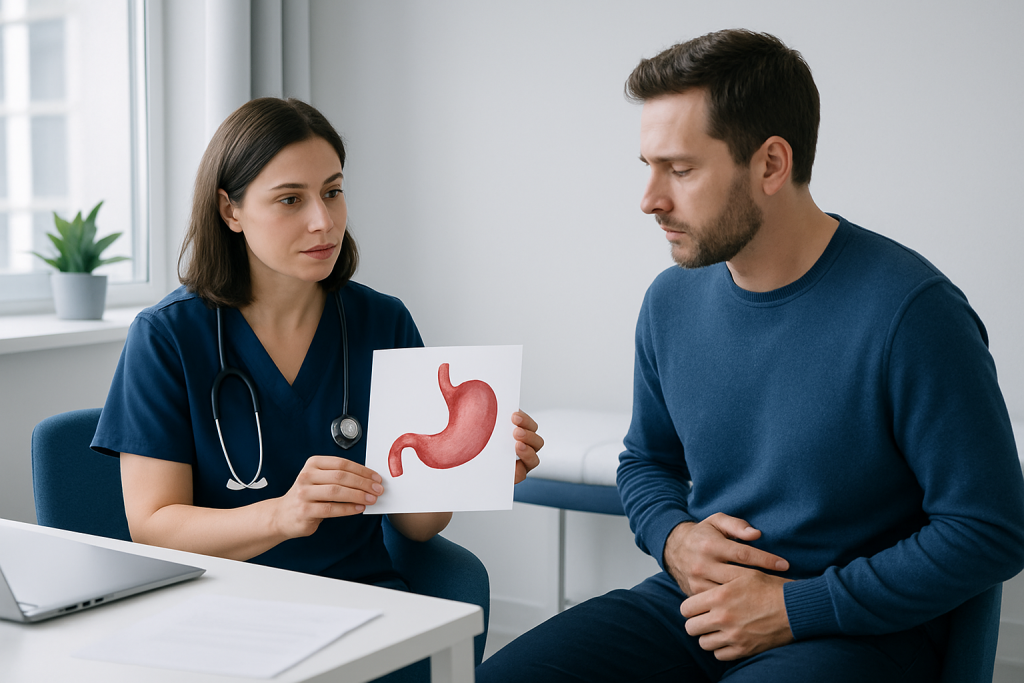
The two most common causes of peptic ulcer disease are H. pylori infection and regular use of nonsteroidal anti-inflammatory drugs, often called NSAIDs. These include medicines such as ibuprofen, naproxen, and some prescription pain relievers. Both can weaken the protective lining of the stomach or duodenum, making it easier for acid and digestive juices to injure the tissue.
Other factors can increase risk or make healing slower. These include smoking, heavy alcohol use, older age, previous ulcers, serious physical stress from major illness, and use of certain medicines such as steroids when combined with NSAIDs or blood thinners. Less commonly, ulcers can be linked to excess acid production from specific medical conditions.
It is helpful to remember that stress and spicy foods do not usually cause ulcers on their own, although they may worsen discomfort in some people. If a person has repeated indigestion or upper abdominal pain, proper evaluation matters because symptoms can overlap with gastritis and other digestive conditions.
How diagnosis guides the right treatment plan
Diagnosis begins with a careful medical history. A doctor will ask about the character of the pain, use of pain relievers, prior ulcers, bleeding symptoms, smoking, and family history. This helps identify risk factors and decide whether urgent testing is needed.
Testing for H. pylori is central because finding and treating this infection can cure many ulcers and reduce the chance of recurrence. Doctors may use a breath test, stool antigen test, or tissue samples taken during endoscopy. Blood tests are less useful for confirming active infection.
Upper endoscopy is often recommended when there are alarm symptoms, recurrent symptoms, older age, or concern for bleeding or another diagnosis. During this procedure, a thin flexible camera is used to examine the esophagus, stomach, and duodenum. Endoscopy can confirm an ulcer, identify active bleeding, take biopsies when appropriate, and sometimes provide treatment at the same time through endoscopy.
Some patients may also need blood tests to check for anemia or signs of infection. In selected cases, imaging may be used if there is concern for perforation or obstruction, but endoscopy remains one of the most informative tests for ulcer evaluation.
Modern treatment approaches for peptic ulcer disease
The core of peptic ulcer disease treatments is acid suppression. Proton pump inhibitors, commonly called PPIs, are often the main medicines used because they lower stomach acid effectively and create a better environment for healing. In some cases, other acid-reducing medicines or protective agents may also be used, depending on symptoms and the ulcer’s cause.
If H. pylori is present, treatment usually includes a combination of antibiotics plus acid suppression for a defined period. The exact regimen depends on local resistance patterns, previous antibiotic exposure, and individual factors such as allergies. Follow-up testing is often recommended after treatment to make sure the infection has truly cleared.
When NSAIDs are the cause, the treatment plan often includes stopping the drug if possible or switching to a safer alternative after discussion with the prescribing doctor. If the medicine cannot be stopped, a protective strategy may be needed to lower future ulcer risk. People should not stop prescribed blood thinners, aspirin, or pain medicines on their own without medical advice.
Complicated ulcers may need additional care. Bleeding ulcers can sometimes be treated during gastroenterology procedures using endoscopic techniques. Rarely, surgery is needed if there is severe bleeding, perforation, or blockage, or if symptoms do not improve with standard care.
Recovery, outlook, and preventing recurrence
Most ulcers heal well when the cause is treated and stomach acid is controlled. Symptom improvement may begin within days, but complete healing usually takes longer. Even if pain improves quickly, it is important to complete the full course of treatment and attend follow-up appointments if they are recommended.
The outlook depends on why the ulcer developed and whether complications are present. Ulcers linked to H. pylori often have an excellent outlook once the infection is eradicated. NSAID-related ulcers can also heal well, but recurrence is more likely if the same medication must be used again without a prevention plan.
Prevention focuses on practical steps. These may include reviewing all over-the-counter and prescription pain relievers, avoiding smoking, limiting alcohol, and discussing safer pain-management options with a doctor. People with repeated indigestion or upper abdominal discomfort may also need evaluation for related conditions such as reflux or other causes of stomach symptoms.
In more complex cases, a multidisciplinary approach can be helpful. Near the end of the care pathway, some patients may be referred for coordinated assessment through general surgery or digestive specialists if complications or diagnostic uncertainty remain. Acibadem International’s multidisciplinary specialists and JCI-accredited hospitals also diagnose and treat peptic ulcer disease for international patients.
Self-care and everyday habits that support healing
Self-care does not replace medical treatment, but it can support healing and reduce irritation. Eating regular meals, avoiding foods that clearly worsen symptoms, and not lying down immediately after eating may help some people feel more comfortable. There is no single ulcer diet, so adjustments are usually based on personal tolerance rather than strict universal rules.
People should use over-the-counter pain medicines carefully. NSAIDs are a common reason ulcers develop or return, so it is wise to read labels and ask a pharmacist or doctor which products contain them. Even medicines taken for headaches, menstrual pain, arthritis, or colds may include ulcer-triggering ingredients.
Smoking cessation is especially important because smoking can impair healing and increase recurrence risk. Limiting alcohol may also help reduce irritation. If a person has chronic digestive symptoms, keeping a symptom and medication diary can make it easier for a doctor to identify patterns and choose the safest treatment plan.
When to seek medical care
Medical review is important if upper abdominal pain lasts more than a few days, keeps returning, or is associated with nausea, bloating, appetite change, or unexplained tiredness. A doctor should also assess anyone who regularly uses NSAIDs and develops indigestion or stomach pain, especially if there is a prior history of ulcers.
Urgent care is needed for signs of possible bleeding or perforation. These include black stools, vomiting blood, fainting, sudden severe abdominal pain, or a rigid, very tender abdomen. Difficulty swallowing, persistent vomiting, unexplained weight loss, and new symptoms in older adults also deserve prompt assessment.
Because ulcer symptoms can overlap with several other digestive conditions, a clear diagnosis is the safest path. Early evaluation can reduce discomfort, prevent complications, and make peptic ulcer disease treatments more targeted and effective.
Frequently asked questions
What are the main peptic ulcer disease treatments?
The main treatments are medicines that reduce stomach acid, treatment for H. pylori infection when present, and stopping or changing ulcer-triggering medicines such as NSAIDs when medically appropriate. Some people also need endoscopy if there is bleeding or if the diagnosis is uncertain.
Can peptic ulcer disease heal completely?
Yes, many ulcers heal completely with the right treatment. Healing is more likely when the underlying cause is addressed, such as eradicating H. pylori or avoiding NSAIDs, and when follow-up advice is carefully followed.
How long does ulcer treatment usually take?
Symptom relief may begin within days, but full healing often takes several weeks. The exact timeline depends on the ulcer's size, location, cause, and whether complications such as bleeding are present.
Do all peptic ulcers need endoscopy?
No, not everyone needs endoscopy immediately. However, it is often recommended when there are alarm symptoms, recurrent symptoms, bleeding, anemia, older age, or concern for another condition.
Are spicy foods the cause of peptic ulcers?
Spicy foods are not usually the main cause of peptic ulcers. Most ulcers are related to H. pylori infection or NSAID use, although certain foods may still irritate symptoms in some people.
Can peptic ulcer disease come back after treatment?
Yes, ulcers can recur, especially if H. pylori is not fully eradicated or if NSAID use continues. Prevention often involves follow-up testing, medication review, and lifestyle changes such as smoking cessation.
References
- National Institute of Diabetes and Digestive and Kidney Diseases
- American College of Gastroenterology
- National Health Service
- Merck Manual Consumer Version
- World Gastroenterology Organisation
This article is for general information only and is not a substitute for professional medical advice. Please consult a qualified doctor about your individual situation.
Peptic Ulcer in Turkey — costs, top hospitals & a free quote
JCI-accredited · board-certified surgeons · reply within 24h
Add us as a Preferred Source to see more of our trusted health content across Google Search, AI Overviews and Discover.

Gastroenterology
Diagnosis and treatment of the digestive system and liver, with advanced endoscopy.
46 specialists in this unitMore from the Health Library



Related Specialists

Embriyolog Sadık Doğan
Vitro Fertilization and Reproductive Medicine Center
Prof. Dr. Murat Yayla
Gynecology & Obstetrics
Pdg. Gülşah Kızıl
Podiatry & Foot Health
Dr. Recep Şekerci
Emergency Service