Periodontal Surgery: What Is Normal, What Is Not, and When to Seek Care

Mild pain, swelling, bruising, and small amounts of oozing are common in the first days after periodontal surgery. Healing is gradual: the gums may look different before they are fully healed, and final tissue maturation can take weeks or months.
Key Takeaways
- Mild pain, swelling, bruising, and small amounts of oozing are common in the first days after periodontal surgery.
- Healing is gradual: the gums may look different before they are fully healed, and final tissue maturation can take weeks or months.
- Heavy bleeding, fever, pus, increasing swelling, severe pain, or difficulty swallowing or breathing are not expected and require urgent advice.
- Careful oral hygiene, a soft diet, avoiding smoking, and attending follow-up visits support healing and long-term gum health.
- Periodontal surgery treats the effects of gum disease but ongoing home care and professional maintenance remain essential.
Periodontal surgery is used to treat advanced gum disease, improve access for cleaning, repair gum or bone defects, or support the long-term stability of teeth. Some soreness, swelling and light bleeding are expected during healing, but symptoms that become worse rather than better should be assessed by a dental professional.
Overview: What Is Periodontal Surgery?
Periodontal surgery is a group of dental procedures that treat problems affecting the gums and the tissues supporting the teeth. It is most often recommended when gum disease has caused deep spaces, called periodontal pockets, around teeth and non-surgical cleaning alone cannot adequately control infection or allow effective cleaning.
It is normal to have tenderness, swelling, mild bruising, and a small amount of blood-stained saliva after periodontal surgery. These symptoms should generally improve over several days, although gum healing continues much longer. Heavy or ongoing bleeding, fever, pus, increasing swelling, or pain that is becoming more severe rather than gradually settling is not typical and should be discussed with the treating dental team.
A periodontist is a dentist with advanced training in the prevention, diagnosis, and treatment of gum disease. The exact procedure, recovery experience, and expected appearance of the gums vary according to the area treated, the severity of disease, the use of grafting material, and a person’s general health.
Why Periodontal Surgery May Be Recommended
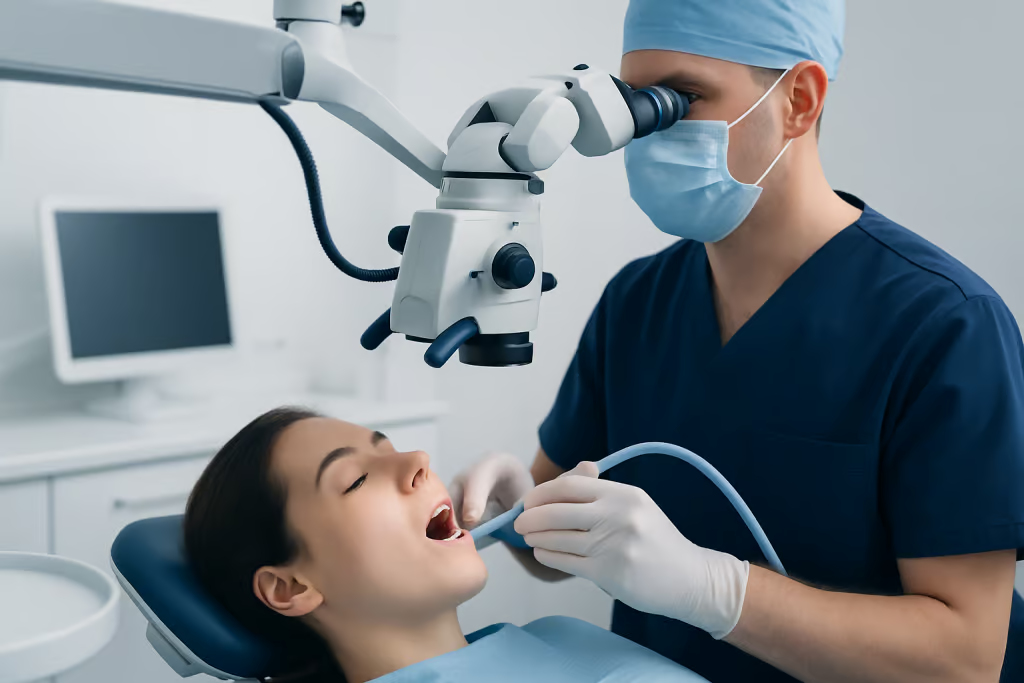
The main aim of periodontal surgery is to reduce infection and inflammation while making it easier to clean the roots of the teeth and maintain healthy gums. Gum disease begins when bacterial plaque accumulates along and below the gumline. Over time, the body’s inflammatory response can damage the bone and connective tissues that hold teeth in place.
Before surgery, clinicians usually recommend non-surgical periodontal treatment, including professional deep cleaning below the gumline and individualized oral hygiene guidance. Surgery may be considered if deep pockets remain, bone loss continues, gum recession needs correction, or the tooth root cannot be accessed adequately for cleaning.
Common procedures include flap surgery, in which the gum tissue is gently moved back so the tooth roots can be cleaned; bone grafting or regenerative procedures intended to support lost tissues in selected cases; and soft-tissue grafting to cover exposed roots or strengthen thin gum tissue. Crown lengthening may also be performed when more tooth structure needs to be exposed for restoration or treatment.
Periodontal surgery does not replace daily plaque control. It is part of a longer treatment plan designed to preserve teeth where possible, reduce future disease activity, and make regular maintenance more effective.
What Is Usually Normal During Recovery
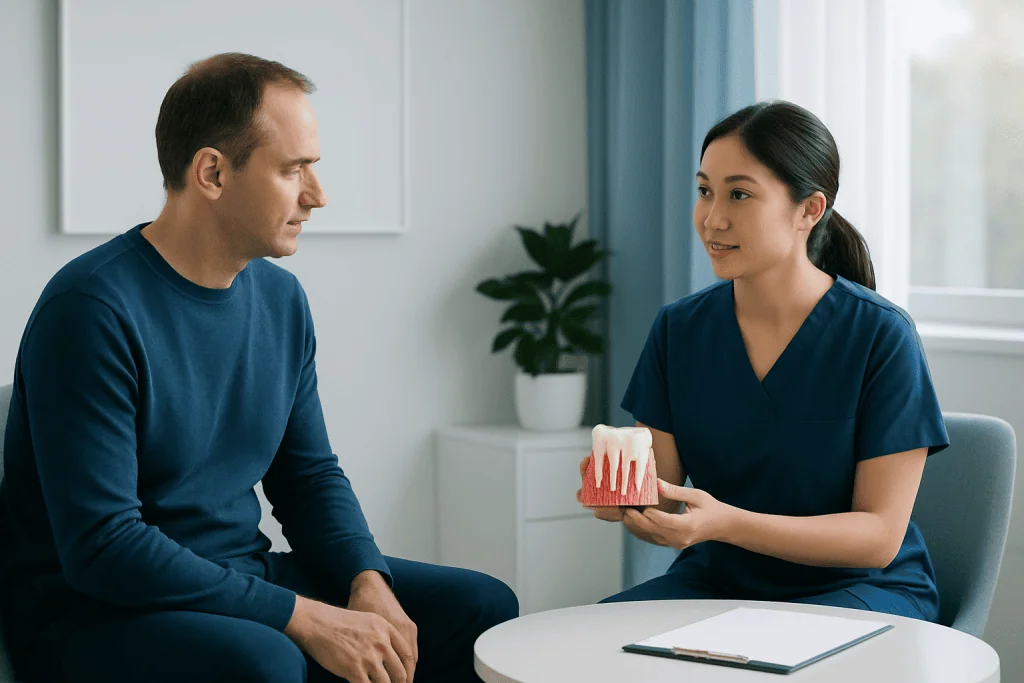
During the first 24 to 72 hours, the treated area may feel sore or tender. Swelling often reaches its peak within the first few days and then gradually reduces. A little oozing or pink saliva can occur early on, especially after brushing near the area or changing a dressing. Temporary sensitivity to hot, cold, or sweet foods is also common when tooth roots are exposed during treatment.
The gums may appear red, bruised, uneven, or slightly pulled back while they heal. Stitches may be visible, and some procedures involve a protective periodontal dressing. These changes can be concerning in a mirror but are not necessarily signs of a complication. The treating clinician will explain whether the stitches dissolve on their own or need removal.
Eating can be uncomfortable initially. Soft, cool or lukewarm foods are often easier to tolerate, while sharp, crunchy, spicy, very hot, or sticky foods may irritate the surgical site. It is generally advisable to avoid chewing directly on the treated area until the clinician says it is safe.
Recovery timelines differ. Many people return to routine daily activities within a day or two, depending on the procedure and how they feel. However, gum tissue needs time to attach and mature, and the final result after grafting or regenerative treatment may not be apparent for several months.
What Is Not Normal After Gum Surgery
Symptoms should follow an overall improving pattern. Discomfort that is controlled with the medicines or measures advised by the clinician and gradually eases is expected. In contrast, severe pain, new throbbing pain after an initial improvement, or pain that prevents sleep, eating, or drinking may indicate a problem and should be reported.
Bleeding that lightly stains saliva is different from active bleeding that fills the mouth, continues despite firm gentle pressure as instructed, or recurs repeatedly. A bad taste or odor can occur temporarily while the area heals, but pus, persistent foul discharge, or a marked worsening of odor may suggest infection or another complication.
Other warning signs include fever, chills, facial swelling that is increasing after the first few days, a rash or breathing symptoms after taking a medicine, or a dressing that becomes loose or causes significant discomfort. A tooth may feel temporarily different after treatment, but a sudden major change in bite or a tooth that becomes increasingly loose should be assessed.
Not every unexpected symptom means that treatment has failed. Early contact allows the dental team to distinguish normal healing changes from concerns such as infection, excessive inflammation, a reaction to medication, or a problem with a stitch or dressing.
Aftercare That Supports Healing
The treating periodontist’s instructions should take priority because aftercare differs between procedures. Patients are commonly advised to rest on the day of surgery, avoid strenuous activity briefly, and use cold packs externally during the early period if recommended. Keeping the head elevated when resting may also help limit swelling for some people.
It is important to take prescribed or recommended medicines exactly as directed. Patients should not add over-the-counter pain relievers, herbal products, or supplements without checking first, particularly if they take blood-thinning medicines or have a medical condition that affects bleeding. Antibiotics are not needed after every procedure, but when prescribed, they should be taken as instructed.
Cleaning is essential, but the surgical site must be handled gently. The clinician may recommend avoiding direct brushing or flossing around the area for a short time, using a very soft toothbrush elsewhere, or using a prescribed antimicrobial mouth rinse. Vigorous rinsing, spitting, or probing the area with fingers or the tongue can disturb healing tissue.
Smoking and nicotine use can impair blood flow and delay wound healing, and they increase the risk of periodontal disease returning. Avoiding tobacco and nicotine products before and after surgery is one of the most important steps a person can take for recovery and long-term results.
When to Seek Medical Care
Patients should contact their periodontist or dentist promptly if they have persistent or heavy bleeding, swelling that is worsening rather than improving, severe or increasing pain, fever, pus, or a persistent bad taste accompanied by other symptoms. They should also call if a stitch, dressing, or graft appears displaced, or if they are unsure how to care for the area.
Urgent medical assessment is needed for difficulty breathing or swallowing, rapidly spreading swelling of the face or neck, fainting, or signs of a severe allergic reaction such as widespread hives, swelling of the lips or tongue, or wheezing. These symptoms are uncommon but should not be managed by waiting for a routine appointment.
People with diabetes, immune suppression, bleeding disorders, or those taking medicines that affect clotting may need tailored advice. They should ensure that both their medical clinician and dental team know about their health conditions and all medicines before surgery and should seek advice early if their recovery seems unusual.
Long-Term Care After Periodontal Treatment
Once the surgical site has healed, preventing recurrent gum disease depends on removing plaque consistently at home and attending periodontal maintenance visits. The ideal interval for professional review is individualized. It depends on factors such as the depth of remaining pockets, previous bone loss, smoking status, diabetes control, oral hygiene, and the person’s risk of disease recurrence.
Daily brushing with an appropriate toothbrush and cleaning between the teeth are central to long-term control. A dentist or dental hygienist can demonstrate the most effective technique and recommend tools suited to the spaces between the teeth, such as interdental brushes, floss, or water-based cleaning devices. Regular professional cleaning reaches areas that are difficult to manage at home.
Gum disease is a chronic condition for many people, but it can often be managed successfully. Seeking review early for bleeding gums, persistent bad breath, gum recession, or teeth that feel different when biting can help prevent more extensive damage. Acibadem International’s multidisciplinary dental specialists at JCI-accredited hospitals can assess periodontal concerns and provide treatment planning for international patients.
Frequently asked questions
How long does pain last after periodontal surgery?
Tenderness is usually most noticeable in the first few days and should gradually improve. The duration depends on the procedure and the individual, but pain that becomes stronger after initially improving should be reported to the dental team. Following the prescribed aftercare plan can help make recovery more comfortable.
Is bleeding normal after periodontal surgery?
A small amount of oozing or pink saliva can be normal shortly after surgery. Active bleeding that does not settle with the instructions provided by the clinician, or bleeding that is heavy or recurrent, is not expected. Patients should contact their treating dentist or periodontist for advice.
Can a person brush their teeth after gum surgery?
Usually, teeth away from the surgical site can be brushed gently, but the operated area may need special care for a period of time. Some patients are instructed to use a mouth rinse or a very soft brush instead of brushing directly over the site. The surgeon's specific instructions should always be followed.
Why do gums look lower after periodontal surgery?
As swelling resolves and diseased tissue is treated, the gumline may appear lower and more of the tooth may be visible. This can expose root surfaces and cause temporary sensitivity. The final gum appearance should be evaluated only after sufficient healing time, as advised by the periodontist.
Can gum disease return after periodontal surgery?
Yes, periodontal disease can return or progress if plaque is allowed to build up again. Surgery improves access for cleaning and may reduce pockets, but it does not remove the need for careful daily oral hygiene and regular periodontal maintenance. Smoking, uncontrolled diabetes, and missed follow-up visits can increase recurrence risk.
When can a person eat normally after periodontal surgery?
Many people need soft foods for the first several days, and they may need to avoid chewing on the treated side for longer. The appropriate timing depends on whether grafting, regenerative materials, or a dressing was used. The periodontist will advise when normal chewing can safely resume.
References
- American Academy of Periodontology
- National Institute of Dental and Craniofacial Research
- European Federation of Periodontology
- National Health Service
This article is for general information only and is not a substitute for professional medical advice. Please consult a qualified doctor about your individual situation.
Explore treatments in Turkey — costs, top hospitals & a free quote
JCI-accredited · board-certified surgeons · reply within 24h
Add us as a Preferred Source to see more of our trusted health content across Google Search, AI Overviews and Discover.