Persistent Eye Pain With Normal Eye Exam: Could It Be Neuro-Ophthalmic?

Eye pain can occur even when the front of the eye appears normal on examination. Neuro-ophthalmic causes may include migraine, optic nerve disorders, nerve-related pain, and referred pain from the head, face, or sinuses.
Key Takeaways
- Eye pain can occur even when the front of the eye appears normal on examination.
- Neuro-ophthalmic causes may include migraine, optic nerve disorders, nerve-related pain, and referred pain from the head, face, or sinuses.
- A careful history and targeted neurologic and eye assessment are often more useful than a routine eye exam alone.
- Urgent warning signs include vision loss, double vision, a drooping eyelid, severe headache, weakness, or pain with other neurologic symptoms.
- Treatment depends on the cause and may involve eye specialists, neurologists, pain specialists, or headache experts.
Persistent eye pain with a normal eye exam can be confusing, but it does not mean the symptoms are imaginary or unimportant. In some people, the source is neuro-ophthalmic, meaning the pain may relate to nerves, the brain, migraine, or nearby structures rather than a visible problem on the surface of the eye.
Overview: Why Eye Pain Can Happen Even When the Eye Looks Normal
Persistent eye pain with a normal eye exam is a real clinical problem. Many people expect eye pain to come from a visible eye condition such as infection, injury, dryness, or high eye pressure. However, sometimes the eye itself appears healthy while the pain originates from the nerves that carry sensation, the optic nerve, headache pathways, or structures around the eye.
In neuro-ophthalmology, specialists look at how the eyes, optic nerves, brain, and nervous system work together. This is important because the feeling of pain around or behind the eye can come from more than one source. In some cases, pain is linked to migraine or facial nerve sensitivity. In others, it may be associated with inflammation of the optic nerve, problems affecting eye movement, or referred pain from the sinuses, jaw, neck, or head.
A normal eye exam can therefore be reassuring in one sense, because it may rule out some urgent eye diseases such as corneal injury or acute glaucoma. At the same time, it does not completely explain persistent symptoms. When pain continues, especially if it is accompanied by visual changes or neurologic symptoms, further evaluation may be needed to look beyond the surface of the eye.
Common Symptoms and How Neuro-Ophthalmic Pain May Feel
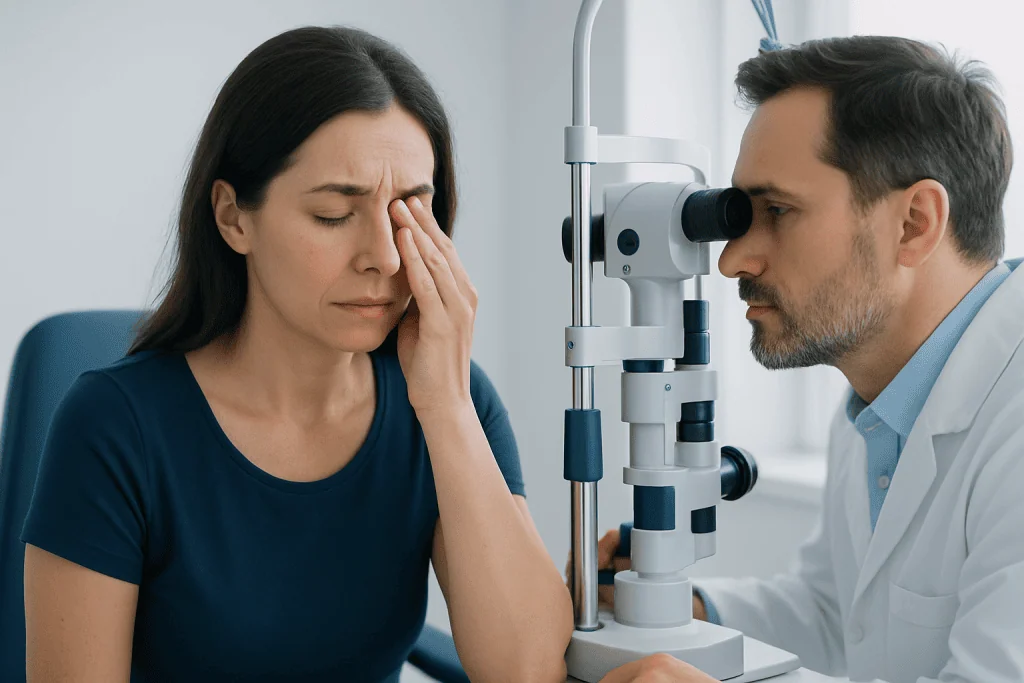
Neuro-ophthalmic eye pain can feel different from pain caused by a scratch, infection, or dry eye. Some people describe a deep ache behind one eye, a pressure-like sensation, burning, stabbing discomfort, or pain that worsens when moving the eyes. Others notice episodes that come and go, often linked to headaches, light sensitivity, nausea, or fatigue.
The pain may affect one eye or seem centered around one side of the face or forehead. In some situations, it is accompanied by blurred vision, dimming of color vision, double vision, a feeling that the eye is tired, or pain with reading and visual concentration. A person may also feel scalp tenderness, temple discomfort, or pain spreading into the cheek, jaw, or neck.
Symptoms that suggest the need for urgent medical review include sudden vision loss, new double vision, a drooping eyelid, severe or unusual headache, weakness, numbness, imbalance, fever, or pain after trauma. These features do not always mean a dangerous condition is present, but they do raise the importance of prompt assessment.
- Deep ache behind the eye
- Pain with eye movement
- Burning or stabbing discomfort
- Light sensitivity or headache
- Blurred vision or color desaturation
- Associated facial, temple, or neck pain
Possible Causes and Risk Factors

One important cause of eye pain with a relatively normal early exam is optic nerve inflammation, also called optic neuritis. This often causes pain with eye movement and may later be associated with blurred vision, reduced color brightness, or a central blind spot. Not every patient with optic nerve-related pain has obvious findings at first, which is one reason follow-up can matter.
Another common explanation is migraine or related headache disorders. Migraine can produce pain around or behind the eye even without a typical throbbing headache. Some people experience visual aura, light sensitivity, nausea, or repeated attacks triggered by sleep changes, stress, dehydration, hormones, or certain foods. Cluster headache and other trigeminal autonomic headaches can also cause severe one-sided eye pain, often with tearing or nasal symptoms.
Nerve-related pain may result from irritation or sensitization of the trigeminal nerve, which carries facial and ocular sensation. This can occur after infection, inflammation, surgery, or sometimes without a clear trigger. Referred pain is also possible: sinus disease, temporomandibular joint problems, dental issues, neck muscle tension, or facial pain syndromes may all be felt near the eye despite a normal ocular surface and internal eye examination.
Less common but important causes include disorders that affect eye movement nerves, inflammation around the eye socket, autoimmune disease, giant cell arteritis in older adults, and intracranial conditions. Risk factors depend on the underlying problem but may include migraine history, autoimmune disease, recent viral illness, smoking, age over 50, and a personal history of neurologic or inflammatory conditions.
How Doctors Evaluate Persistent Eye Pain
Assessment usually begins with a detailed history. A clinician will ask when the pain started, whether it is constant or episodic, what makes it worse, whether eye movement triggers it, and whether there are associated symptoms such as blurred vision, headache, numbness, tearing, jaw pain, fever, or recent infection. This history often gives important clues that a standard eye chart alone cannot provide.
The examination may include vision testing, color vision, pupil reactions, eye pressure, eye movements, visual fields, and a close look at the optic nerve and retina. Even if the first exam is normal, subtle findings can sometimes emerge over time. A neuro-ophthalmic evaluation also considers facial sensation, eyelid position, alignment of the eyes, and other neurologic signs.
Depending on the suspected cause, further tests may include blood work, visual field testing, optical coherence tomography, and imaging such as MRI imaging of the brain, orbit, or optic nerves. Imaging is not needed for every patient, but it can be very helpful when pain is severe, unexplained, linked to neurologic symptoms, or suspicious for inflammation, compression, or intracranial disease. Some patients may also need review by headache medicine, ENT, dentistry, rheumatology, or neurology.
Treatment Options Depend on the Cause
There is no single treatment for persistent eye pain with a normal eye exam because the best approach depends on the diagnosis. If migraine or headache-related pain is responsible, management may include trigger reduction, hydration, regular sleep, stress management, and medications chosen by a doctor to treat attacks or reduce their frequency. When the pattern fits a primary headache disorder, a referral for headache treatment may be helpful.
If optic nerve inflammation or another inflammatory condition is suspected, treatment may involve urgent specialist monitoring and medications aimed at reducing inflammation or treating an underlying immune or infectious process. If the pain is related to a condition such as multiple sclerosis, treatment planning may involve both neurology and neuro-ophthalmology. When a compressive or structural cause is found, management is directed at that problem.
For neuropathic or nerve-sensitization pain, treatment may focus on calming overactive pain pathways rather than treating the eye itself. This can involve medications used for nerve pain, lifestyle measures, and sometimes multidisciplinary care including neurology or pain medicine. If imaging or clinical signs point to a brain or orbital cause, teams may also consider neurology treatment or other specialist-led care.
It is also important to avoid repeated self-treatment with nonprescribed eye drops unless advised by a clinician. Frequent use of redness-relieving drops or unnecessary medications may irritate the eye further without addressing the true source of the pain.
Self-Care, Monitoring, and Prevention
Self-care cannot replace diagnosis, but it can support recovery and help reveal patterns. Keeping a symptom diary is often useful. Recording when pain happens, how long it lasts, whether it follows stress or poor sleep, and whether there are visual symptoms can help the doctor identify migraine, cluster headache, or another recurring trigger.
General supportive steps include staying hydrated, taking regular breaks from screens, protecting the eyes from excessive glare, maintaining consistent sleep, and managing neck and shoulder tension. For some people, reducing skipped meals, caffeine excess, or dehydration lowers the frequency of eye-related headache pain. If dry eye contributes even partly to discomfort, a clinician may recommend lubricating drops or environmental adjustments.
Prevention also means paying attention to changes over time. Persistent pain that is stable may still need review, but pain that becomes more frequent, more severe, or newly associated with visual loss should not be ignored. In complex cases, multidisciplinary evaluation can be valuable. Near the end of the diagnostic pathway, some patients benefit from coordinated review by neuro-ophthalmology, neurology, and imaging specialists; Acibadem International offers this kind of care in JCI-accredited hospitals for international patients.
When to See a Doctor
A medical review is appropriate when eye pain lasts more than a short time, keeps returning, or interferes with daily life, even if a previous eye exam was described as normal. Pain that worsens with eye movement, occurs mainly on one side, or comes with recurrent headaches deserves further assessment. The same is true when over-the-counter measures do not help.
Urgent assessment is recommended if there is any sudden drop in vision, new double vision, loss of color brightness, unequal pupils, eyelid drooping, facial weakness, severe headache, fever, jaw pain while chewing, recent injury, or neurologic symptoms such as numbness or imbalance. These features can point to conditions needing prompt attention.
If the cause remains unclear after a routine eye visit, asking whether neuro-ophthalmic, neurologic, or referred pain causes should be considered can be a reasonable next step. A patient-friendly, stepwise workup often provides reassurance while also making sure important diagnoses are not missed.
Frequently asked questions
Can eye pain be serious if the eye exam is normal?
Yes, sometimes it can. A normal eye exam may rule out certain surface eye problems, but pain can still come from the optic nerve, headache pathways, facial nerves, or nearby structures. Persistent or unexplained pain should be reviewed, especially if vision changes or neurologic symptoms appear.
What does neuro-ophthalmic eye pain usually feel like?
People often describe it as a deep ache behind the eye, pressure, pain with eye movement, or discomfort linked to headache and light sensitivity. The exact feeling varies depending on whether the cause is migraine, optic nerve inflammation, nerve-related pain, or referred pain from another area.
Can migraine cause pain behind one eye without obvious eye disease?
Yes. Migraine and related headache disorders can cause one-sided pain around or behind the eye even when the eye itself looks normal. Some people also have nausea, light sensitivity, visual aura, or repeated attacks triggered by sleep changes, stress, or dehydration.
Does pain with eye movement always mean optic neuritis?
No. Pain with eye movement can occur with optic neuritis, but it is not specific to that condition. It can also be seen with migraine, orbital inflammation, muscle strain, or other neuro-ophthalmic conditions, so a full assessment is important.
What tests may be needed if the routine eye exam is normal?
Depending on symptoms, doctors may use visual field testing, color vision testing, optic nerve imaging, blood tests, or MRI of the brain and orbits. Not everyone needs all of these tests. The choice depends on the pattern of pain, associated symptoms, and examination findings.
When should someone seek urgent help for eye pain?
Urgent care is important if eye pain comes with sudden vision loss, double vision, a drooping eyelid, severe headache, weakness, numbness, fever, or pain after trauma. These features may signal a condition that needs prompt evaluation. If there is any doubt, it is safest to seek medical advice quickly.
References
- American Academy of Ophthalmology
- North American Neuro-Ophthalmology Society
- National Eye Institute
- American Migraine Foundation
- National Institute of Neurological Disorders and Stroke
This article is for general information only and is not a substitute for professional medical advice. Please consult a qualified doctor about your individual situation.
Explore treatments in Turkey — costs, top hospitals & a free quote
JCI-accredited · board-certified surgeons · reply within 24h
Add us as a Preferred Source to see more of our trusted health content across Google Search, AI Overviews and Discover.