Phonological Disorder: Early Signs, Risk Factors, and How It Is Treated

Phonological disorder affects patterns of sounds in words, rather than only the ability to physically make one sound. Children may simplify words in predictable ways, such as leaving off final sounds or replacing back sounds with front sounds.
Key Takeaways
- Phonological disorder affects patterns of sounds in words, rather than only the ability to physically make one sound.
- Children may simplify words in predictable ways, such as leaving off final sounds or replacing back sounds with front sounds.
- Some sound errors are typical at younger ages, but persistent patterns that reduce understandability should be assessed.
- A hearing evaluation and speech-language assessment are important parts of diagnosis.
- Speech-language therapy is the main treatment and is most effective when practice is regular and meaningful.
- Parents can support progress through relaxed, positive communication rather than repeated correction or pressure.
Phonological disorder is a type of speech sound disorder in which a child has difficulty learning and using the rules that organize speech sounds. Early assessment by a speech-language pathologist can clarify the cause of unclear speech and guide effective, individualized therapy.
Overview: What Is a Phonological Disorder?
A phonological disorder is a communication condition in which a child has difficulty understanding, organizing, or using the sound patterns of their language. The child may be able to produce certain speech sounds in some situations, yet use them incorrectly in words because the rules for combining and contrasting sounds are not developing as expected. This can make speech difficult for family members, teachers, or other children to understand.
It is one type of speech sound disorder. For example, a child may regularly leave the last sound off words, say “tat” for “cat,” or replace several sounds made at the back of the mouth with sounds made at the front. These are called phonological processes. Many such patterns occur during typical early development, but they are expected to fade as a child’s speech and language skills mature.
Phonological disorder differs from an articulation difficulty. An articulation difficulty usually involves trouble physically producing a particular sound, such as “r” or “s.” A phonological disorder involves a broader pattern of sound use and may affect many words. Some children have features of both, and a comprehensive speech assessment can identify the pattern accurately.
Early Signs and Speech Patterns to Notice
The main sign of phonological disorder is speech that is less understandable than expected for the child’s age, especially to people outside the immediate family. Parents may notice that the child becomes frustrated when not understood, avoids speaking in unfamiliar settings, or relies on gestures because communicating verbally is difficult. A child’s understanding of language may be typical, although language difficulties can occur alongside speech sound concerns.
Speech-language pathologists listen for consistent patterns rather than focusing only on isolated mispronounced words. Common patterns may include deleting final consonants, reducing a sound blend such as “spoon” to “poon,” substituting one group of sounds for another, or omitting syllables from longer words. A child may say “doe” for “go,” “pane” for “plane,” or “nana” for “banana,” depending on the sound pattern involved.
Age matters when interpreting speech. Young children commonly simplify difficult words while they are learning to speak. Concern is more appropriate when patterns continue beyond the expected developmental period, when they occur frequently, or when they significantly affect everyday communication. Bilingual or multilingual children should be assessed in the context of all languages they use; differences between languages are not automatically signs of a disorder.
- Speech is regularly difficult for unfamiliar listeners to understand.
- The child uses the same sound substitutions across many different words.
- Word endings, syllables, or consonant blends are often omitted.
- The child is upset, withdrawn, or less willing to communicate because of speech difficulties.
- Speech patterns are not gradually improving or appear to be getting more noticeable over time.
Why Phonological Disorder Develops: Causes and Risk Factors
In many children, there is no single known cause of phonological disorder. Speech development depends on several connected abilities, including hearing speech sounds clearly, recognizing sound differences, learning vocabulary, planning speech, and receiving opportunities for interaction. A phonological disorder is not caused by laziness, poor parenting, or a child simply refusing to speak clearly.
Family history may play a role. Children with close relatives who had speech, language, reading, or learning difficulties may have a higher likelihood of speech sound challenges. A history of frequent middle-ear problems or hearing changes can also affect access to speech sounds during important developmental years. This does not mean every child with ear infections will develop a phonological disorder, but hearing should be checked when speech is unclear.
Phonological difficulties may occur on their own or alongside developmental language disorder, learning differences, developmental delay, or other neurodevelopmental conditions. Structural differences affecting the mouth or palate, motor-speech conditions, and neurological disorders require a different or additional clinical approach. Assessment is therefore important before assuming that all speech errors have the same explanation.
How a Phonological Disorder Is Diagnosed
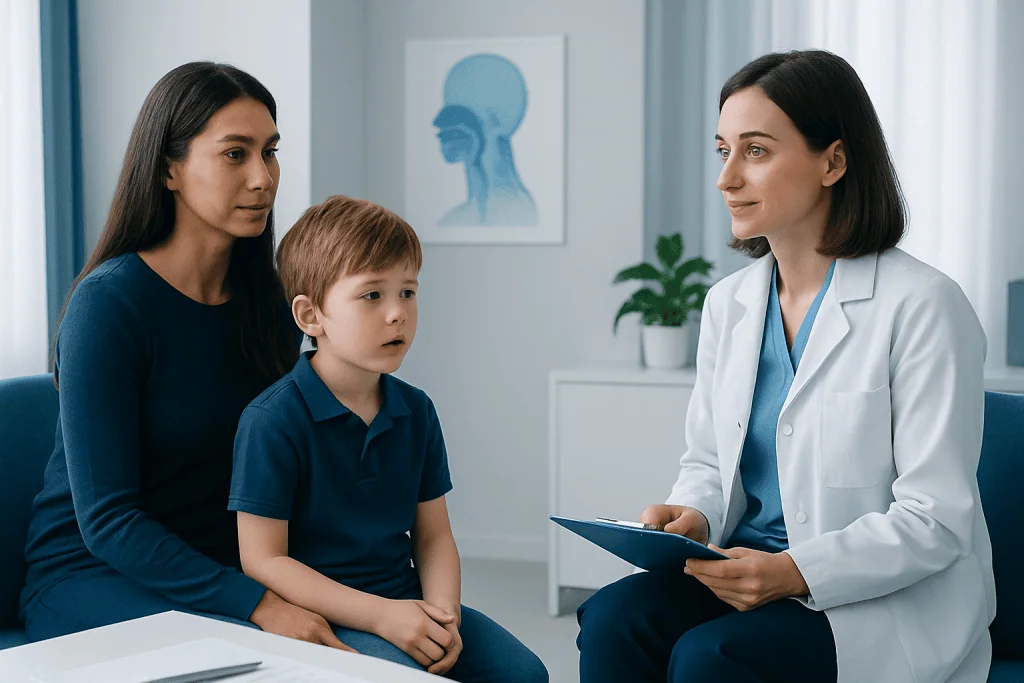
Diagnosis is usually made by a speech-language pathologist, also called a speech therapist in some settings. The assessment begins with a detailed history of the child’s development, languages spoken, health, hearing, family history, and the impact of speech difficulties at home or school. Parents are often asked which words or situations are most difficult for others to understand.
The clinician listens to the child speak in conversation and in structured activities. They may ask the child to name pictures, repeat words, or describe a story. The assessment examines which sounds the child uses, where errors occur within words, whether errors follow predictable patterns, and how understandable the child is overall. Language skills, oral-motor function, voice, fluency, and social communication may also be considered.
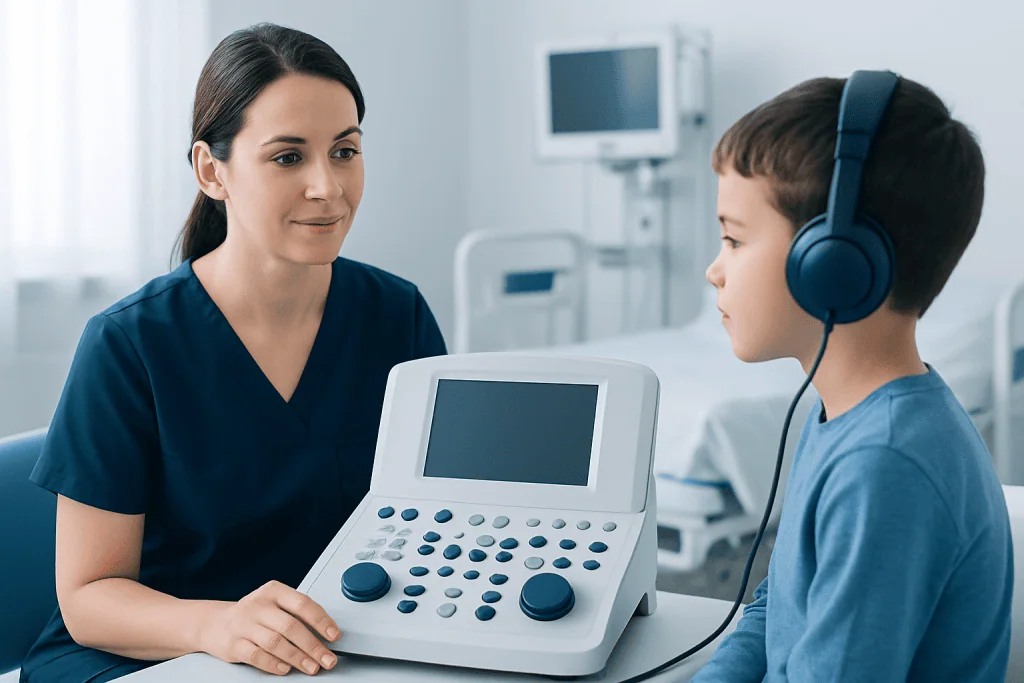
A hearing screening or full hearing assessment is commonly recommended, particularly if there is a history of ear infections, delayed speech, or uncertainty about hearing. The clinician will also distinguish phonological disorder from articulation disorder, childhood apraxia of speech, and speech differences related to another medical or developmental condition. A diagnosis is based on the complete clinical picture, not on one speech sample alone.
Treatment Options and What Therapy Involves
Speech-language therapy is the main treatment for phonological disorder. Therapy is tailored to the child’s age, speech patterns, language skills, attention, motivation, and communication needs. The goal is not simply to have a child repeat sounds perfectly in isolation. It is to help them recognize meaningful sound differences and use clearer patterns reliably in words, sentences, and everyday conversation.
A therapist may use play, picture activities, storytelling, games, books, and conversation to practice target sound patterns. For example, a child may learn that changing the first sound in two words can change the meaning. Therapy can focus on contrasts between sounds, correct word endings, syllable structure, or other patterns identified during assessment. Sessions may be individual or part of a small group, depending on the child’s needs and local services.
Progress varies. Some children make steady gains over months, while others need longer-term support, particularly when speech difficulties occur with language or learning concerns. Regular attendance and brief, enjoyable home practice usually support therapy goals. A clinician may adjust targets as the child becomes more understandable and gains confidence.
Acibadem International’s multidisciplinary specialists and JCI-accredited hospitals can assess speech and developmental concerns and coordinate care for international patients when appropriate.
Supporting Communication at Home and School
Families can make a meaningful difference by creating a calm environment where the child feels heard. It is helpful to listen patiently, allow time for the child to finish speaking, and respond to the message rather than drawing attention to every error. If a word is unclear, a parent can ask gently for clarification or offer a natural model. For instance, if the child says “tat,” an adult may respond, “Yes, a cat is sleeping,” without demanding repeated correction.
Reading together, singing age-appropriate songs, talking during everyday routines, and playing word-based games can provide enjoyable opportunities to hear and use language. If a speech-language pathologist recommends home activities, these should be practiced in short, positive sessions. Overly frequent correction, teasing, or asking a child to perform for others can increase frustration and is unlikely to improve speech.
Teachers and caregivers can support the child by allowing extra time to respond, confirming what they have understood, and sharing observations with parents and the therapy team. When relevant, school-based support can help a child participate confidently in classroom discussions and early literacy activities. Clear communication between home, school, and clinicians helps ensure that strategies are consistent.
When to Seek Medical Care
Parents or caregivers should consider an evaluation when a child’s speech is often difficult to understand, when sound patterns persist without improvement, or when speech difficulties lead to frustration or reduced participation. It is reasonable to raise concerns at any age; families do not need to wait until a child starts school if communication is noticeably challenging.
Prompt assessment is particularly important if there is concern about hearing, loss of skills the child previously had, trouble understanding language, difficulty feeding or swallowing, unusual voice quality, or other developmental concerns. A pediatrician can review the child’s overall development, arrange hearing assessment when needed, and refer to a speech-language pathologist.
Early support does not mean that a serious underlying condition is present. It provides a clearer understanding of the child’s communication needs and can reduce the effect of speech difficulties on social interaction, learning, and confidence. Families should seek urgent medical attention for sudden speech changes accompanied by weakness, facial asymmetry, confusion, severe headache, or altered consciousness.
Frequently asked questions
Is phonological disorder the same as a speech delay?
Not exactly. A speech delay is a broad term that may describe speech skills developing more slowly than expected. Phonological disorder is a specific type of speech sound disorder involving persistent patterns in the way speech sounds are organized and used.
Can a child outgrow phonological disorder without therapy?
Some speech simplifications resolve naturally during early development. However, persistent patterns that make speech difficult to understand may not resolve fully without support. An assessment can determine whether observation, therapy, or another approach is appropriate.
At what age should unclear speech be assessed?
A child can be assessed whenever a parent, caregiver, or teacher has concerns about communication. Assessment is especially helpful when unfamiliar listeners regularly have difficulty understanding the child, the child is frustrated, or speech is not becoming clearer over time.
Does phonological disorder affect intelligence?
No. A phonological disorder does not indicate low intelligence. Children with this condition may have typical learning abilities, although some may also have language or literacy difficulties that should be identified and supported individually.
Can hearing problems cause phonological disorder?
Hearing difficulties can affect how consistently a child hears and learns speech sounds, particularly during early development. Not every child with phonological disorder has a hearing problem, but hearing evaluation is an important part of a thorough assessment.
How can parents correct speech without upsetting a child?
Parents can model the intended word naturally instead of asking the child to repeat it many times. Listening attentively, praising communication efforts, and using therapist-recommended games can support clearer speech while protecting the child’s confidence.
References
- American Speech-Language-Hearing Association
- National Institute on Deafness and Other Communication Disorders
- Royal College of Speech and Language Therapists
- Centers for Disease Control and Prevention
This article is for general information only and is not a substitute for professional medical advice. Please consult a qualified doctor about your individual situation.
Explore treatments in Turkey — costs, top hospitals & a free quote
JCI-accredited · board-certified surgeons · reply within 24h
Add us as a Preferred Source to see more of our trusted health content across Google Search, AI Overviews and Discover.