Physical Therapy for Autism: How It Works, Results and What to Expect

Physical therapy for autism focuses on functional movement goals, not on changing a person’s identity or personality. A physical therapist assesses posture, strength, coordination, balance, walking, play and everyday mobility.
Key Takeaways
- Physical therapy for autism focuses on functional movement goals, not on changing a person’s identity or personality.
- A physical therapist assesses posture, strength, coordination, balance, walking, play and everyday mobility.
- Treatment is usually active and individualized, often using games, routines and interests to support engagement.
- Progress is measured by meaningful functional changes, such as safer stairs, improved endurance or greater confidence in play.
- Physical therapy is generally low risk when goals and activities are adapted to the individual’s health, communication and sensory needs.
Physical therapy for autism is an individualized rehabilitation service that can help children, adolescents and adults improve movement, balance, coordination, physical confidence and participation in daily activities. It does not change autism itself, but it may address motor, sensory-motor and mobility challenges that occur alongside autism spectrum disorder.
Physical Therapy for Autism: An Individualized Movement Approach
Physical therapy for autism helps people develop or maintain movement skills that support comfort, safety, independence and participation. A physical therapist may work on balance, coordination, strength, posture, walking, running, stair use, endurance, motor planning and access to play, school, work or community activities. Sessions are tailored to the person rather than based on a single autism “program.”
Autism spectrum disorder is a neurodevelopmental difference with varied strengths, communication styles, sensory experiences and support needs. Some autistic people also have differences in motor coordination, low muscle tone, joint flexibility, toe walking, reduced physical activity, difficulty learning new movement sequences or challenges navigating busy environments. Physical therapy may be useful when these differences affect everyday life.
Therapy is not intended to cure autism or make an autistic person appear non-autistic. Its purpose is practical: helping the person move more safely and comfortably while pursuing goals that matter to them and their family. Care may be coordinated with pediatricians, neurologists, occupational therapists, speech and language therapists, psychologists, educators and other professionals involved in autism support.
What Do Physical Therapists Do for Autism?
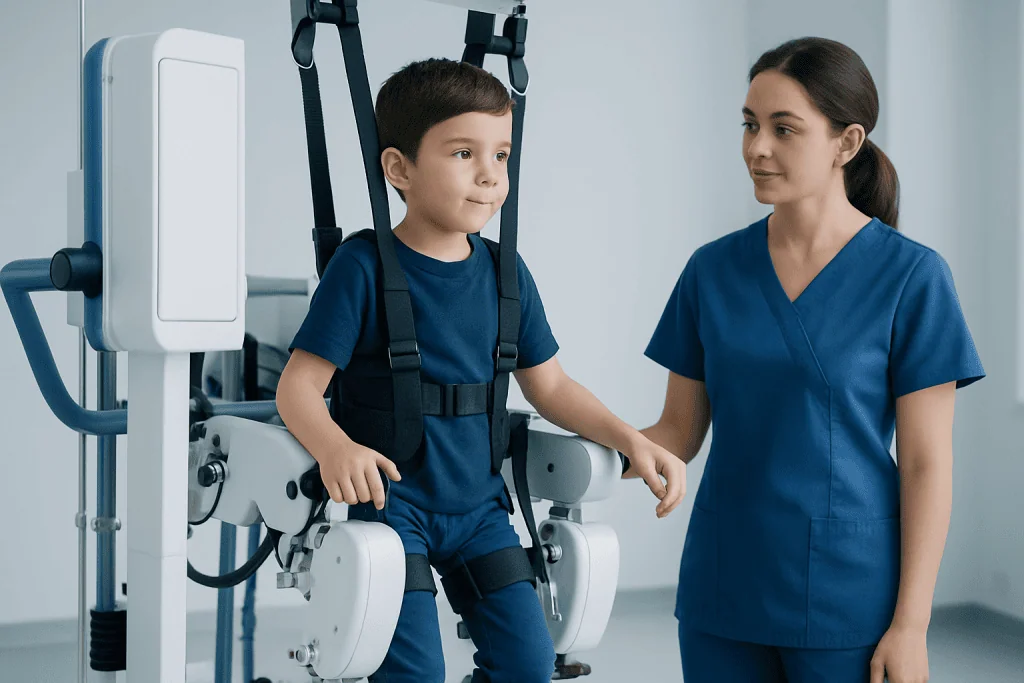
Physical therapists assess how a person moves in real-life situations. This can include observing sitting, standing, transitions from floor to chair, walking, running, climbing, jumping, stair use, playground skills and participation in physical education. The assessment may also consider balance reactions, coordination, muscle strength, range of motion, pain, fatigue, footwear, sensory preferences and the safety of the home or school environment.
Based on this assessment, the therapist develops specific, functional goals. For a young child, a goal may be joining a playground activity, using stairs with less support or learning to ride a scooter. For an adolescent or adult, goals may include building endurance for community mobility, managing recurrent muscle discomfort, improving fitness or using public transportation more safely.
Therapists commonly use movement games, obstacle courses, strengthening activities, balance practice, gait training, stretching when indicated and graded practice of daily tasks. They can also advise parents, caregivers and schools on safe activity opportunities, supportive routines and adaptations. Communication may be supported with demonstration, visual schedules, simple language, choices, predictable routines and sufficient processing time.
Who May Benefit and How a Plan Is Created

Not every autistic person needs physical therapy. Referral may be considered when there are concerns about delayed motor milestones, frequent falls, difficulty with stairs, persistent toe walking, poor balance, low endurance, pain with movement, difficulty taking part in play or sports, or loss of a previously established movement skill. A doctor may also recommend assessment when there is a known orthopedic, neurological or genetic condition affecting mobility.
The first appointment usually includes a discussion of health history, daily routines, strengths, preferred activities, sensory needs, communication methods and the family’s priorities. The physical therapist may use standardized motor assessments when suitable, but observation and the person’s own goals are equally important. The assessment should be paced respectfully and adapted if touch, noise, unfamiliar spaces or demands are distressing.
Individual plans vary in frequency and duration. Some people benefit from a short period of targeted therapy and a home or school activity plan, while others need ongoing support because of complex physical needs. The plan should remain flexible, with goals reviewed as the person grows, changes environments or develops new interests.
- Mobility goals may include walking, stairs, transfers or safe community access.
- Motor goals may include coordination, ball skills, cycling, jumping or motor planning.
- Participation goals may include play, physical education, recreation or fitness routines.
- Comfort goals may include reducing preventable strain, stiffness or fear of falling.
What Happens During Physical Therapy Sessions?
A typical session begins with a brief check-in. The therapist may ask about sleep, pain, recent falls, changes in behavior, activity participation or concerns since the previous visit. For people who communicate differently, caregivers and observation can help identify changes in comfort, energy and function.
Next, the therapist introduces activities linked to agreed goals. A session might include warm-up movement, balance practice, stepping over objects, navigating a short course, ball play, climbing, strengthening or walking practice. Activities can be broken into small steps, repeated in predictable ways and adjusted in response to attention, fatigue, sensory needs and motivation.
Sessions often end with a brief review and a manageable practice plan. Home activities should be realistic, enjoyable and safe rather than burdensome. The therapist may suggest incorporating movement into daily routines, such as walking to a preferred destination, helping with household tasks, using stairs with supervision or choosing a favorite active game.
There is no recovery period after standard outpatient physical therapy. A person may feel pleasantly tired or have mild, short-lived muscle soreness after a new activity, particularly if conditioning has been limited. The therapist should adapt exercise intensity to avoid excessive fatigue, pain or distress.
How Do You Know If Physical Therapy Is Working?
Physical therapy is working when progress is visible in goals that are meaningful for the individual, not simply when a person performs an exercise in the clinic. Examples include fewer falls, improved confidence on stairs, longer tolerance for walking, more participation in games, greater independence with transfers or less discomfort during everyday movement.
Therapists may track progress with repeated observations, goal-attainment measures, functional tests and reports from the person, family or school. A good plan identifies a starting point and describes what improvement would look like. Progress may be gradual and is not always linear; illness, stress, changes in routine, growth spurts and sensory overload can affect performance from day to day.
If goals are not being met, this does not mean the person has failed. The team should revisit whether the goals are relevant, whether instructions or environment need adjustment, whether sensory or communication needs are being accommodated and whether another medical issue may be contributing. A revised plan may involve other specialists or a different setting for practice.
What Is Tunneling in Autism?
“Tunneling” is not a formal medical diagnosis and can mean different things in autism discussions. It often describes becoming intensely focused on one activity, object, interest or thought while noticing less of what is happening around the person. Some people may also use the term “tunnel vision” to describe reduced awareness of their surroundings during stress, overload, anxiety or intense concentration.
Focused attention can be a strength and may help a person learn, enjoy an interest or complete a valued task. It may become challenging when it affects safety, makes transitions very difficult or prevents the person from responding to urgent cues. The reasons can vary and may include sensory overload, fatigue, anxiety, executive-function differences or a need for predictability.
Physical therapists may account for this by using clear visual boundaries, predictable transitions, simple safety cues and activities that match the person’s interests. If episodes involve fainting, sudden confusion, unusual staring with unresponsiveness, new vision changes or a major change from the person’s usual behavior, medical evaluation is important.
What Is the 6 Second Rule in Autism?
The “6 second rule” is not a universal clinical rule or a diagnostic tool for autism. It is an informal communication strategy that encourages adults to pause for several seconds after asking a question, giving an instruction or offering a choice before repeating themselves. The aim is to allow time for processing and for a person to respond in their preferred way.
Some autistic people benefit from longer wait time, particularly in unfamiliar, busy or demanding settings. However, six seconds will not suit everyone. The helpful amount of time depends on communication style, language processing, anxiety, sensory environment, task complexity and whether the person uses speech, gestures, a communication device or other methods.
In physical therapy, an unhurried pace can support participation and autonomy. Therapists may demonstrate an activity, give one step at a time, wait quietly, offer choices and check understanding without pressuring the person to respond immediately. Caregivers can discuss the most effective communication supports with the therapy team.
Benefits, Limits, Safety and When to Seek Medical Care
Potential benefits of physical therapy include improved balance, coordination, strength, endurance, confidence and access to activities. It may also help families identify safe ways to make movement part of everyday life. Results differ between individuals, and improvement depends on the person’s baseline abilities, health, opportunities to practice, goals and environmental support.
Risks are usually minor and may include temporary muscle soreness, frustration, fatigue or sensory discomfort. These risks can often be reduced through gradual progression, choice, accessible communication, rest breaks and attention to pain or distress. A therapist should stop or modify an activity that causes ongoing pain, fear or significant dysregulation.
Medical care should be sought promptly for sudden weakness, severe or worsening pain, a new inability to walk, loss of previously acquired skills, head injury, repeated unexplained falls, fainting, breathing difficulty or seizure-like episodes. A clinician should also assess persistent toe walking, limping, joint swelling or changes in movement that interfere with daily life.
At Acibadem International, multidisciplinary specialists and JCI-accredited hospitals can assess movement concerns and coordinate rehabilitation for international patients when appropriate. Families should consult a qualified doctor or licensed physical therapist for individualized recommendations.
Frequently asked questions
Can physical therapy help autism?
Physical therapy can help address movement-related needs that may occur alongside autism, including balance, coordination, walking, strength and participation in active daily routines. It does not treat autism as something to be cured. Goals should reflect the individual’s comfort, safety, independence and interests.
At what age can an autistic child start physical therapy?
Physical therapy can be considered at any age when a child has movement, balance, posture, mobility or participation concerns. Early support may be helpful for developmental motor delays, but adolescents and adults can also benefit from targeted rehabilitation. A pediatrician or other qualified clinician can advise whether an assessment is appropriate.
How long does physical therapy for autism last?
The duration depends on the person’s needs, goals, progress and access to opportunities for practice. Some people need a focused period of therapy followed by a home or school plan, while others benefit from intermittent or ongoing support. The therapist should regularly review whether the plan remains useful.
Does physical therapy help with toe walking in autism?
Physical therapy may help assess toe walking and address contributing factors such as muscle tightness, balance, coordination, habit or sensory preferences. However, toe walking can have several causes, so a medical assessment may be needed, especially when it is persistent, painful, one-sided or worsening. Treatment is individualized and may involve more than one specialist.
Is physical therapy stressful for autistic people?
It can be stressful if the environment, communication style or activities do not match the person’s needs. A respectful therapist can reduce stress by using predictable routines, visual supports, choices, sensory accommodations and appropriate breaks. The person’s comfort and consent should guide the session.
Can physical therapy be done at home for autism?
Many therapy goals can be practiced at home through simple movement activities incorporated into everyday routines. A physical therapist can recommend activities that are safe, realistic and matched to the person’s abilities. Home practice should not replace assessment when there are pain, safety or developmental concerns.
References
- Centers for Disease Control and Prevention
- American Physical Therapy Association
- National Institute of Neurological Disorders and Stroke
- American Academy of Pediatrics
- World Health Organization
This article is for general information only and is not a substitute for professional medical advice. Please consult a qualified doctor about your individual situation.
Joint and spine care in Turkey — expert assessment & treatment
JCI-accredited · board-certified surgeons · reply within 24h
Add us as a Preferred Source to see more of our trusted health content across Google Search, AI Overviews and Discover.