Treatment of Solar Retinopathy: How It Works, Results and What to Expect

Solar retinopathy is retinal damage caused by looking directly at the sun or another intense light source. There is no proven standard medicine or surgery that reliably reverses solar retinal injury.
Key Takeaways
- Solar retinopathy is retinal damage caused by looking directly at the sun or another intense light source.
- There is no proven standard medicine or surgery that reliably reverses solar retinal injury.
- An eye specialist uses dilated examination and retinal imaging to assess the macula and monitor recovery.
- Many people improve over several weeks to months, although some changes in central vision can persist.
- New central blur, distortion or a spot after sun exposure should be assessed promptly by an ophthalmologist.
- Prevention relies on never looking directly at the sun and using certified eclipse viewers only as instructed.
Treatment of solar retinopathy usually involves urgent assessment by an ophthalmologist, careful monitoring and avoiding further sun exposure rather than a routine procedure. Vision often improves gradually, but recovery varies and some people may have lasting central visual symptoms.
Overview: treatment of solar retinopathy
Treatment of solar retinopathy begins with a prompt ophthalmology assessment to confirm retinal injury, measure its effect on vision and rule out other causes of central visual changes. In most cases, care is supportive: the eye is monitored over time, further intense-light exposure is avoided and any changes in vision are reviewed. There is no universally proven medication, injection, laser treatment or surgery that can reliably repair sun-related retinal damage.
Solar retinopathy, also called solar maculopathy, occurs when intense light damages the macula, the small central part of the retina responsible for detailed vision. It can occur after looking at the sun, including during an eclipse, or viewing other very bright light sources without appropriate protection. Symptoms may affect one or both eyes and can be unsettling, but many cases show partial or substantial improvement over time.
The outlook depends on the intensity and duration of exposure, the exact area affected and findings on retinal imaging. An individualized follow-up plan is important because similar symptoms can also result from other eye conditions that need different care.
How solar retinopathy is assessed and monitored
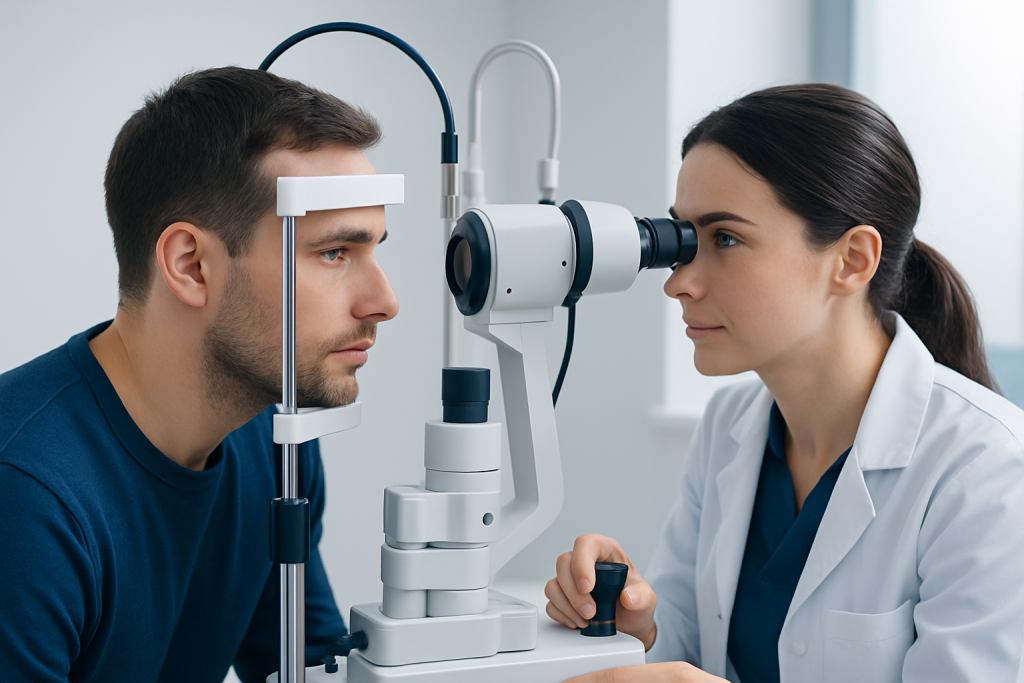
An ophthalmologist, preferably a retina specialist when available, will ask about the light exposure, when symptoms began and whether they are changing. The examination commonly includes visual-acuity testing, pupil examination and a dilated retinal examination. It is helpful to explain exactly what was viewed, for how long and whether any eye protection was used.
Optical coherence tomography (OCT) is a painless imaging test that produces detailed cross-sectional images of the retina. It can show subtle changes in the layers of the macula and provides a baseline for follow-up. Fundus photographs and other tests may be used when appropriate. These tests help clinicians distinguish solar retinopathy from problems such as macular degeneration, retinal inflammation or other macular disorders.
Monitoring is often the central part of management. Repeat vision testing and OCT scans can document whether the retina is recovering, stable or showing findings that require further investigation. Follow-up timing is individualized according to symptoms, examination findings and the degree of visual limitation.
Who may need treatment or closer follow-up
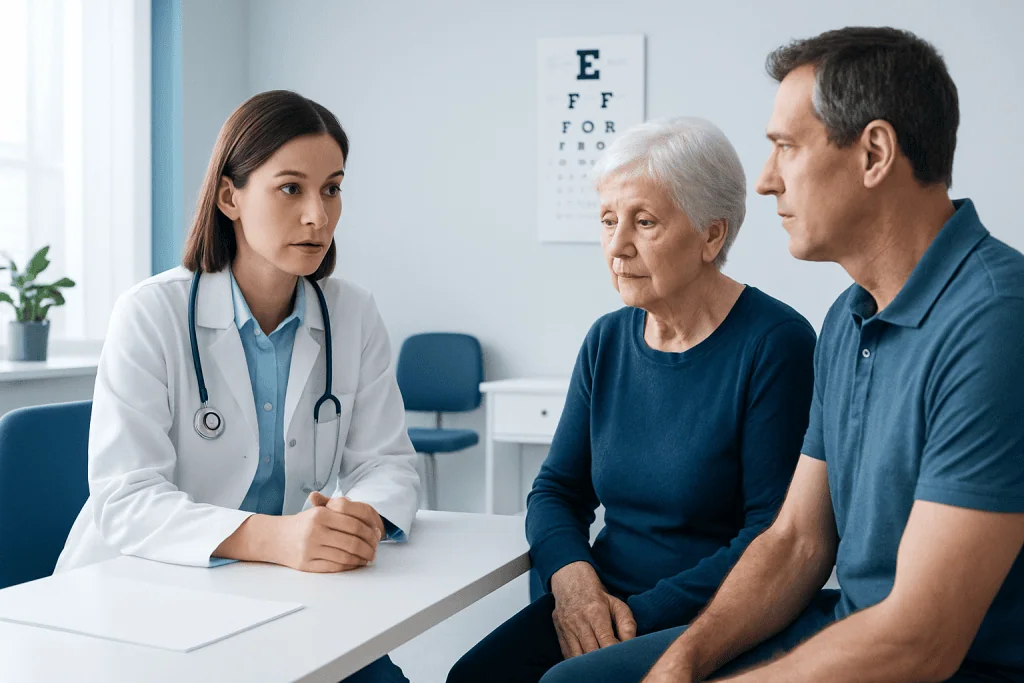
Anyone who develops a central blurred patch, distorted lines, reduced detail vision, altered color perception or unusual light sensitivity after looking at the sun should arrange prompt medical assessment. Symptoms can begin soon after exposure or become more noticeable over the following hours or days. Looking at an eclipse without certified, undamaged solar viewers is a well-recognized risk, but routine sun exposure without direct viewing does not usually cause solar retinopathy.
Closer follow-up may be advised when both eyes are affected, vision is significantly reduced, symptoms are worsening or OCT shows more pronounced macular changes. People with a history of retinal disease, diabetes-related eye disease or prior eye surgery may also need careful evaluation because their symptoms may have more than one possible cause.
There is no home test that can confirm solar retinopathy. People should not repeatedly check their vision by looking at bright lights or the sun, as this may cause additional harm. A qualified eye professional can determine whether observation is appropriate or whether another diagnosis and treatment pathway should be considered.
What treatment involves: step by step
Step 1: urgent assessment and diagnosis. The first priority is to document visual symptoms and examine the retina. Imaging identifies the site and extent of injury and helps exclude conditions that may need time-sensitive treatment. If solar retinopathy is suspected, the clinician will also discuss ways to prevent another exposure.
Step 2: supportive care and observation. For uncomplicated solar retinopathy, doctors commonly recommend observation with scheduled reassessment. No medicine has been consistently shown to restore damaged retinal cells. Some clinicians may consider treatment in selected circumstances if there is substantial inflammation or another associated finding, but this is not standard therapy for most cases and should be decided by an ophthalmologist.
Step 3: follow-up based on recovery. The specialist compares symptoms, visual-acuity results and OCT findings over time. Persistent distortion or loss of central detail may lead to additional testing or referral to low-vision and visual-rehabilitation services, which can help a person adapt to ongoing visual changes.
Acibadem International’s multidisciplinary specialists and JCI-accredited hospitals can assess retinal symptoms and coordinate ophthalmology care for international patients. Evaluation and follow-up can include detailed retinal imaging and individualized care planning.
Benefits, limitations and possible risks
The main benefit of specialist care is diagnostic clarity. Confirming solar retinopathy can provide a realistic recovery plan, while ruling out conditions that may require a different treatment. Serial testing can also show whether the retina is healing, helping patients and clinicians make informed decisions about work, driving and other visually demanding activities.
The important limitation is that supportive care does not guarantee full visual recovery. The retina is delicate neural tissue, and the ability to recover differs from person to person. Some people regain near-normal vision, while others continue to notice a central spot, reduced contrast, distortion or difficulty reading fine print.
Tests such as dilated examination, retinal photography and OCT are generally low risk. Dilation drops may cause temporary blurred near vision and light sensitivity. Treatments that are not proven for solar retinopathy can create unnecessary side effects or delay the correct diagnosis, so people should avoid unverified eye drops, supplements or devices marketed as retinal cures.
How long does it take for solar retinopathy to go away?
Symptoms often begin to improve within weeks, but recovery can take several months. The timeline is variable: mild cases may improve relatively quickly, whereas more substantial macular injury can leave symptoms that persist longer. Retinal imaging may continue to show changes even when a person feels that vision has improved.
It is important not to judge recovery only by day-to-day perception. Central vision can fluctuate with lighting, fatigue and the visual task being performed. Follow-up examinations allow the ophthalmologist to assess objective changes and advise when normal activities, including driving, are safe for the individual.
Can solar retinopathy be completely cured?
Solar retinopathy cannot be described as completely curable in every case because there is no treatment that reliably reverses all retinal damage. However, many people experience meaningful spontaneous improvement, sometimes with little remaining effect on daily vision. The degree of recovery cannot be predicted with certainty at the first appointment.
A clinician can explain the likely outlook using symptoms, visual testing and OCT findings, but these results should be interpreted over time. Avoiding further direct sun viewing remains essential, as repeated exposure could cause additional injury.
Can retinopathy go away with treatment?
“Retinopathy” is a broad term for retinal disease, and whether it improves depends on its cause. In solar retinopathy, improvement often occurs through the retina’s natural recovery process with observation and protection from further intense light, rather than through a specific curative treatment.
Other forms of retinopathy may require targeted care. For example, diabetic retinal disease may be managed with blood-sugar and blood-pressure control, eye injections, laser procedures or surgery when indicated. This is why an accurate diagnosis is essential before assuming that any visual change is due to sun exposure.
Can sun eye damage be reversed?
Some sun-related eye effects can improve, while others may be permanent. Solar retinopathy may partially or substantially improve over time, but direct sun viewing can damage retinal cells in ways that cannot always be fully reversed. The outcome is influenced by the intensity and length of exposure and the location of the injury in the macula.
Sun exposure can also affect other eye structures. For example, long-term ultraviolet exposure is associated with conditions such as cataract, which may be treatable with surgery when it affects vision. An ophthalmologist can identify which part of the eye has been affected and discuss appropriate management.
Prevention and everyday self-care
The safest prevention is never to look directly at the sun, even briefly, and never to use sunglasses, cameras, smoked glass, ordinary filters or homemade devices for direct solar viewing. During an eclipse, only certified solar viewers designed for direct sun observation should be used exactly according to manufacturer instructions. Regular sunglasses protect against ultraviolet exposure but do not make it safe to stare at the sun.
After suspected injury, rest does not repair the retina on its own, but avoiding further bright-light exposure is sensible. People can use standard UV-blocking sunglasses outdoors for comfort and eye protection. They should follow their clinician’s advice about work tasks, driving and the use of magnification or accessibility settings for reading.
A balanced diet supports general eye health, but supplements should not be presented as a cure for solar retinal injury. Anyone considering supplements or eye drops should discuss them with an ophthalmologist, especially if they have other health conditions or take regular medicines.
When to seek medical care
Medical care should be sought promptly after direct sun viewing if there is a new blurred or dark spot in the center of vision, wavy or distorted lines, reduced color vision, difficulty focusing, persistent afterimages or reduced vision in either eye. An ophthalmology appointment is appropriate even if symptoms seem mild, because early examination establishes a baseline and helps rule out other causes.
Urgent same-day eye assessment is particularly important for sudden marked vision loss, a curtain or shadow across vision, many new floaters, flashing lights, severe eye pain or a red eye with nausea. These symptoms are not typical of uncomplicated solar retinopathy and may indicate another eye emergency.
People with persistent symptoms should keep follow-up appointments, even if vision seems to be improving. Changes in daily function, including reading difficulty or trouble recognizing faces, should be shared with the treating clinician.
Frequently asked questions
What is the treatment of solar retinopathy?
Treatment of solar retinopathy usually consists of prompt ophthalmology assessment, retinal imaging and follow-up monitoring. There is no standard medication, laser procedure or surgery proven to reliably reverse the retinal injury. The specialist will also rule out other causes of central vision changes.
How long does it take for solar retinopathy to go away?
Many people notice improvement over weeks to months, but the timing differs between individuals. Some visual symptoms can last longer, particularly after more intense or prolonged sun exposure. Follow-up OCT imaging helps assess recovery.
Can solar retinopathy be completely cured?
Complete recovery is possible for some people, but it cannot be guaranteed. There is no treatment that consistently restores all sun-damaged retinal tissue. An ophthalmologist can discuss the likely outlook based on examination and imaging results.
Can retinopathy go away with treatment?
It depends on the type and cause of retinopathy. Solar retinopathy often improves naturally with observation and avoidance of further intense-light exposure, while other retinal conditions may need specific treatments. Proper diagnosis is necessary before choosing treatment.
Can sun eye damage be reversed?
Some sun-related eye damage may improve, but damage to the retina from direct sun viewing may not be fully reversible. The outcome depends on the severity and location of the injury. An eye examination is the best way to determine what has been affected.
Should someone use eye drops or supplements after looking at the sun?
Over-the-counter eye drops and supplements have not been proven to repair solar retinal damage. Some drops may relieve dryness or irritation, but they do not treat injury to the macula. It is safest to consult an ophthalmologist before using any product for new visual symptoms.
References
- American Academy of Ophthalmology
- National Eye Institute
- American Optometric Association
- Merck Manual Consumer Version
This article is for general information only and is not a substitute for professional medical advice. Please consult a qualified doctor about your individual situation.
Explore treatments in Turkey — costs, top hospitals & a free quote
JCI-accredited · board-certified surgeons · reply within 24h
Add us as a Preferred Source to see more of our trusted health content across Google Search, AI Overviews and Discover.