Physical Urticaria Pressure: An Evidence-Based Guide for Patients

Pressure urticaria causes hives or deeper swelling after sustained pressure on the skin. Symptoms may develop immediately but often appear several hours after the pressure occurred.
Key Takeaways
- Pressure urticaria causes hives or deeper swelling after sustained pressure on the skin.
- Symptoms may develop immediately but often appear several hours after the pressure occurred.
- Common triggers include tight clothing, straps, prolonged sitting or standing, and gripping objects.
- A clinician can usually diagnose the condition from the symptom pattern and, when appropriate, pressure-provocation testing.
- Avoiding known triggers and using clinician-guided antihistamine treatment can help control symptoms.
- Urgent care is needed for breathing difficulty, throat swelling, faintness, or rapidly worsening facial swelling.
Physical urticaria pressure, also called pressure urticaria or delayed pressure urticaria, is a type of inducible hives caused by pressure on the skin. It can lead to itchy, burning, painful, or swollen areas after activities such as carrying a bag, standing for long periods, or wearing tight clothing.
Overview: What Is Physical Urticaria Pressure?
Physical urticaria pressure is a form of chronic inducible urticaria, meaning that hives develop after a physical stimulus. In this condition, pressure applied to the skin causes local swelling, redness, itching, burning, tenderness, or pain. It is often called pressure urticaria or delayed pressure urticaria because symptoms may begin several hours after the pressure has stopped.
The reaction can occur where an object presses against the body, such as under a backpack strap, waistband, bra strap, watch, shoe, or seat edge. It may also affect the hands after gripping tools or bags, and the feet after standing or walking. The skin changes are not contagious, and they do not mean that the person has an infection.
Pressure urticaria can occur on its own or alongside other forms of hives, including spontaneous hives that arise without an obvious trigger. Symptoms can be disruptive because swelling may last longer than ordinary hives and can interfere with work, sleep, exercise, and daily routines. With a careful assessment and individualized management plan, many people can reduce symptoms and maintain usual activities.
How Pressure Urticaria Feels and Looks
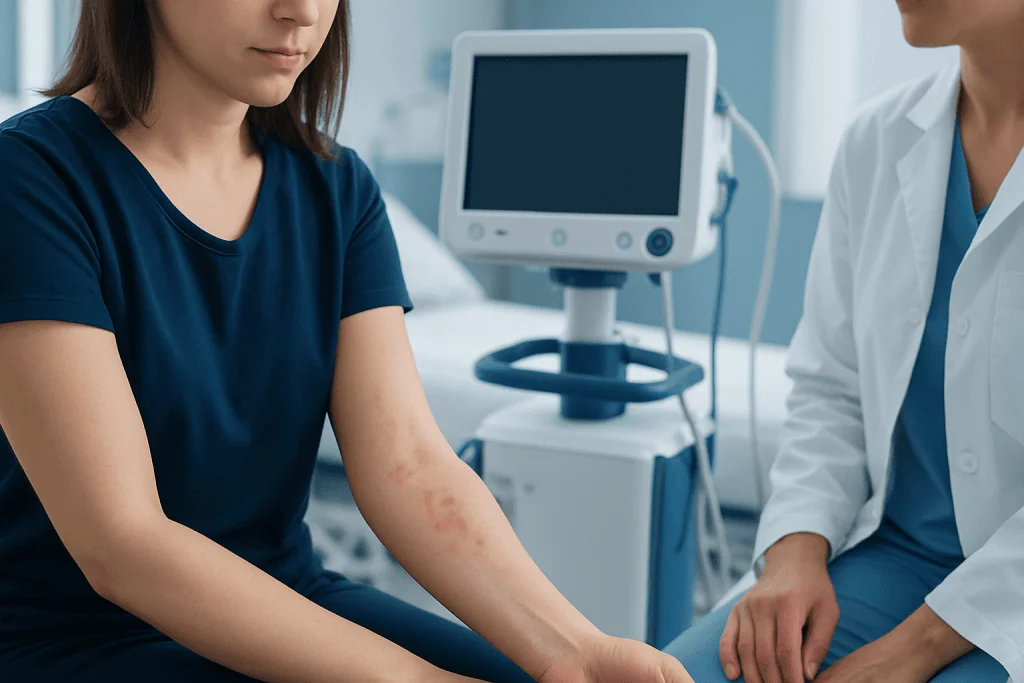
The most typical feature is a localized swollen area after sustained pressure. Unlike some ordinary hives that appear and fade within minutes to a few hours, delayed pressure urticaria commonly develops about four to six hours after pressure and may persist for many hours or, occasionally, longer. The response may be more noticeable after heavier or longer-lasting pressure.
Symptoms vary between individuals and from one episode to another. Some people mainly experience itch, while others describe burning, warmth, aching, or pain. Swelling can occur deeper in the skin and may feel firm rather than appearing as small, surface-level welts. When the hands or feet are involved, the area may feel stiff or uncomfortable with movement.
Common examples include swelling beneath a shoulder strap after carrying a bag, a tender mark at the waist after tight clothing, foot discomfort after prolonged standing, or hand swelling after using hand tools. A delayed response can make the connection with a trigger less obvious, so a record of daily activities and symptoms can be useful.
- Raised, red, or skin-colored swelling at a pressure site
- Itching, burning, tenderness, or pain
- Symptoms after sitting, standing, walking, carrying, gripping, or wearing tight items
- Fatigue or a general unwell feeling in some people during more extensive episodes
Why It Happens and Who May Be Affected

Pressure urticaria involves mast cells, which are immune cells in the skin. In response to pressure, these cells release substances including histamine that can cause blood vessels to leak fluid into surrounding tissue. This produces the swelling and other symptoms of a hive-like reaction. The exact reason why some people develop this sensitivity is not always known.
It is not usually an allergy to a particular food, fabric, or object. Rather, the physical force of pressure is the trigger. However, heat, friction, stress, infections, alcohol, and some medicines may worsen hives in certain people. Nonsteroidal anti-inflammatory drugs, such as ibuprofen or aspirin, can aggravate urticaria in some individuals; people should not stop prescribed medication without medical advice.
Pressure urticaria may occur at any age. It can coexist with other inducible urticarias, such as dermatographism, cold urticaria, heat urticaria, or cholinergic urticaria. It may also be present with chronic spontaneous urticaria, in which hives occur without a consistent external trigger. A healthcare professional can help distinguish these patterns and assess whether another condition could be contributing.
How Doctors Diagnose It
Diagnosis begins with a clinical history. A doctor will ask where swelling occurs, how long it takes to appear after pressure, how long it lasts, what it feels like, and whether there are other hive episodes. Questions may cover work demands, exercise, clothing, medicines, recent illness, and personal or family history of allergies or skin conditions.
A physical examination may be normal if the appointment takes place between episodes. Photographs taken when symptoms are present can therefore be very helpful. Keeping a symptom diary for several weeks may also reveal patterns, especially because delayed reactions can happen after the triggering activity has ended.
When needed, a clinician may use a controlled pressure test to reproduce the reaction. The test is interpreted alongside the person’s history because the timing and appearance of symptoms matter. Blood tests are not routinely required for every patient, but may be considered when symptoms, examination findings, or medical history suggest another cause. A doctor may also consider related conditions such as urticaria or angioedema when evaluating recurring swelling.
Treatment Options and Daily Symptom Control
Management usually combines trigger reduction with medication when symptoms are frequent, painful, or limiting. Second-generation, non-sedating antihistamines are commonly used as first-line treatment for chronic urticaria. A clinician may adjust the treatment plan if standard use does not provide adequate control. The choice of medicine should take account of age, pregnancy status, other health conditions, and other medicines being taken.
For symptoms that remain difficult to control, referral to a dermatologist or allergy specialist may be appropriate. Specialists can confirm the diagnosis, review alternative explanations, and discuss evidence-based options for chronic urticaria that is not responding to first-line therapy. Short courses of systemic corticosteroids are sometimes considered for severe flare-ups, but they are generally not a long-term solution because of potential side effects.
Practical measures may reduce the amount of pressure on sensitive skin. Useful steps can include choosing looser clothing, using wider padded straps, spreading weight between both shoulders, taking breaks from prolonged standing or sitting, and avoiding tightly fitted watches, belts, or footwear when possible. These changes do not replace medical treatment, but they can reduce day-to-day triggers.
People should avoid relying on unproven elimination diets unless a qualified clinician has identified a specific reason. Food allergy is not the usual cause of pressure urticaria. If hives are persistent or affecting quality of life, a clinician can discuss allergy testing when it is clinically appropriate and help develop a tailored management plan.
Living Well With a Delayed Reaction Pattern
One challenge of physical urticaria pressure is that a reaction may appear hours after an activity. Planning around this delay can help. For example, a person who notices symptoms after carrying shopping bags may choose a wheeled bag, divide loads into smaller amounts, or use padded handles. Someone affected by prolonged standing may benefit from rest breaks and supportive, well-fitting footwear.
A simple diary can include the time and type of pressure, the body area involved, symptoms, duration, foods and medicines taken, and photographs of visible swelling. This information can help identify meaningful patterns without unnecessarily restricting normal activities. It can also make medical appointments more productive.
Emotional stress does not cause the condition, but stress can make some people more aware of itch or can coincide with more active symptoms. Sleep, regular movement within personal tolerance, and supportive routines may help overall wellbeing. It is reasonable to seek professional support if recurring symptoms are affecting mood, work, social life, or confidence.
When to Seek Medical Care
A person should arrange a medical assessment for repeated hives or swelling, especially when symptoms are painful, last for long periods, interfere with daily activities, or have no clear explanation. Assessment is also important when hives occur with fever, joint pain, bruising-like marks, unexplained weight changes, or other persistent symptoms, as these may need a broader evaluation.
Emergency medical care is needed if hives or swelling occur with trouble breathing, wheezing, tightness in the throat or chest, difficulty swallowing, swelling of the tongue or throat, dizziness, fainting, or rapid worsening of facial swelling. These symptoms may indicate a serious allergic reaction and should not be managed at home.
For international patients requiring assessment, Acibadem International’s multidisciplinary specialists and JCI-accredited hospitals can evaluate and treat urticaria and related skin symptoms. A dermatologist or allergy specialist can help determine whether pressure urticaria is the likely diagnosis and provide safe, individualized follow-up.
Frequently asked questions
Is physical urticaria pressure the same as an allergy?
Physical urticaria pressure is usually a physical trigger response rather than an allergy to a food, material, or object. Pressure activates immune cells in the skin and can release histamine, leading to swelling and discomfort. A clinician can assess whether allergy testing is relevant based on the individual history.
How long after pressure do symptoms start?
In delayed pressure urticaria, symptoms often begin several hours after sustained pressure, commonly around four to six hours later. This delay can make it difficult to identify the trigger. Reactions may then last for many hours and sometimes longer.
Can pressure urticaria go away on its own?
The course varies. Some people have symptoms for a limited period, while others experience recurring episodes over a longer time. Medical review and a treatment plan can improve symptom control and help a person continue normal activities.
What triggers pressure urticaria?
Typical triggers include tight clothing, backpack or handbag straps, belts, prolonged sitting, standing, walking, gripping objects, and pressure from footwear. The amount and duration of pressure needed to cause a reaction differs from person to person. Friction, heat, and certain medicines may worsen hives in some people.
Can antihistamines help pressure urticaria?
Yes. Non-sedating antihistamines are commonly the first treatment used for chronic inducible urticaria, including pressure urticaria. A healthcare professional should advise on the most appropriate medicine and treatment plan, particularly if symptoms continue despite treatment.
Should a person avoid exercise with pressure urticaria?
Most people do not need to avoid all exercise. It may help to choose activities and clothing that reduce prolonged pressure or friction, and to discuss recurring exercise-related symptoms with a clinician. Seek urgent help if exercise is accompanied by breathing problems, faintness, or throat swelling.
References
- American Academy of Allergy, Asthma & Immunology
- American Academy of Dermatology Association
- European Academy of Allergy and Clinical Immunology
- National Institute of Allergy and Infectious Diseases
- National Health Service
This article is for general information only and is not a substitute for professional medical advice. Please consult a qualified doctor about your individual situation.
Urticaria in Turkey — costs, top hospitals & a free quote
JCI-accredited · board-certified surgeons · reply within 24h
Add us as a Preferred Source to see more of our trusted health content across Google Search, AI Overviews and Discover.

More from the Health Library

Dupixent: An Evidence-Based Guide for Patients

Extrovert: A Complete Medical Overview

10k in Miles — Explained by Medical Evidence, Not Myths

Boron’s: What Patients Need to Know

Retrognathia — Explained by Medical Evidence, Not Myths