Retrognathia — Explained by Medical Evidence, Not Myths

Retrognathia usually refers to a lower jaw that is positioned too far back relative to the upper jaw. Symptoms can range from mild cosmetic concerns to chewing, bite, speech, or breathing difficulties.
Key Takeaways
- Retrognathia usually refers to a lower jaw that is positioned too far back relative to the upper jaw.
- Symptoms can range from mild cosmetic concerns to chewing, bite, speech, or breathing difficulties.
- In babies and children, evaluation is important if feeding, growth, or airway problems are present.
- Diagnosis often includes a physical exam, dental assessment, and imaging to evaluate jaw position and airway anatomy.
- Treatment may involve monitoring, orthodontics, dental appliances, or jaw surgery depending on the cause and severity.
- New snoring, pauses in breathing during sleep, or significant jaw-related functional problems should be medically assessed.
Retrognathia is a condition in which the jaw sits farther back than expected, most often involving the lower jaw. It can be a normal facial variation in some people, but in others it may contribute to bite problems, speech changes, or breathing issues such as sleep-disordered breathing.
What retrognathia means
Retrognathia means the jaw is positioned farther back than expected when the face is viewed from the side. In everyday language, it is often described as a receding jaw. The term is most commonly used for mandibular retrognathia, where the lower jaw sits behind the upper jaw more than usual, although jaw position can vary from person to person.
Medical evidence shows that retrognathia is not simply a cosmetic label. Jaw position can affect how the teeth meet, how the tongue rests in the mouth, and how open the airway remains during sleep. For some people, it causes no major health problem. For others, it may contribute to malocclusion, speech differences, jaw strain, or breathing problems.
Retrognathia should also be distinguished from micrognathia. Micrognathia refers to a jaw that is physically small, while retrognathia refers to a jaw that is set back in relation to the rest of the face. A person can have one, the other, or both. This distinction matters because the cause, age of presentation, and treatment plan may differ.
Signs and symptoms of retrognathia

The effects of retrognathia vary widely. Some people notice only a facial profile in which the chin appears less prominent. Others develop functional symptoms because the upper and lower teeth do not align well or because the tongue and soft tissues sit farther back toward the throat.
Common symptoms and features may include:
- A chin or lower jaw that appears recessed
- An overbite or poor bite alignment
- Difficulty biting, chewing, or fully closing the lips
- Speech differences, especially with certain sounds
- Jaw discomfort or strain
- Snoring or sleep disruption
- Mouth breathing in some cases
In infants, retrognathia can look different. Parents may notice feeding difficulty, noisy breathing, poor latch, or tiring during feeds. In children and teenagers, concerns may emerge gradually as the face grows, especially if orthodontic crowding, speech issues, or disturbed sleep become more noticeable.
Because symptoms overlap with other conditions, retrognathia is sometimes recognized during assessment for sleep apnea or for bite problems identified by a dentist or orthodontist. A proper evaluation helps determine whether jaw position is the main issue or one part of a broader craniofacial pattern.
Causes and risk factors
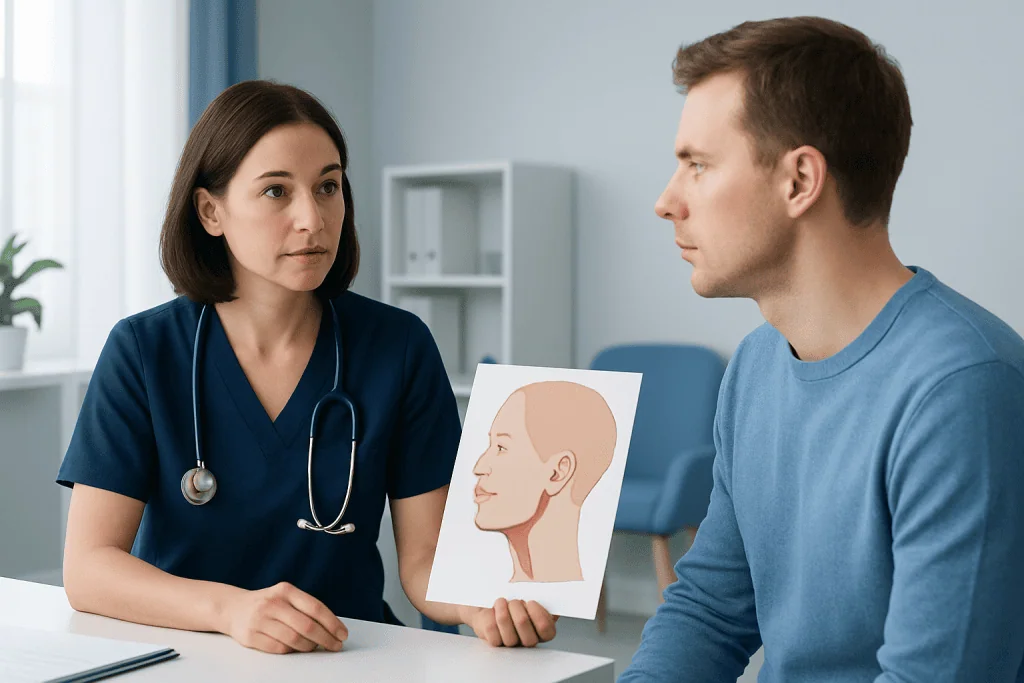
Retrognathia can be present from birth or become more noticeable during growth. In many people, it reflects inherited facial structure. A family history of a receding chin, overbite, or jaw imbalance may be present. Developmental differences in how the upper and lower jaws grow are a common explanation.
In some infants and children, retrognathia occurs as part of a syndrome or craniofacial condition. It may be associated with cleft-related conditions, airway differences, or genetic syndromes that affect jaw development. When retrognathia appears along with feeding difficulty, delayed growth, or other structural findings, a broader pediatric evaluation may be recommended.
Other causes can include childhood growth disturbances, prior trauma affecting the jaw, or less commonly, inflammatory joint disease involving the jaw joint. The visible appearance may also be influenced by dental alignment, head posture, and the size or position of the upper jaw, so assessment needs to consider the whole face rather than the lower jaw alone.
Risk factors for complications from retrognathia include severe jaw retrusion, obesity, enlarged tonsils or adenoids in children, and other structural airway narrowing. These factors can make breathing during sleep more difficult and increase the chance of snoring or obstructive sleep apnea.
How doctors diagnose retrognathia
Diagnosis begins with a clinical examination. A doctor, dentist, orthodontist, or maxillofacial surgeon looks at the facial profile, how the teeth meet, jaw movement, and signs of airway narrowing. They also ask about chewing, speech, temporomandibular joint symptoms, daytime tiredness, snoring, and sleep quality.
Dental and facial imaging is often used to understand the anatomy more precisely. This may include cephalometric X-rays, panoramic dental imaging, or three-dimensional scans when needed. These studies help measure jaw relationships, tooth position, and sometimes airway dimensions. If symptoms suggest a sleep-related breathing disorder, the person may be referred for sleep evaluation and testing.
In babies and young children, diagnosis also focuses on function. The care team may assess feeding, weight gain, oxygenation, and whether the jaw position is affecting the tongue or airway. In more complex cases, a multidisciplinary team may include pediatrics, ENT, sleep medicine, orthodontics, and oral and maxillofacial surgery.
Because retrognathia can overlap with other jaw alignment problems such as jaw disorders, diagnosis should not rely on appearance alone. A measured, evidence-based assessment helps avoid myths, such as assuming every recessed chin needs surgery or that all symptoms are purely cosmetic.
Treatment options: from monitoring to surgery
Treatment depends on age, symptoms, severity, and the underlying cause. If retrognathia is mild and does not affect function, monitoring may be enough. In growing children, clinicians may track jaw development over time because the facial profile can change as growth continues.
Orthodontic treatment may help if the main problem is tooth alignment or bite relationship. Braces, retainers, or selected growth-guidance appliances may be used in children and adolescents when appropriate. In adults, orthodontics can improve dental alignment, but it cannot fully reposition the jaw bones on its own if the skeletal difference is significant.
If breathing is affected, treatment may also address the airway. Depending on the person, this can include lifestyle measures, management of nasal or tonsillar obstruction, oral appliances, or care for sleep apnea treatment. Some people with retrognathia benefit from coordinated care between dental, sleep, and ENT specialists to match treatment to symptoms rather than facial appearance alone.
When retrognathia causes major bite problems, persistent functional limitation, or significant airway compromise, surgery may be considered. Corrective jaw procedures such as orthognathic surgery can move the jaw forward to improve alignment and facial balance. In selected patients, planning may involve advanced imaging and collaboration with specialists in maxillofacial surgery to achieve a safe, individualized result.
Prevention, self-care, and living with retrognathia
Retrognathia itself is usually not preventable because it often reflects inherited or developmental anatomy. However, early recognition can help prevent complications related to teeth, speech, feeding, and sleep. Regular dental checkups are especially important in children, since orthodontic or craniofacial concerns may be identified before symptoms become more disruptive.
Self-care focuses on reducing the impact of symptoms. People who snore or feel unrefreshed after sleep may benefit from maintaining a healthy weight, sleeping on their side if advised, avoiding alcohol close to bedtime, and discussing possible sleep apnea with a clinician. Those with jaw discomfort may be told to avoid frequent gum chewing, clenching, or very hard foods if these worsen symptoms.
Parents of infants with a recessed jaw should seek guidance rather than trying to manage feeding or breathing concerns alone. Positioning strategies or feeding modifications may be recommended, but these should come from professionals familiar with infant airway and feeding safety. Newborns and infants need particularly careful assessment because even small airway differences can matter.
Near the end of the care journey, some people need only reassurance and follow-up, while others benefit from a structured plan involving dental, sleep, and surgical specialists. At Acibadem International, multidisciplinary specialists in JCI-accredited hospitals diagnose and treat retrognathia for international patients when further evaluation or coordinated care is needed.
When to seek medical care
Medical review is appropriate if retrognathia is associated with symptoms rather than appearance alone. A person should seek assessment if they have trouble chewing, a significant overbite, speech difficulty, persistent jaw pain, or concerns that the jaw position is changing over time.
Prompt evaluation is especially important when breathing may be affected. Snoring, witnessed pauses in breathing during sleep, choking at night, morning headaches, daytime sleepiness, or poor concentration can be signs of sleep-disordered breathing. In infants, urgent medical attention is needed for feeding difficulty, blue episodes, labored breathing, or poor weight gain.
Children should also be evaluated if retrognathia seems to interfere with growth, sleep quality, or dental development. Early review does not always mean treatment is needed right away, but it can clarify whether monitoring, orthodontic guidance, or referral to a specialist would be helpful.
Frequently asked questions
Is retrognathia the same as having a weak chin?
Not exactly. A weak chin is a nonmedical description of facial appearance, while retrognathia refers to the jaw being positioned farther back than expected. A person may have a less prominent chin for different reasons, so a professional assessment is the best way to tell.
Can retrognathia cause sleep apnea?
Yes, it can contribute in some people, especially when the lower jaw sits far back and narrows the space behind the tongue. This does not mean everyone with retrognathia has sleep apnea, but snoring, witnessed pauses in breathing, and daytime sleepiness should be evaluated.
Does retrognathia correct itself with age?
Sometimes the appearance changes as a child grows, but it does not reliably correct itself in every case. Growth may improve jaw balance in some children, while in others the difference becomes more noticeable over time. Regular follow-up helps guide the right timing for any treatment.
Is surgery always needed for retrognathia?
No. Many people do well with observation, orthodontic care, or treatment aimed at symptoms such as bite problems or sleep-disordered breathing. Surgery is usually considered only when the jaw position causes significant functional issues or severe skeletal imbalance.
How is retrognathia diagnosed in children?
Diagnosis usually includes a physical exam, review of feeding or sleep symptoms, and assessment of how the teeth and jaws are developing. Imaging may be used when needed, especially if orthodontic planning or airway concerns are involved. In some children, several specialists work together to understand the full picture.
Can braces fix retrognathia?
Braces can improve tooth alignment and how the bite fits together, but they do not always correct a jaw bone that is set back. In growing children, some appliances may help guide development. In adults with a marked skeletal difference, orthodontics may need to be combined with jaw surgery for full correction.
References
- American Academy of Orthopaedic Surgeons
- American Association of Oral and Maxillofacial Surgeons
- American Academy of Sleep Medicine
- National Institute of Dental and Craniofacial Research
- American Academy of Pediatrics
This article is for general information only and is not a substitute for professional medical advice. Please consult a qualified doctor about your individual situation.
Hair transplant in Turkey — costs, graft counts & a free assessment
JCI-accredited · board-certified surgeons · reply within 24h
Add us as a Preferred Source to see more of our trusted health content across Google Search, AI Overviews and Discover.

More from the Health Library



Related Specialists

Dr. Meltem Yücebaş
Anesthesiology
Dr. Melisa Ulufi
Inpatient Clinic Physicians Clinical Service
Dr. Meltem Hüner
Infectious Diseases & Clinical Microbiology
Prof. Dr. Serkan Şener
Emergency Service